
Art Deco Sculptures
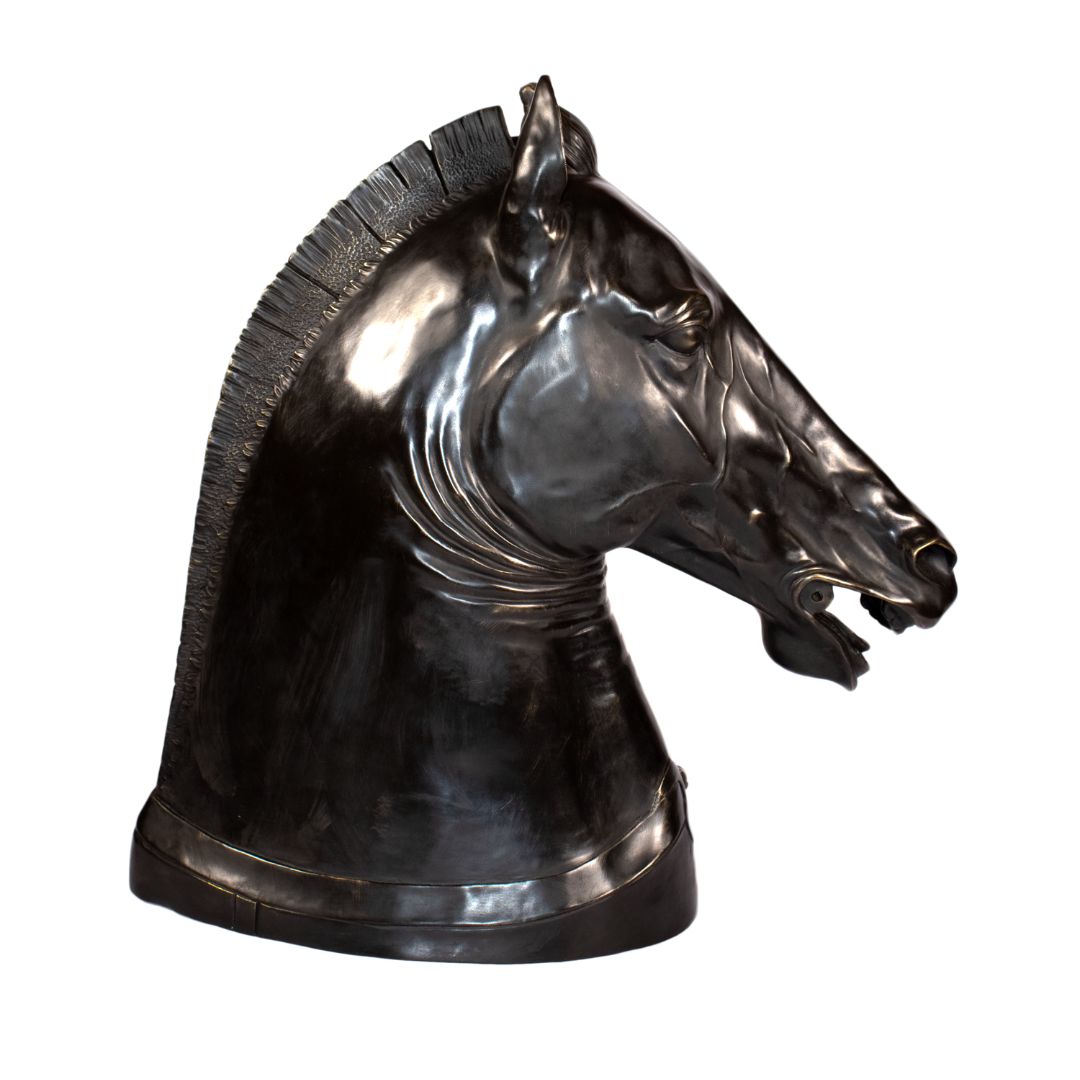
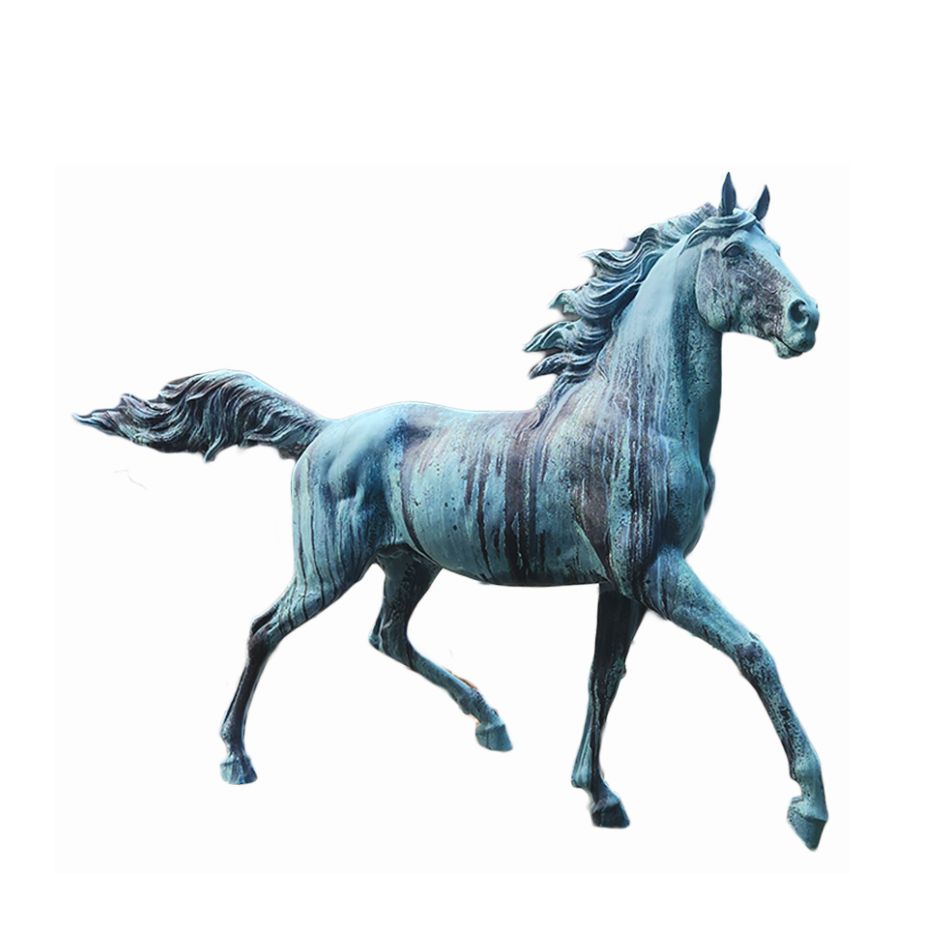
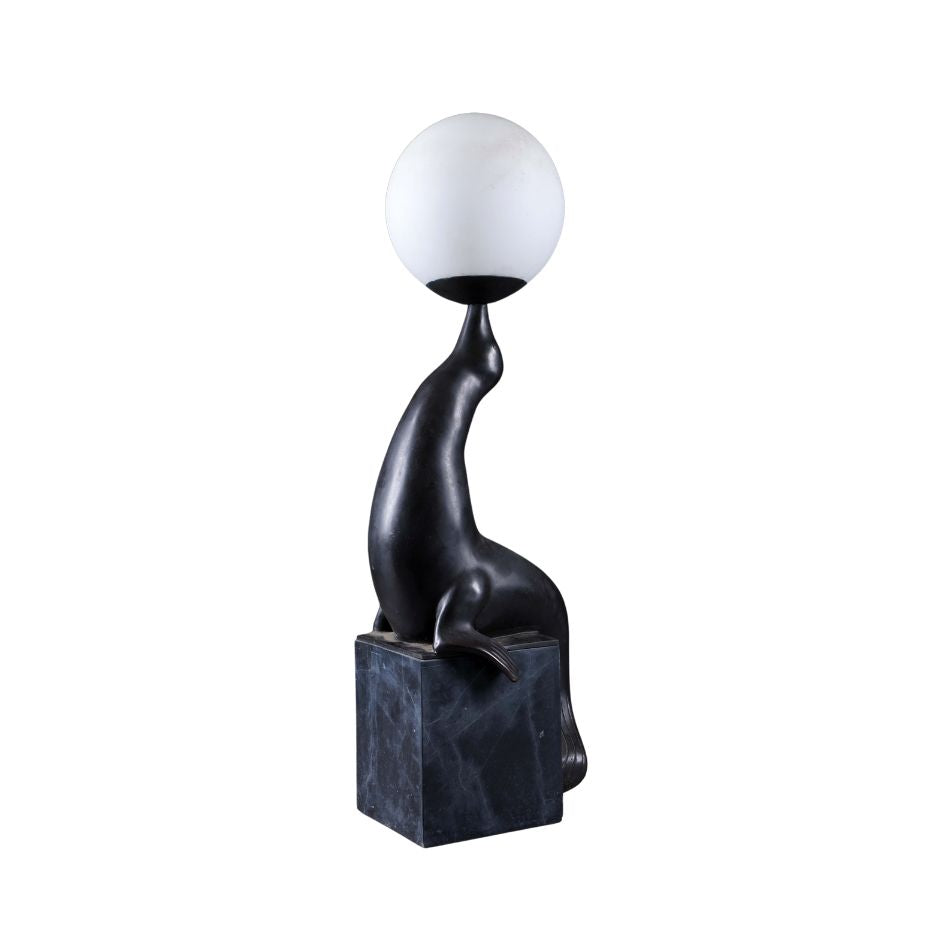
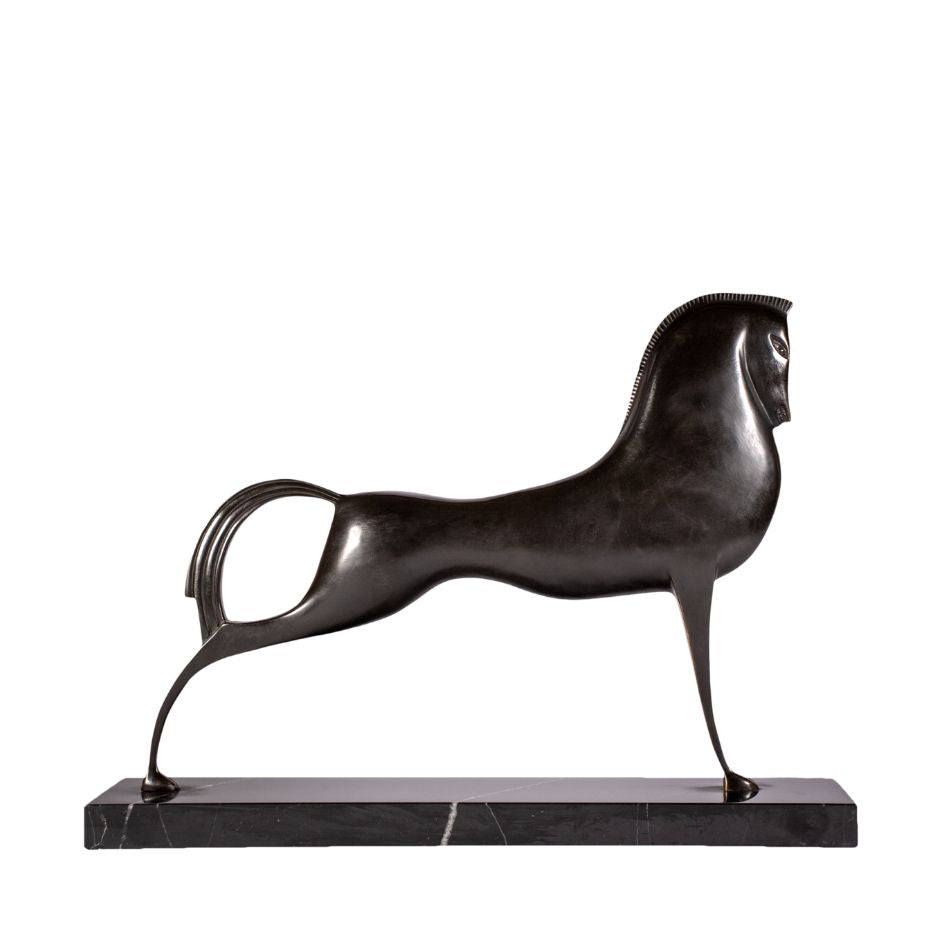
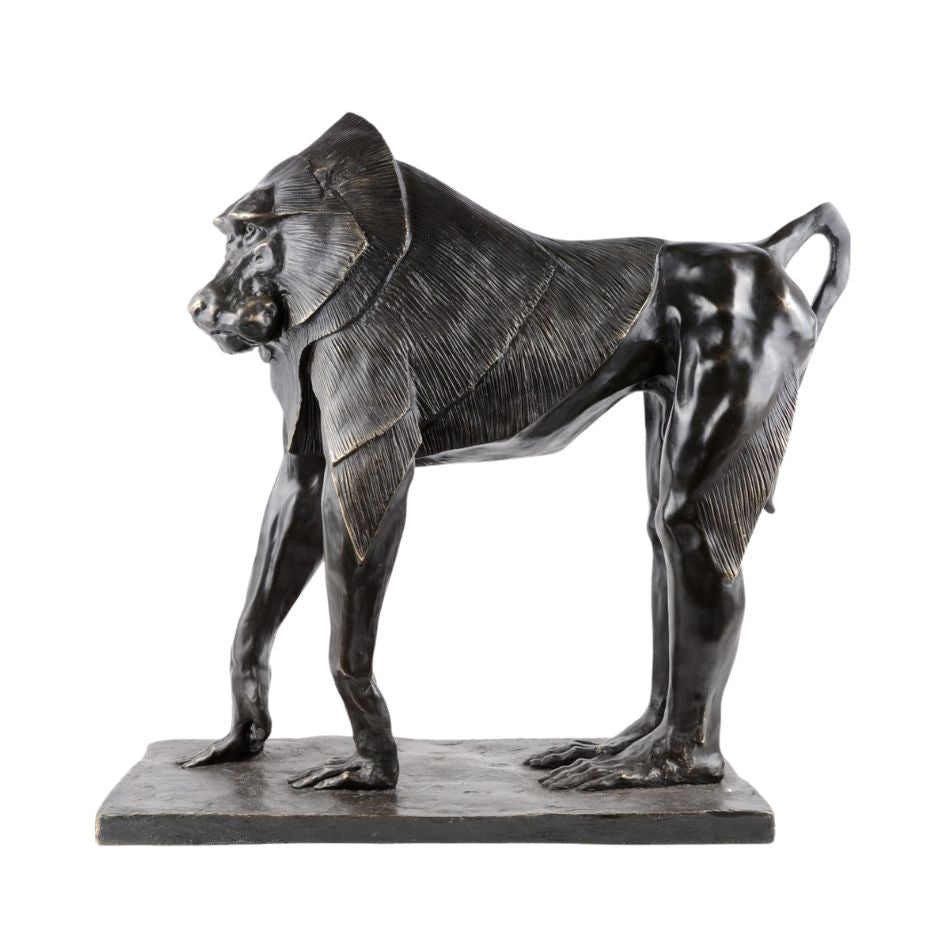
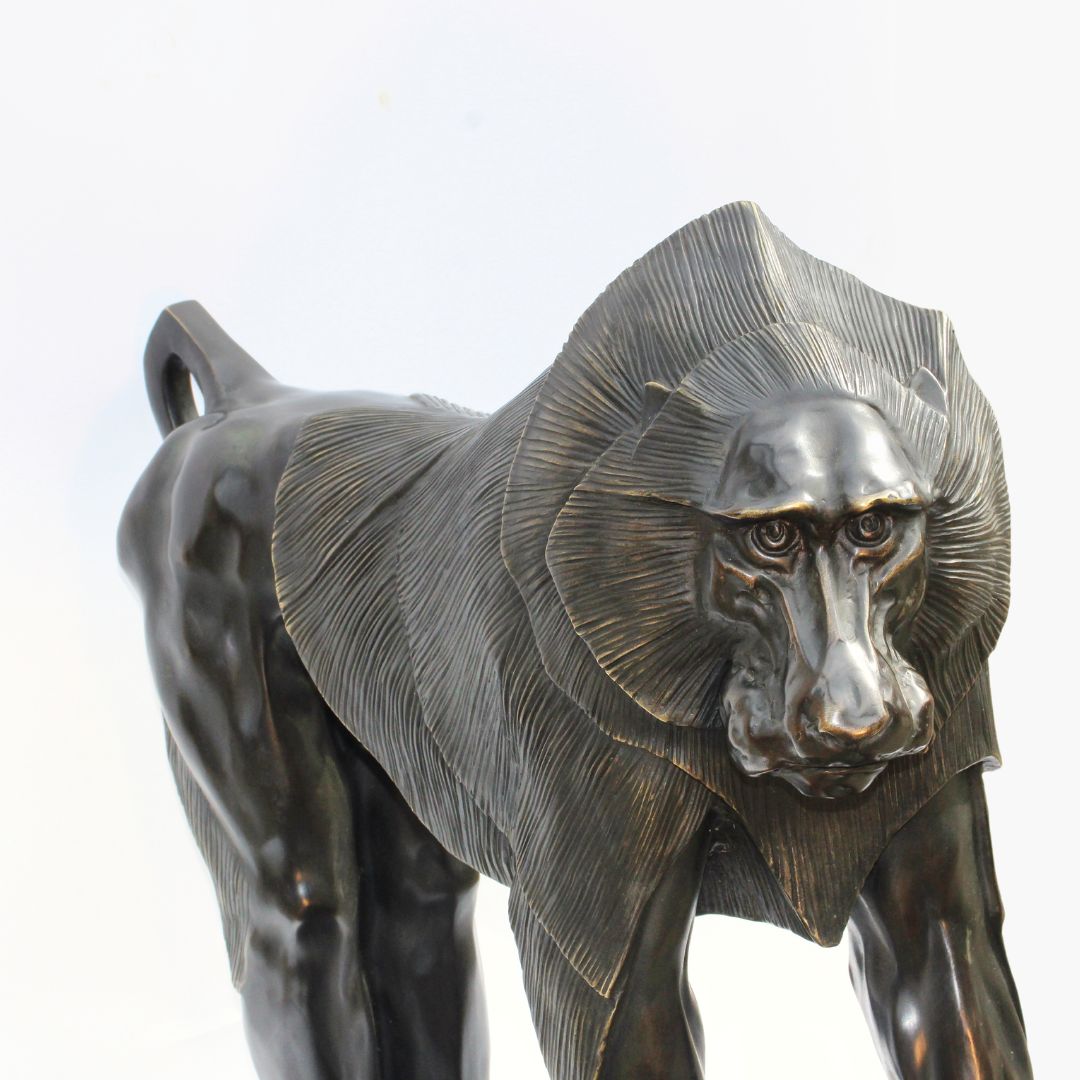
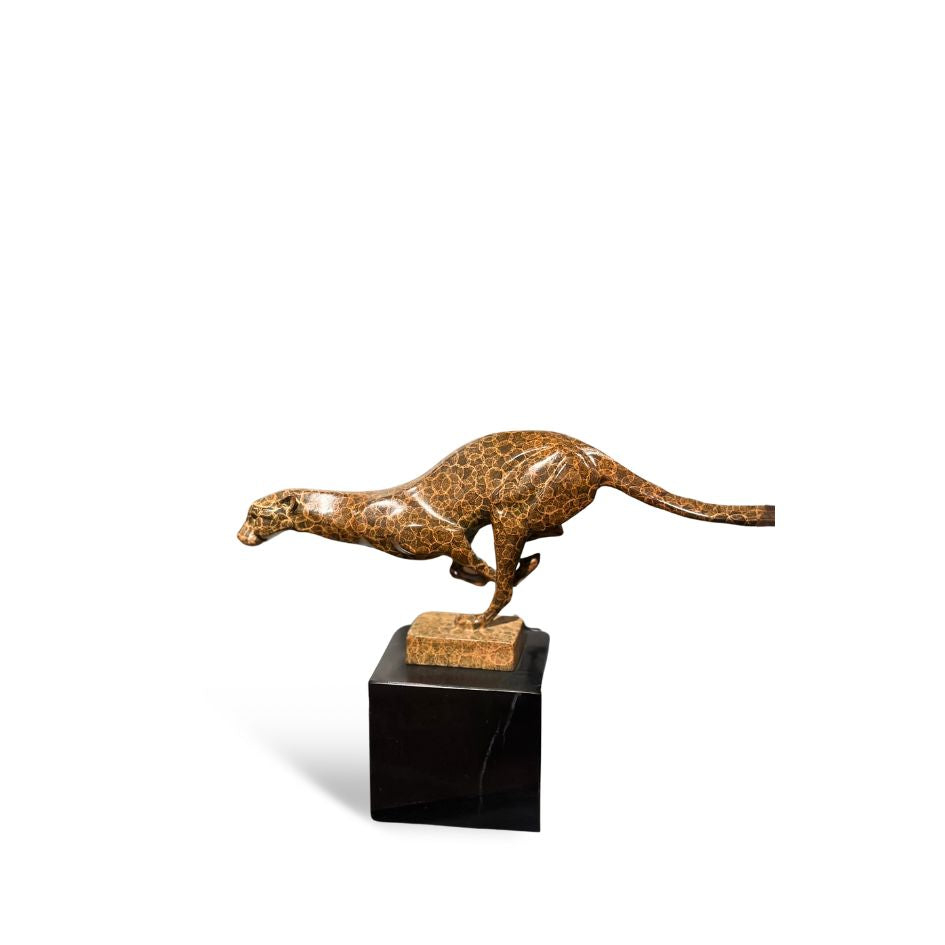
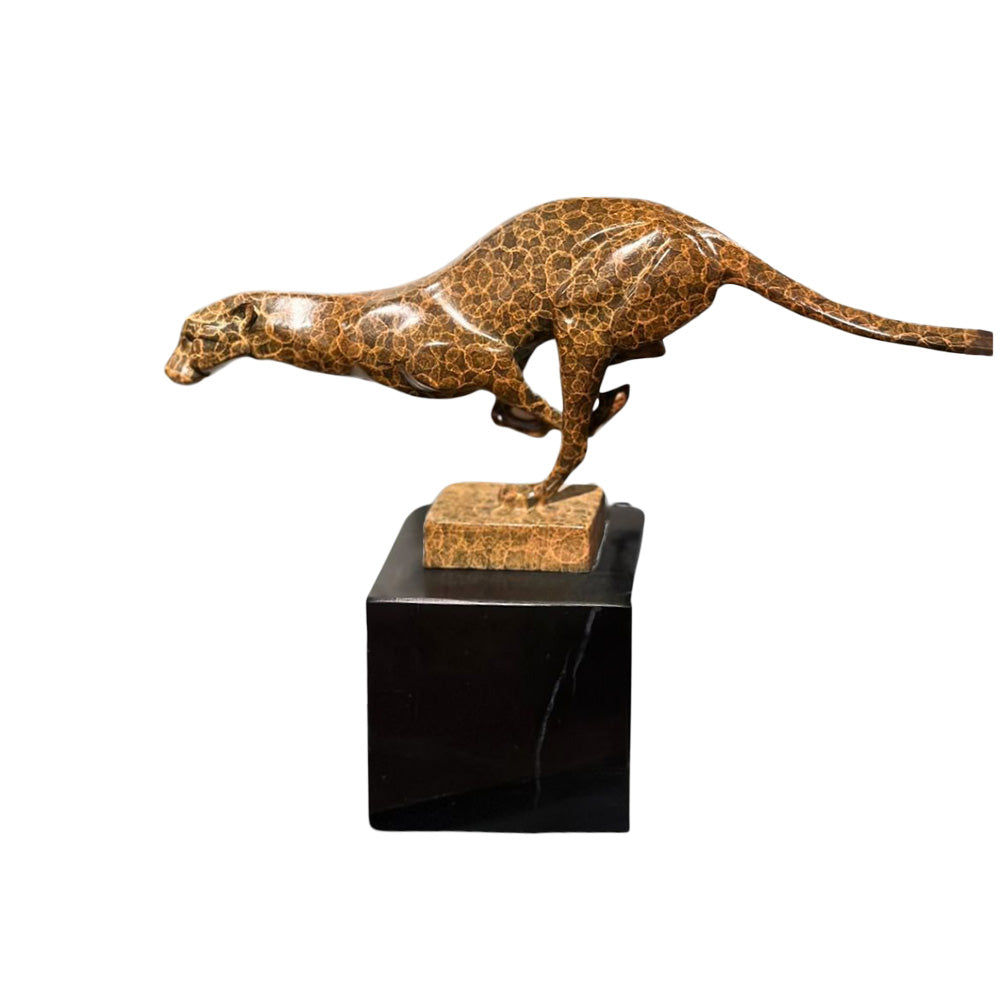
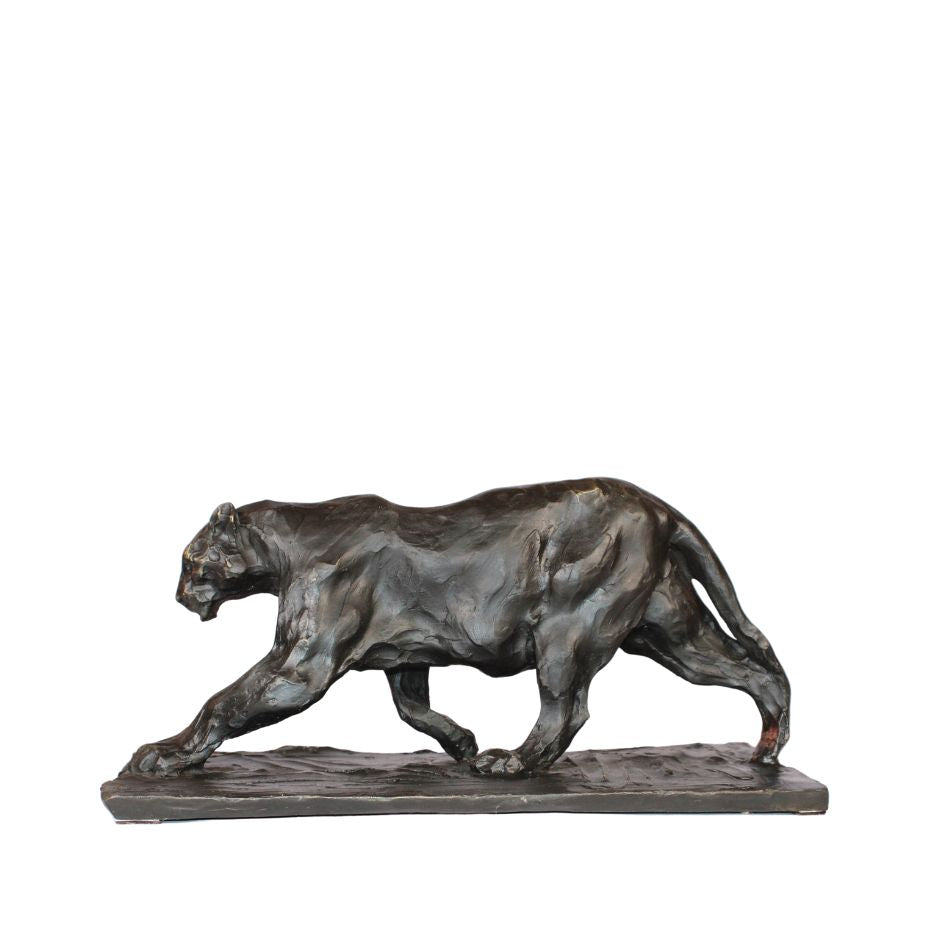
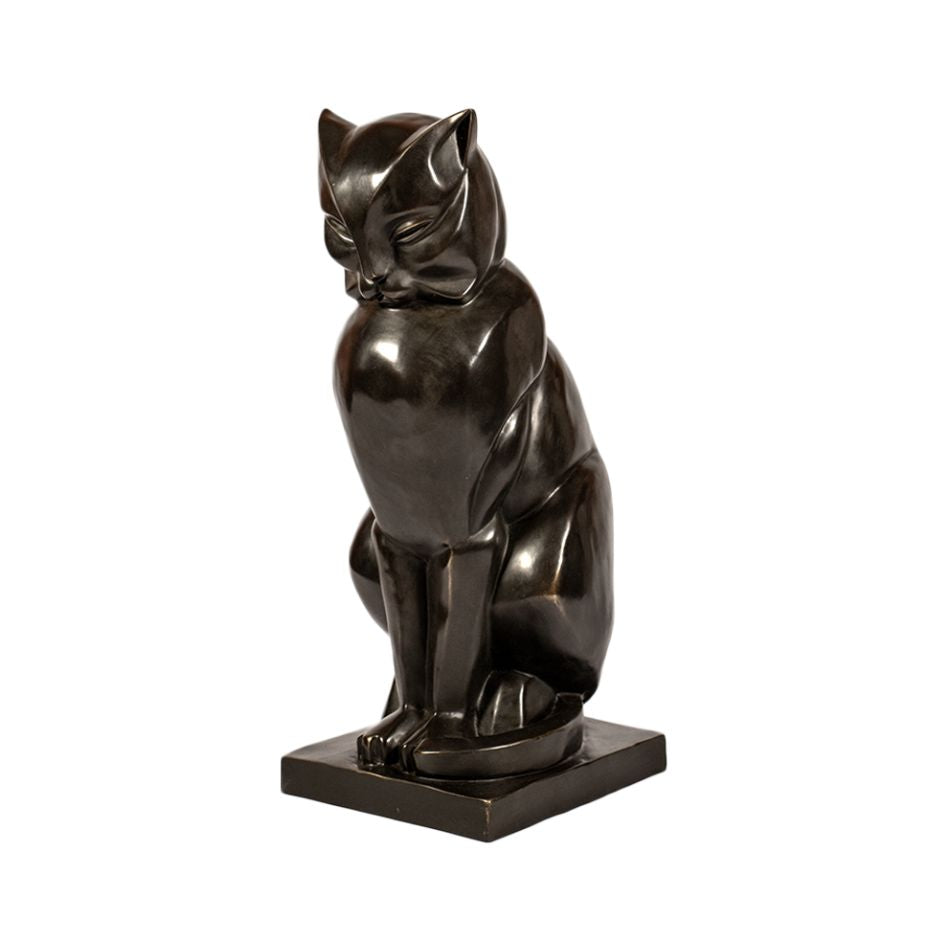
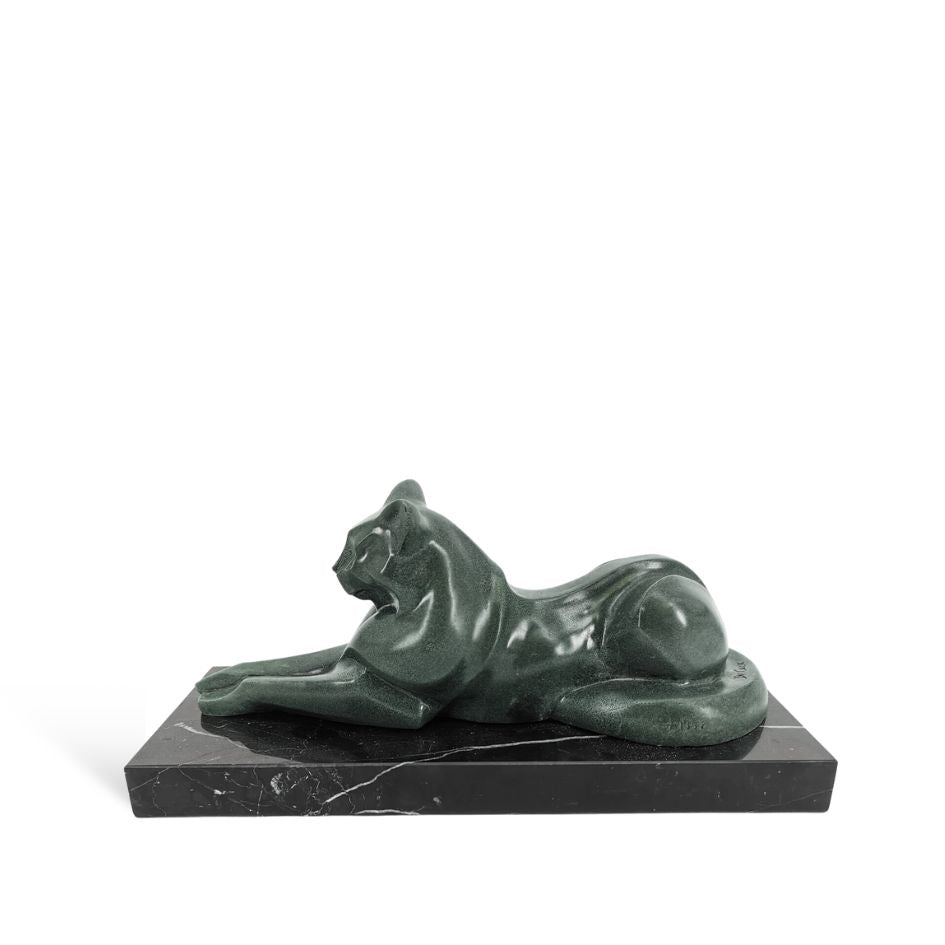
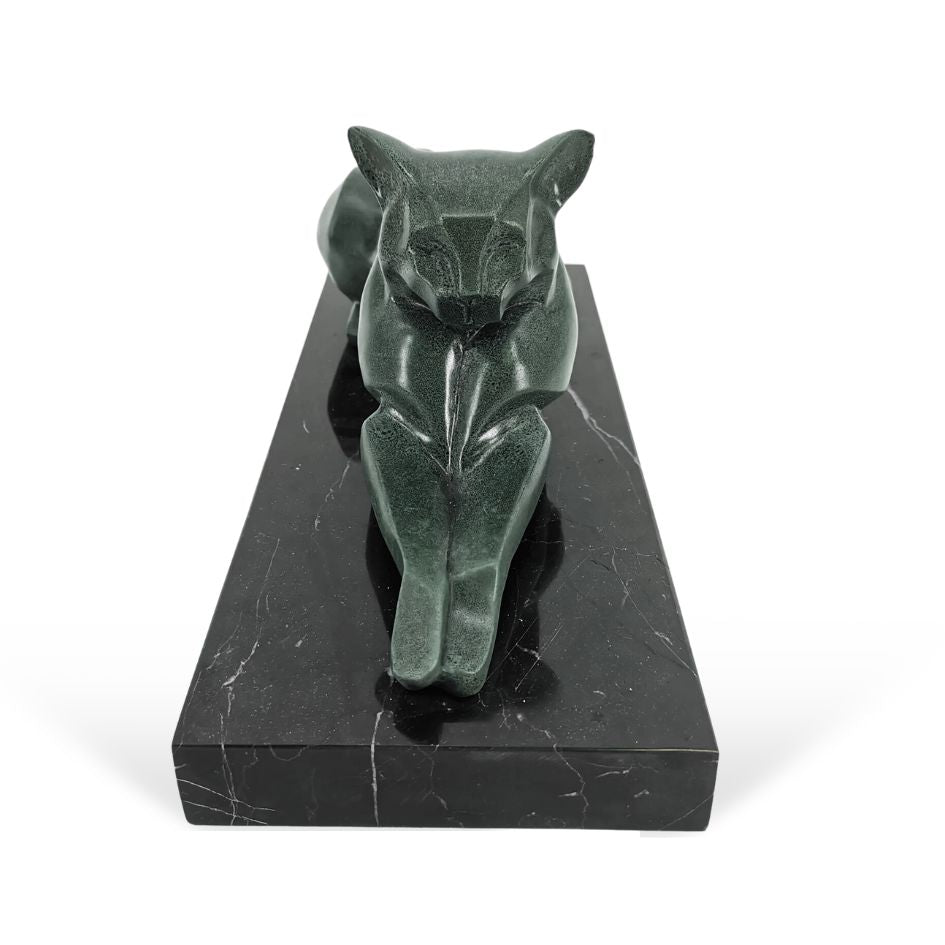
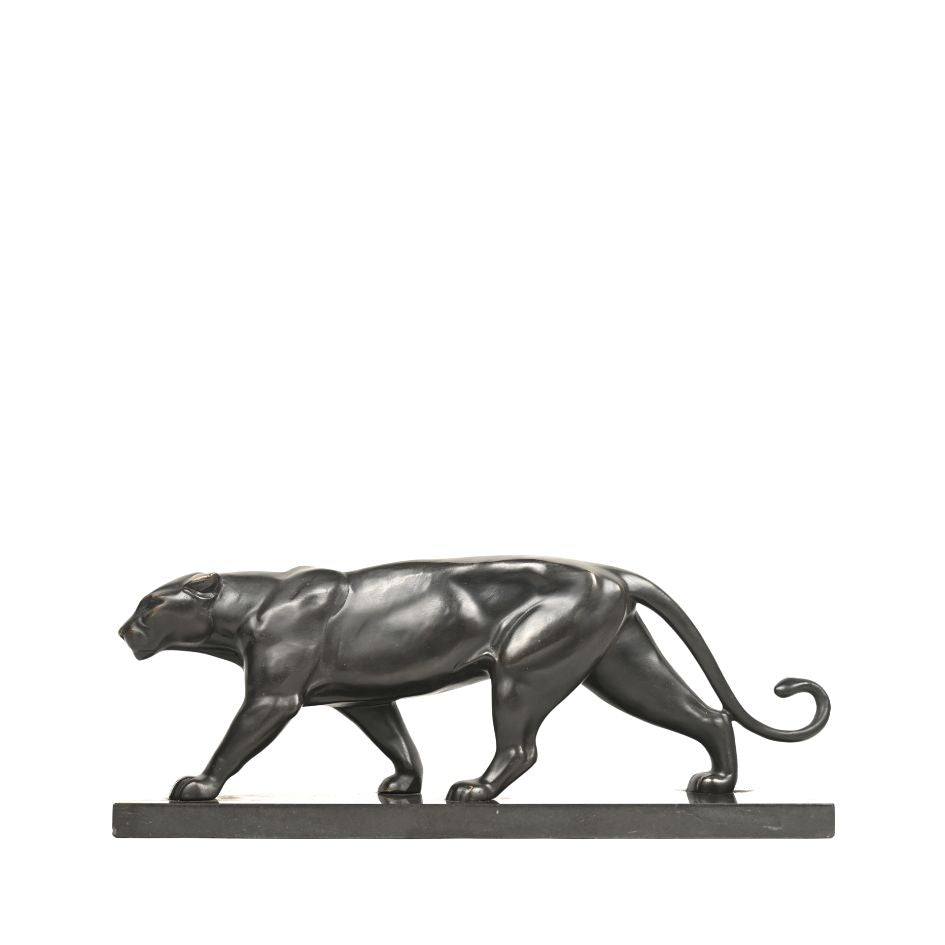
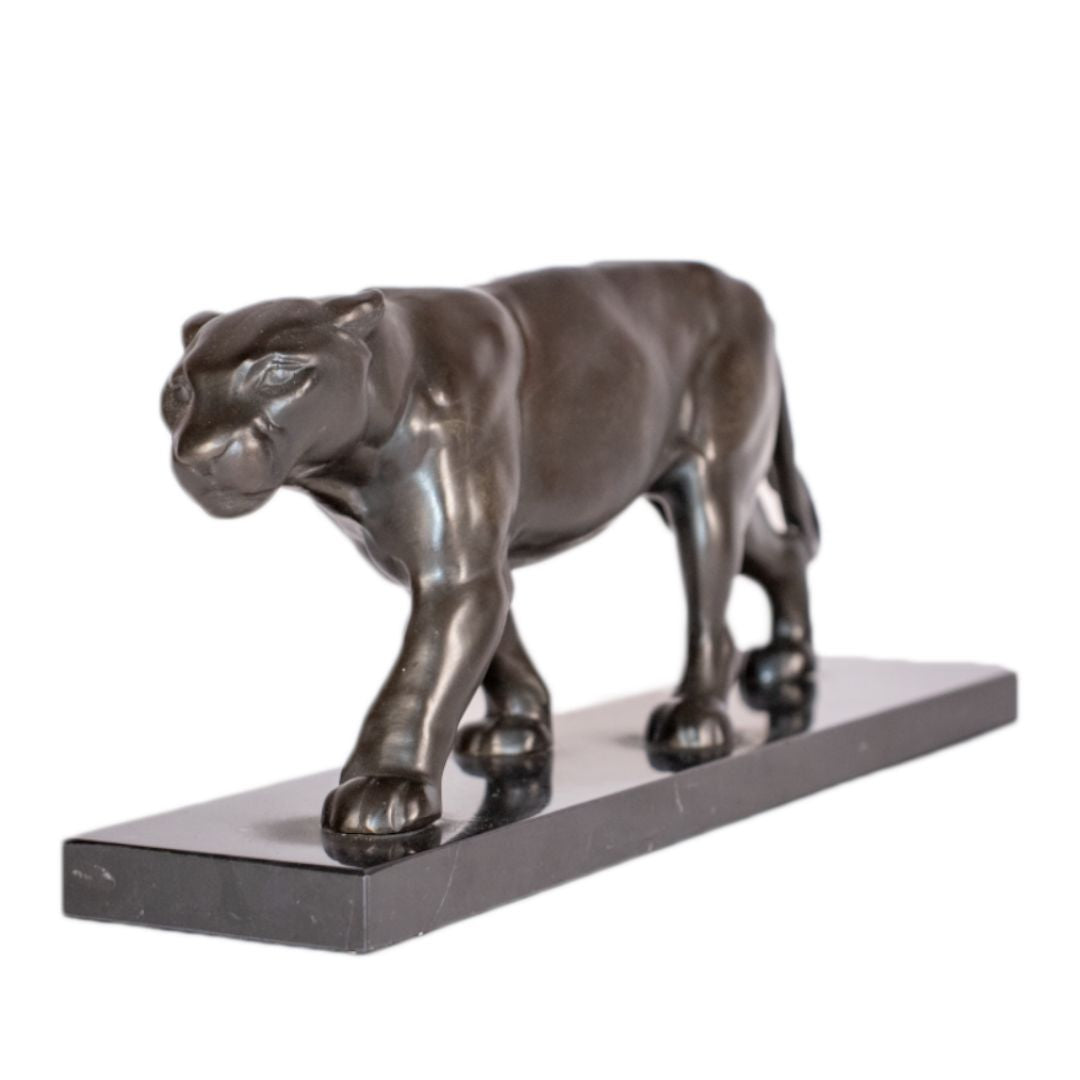
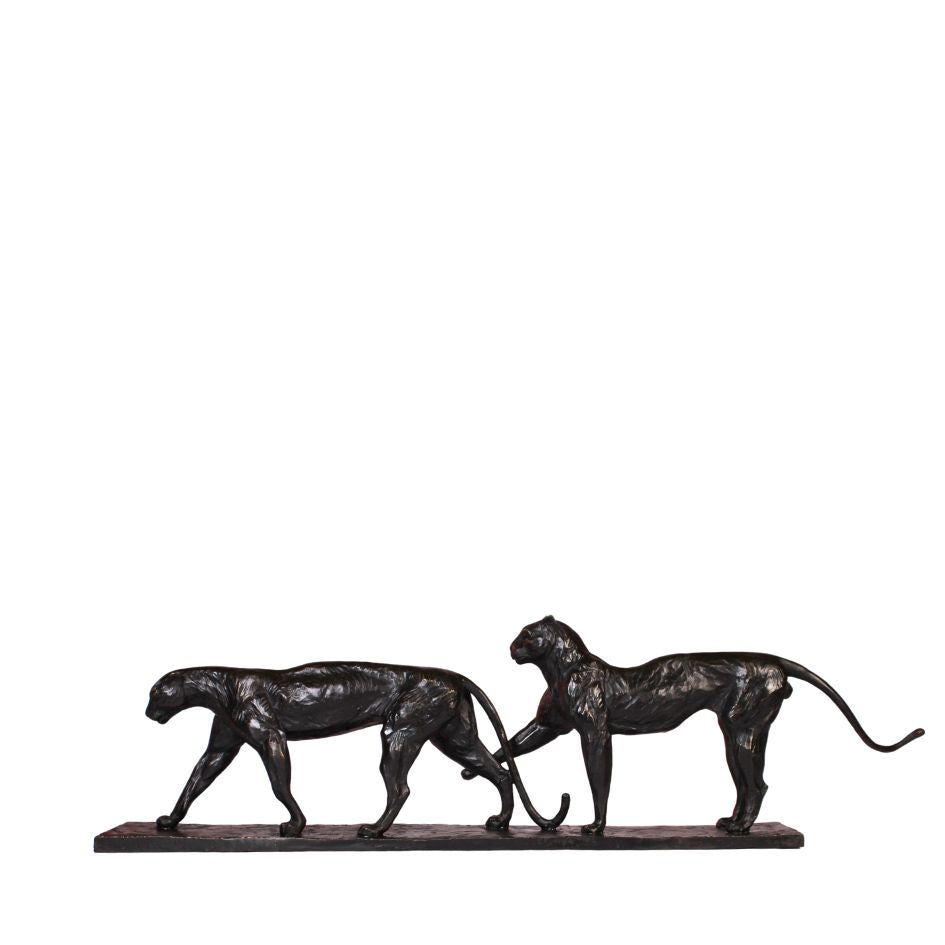
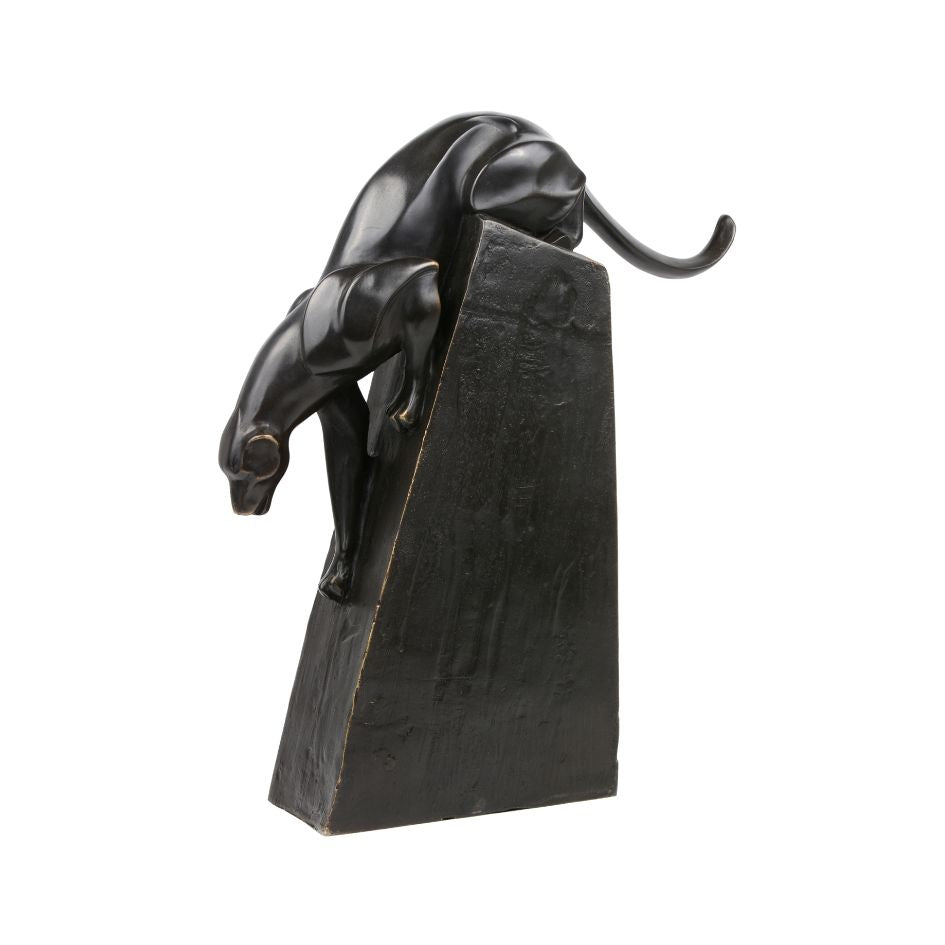
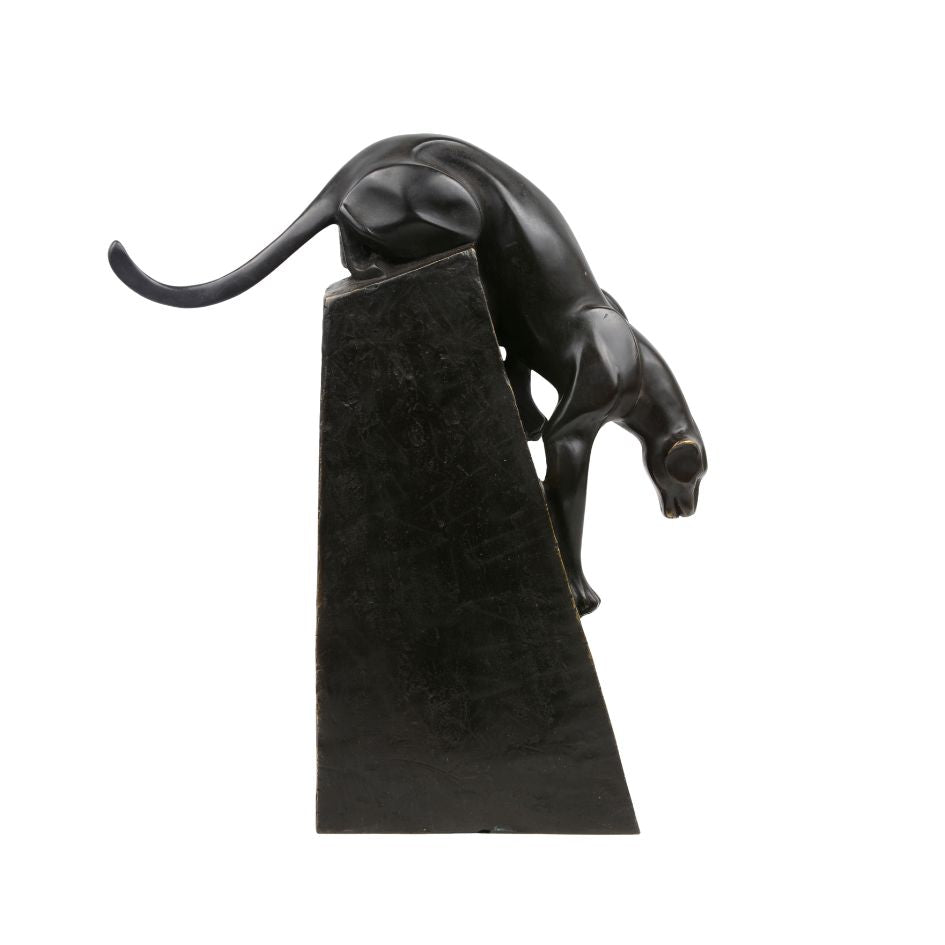
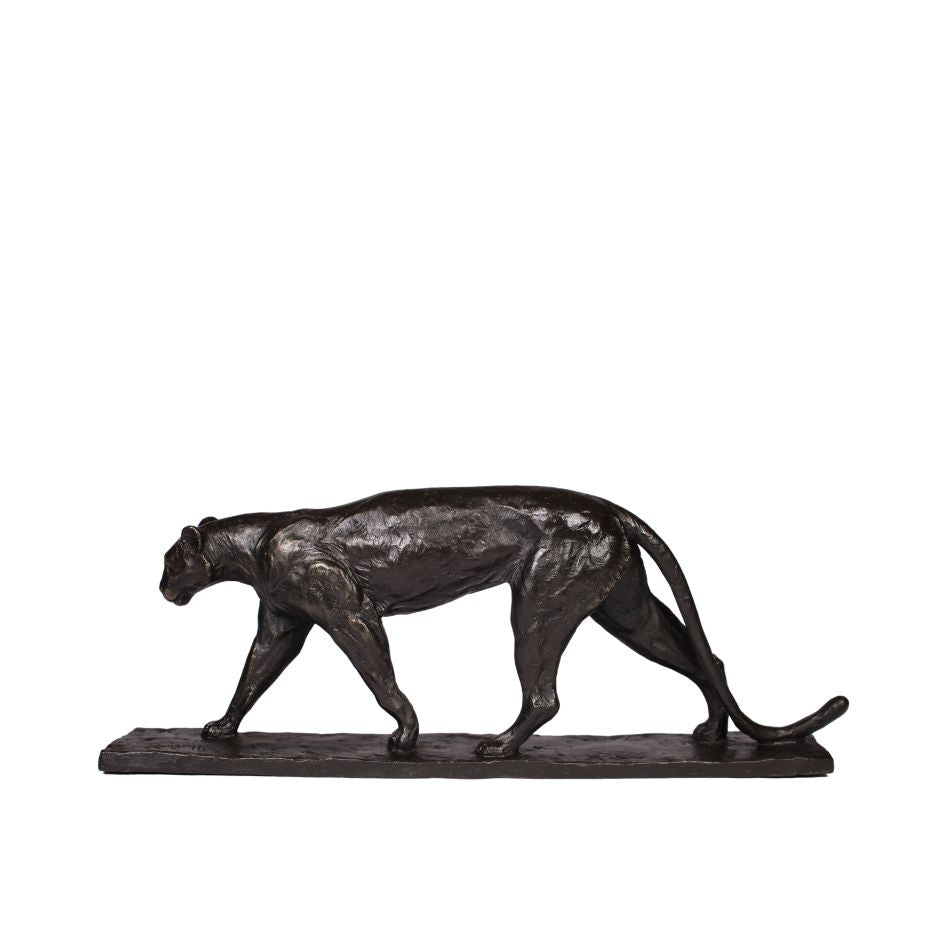
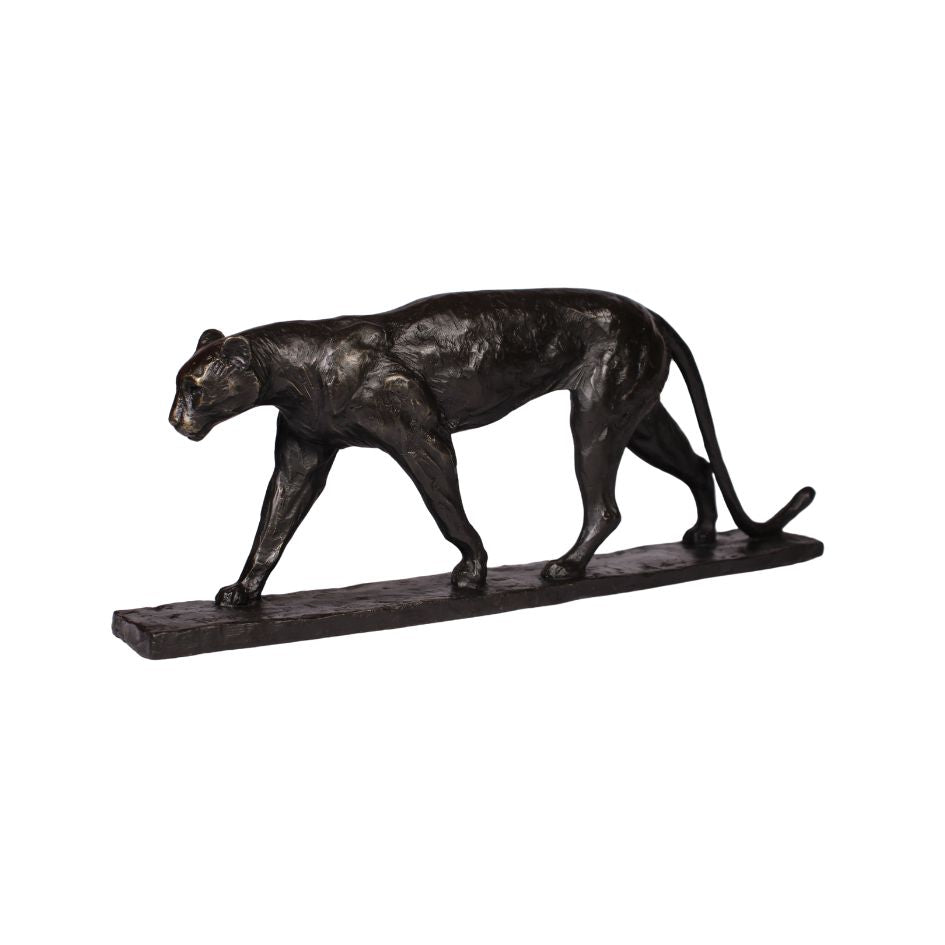
Art Deco sculptures in bronze with the animal in the leading role: walking and prowling panthers, cats, a cheetah, horses, bears and a baboon, reduced to a clean, stylised silhouette. All are lost-wax castings, finished with a patina applied by hand. They are newly made in the Art Deco idiom, not antiques; the product pages give dimensions, patina and price.


Buy Art Deco sculptures: hand-cast bronze animals
Kuzco Art Maison offers hand-made Art Deco sculptures in bronze: stylised animals with taut, clean lines. Each piece is cast by the lost-wax method and patinated by hand, inspired by art history and selected on the basis of art-historical research led by Lilly-Ann de Zeeuw, MA. They are new, hand-made works, not antiques. The collection runs from compact pieces to large-format sculptures and forms part of our wider collection of bronze sculptures. It is intended for private clients, interior designers and collectors.
What makes a sculpture 'Art Deco'?
An Art Deco sculpture turns a living animal into a taut, stylised silhouette: the tension of a prowling panther, the calm of a reclining cat, the strength of a horse, reduced to essentials. The style can be recognised by a few features:
- Stylised, smooth forms – the animal is simplified into a recognisable, elegant line.
- Movement and elegance at once – a gesture held still at its moment of greatest tension.
- Dark patina on a plinth – often black marble, which makes the bronze stand out.
- The animal in the leading role – the animalier tradition, in which the animal itself is the subject.
The panther: a recurring Art Deco motif
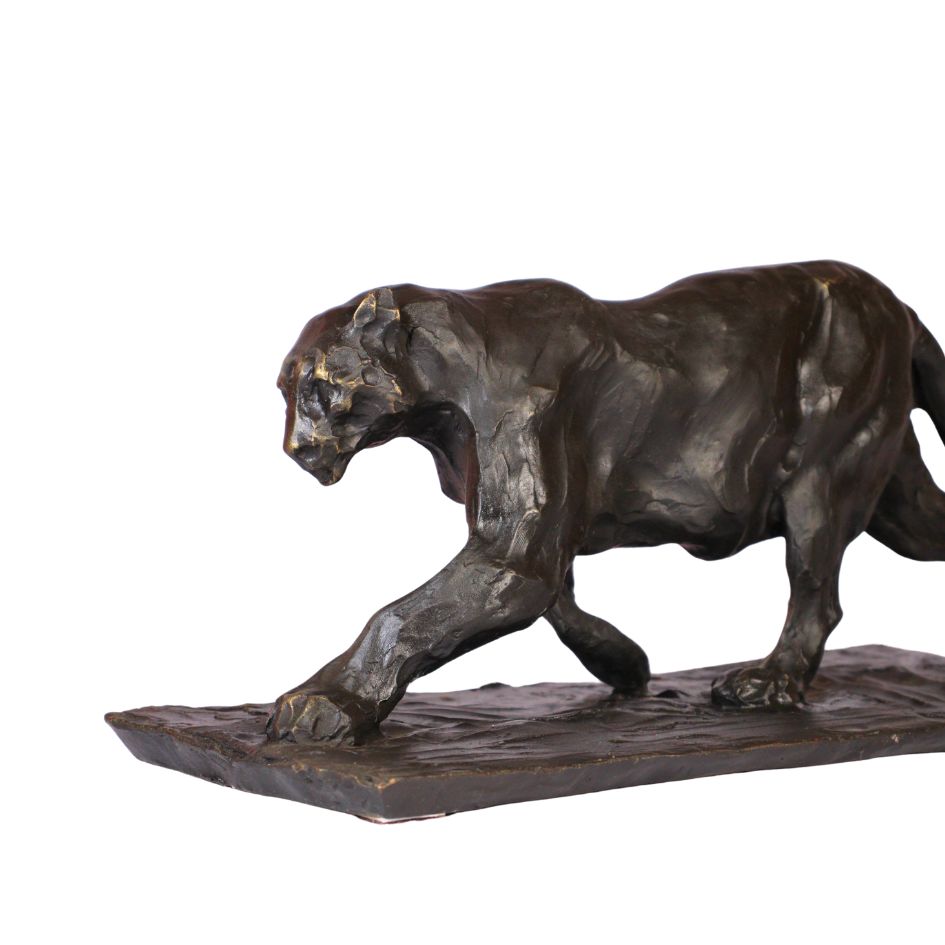
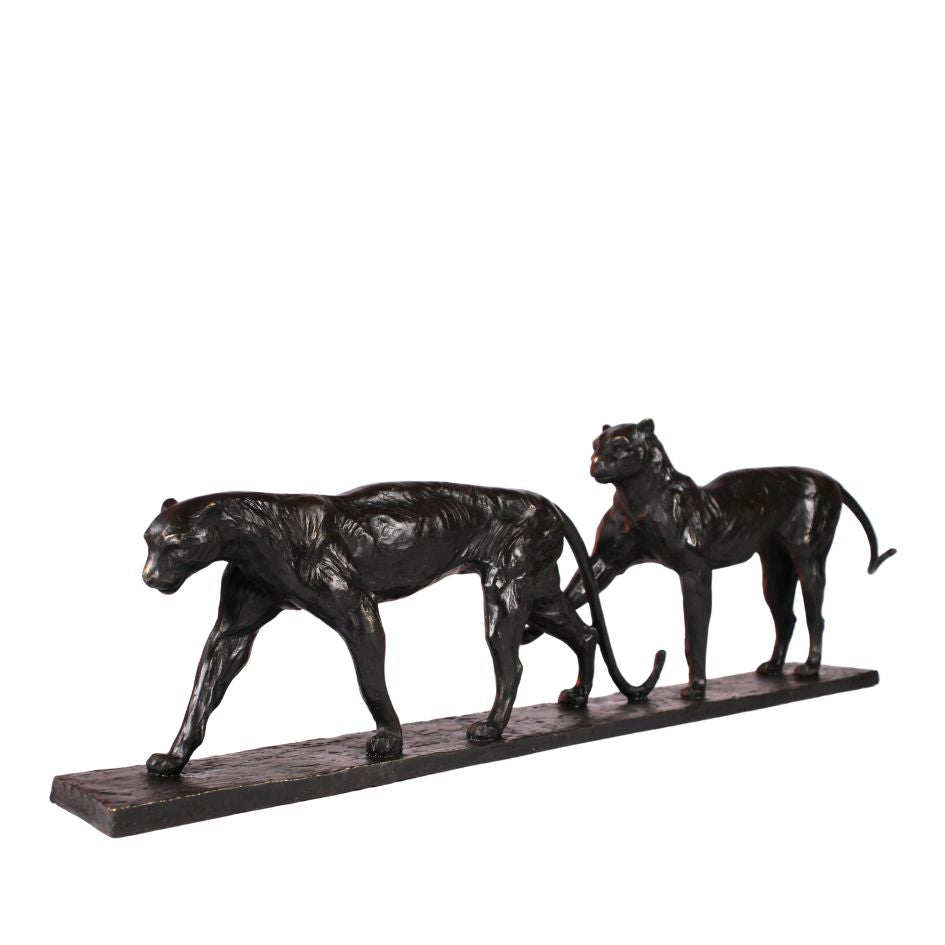
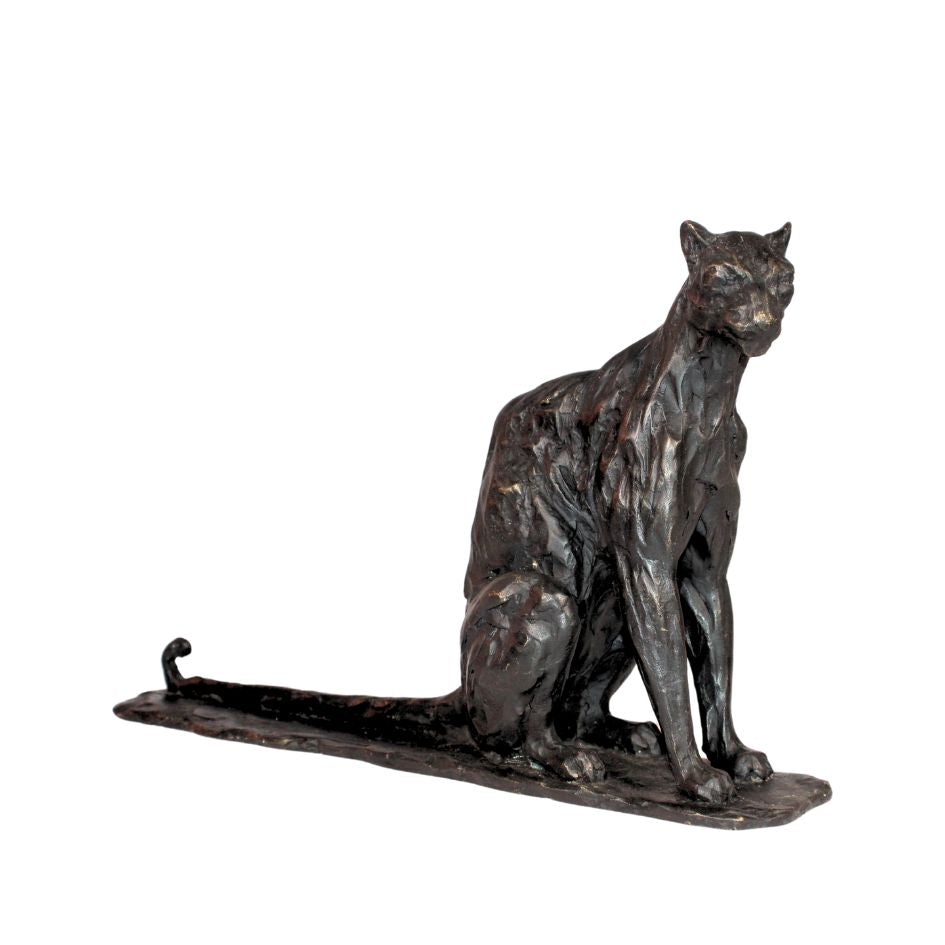
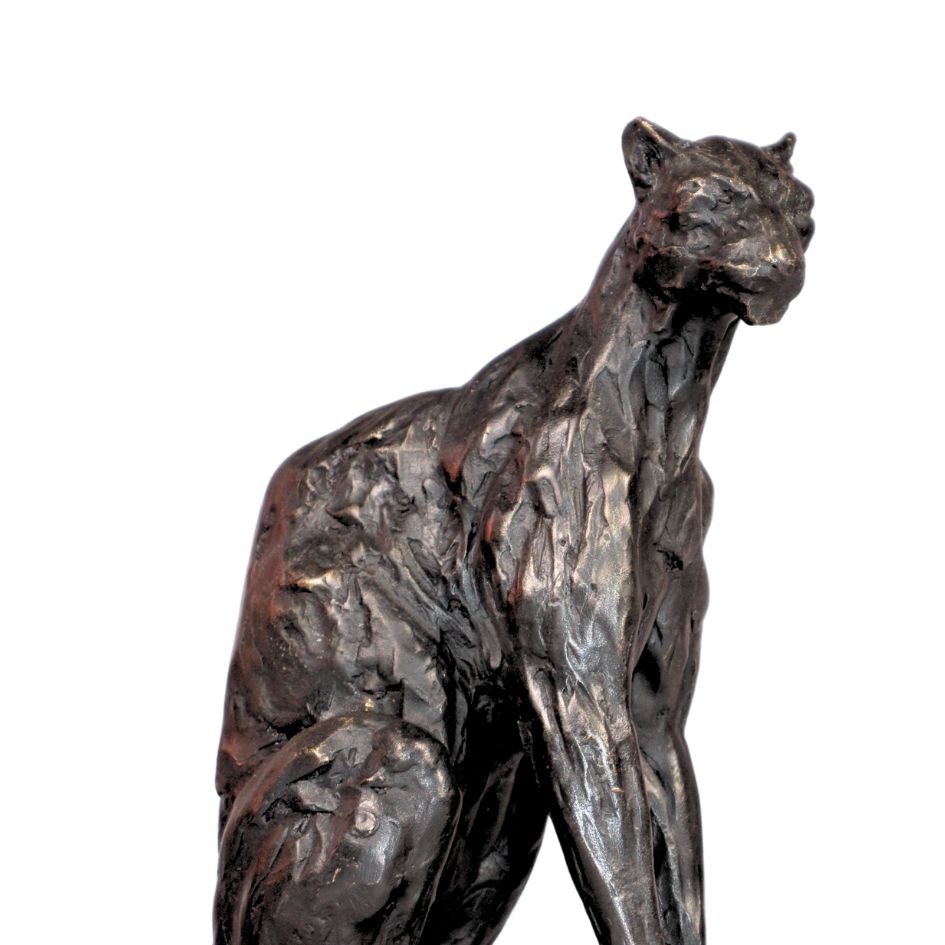
The panther is at the centre of our Art Deco collection: in it, the big cat combines strength and grace in a single controlled line. The collection shows the panther in several poses: the prowling panther, the walking black panther and the polished Art Deco panther. The full series can be found among our bronze panthers.
The animalier tradition: Rembrandt Bugatti and François Pompon
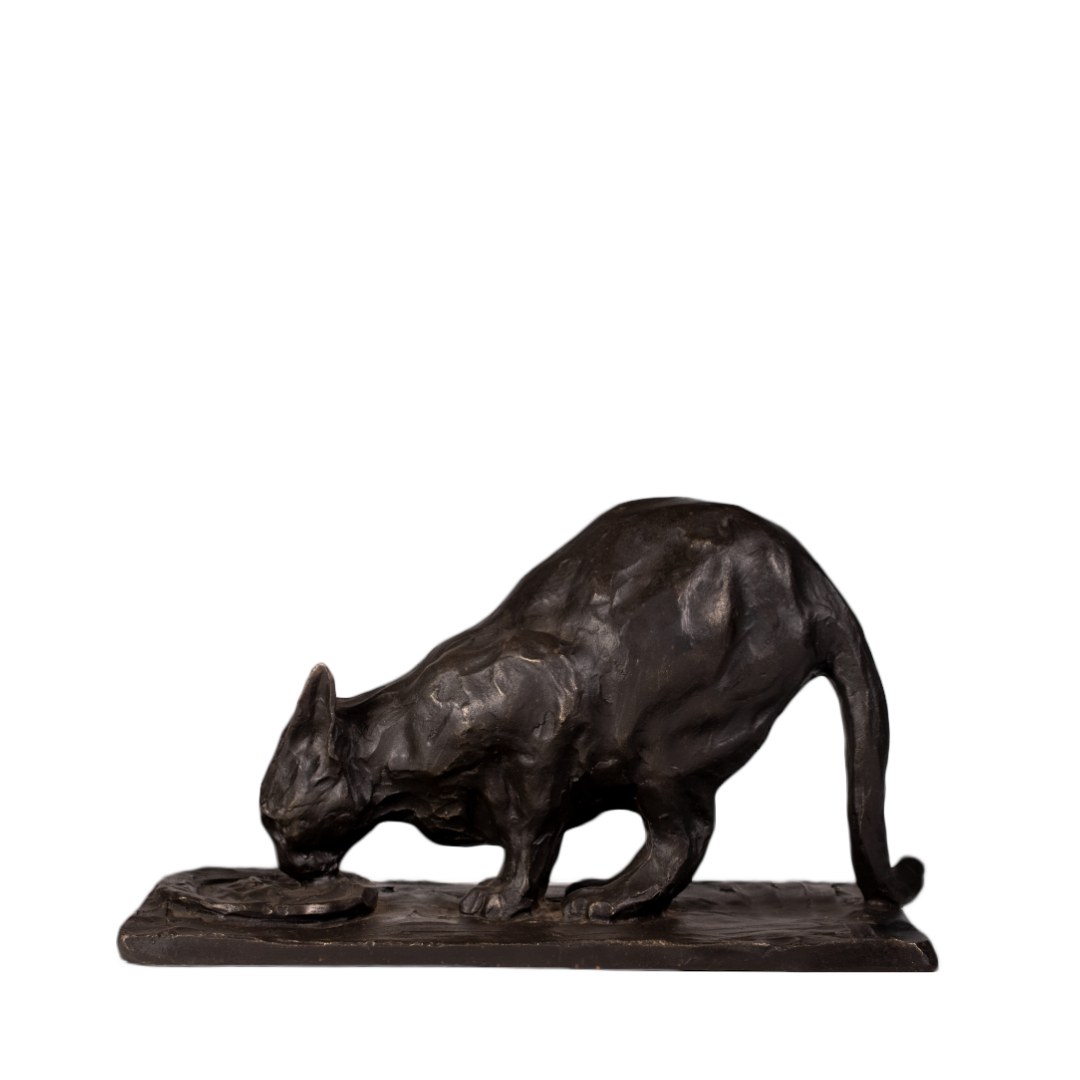
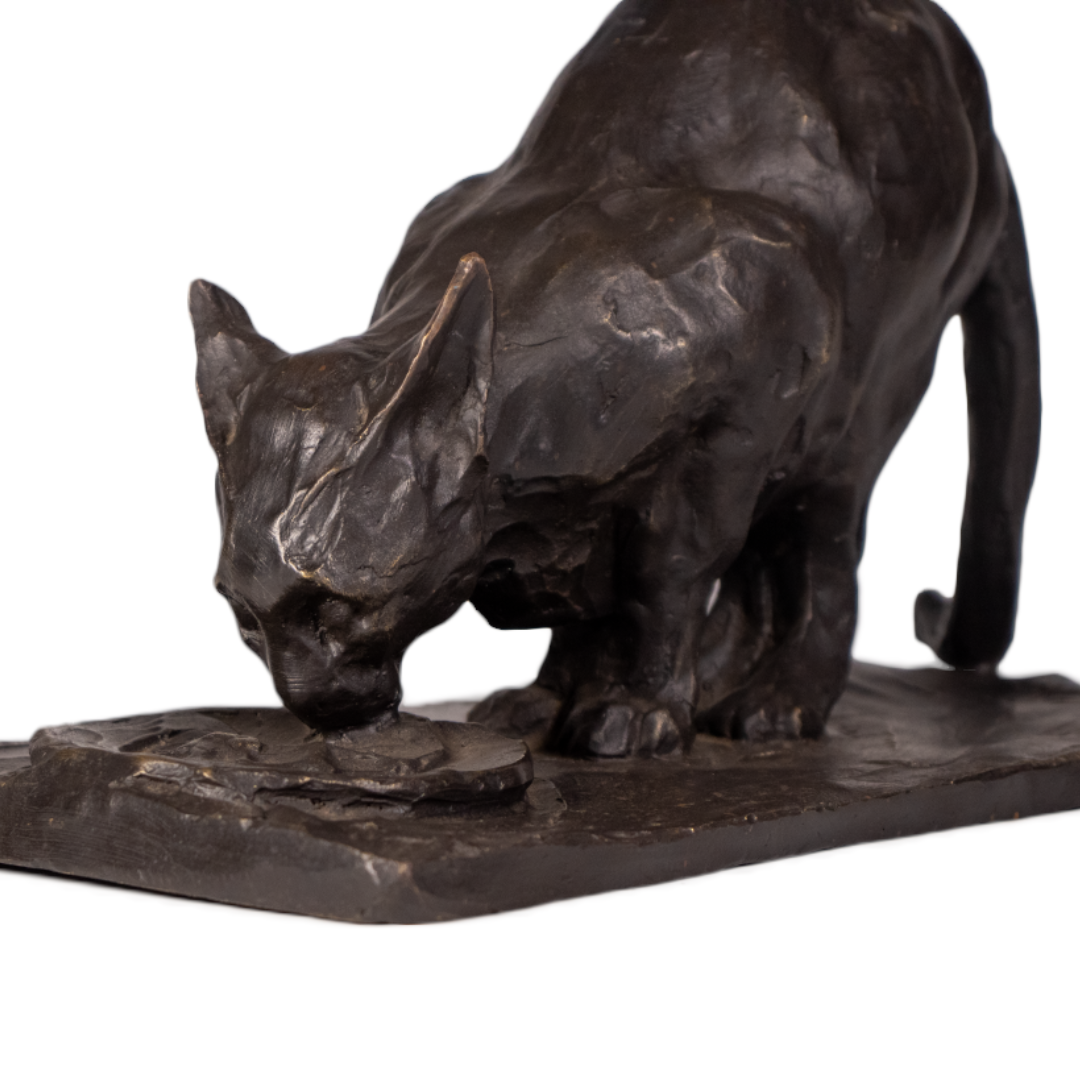
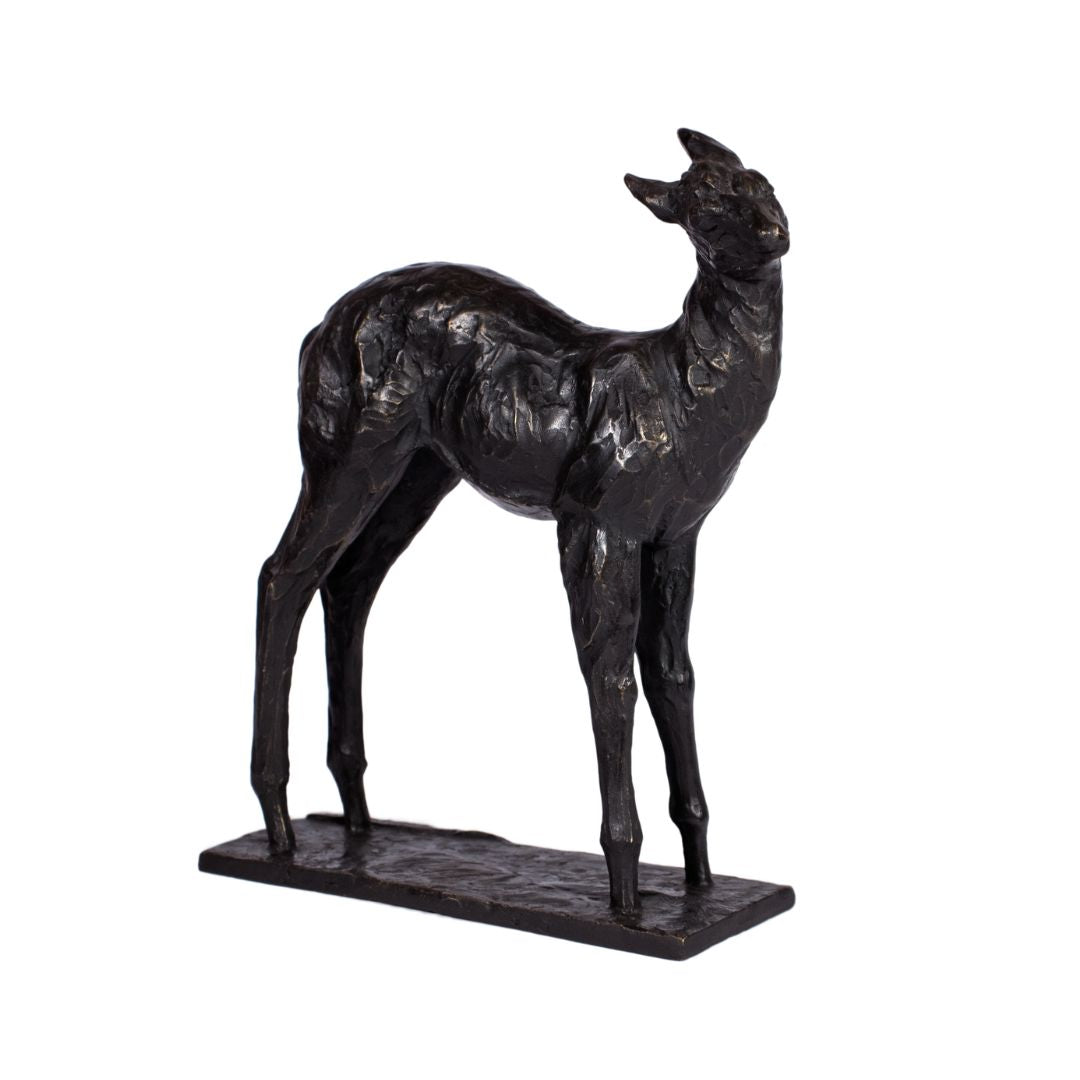
Several of our sculptures follow the great animaliers. Rembrandt Bugatti (1884–1916) worked from the living animal: in 1907 the Royal Zoological Society invited him to settle in Antwerp, where he drew the animals of the zoo, and the Musée d'Orsay describes his style as terse and lively. That direct observation, shared by the whole animalier tradition, can be seen in the drinking cat, the elephant – this one in the manner of Bugatti – and the young deer. François Pompon (1855–1933) took stylisation further still: according to the Musée d'Orsay, he gradually removed detail until only the essence of the animal remained, in smooth, rounded volumes. Our polar bear after Pompon shows this. More work in this line can be found among our Rembrandt Bugatti sculptures and our animal sculptures.
Our Art Deco sculptures at a glance
The collection centres on animals, each with a character of its own:
- Panthers and other big cats – from prowling to hunting, plus Panthera and a hunting cheetah.
- Horse and rider – the Art Deco horse and the jockey on horseback.
- Monkeys – the expressive baboon and a baboon with its young.
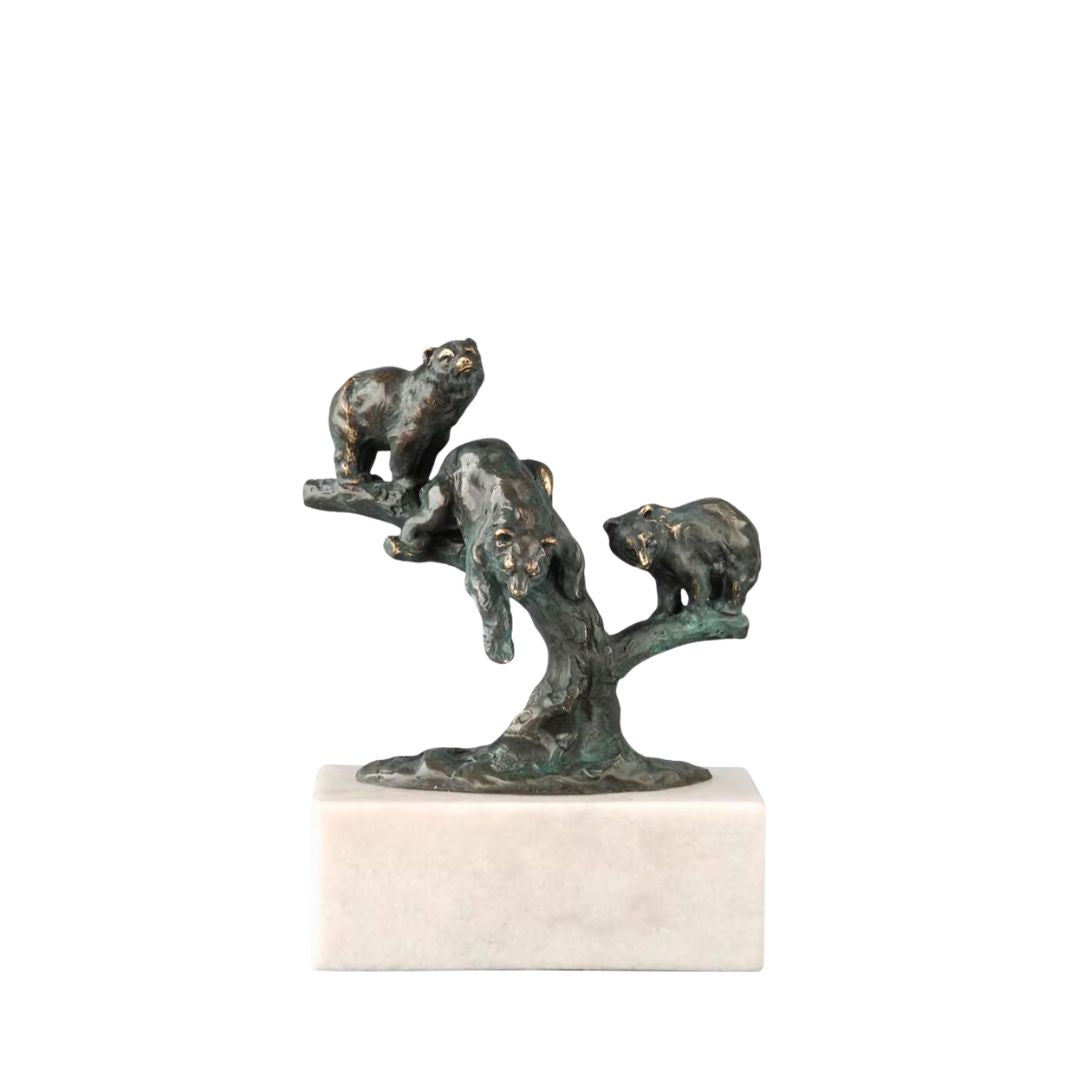
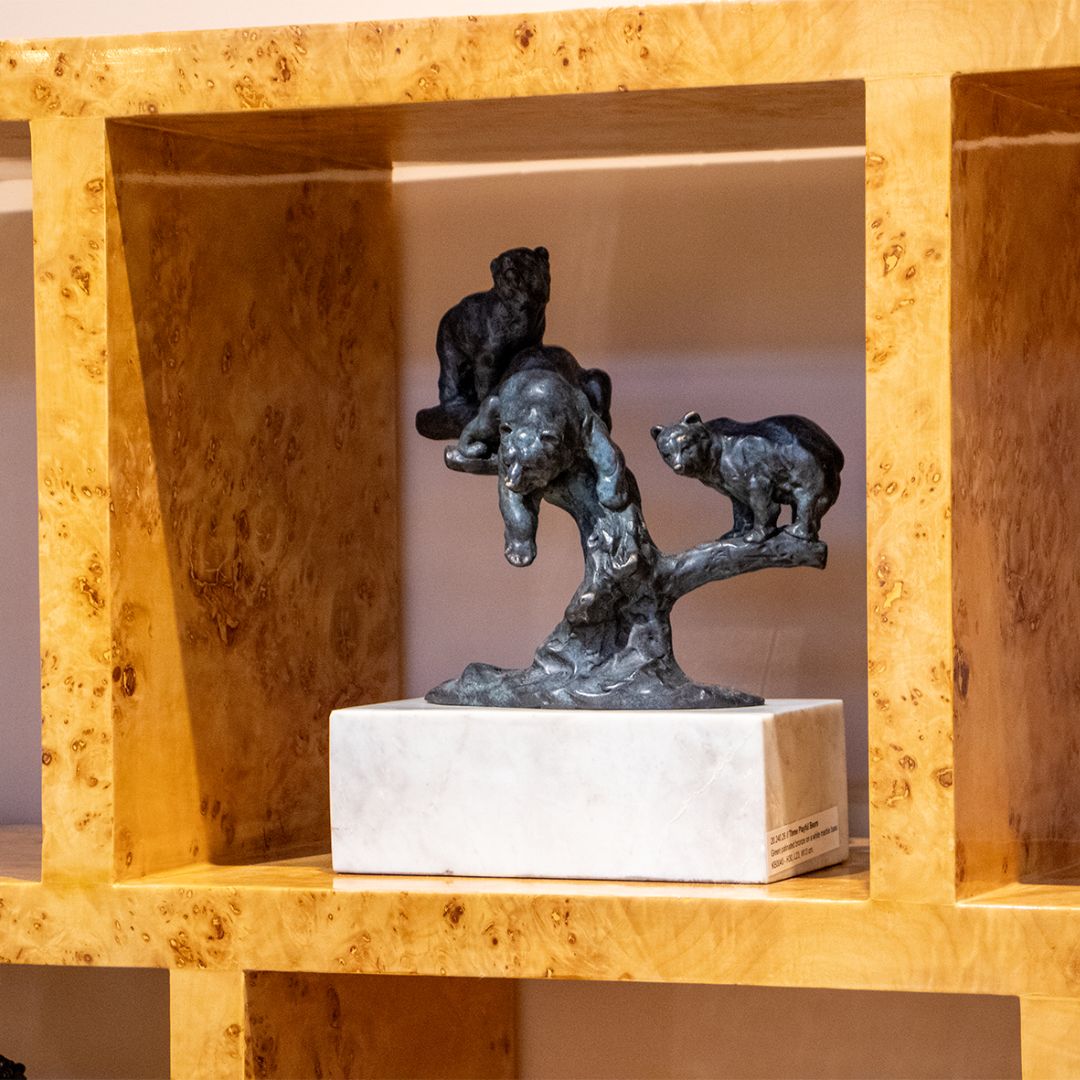
- Bears and deer – the lively three playing bears and the slender young deer.
What does an Art Deco sculpture cost?
Three factors set the price: size, the complexity of the model and the plinth. The price of each piece is shown on its product page. Cheaper versions are on offer elsewhere, but the difference almost always lies in compromises: thin casting, superficial finishing or resin imitations. A real bronze sculpture is not bought for a season; it lasts for generations.
The most common mistake when buying Art Deco sculptures
The most common mistake is to take an imitation for real bronze. Many 'Art Deco sculptures' on the market are made of polyresin or synthetic resin with a bronze-coloured coating: light, smooth and uniform, attractively priced, but without weight or depth. Watch for words such as 'polyresin', 'poly-…' or 'bronze look': that is plastic. Real bronze can be recognised by its weight, by the nuance of its surface and by a patina chemically bonded to the metal. Our sculptures are cast by the lost-wax method and finished by hand, so what is bought here does not age through wear but gains character with time.
Not sure which sculpture suits your interior? Make an appointment and visit our office in Amsterdam or our atelier in Bleiswijk; we are glad to help.
Why interior designers choose Kuzco Art Maison
We approach bronze from a curatorial point of view: each sculpture relates to an art-historical example and is selected to last for generations.
- Made by hand – cast by the traditional lost-wax method, finished by hand, with a patina that has depth.
- Trusted in more than ten countries by interior designers, decorators and art dealers.
- At Maison & Objet (Paris) since 2024, and earlier at La Maison Creative Salon (Amsterdam).
- Insured transport across Europe – carefully packed and shipped; heavy pieces travel on a pallet.
- Led by Lilly-Ann de Zeeuw, MA – artist, art historian and curator; every work starts with art-historical research.
Since 2026 we also sell directly to private clients, with a fourteen-day right of withdrawal; trade clients order through their own account.
Where to place an Art Deco sculpture
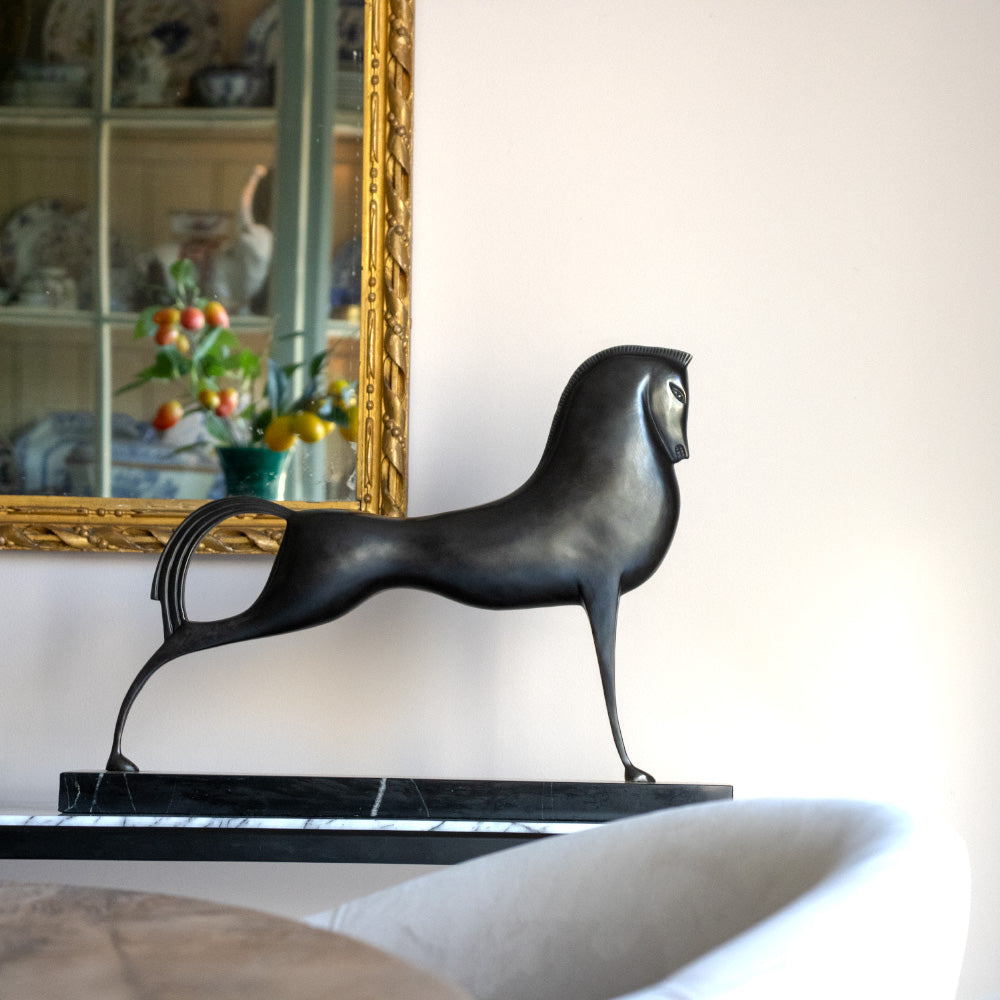
A stylised bronze animal draws the eye when it has room around it. A prowling panther suits a sideboard or a large table, where it can be seen from several angles. A cat or monkey sits well on a console or open shelving; a horse or larger big cat asks for a place of its own in the entrance hall or living room. The dark patina shows best against a pale wall or in raking light, which brings out the lines of the muscles.
Frequently asked questions about Art Deco sculptures
What are Art Deco sculptures?
Art Deco sculptures are works in the style that emerged in the 1920s and 1930s: stylised, elegant forms, often of animals, executed in bronze on a plinth. For the Musée des Arts Décoratifs, the style reached its peak with the decorative arts exhibition staged in Paris in 1925. Ours are new, made by hand in that style, not antiques.
Why is the panther associated with Art Deco?
Because it unites strength and grace in a single taut line, close to the synthesis Art Deco was after. The walking panther in particular recurs in more than one animalier bronze of the 1920s.
Are your Art Deco sculptures antique or new?
They are new and made by hand, in the style of historical examples such as the work of Rembrandt Bugatti and François Pompon. They are not antique originals or official casts, but new creations in the animalier tradition.
What are they made of?
Bronze, cast by the lost-wax method and patinated by hand; several pieces stand on a marble plinth, usually black. Bronze is heavy and durable.
How does it differ from a polyresin sculpture?
Polyresin (synthetic resin) is plastic with a bronze-coloured coating: light and smooth. Real bronze is heavy, shows nuance in its surface and lasts for generations. Buyers who look only at price sometimes choose an imitation without realising it, so look at material and weight, not only at the photograph.
Can an Art Deco sculpture stand outdoors?
A patinated bronze sculpture withstands rain and frost. Sculptures on a marble plinth are best kept indoors, as marble is more sensitive to the weather.
What does an Art Deco sculpture from Kuzco Art Maison cost?
The price depends on size and model. The current price of each piece is shown on its product page.
Can I order as a private client, and how is delivery arranged?
Yes. Since 2026 private clients can order directly through the online shop, with a fourteen-day right of withdrawal. Each sculpture is carefully packed and shipped insured throughout Europe; heavy pieces travel on a pallet.
Where can I see the sculptures in person?
By appointment at our office and gallery at Hekelveld 1-1 in Amsterdam, or at our atelier in Bleiswijk. The full collection can always be viewed online.