

Torsos & Busts
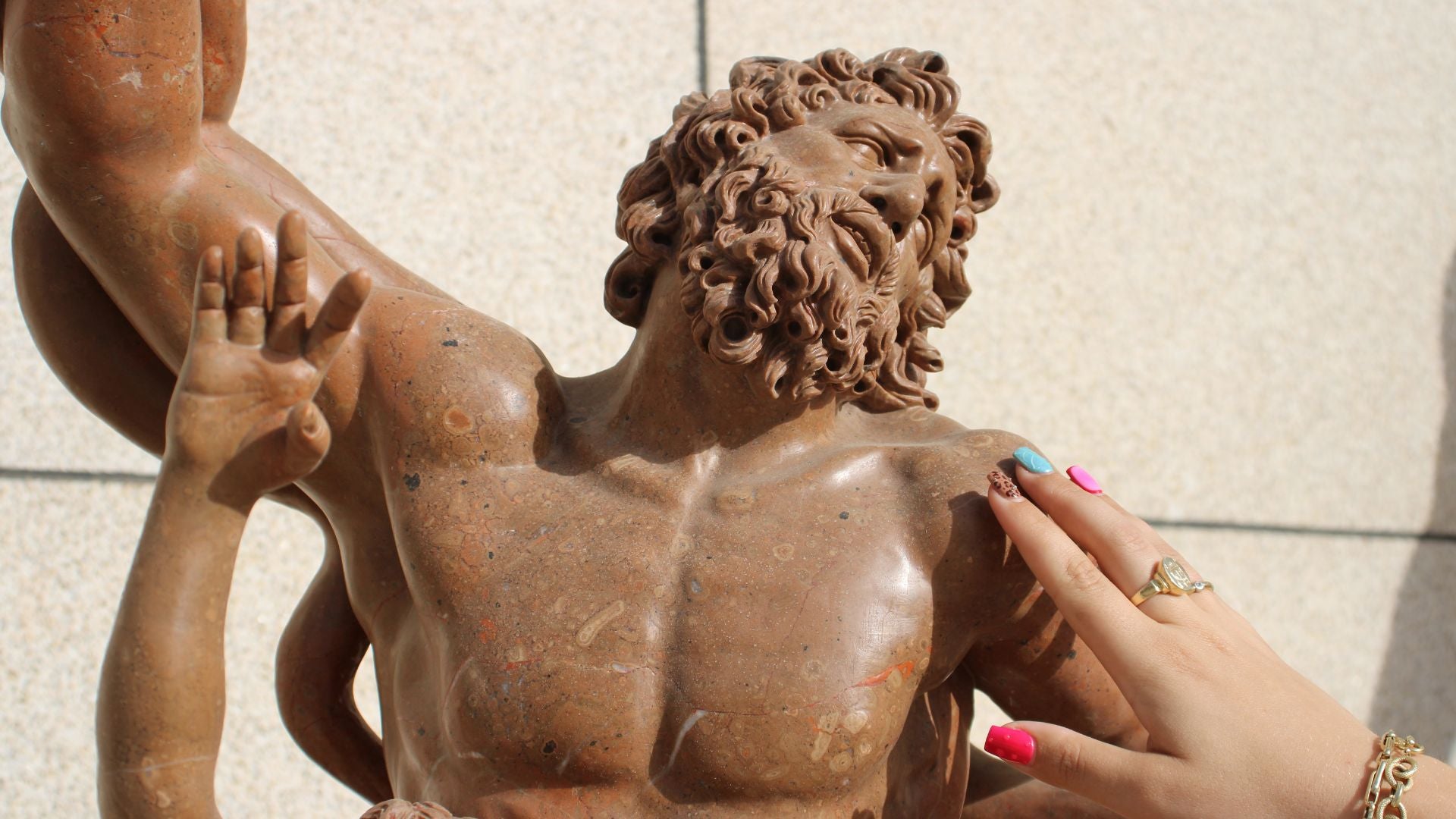
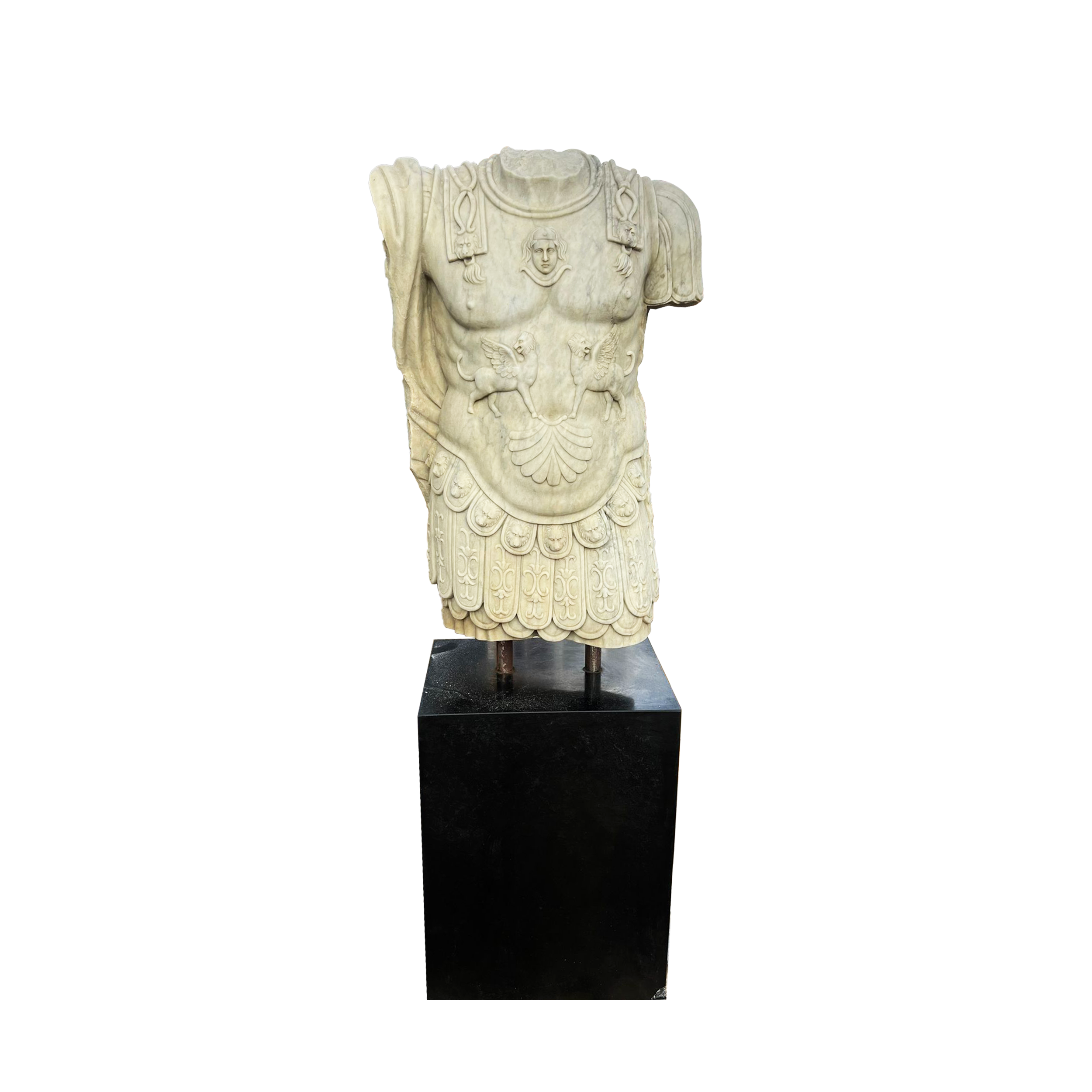
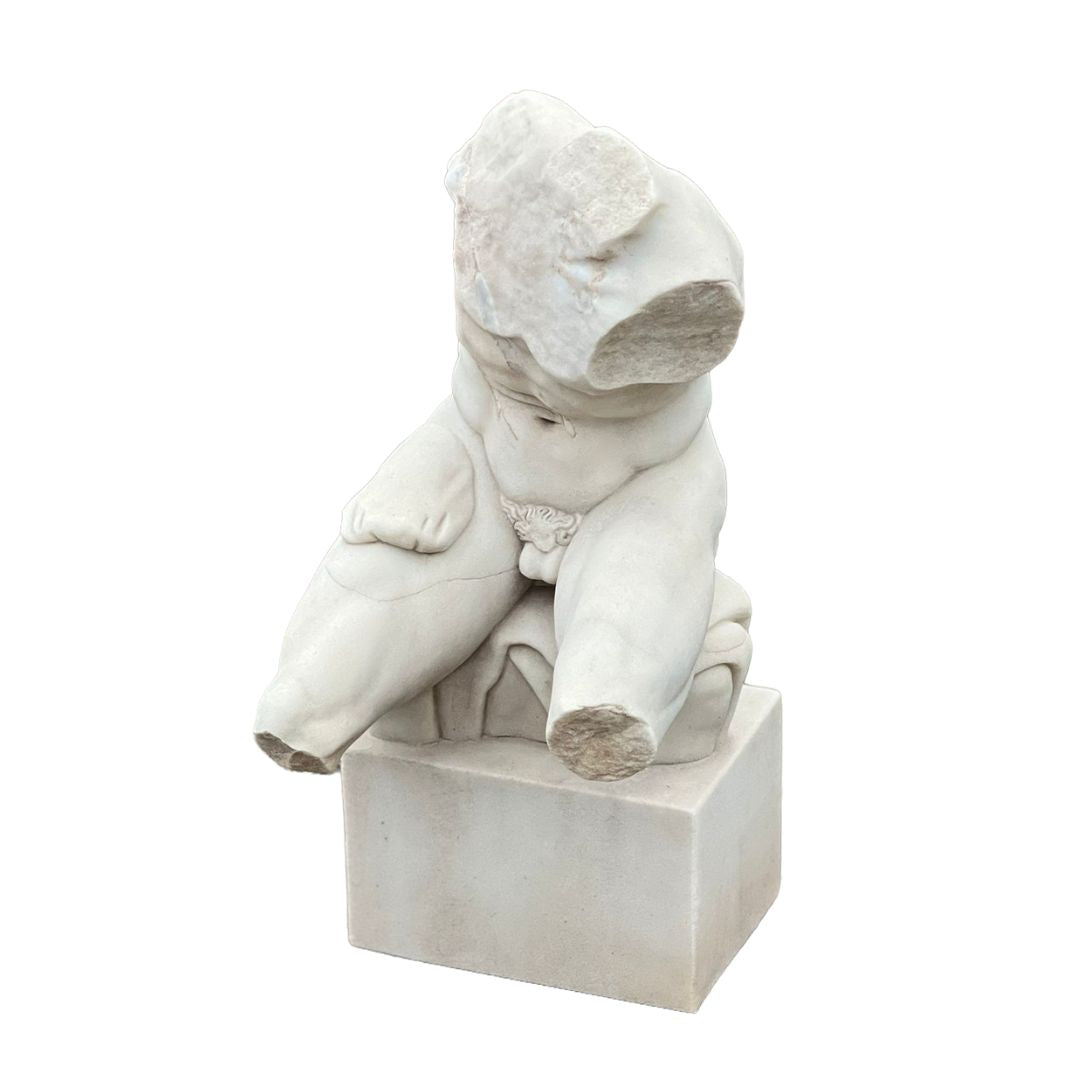
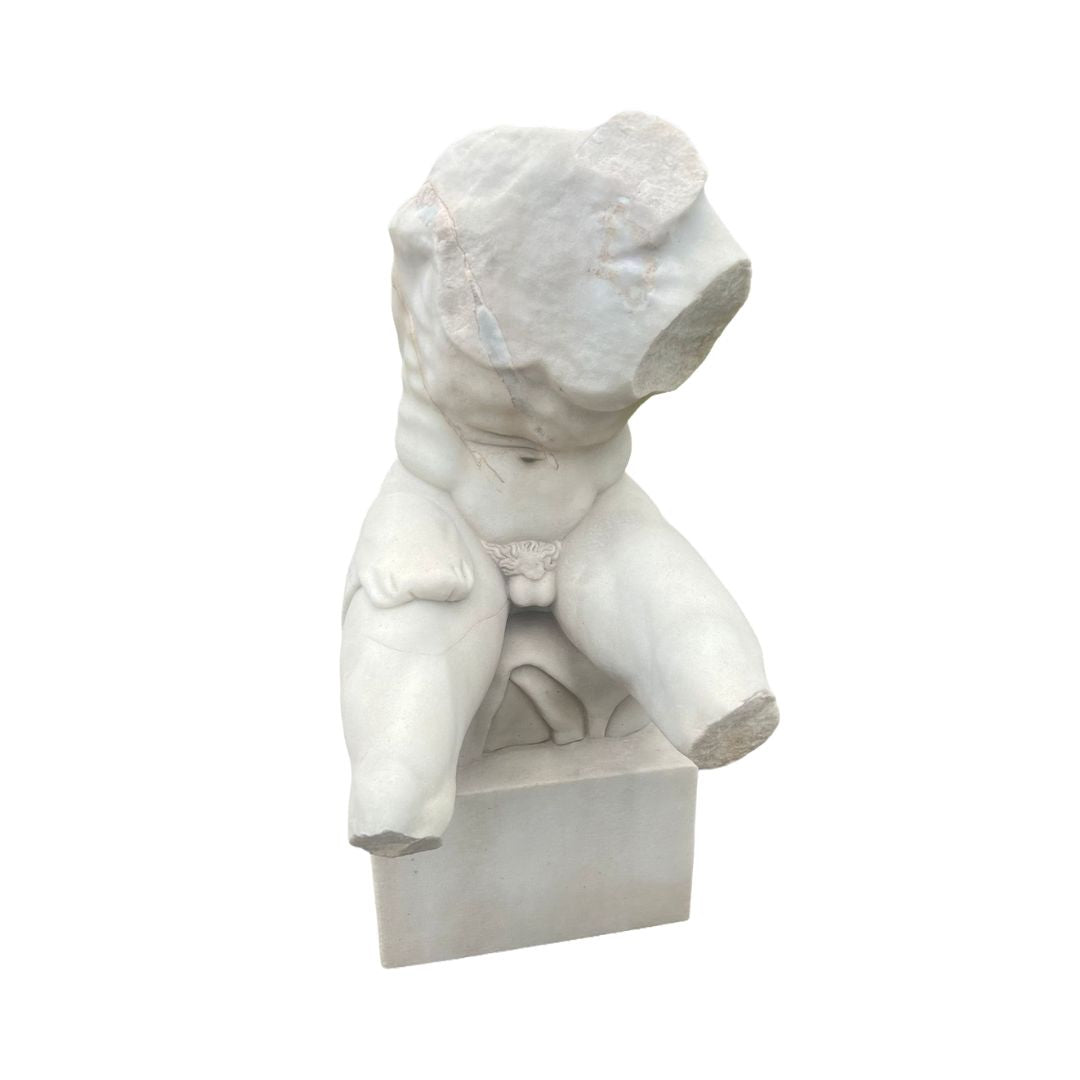
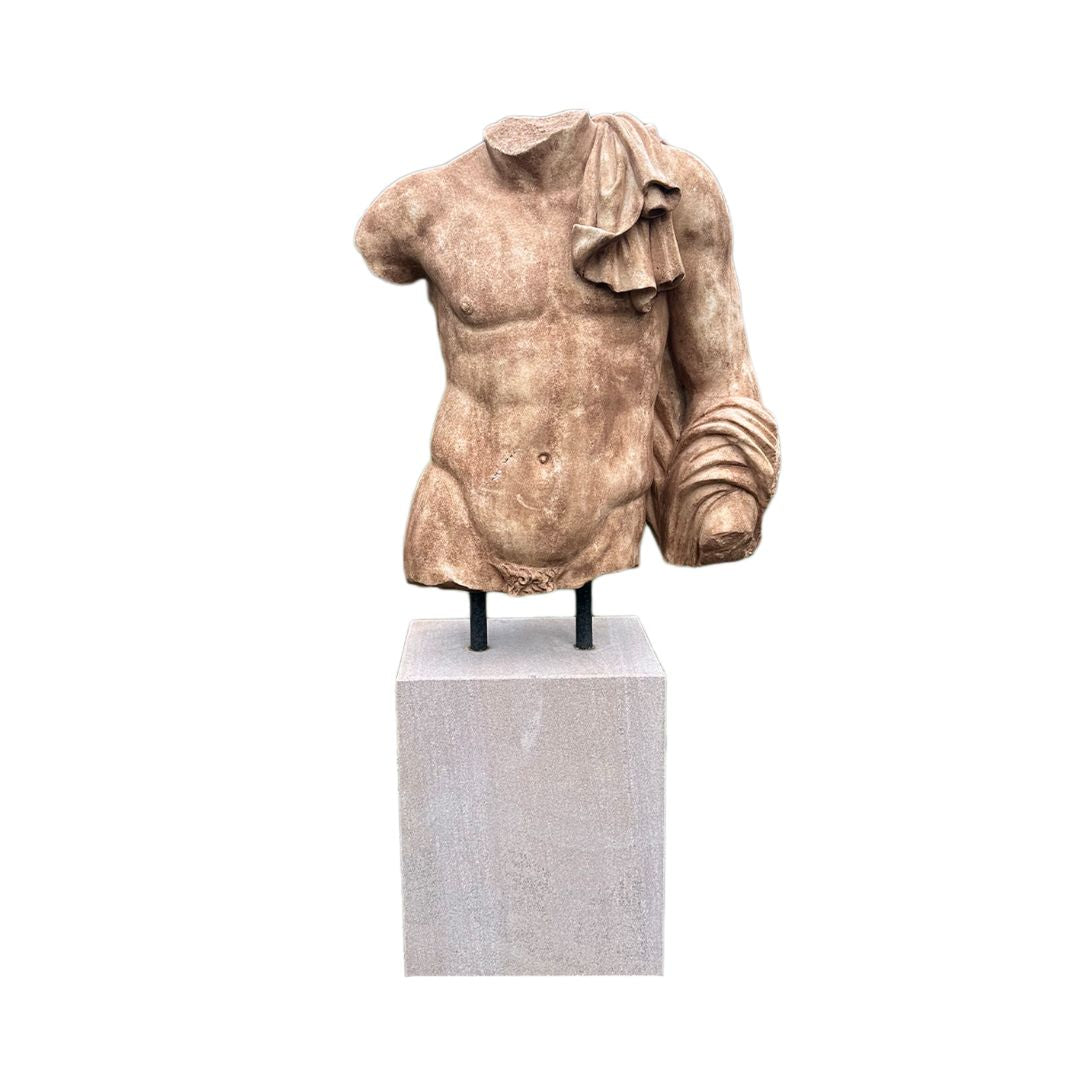
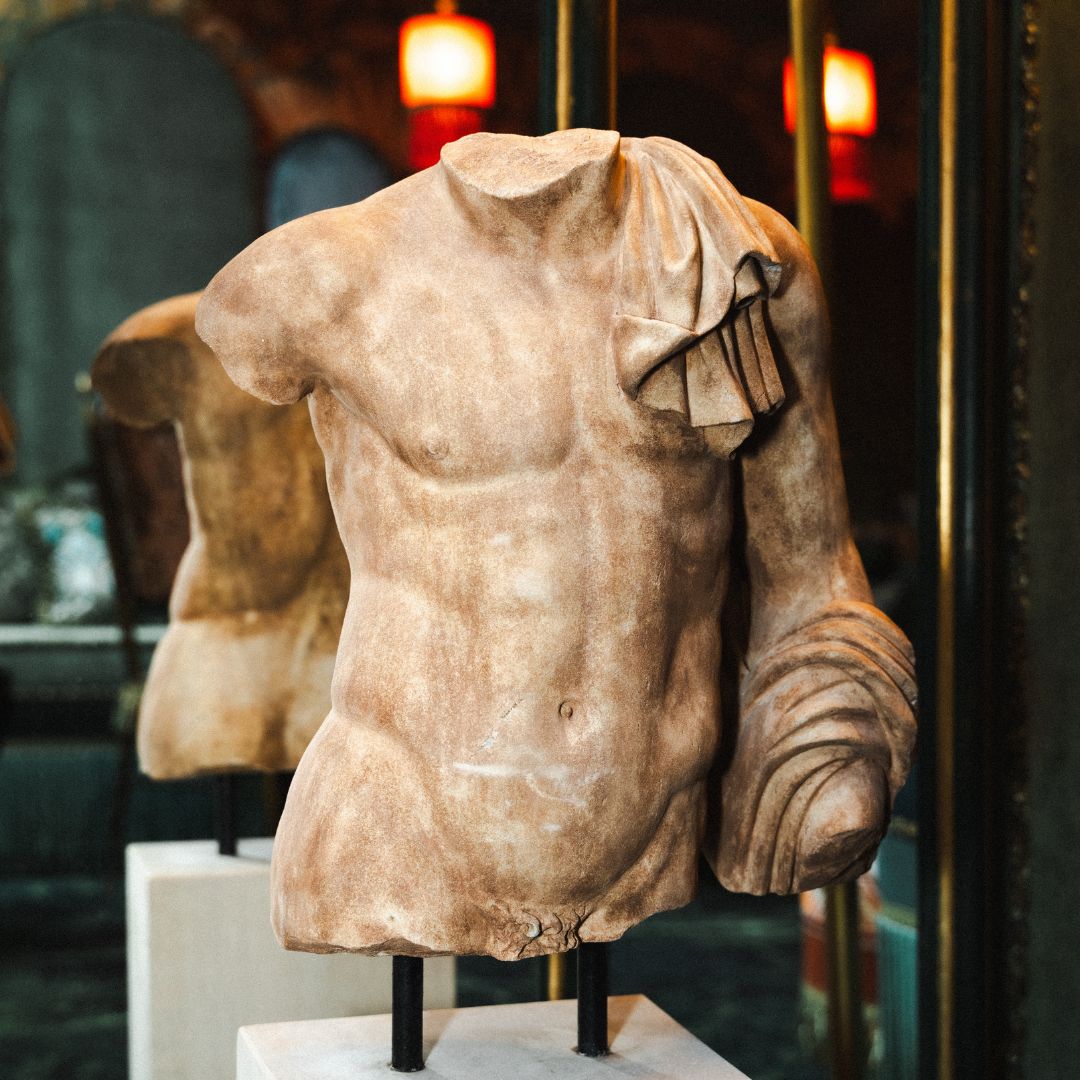
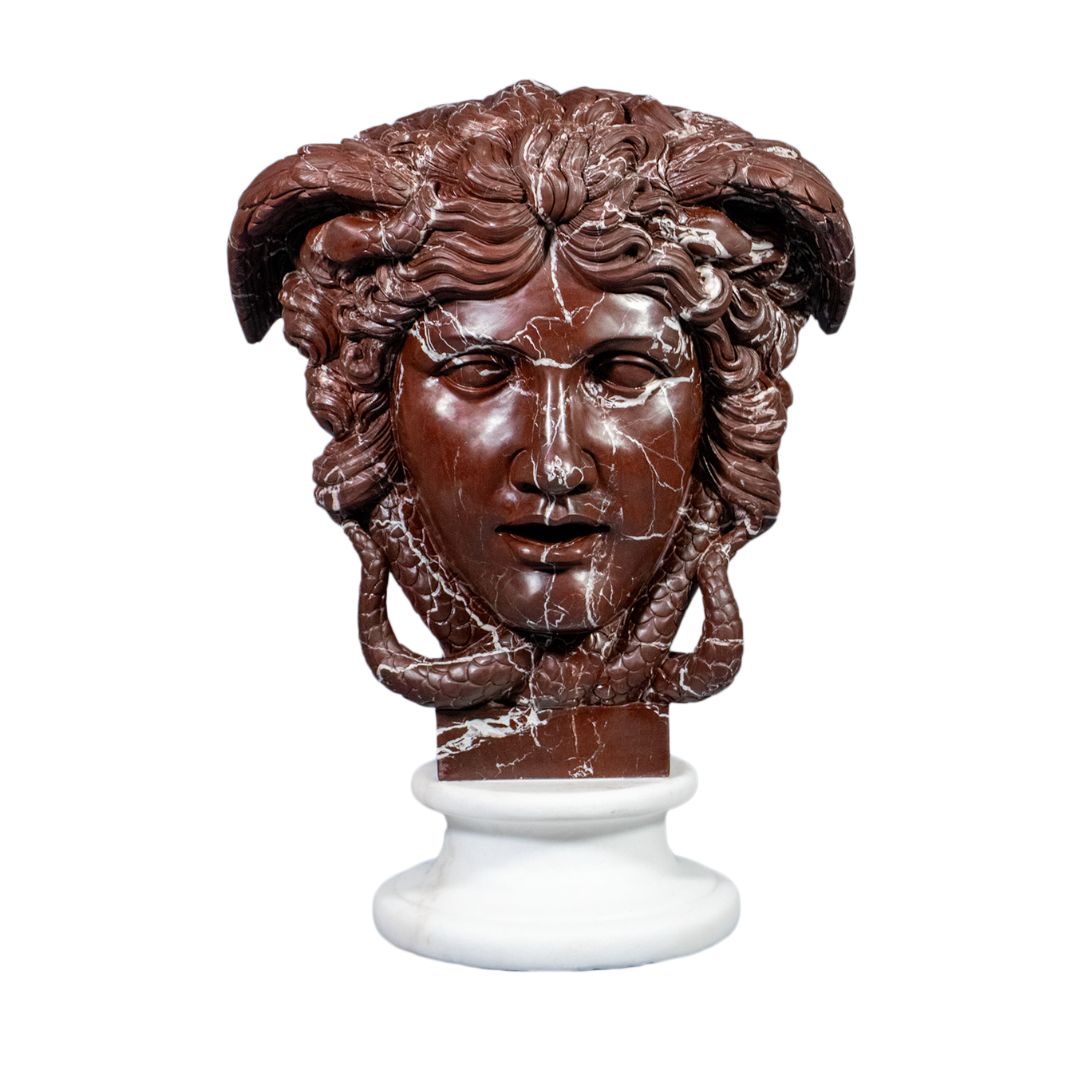
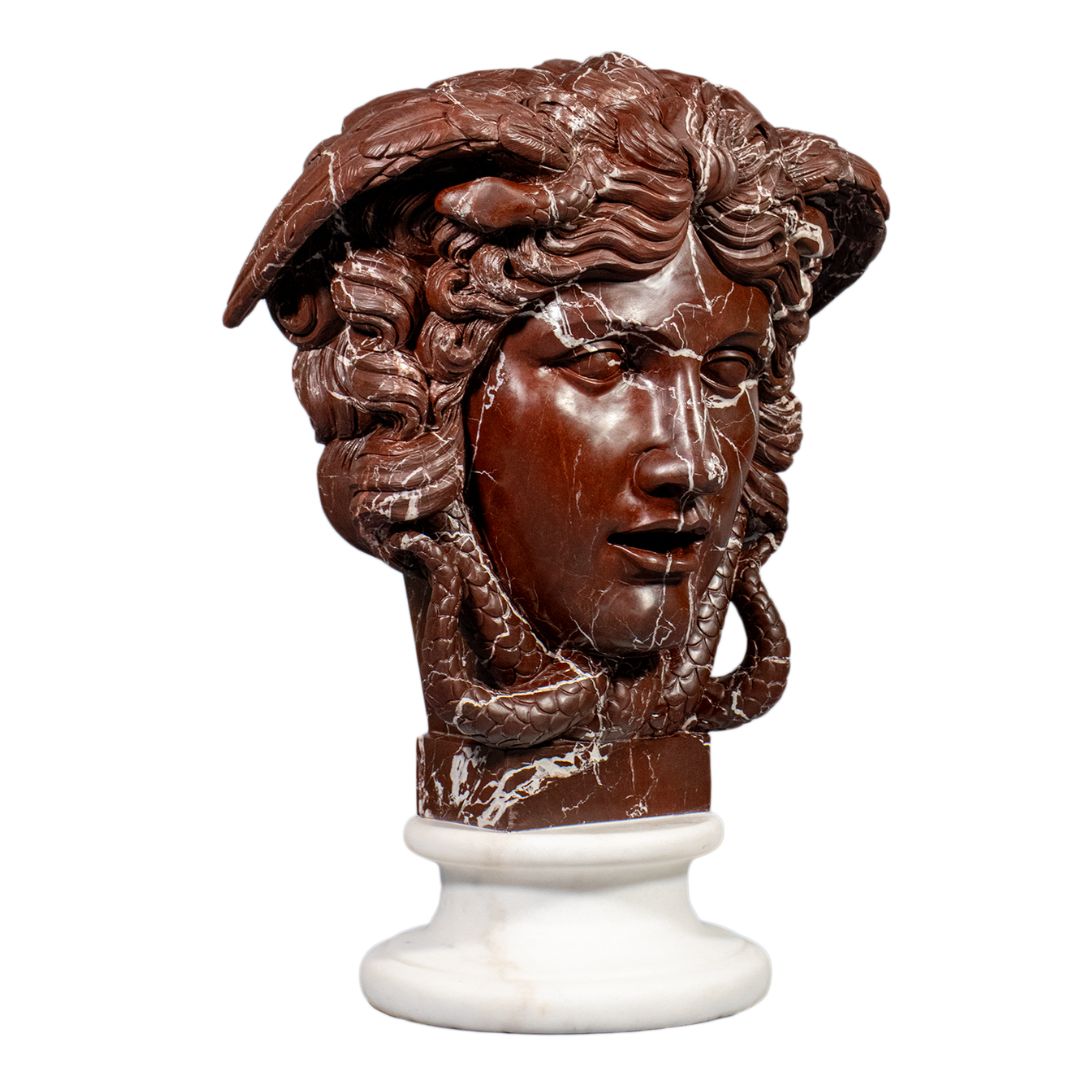
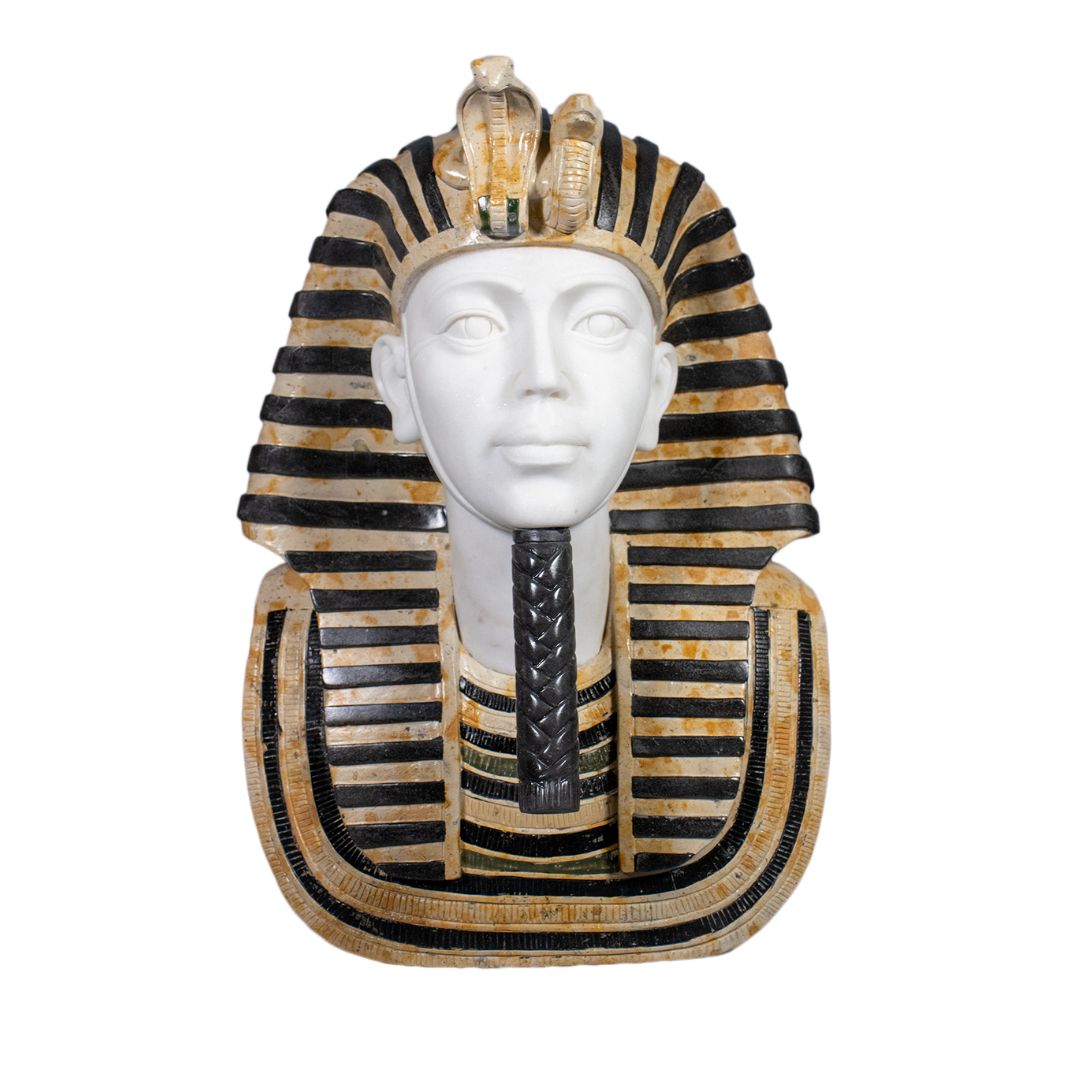
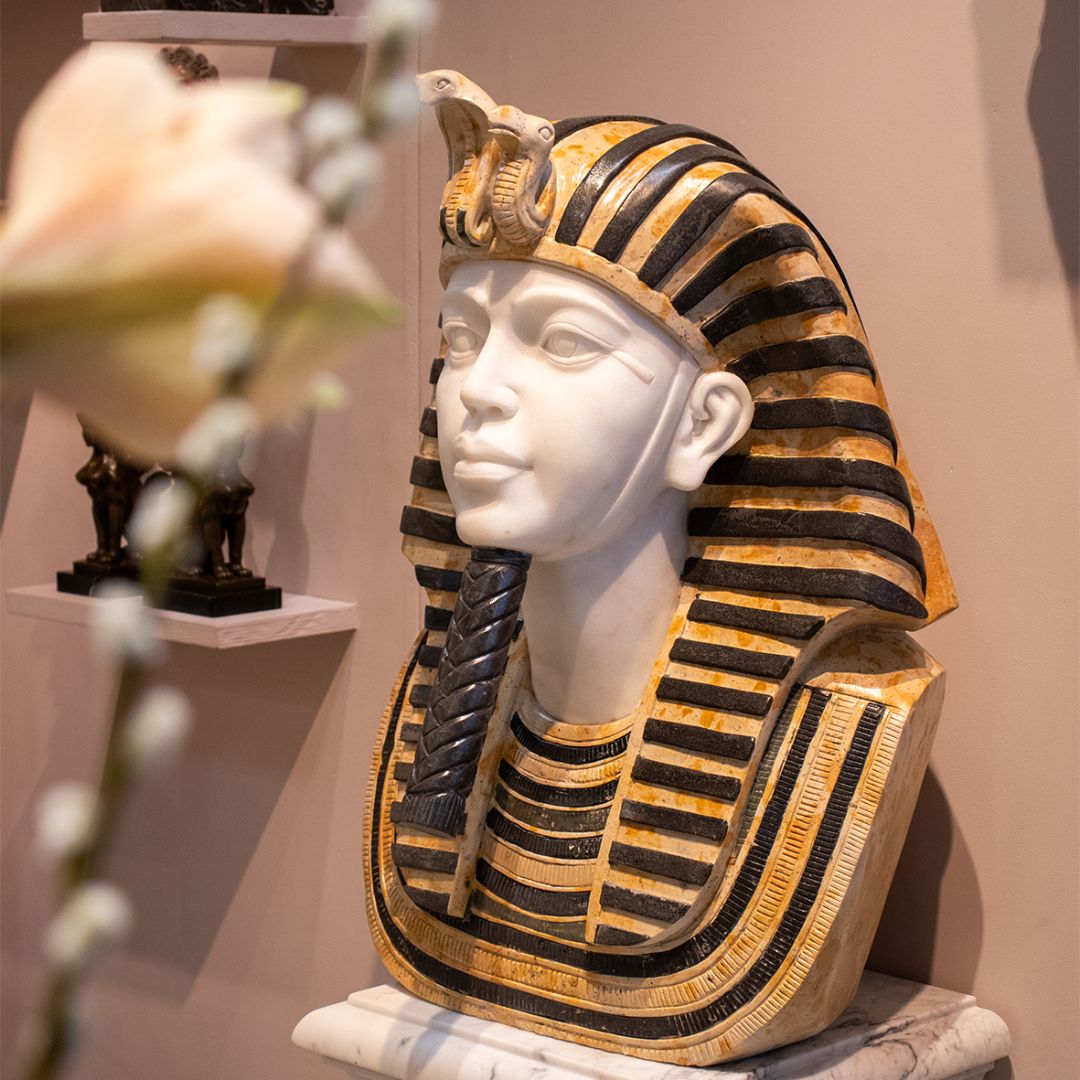
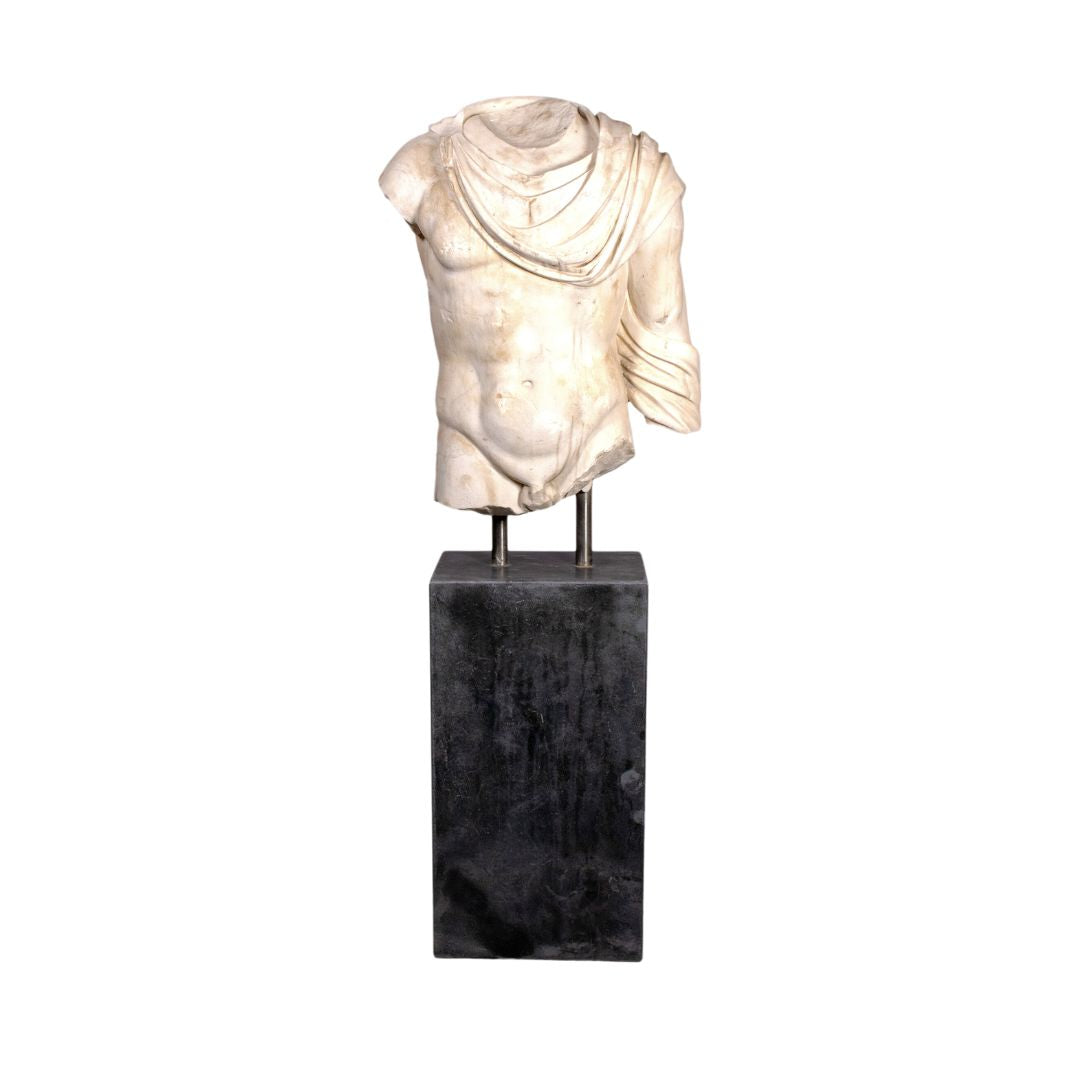
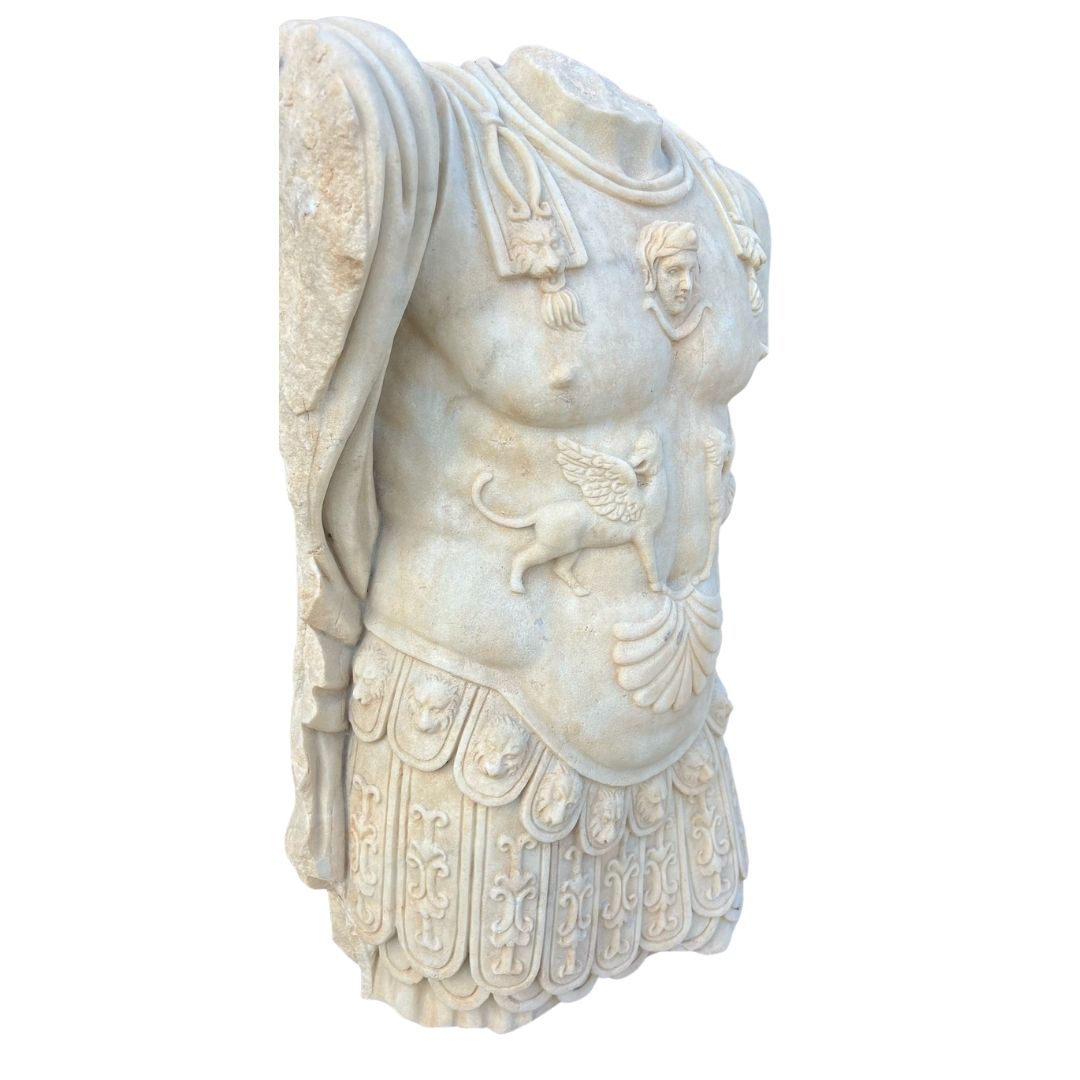
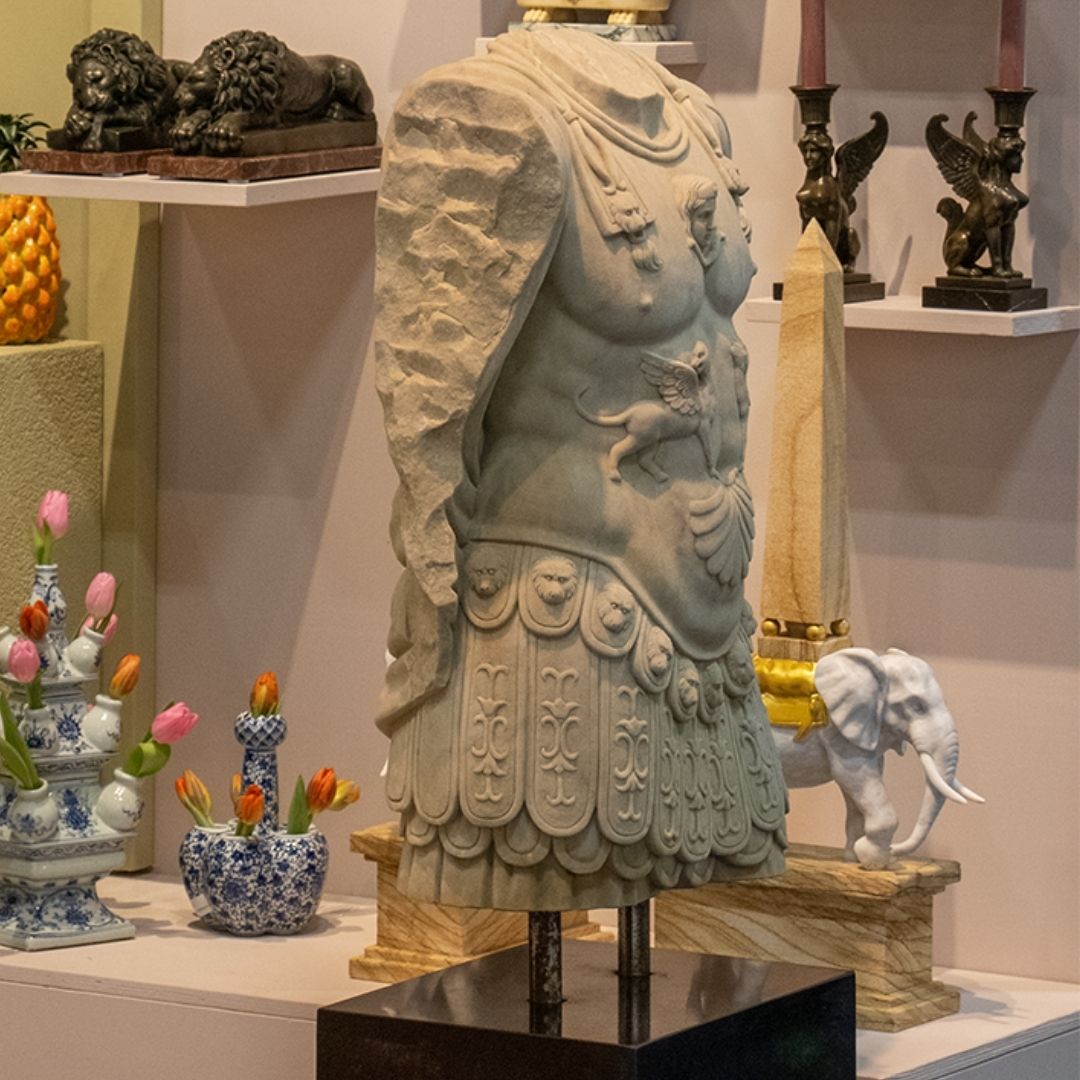
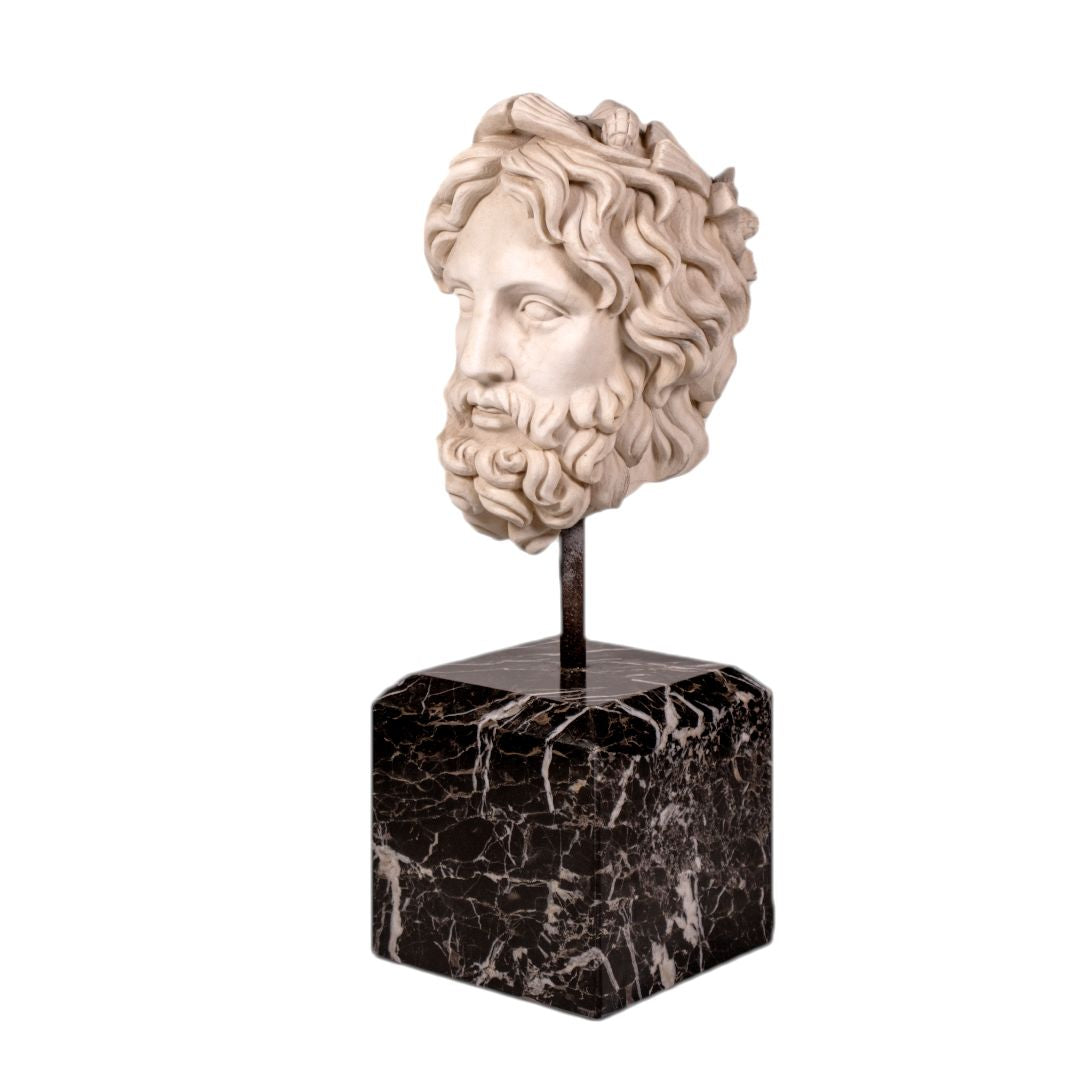
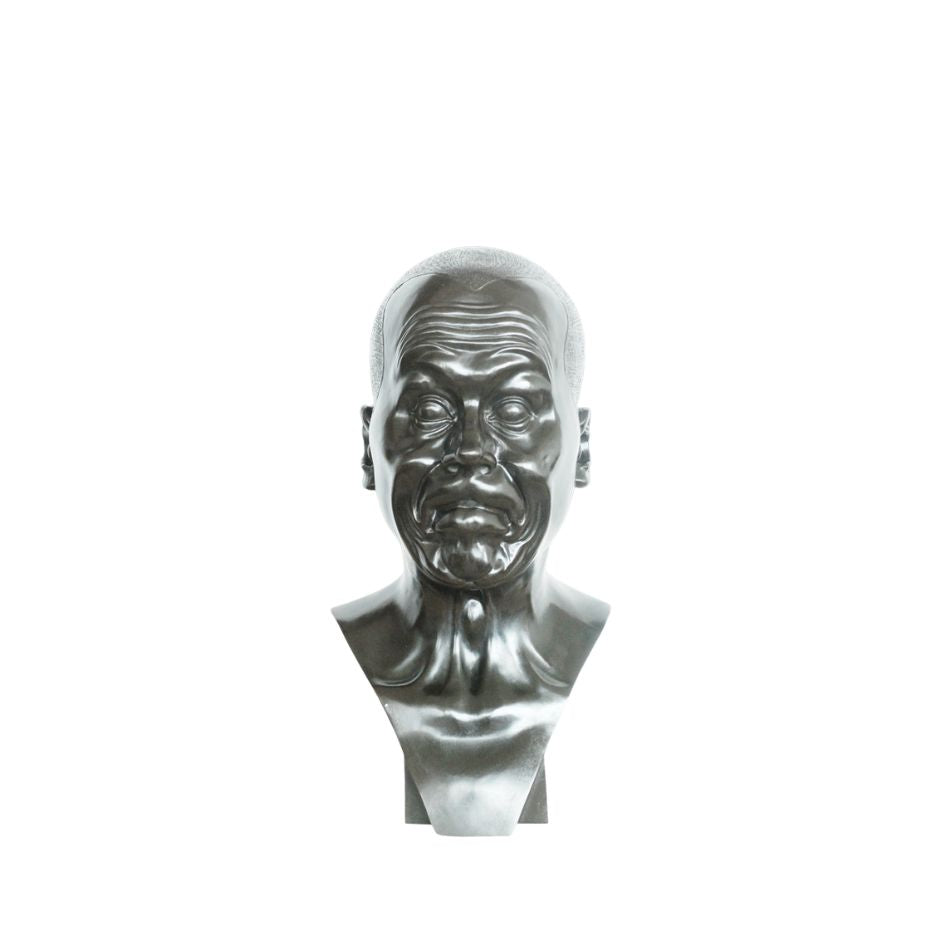
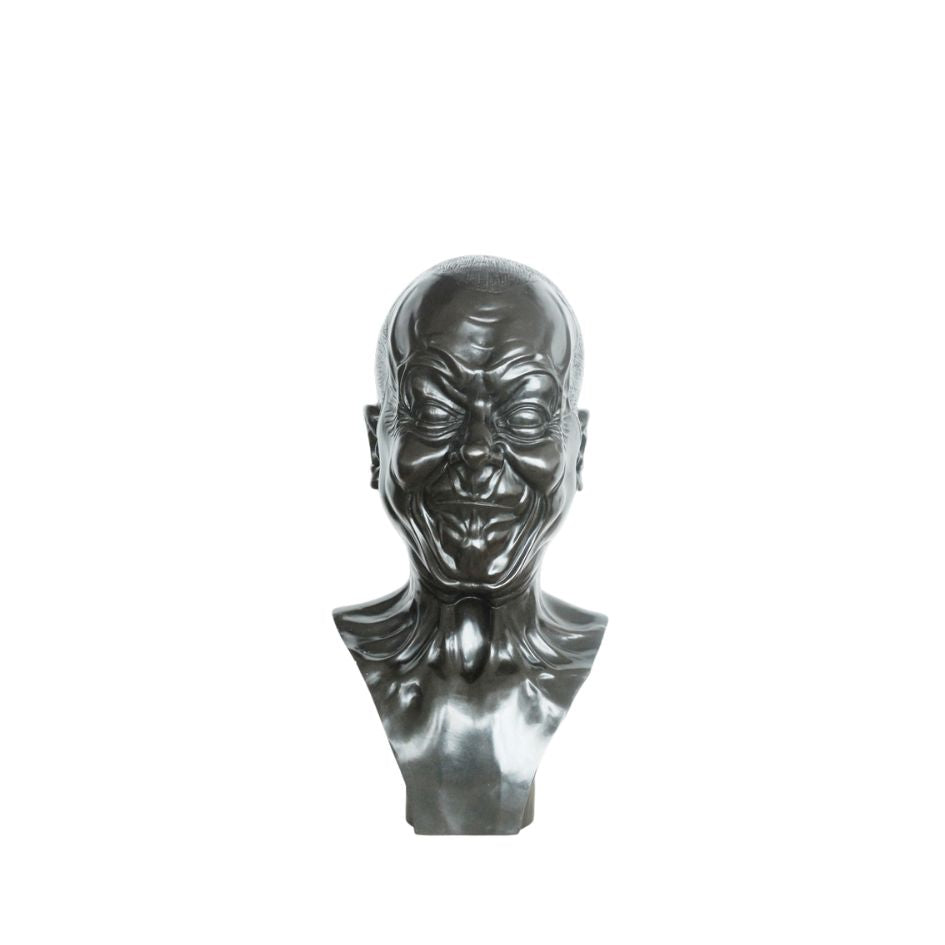
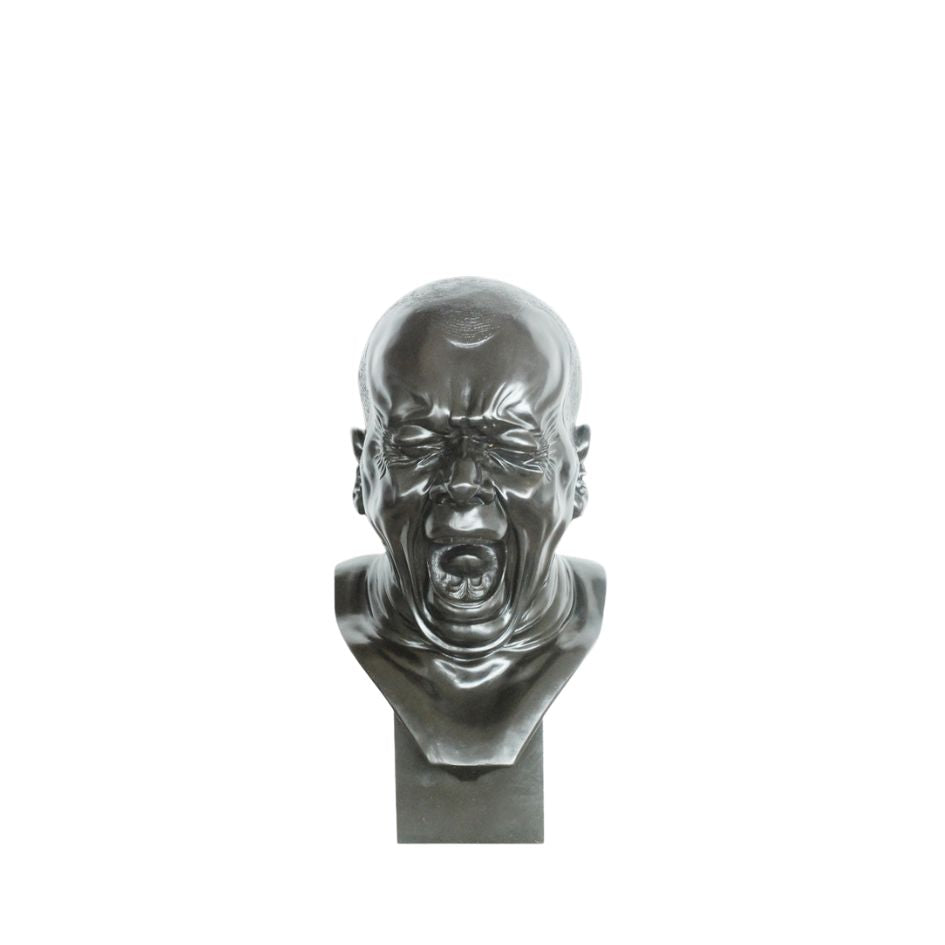
Torsos and busts, hand-carved in marble or hand-cast in bronze: Roman torsos after the Belvedere and Gaddi originals, cuirassed and togate torsos, marble heads of Zeus and Medusa, a bust of Tutankhamun and three bronze character heads after Messerschmidt. Each is a newly made piece that follows a historical model; the product page names that model and gives the dimensions and weight.
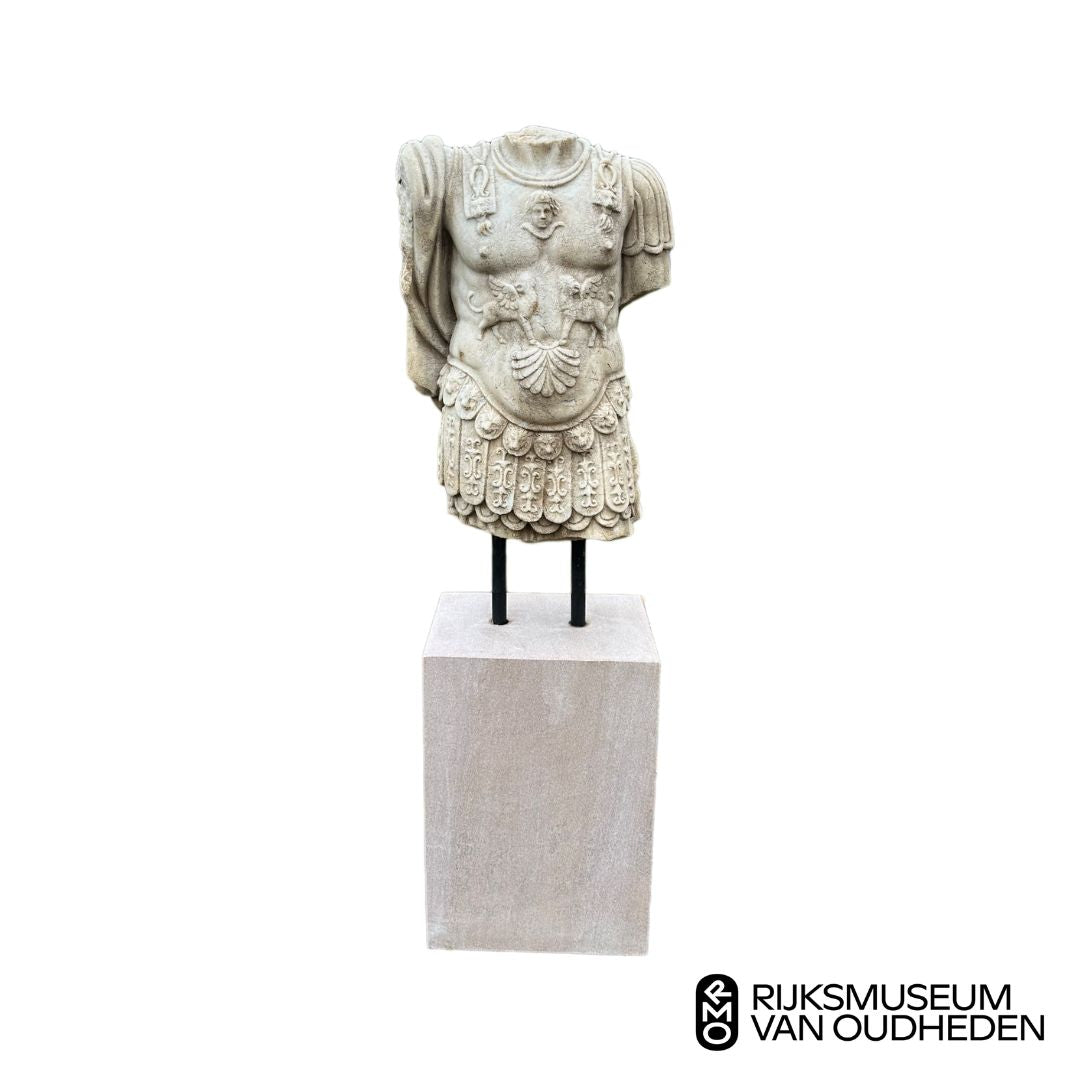
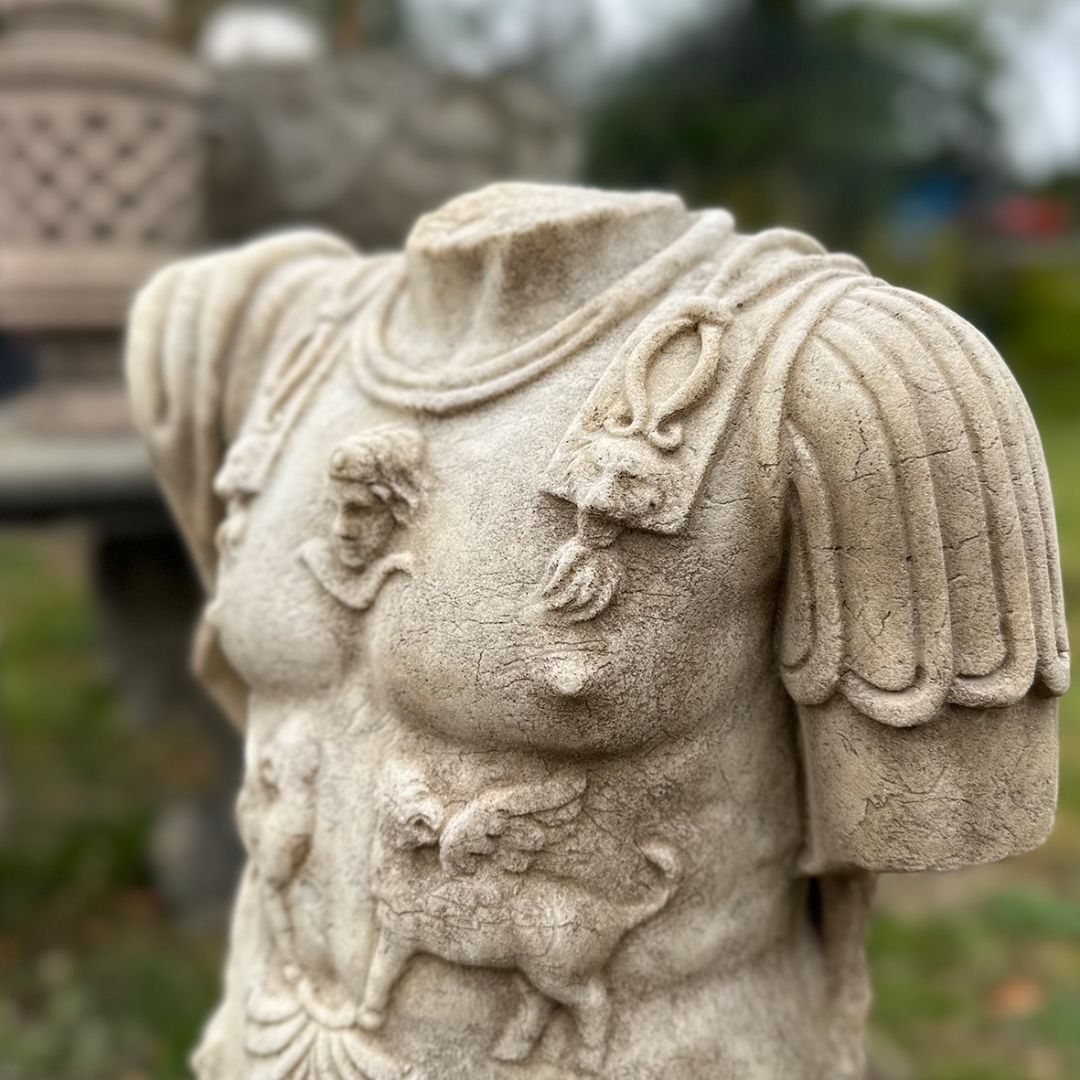
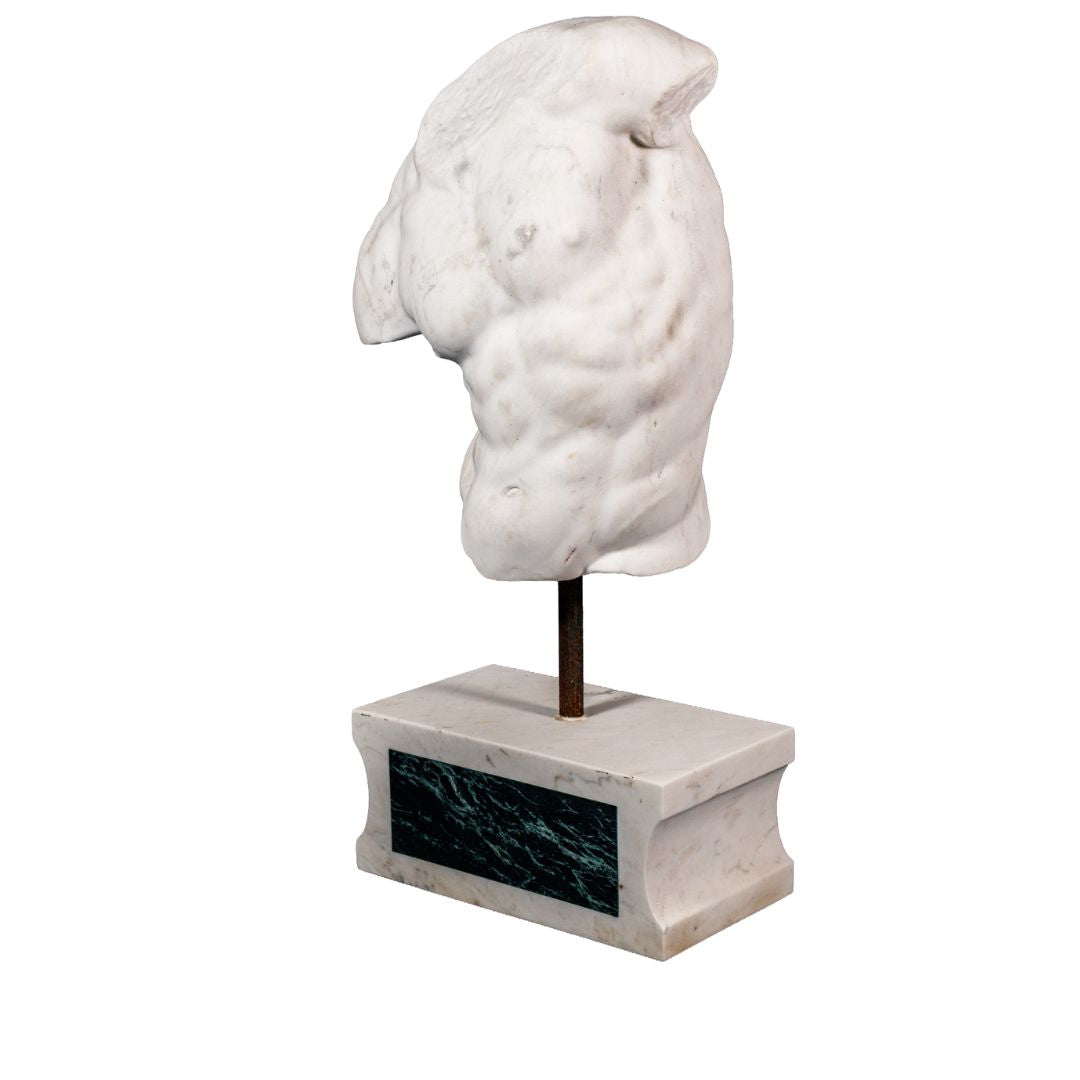
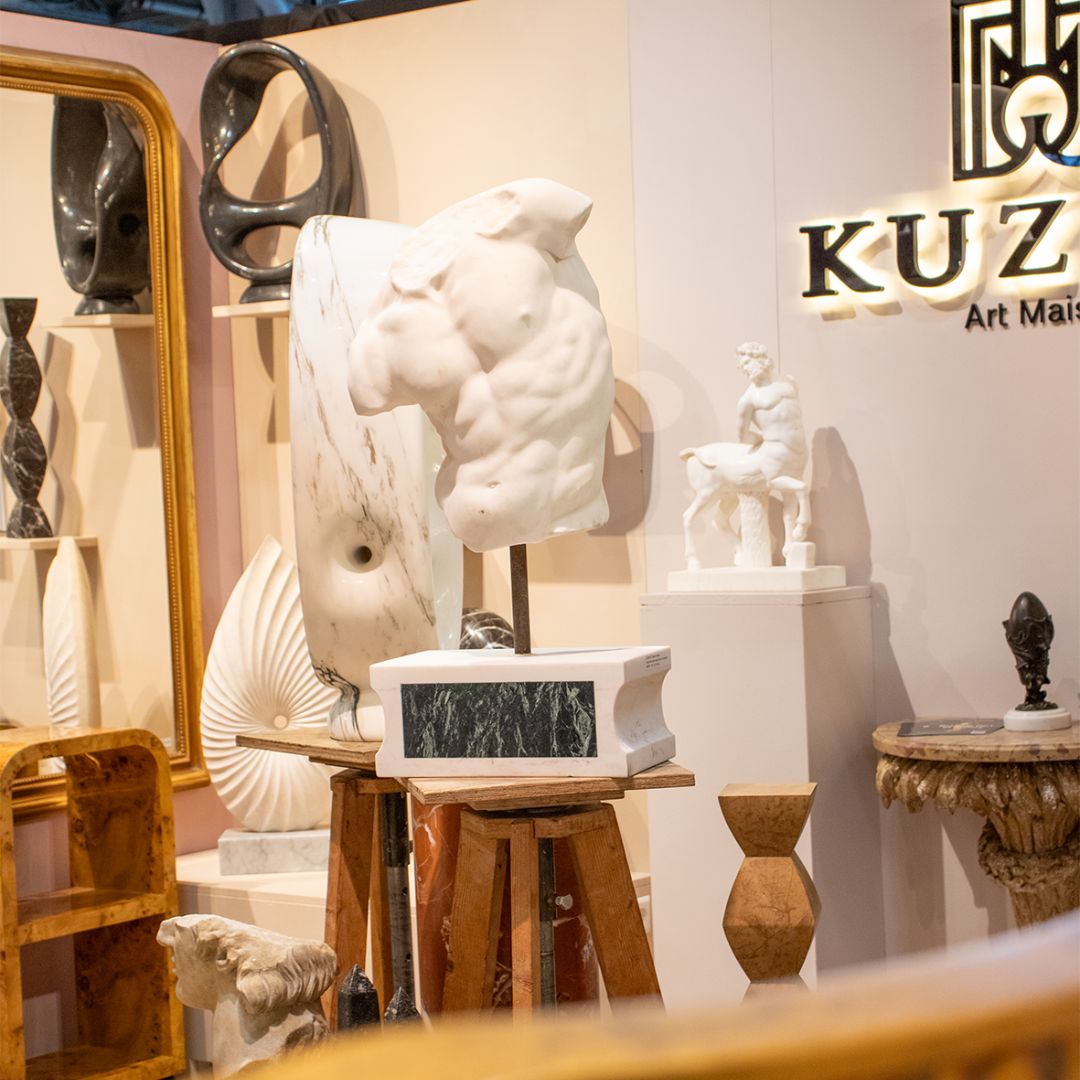
Marble and Bronze Torsos and Busts
A bust shows the head, neck and chest; a torso shows the trunk without head or limbs. This collection brings both together, in marble and in bronze. They are two of the oldest forms in Western sculpture, and both are made by hand in our studio. At Kuzco Art Maison every work begins with art-historical research: we first study the model from antiquity or the period style, and only then carve or cast. The collection sits alongside our wider range of Greek and Roman sculptures and forms part of our full sculptures collection.
Bust and Torso: How They Differ
The bust: head, neck and shoulders
A bust shows the head with the neck, shoulders and part of the chest, on a base or plinth. The form is not a damaged statue but a deliberate choice. It is usually linked to Roman portraiture, in which families kept wax masks of their ancestors and carried them in processions: the head with the shoulders was itself the portrait. The Roman Republic added so-called verism, an unflattering likeness with wrinkles and scars as a sign of experience and authority.
A torso is the trunk
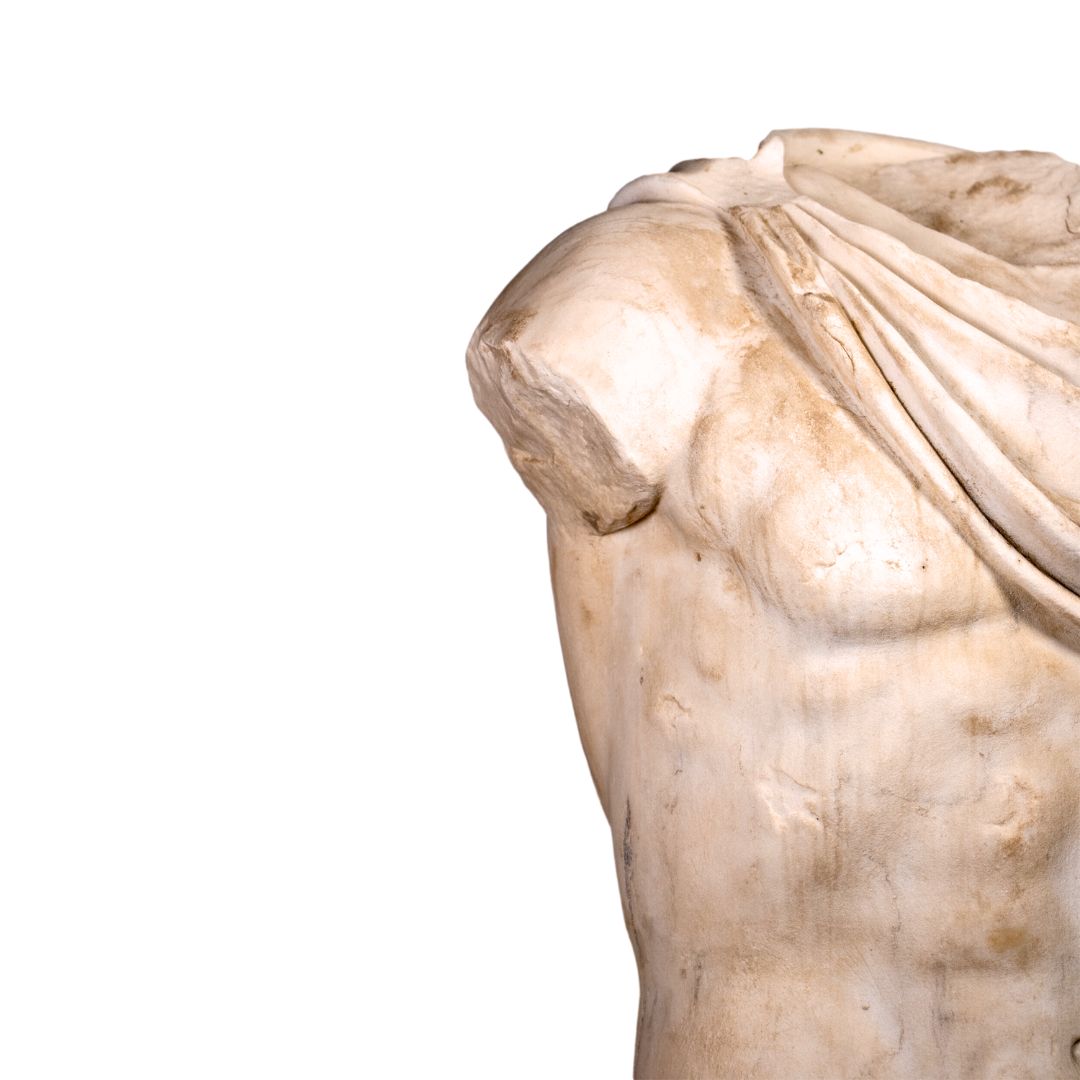
A torso shows the body without head or arms. In many ancient marble statues those parts broke off over the centuries, since thin, projecting pieces are the first to go; the compact trunk survived. But the torso has long been a form in its own right.
Why a headless torso is still complete
The best known is the Belvedere Torso, now in the Vatican collections. Much later, Rodin made the torso a complete work once more: his Walking Man has neither head nor arms. According to the Musée Rodin in Paris, the figure arose around 1900 from joining a study of the legs for his Saint John the Baptist to a torso, and the museum sees in it the very image of movement. A torso does not ask to be completed: it concentrates attention on pose, tension and flesh turned into stone or bronze.
Marble or Bronze: Which to Choose
Marble busts and torsos
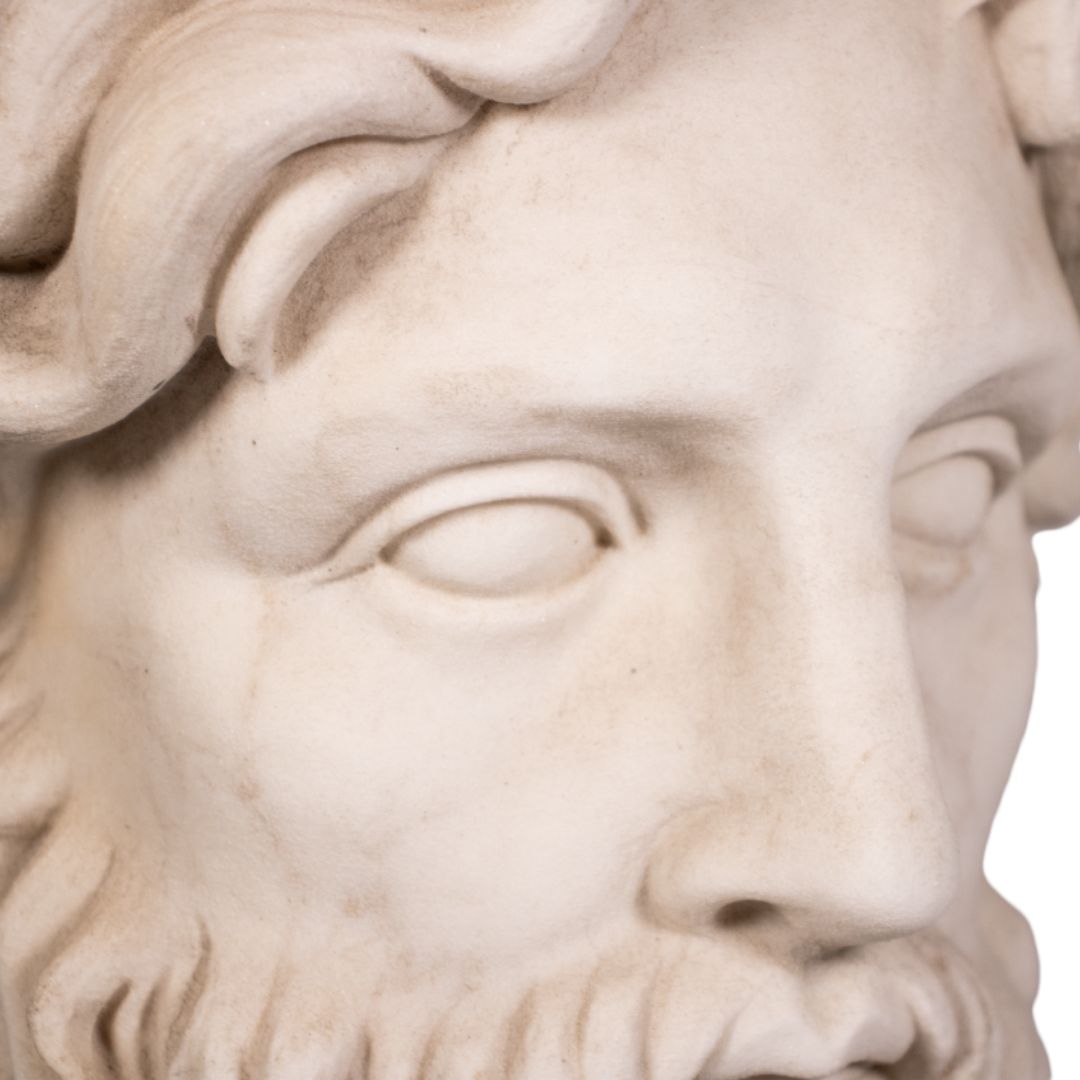
Our marble sculptures are carved by hand with point, chisel and mallet, then polished. That handwork makes each piece different, down to the veins of the stone. We work in white marble, black marble, travertine and Rosso Levanto. Marble is sensitive to frost and acid, so it belongs indoors or in a sheltered spot. Classical subjects suit it especially well, such as the marble Head of Zeus, the bust of Tutankhamun and the Medusa in Rosso Levanto. The marble works of David Liang (b. 1976), found in our marble sculptures collection, are signed contemporary originals – a deliberate exception in a range otherwise made up of style pieces.
Bronze busts and character heads
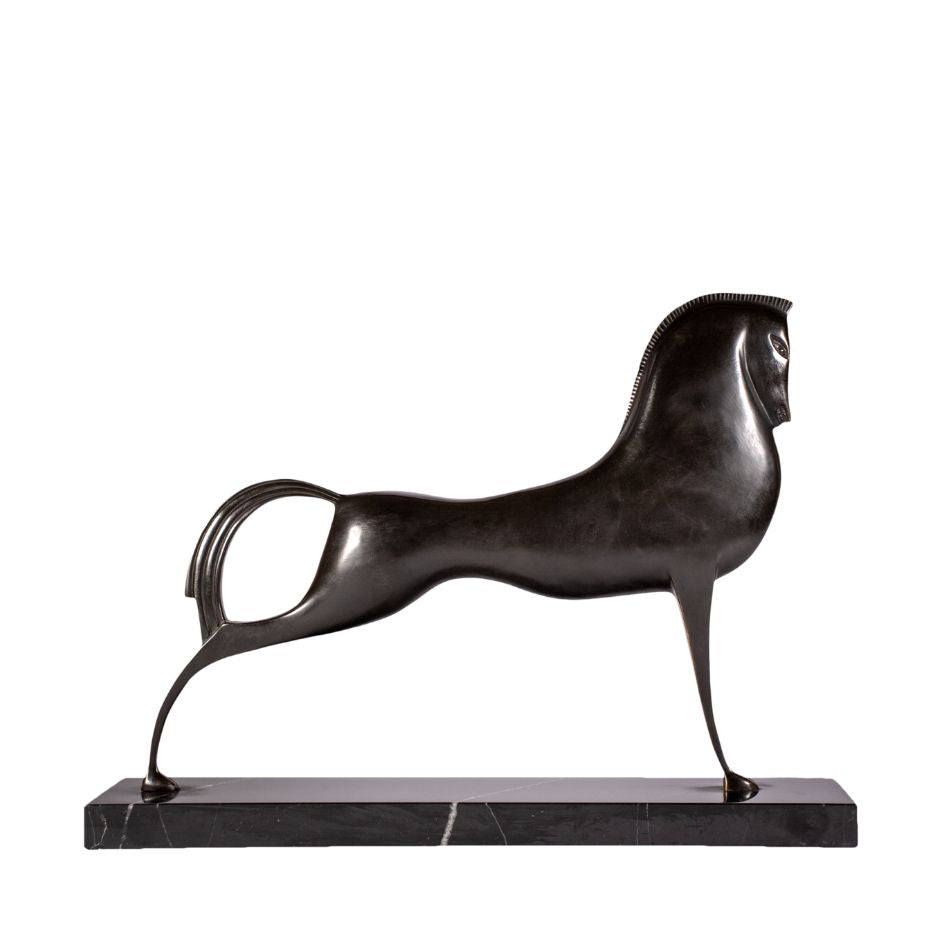
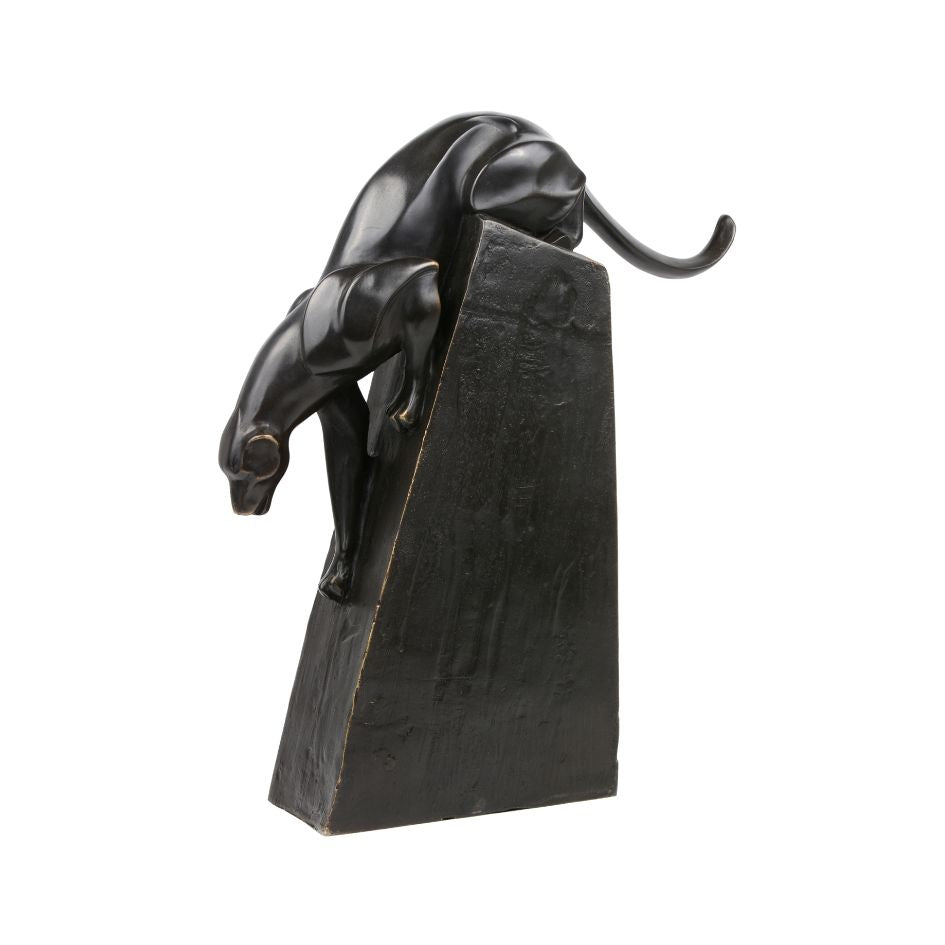
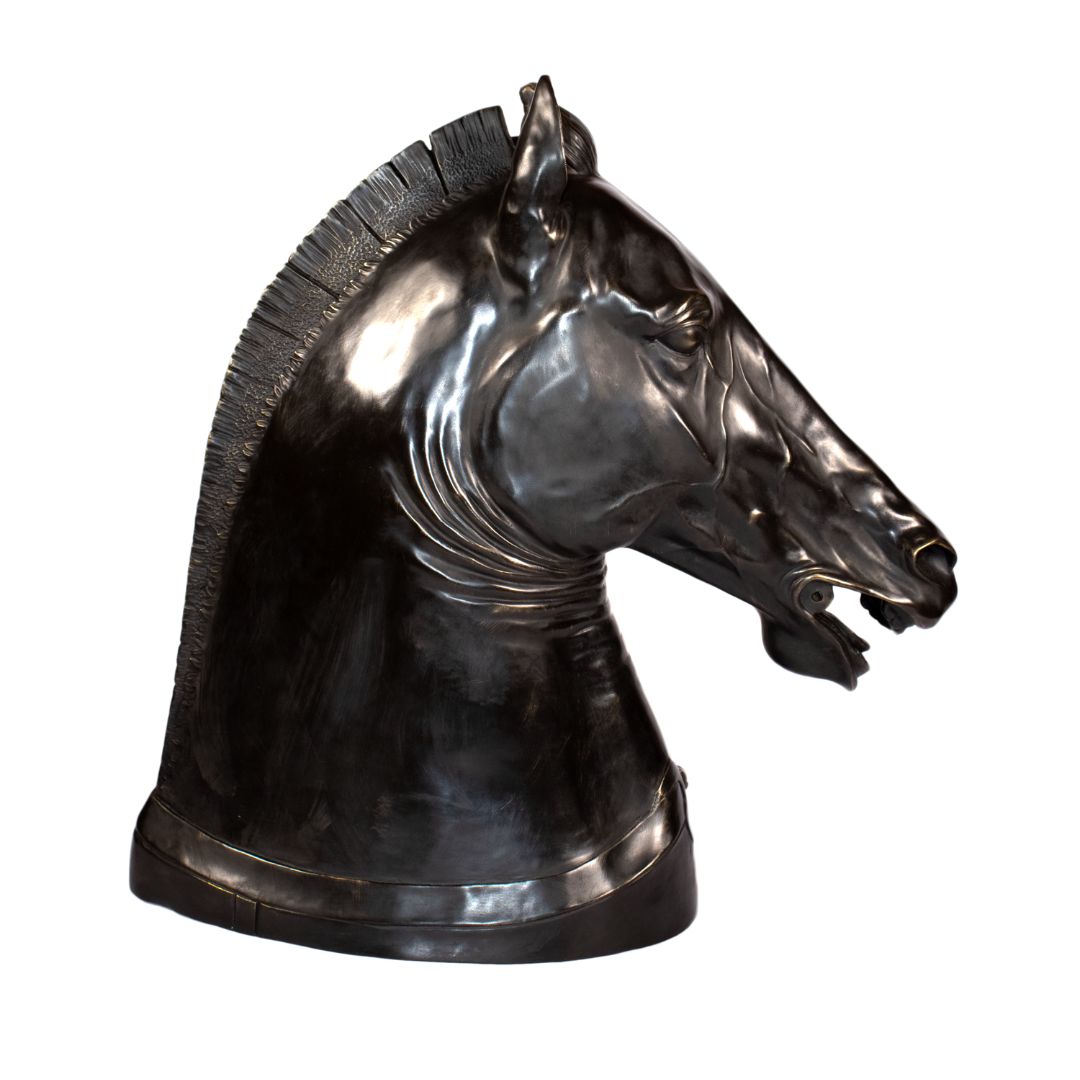
Our bronze sculptures are cast hollow in lost wax (cire perdue), then chased and patinated by hand. Bronze can go outdoors, where it develops a deeper patina of its own accord. It also carries other subjects well, such as our character heads after Messerschmidt: busts with extreme facial expressions, after the eighteenth-century Charakterköpfe in which the sculptor studied the human passions. In short: choose marble for a classical, restrained presence indoors, and bronze for weight, patina or a place outdoors.
Roman and Greek Busts: Portrait and Power
The Roman emperors had their portraits spread throughout the empire. Each emperor had a fixed 'type', a blend of likeness and idealisation after the example of Augustus, so that the image conveyed both the person and his authority. Our Roman emperor medallions follow this line. The gods have an iconography of their own: Zeus virile and bearded, Medusa as a protective mask meant to ward off evil.
One fact that many shops leave out: Greek and Roman marble sculptures were originally painted. The ideal of pure white marble belongs to the early modern period, not to antiquity itself.
Hand-Made in Our Studio, and How It Differs from Plaster and Resin
A real marble or bronze sculpture can be recognised by its weight, by traces of handwork and by a surface with nuance instead of an even coat of lacquer. Be wary of terms such as polyresin, polystone or 'bronze effect': these are figures of synthetic resin with a coat of paint. They convince at a distance, but are light and wear quickly. Our busts and torsos are made by hand in our studio in Bleiswijk and shown in our Amsterdam gallery at Hekelveld 1-1, where they can be seen in person by appointment. Selection and quality control are led by Lilly-Ann de Zeeuw, MA, artist, art historian and curator. Prices vary by piece and are given on each product page.
Placing and Caring for a Torso or Bust
The right plinth or column
A bust looks best at eye level, on a plinth or column. A torso works on a low plinth as well as on a console table or bookcase. Choose a base whose colour and material bring calm, so that the sculpture itself does the work.
Care
Dust marble dry and clean it with lukewarm water, without acid or abrasives; treat stains quickly, as marble is porous. Bronze indoors needs no more than dusting and a thin layer of wax from time to time; outdoors, wax it once or twice a year. Avoid harsh cleaners on both.
Weight, transport and delivery
Marble and bronze are heavy. Each piece is packed to measure and shipped insured throughout Europe; shipments over 30 kg go on a pallet. Weight and dimensions are listed on the product page.
Frequently Asked Questions about Torsos and Busts
What is the difference between a bust and a torso?
A bust shows the head with neck, shoulders and chest. A torso shows the trunk without head or limbs. We make both by hand, in marble or bronze.
Why do classical torsos often lack their head and arms?
In ancient statues the thin, projecting parts broke off first, so that mainly the sturdy trunk survived. For centuries the torso has also been valued as an art form in its own right, from the Belvedere Torso to Rodin.
Marble or bronze: which is the better choice?
Marble gives a classical, restrained presence and belongs indoors. Bronze is stronger, can go outside and develops a deeper patina there. The choice depends on the location, the weight and the atmosphere wanted.
Are your torsos and busts antiques or new creations?
They are new, hand-made works in the style of historical models from Greek and Roman antiquity and later periods; they are not antiques. Only the marble works of David Liang, outside this selection, are signed contemporary originals.
How can a hand-made bust be told apart from a plaster or resin replica?
By its weight, by visible traces of handwork and by a surface with nuance. Imitations in polyresin or plaster are light and uniform, often cannot go outdoors and age badly.
What does a marble or bronze bust cost?
That depends on material, size and finish; larger, more complex works sit higher in the range. The price is shown on each product page.
On which plinth or column should a bust or torso stand?
A bust looks finest at eye level on a plinth or column; a torso also works lower down, on a console table or cabinet. Choose a quiet base that does not overpower the sculpture.
Can a bust or torso stand outdoors?
Bronze can go outside and withstands weather and frost. Marble does not tolerate frost or acid and needs to stay indoors or in a sheltered place. For the garden, see our garden sculptures.
Can I buy a bust or torso as a private customer?
Yes. Since 2026 private buyers can also order directly in the online shop, and a 14-day cooling-off period applies. Professionals order through a dedicated account.
Where can I see the sculptures in real life?
By appointment in our Amsterdam gallery on the Hekelveld (no. 1-1). The whole collection remains online to browse at any time.