
Ginger Jars
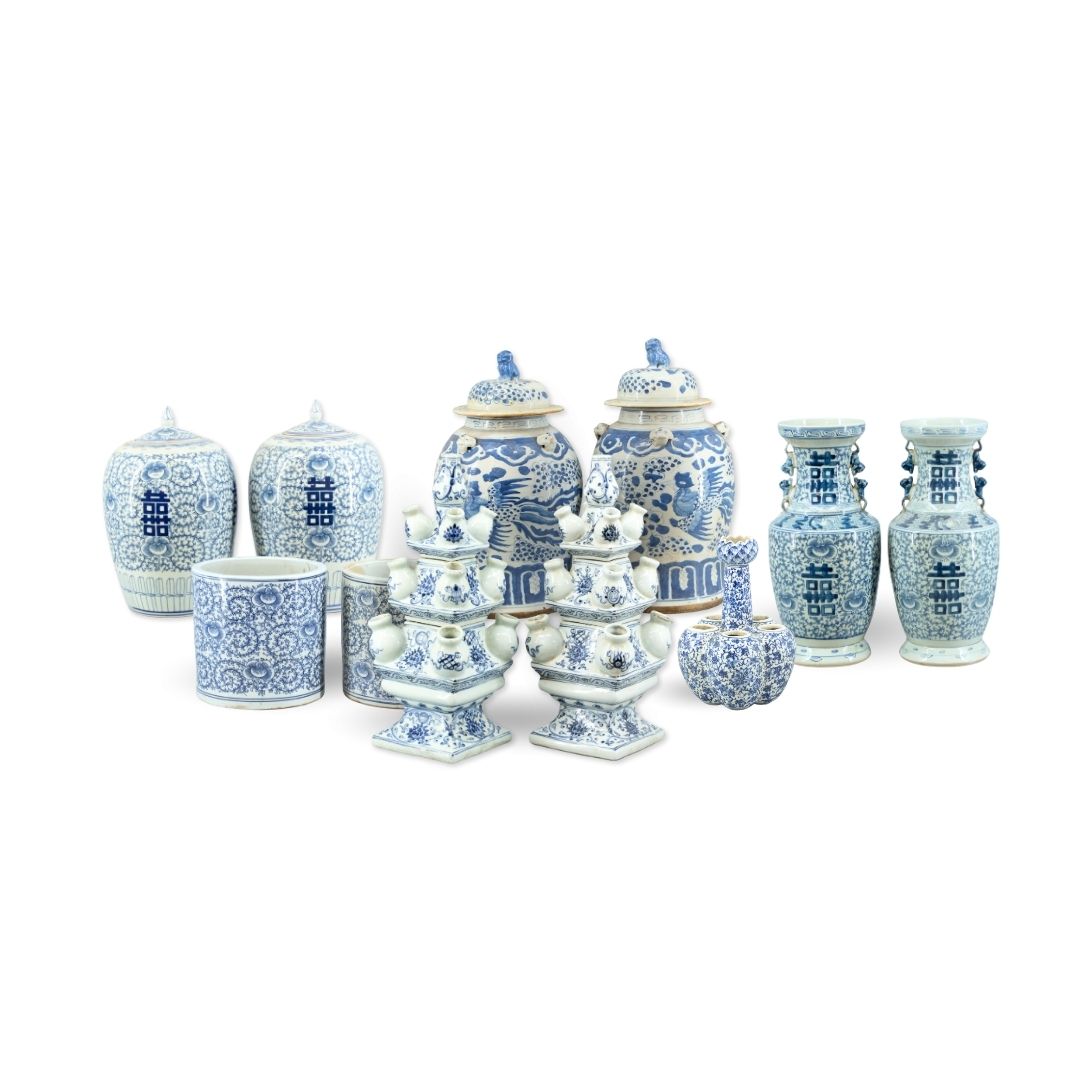
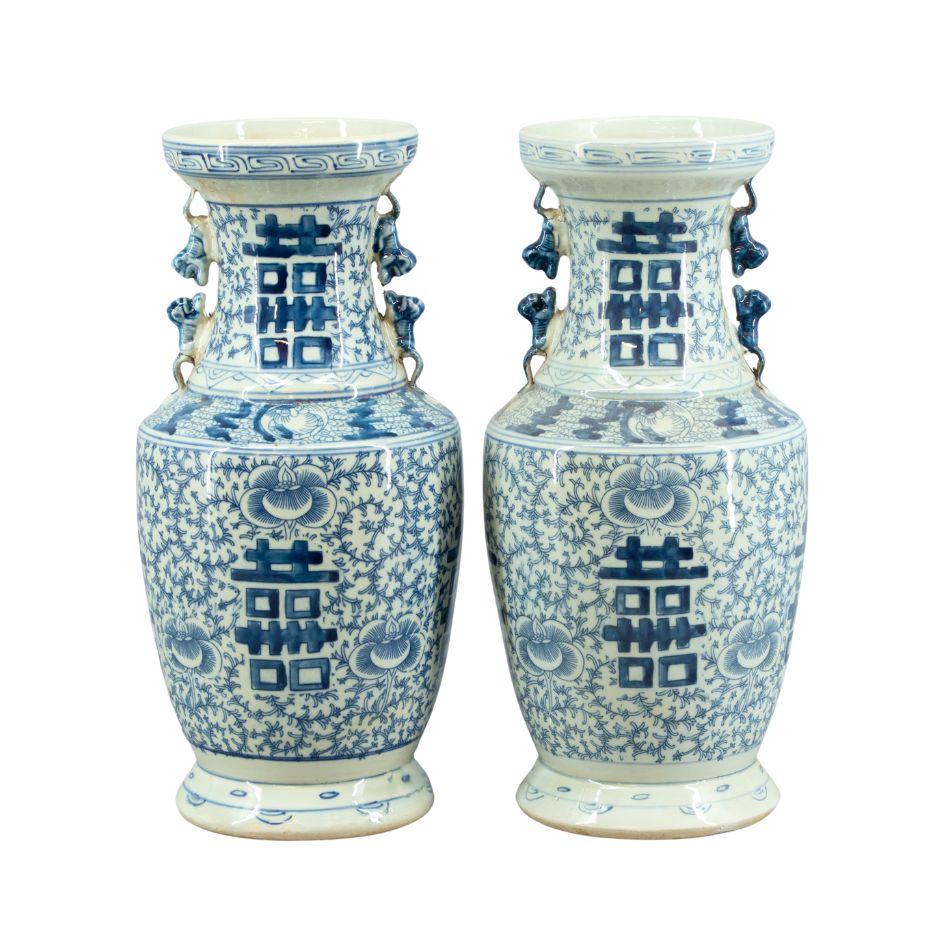
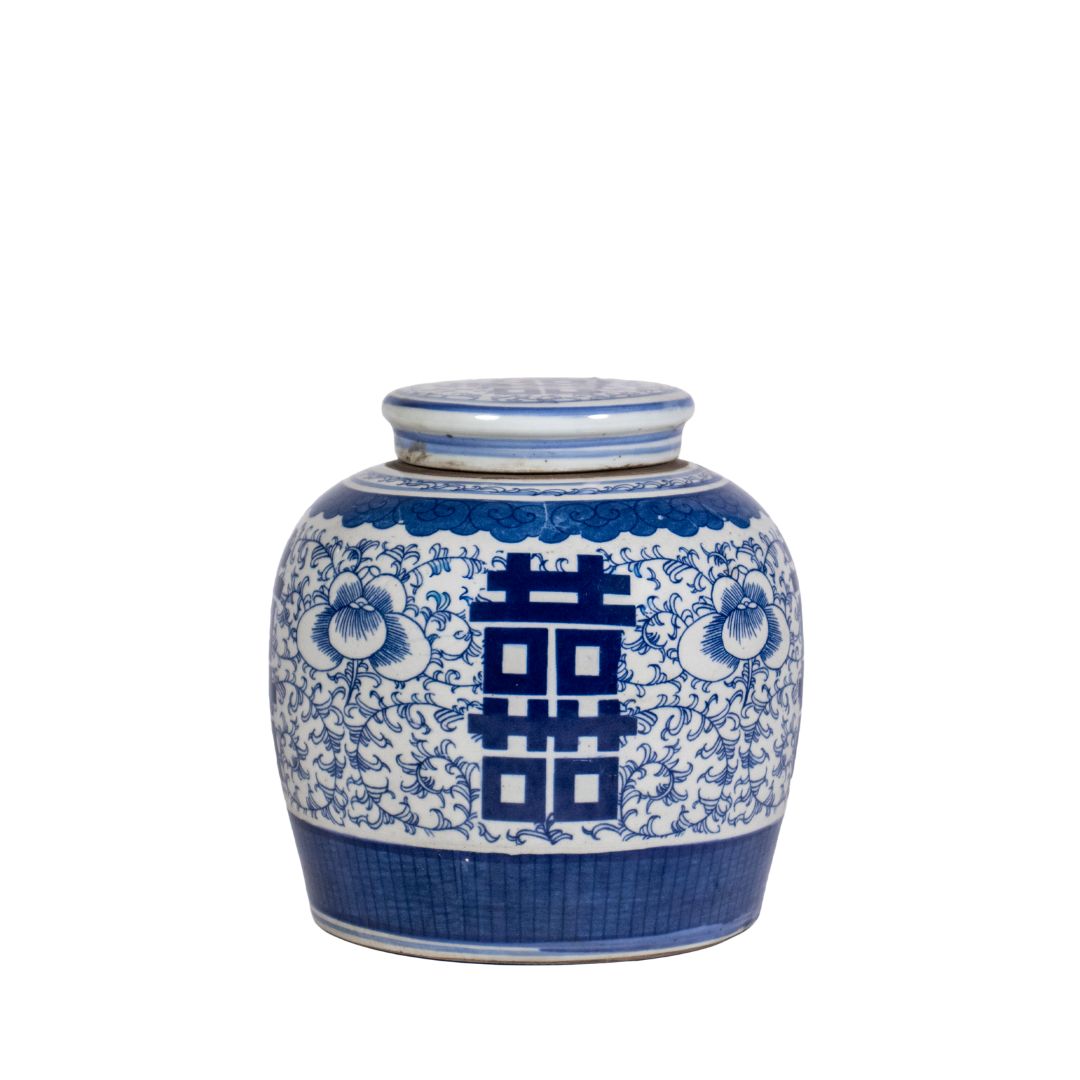
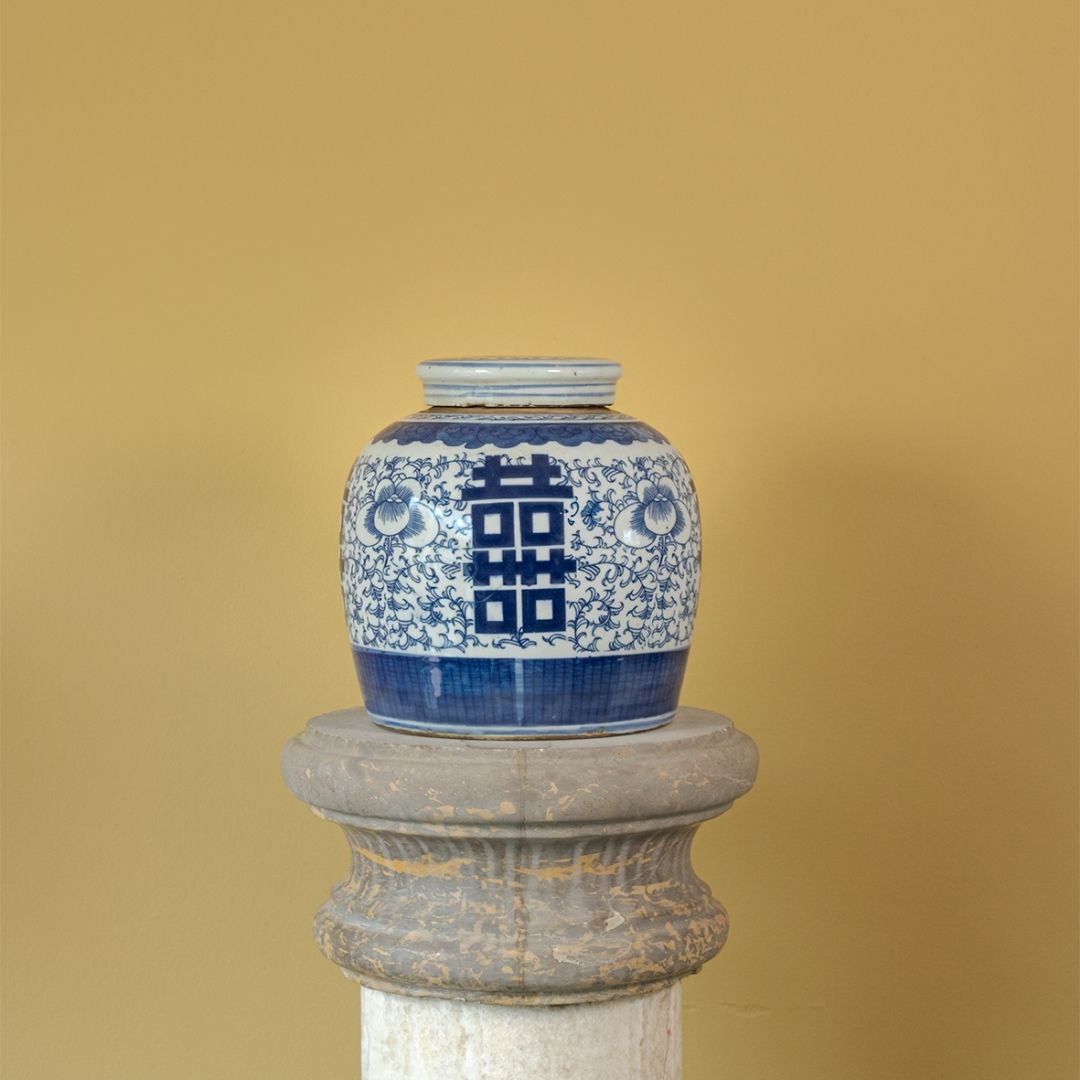
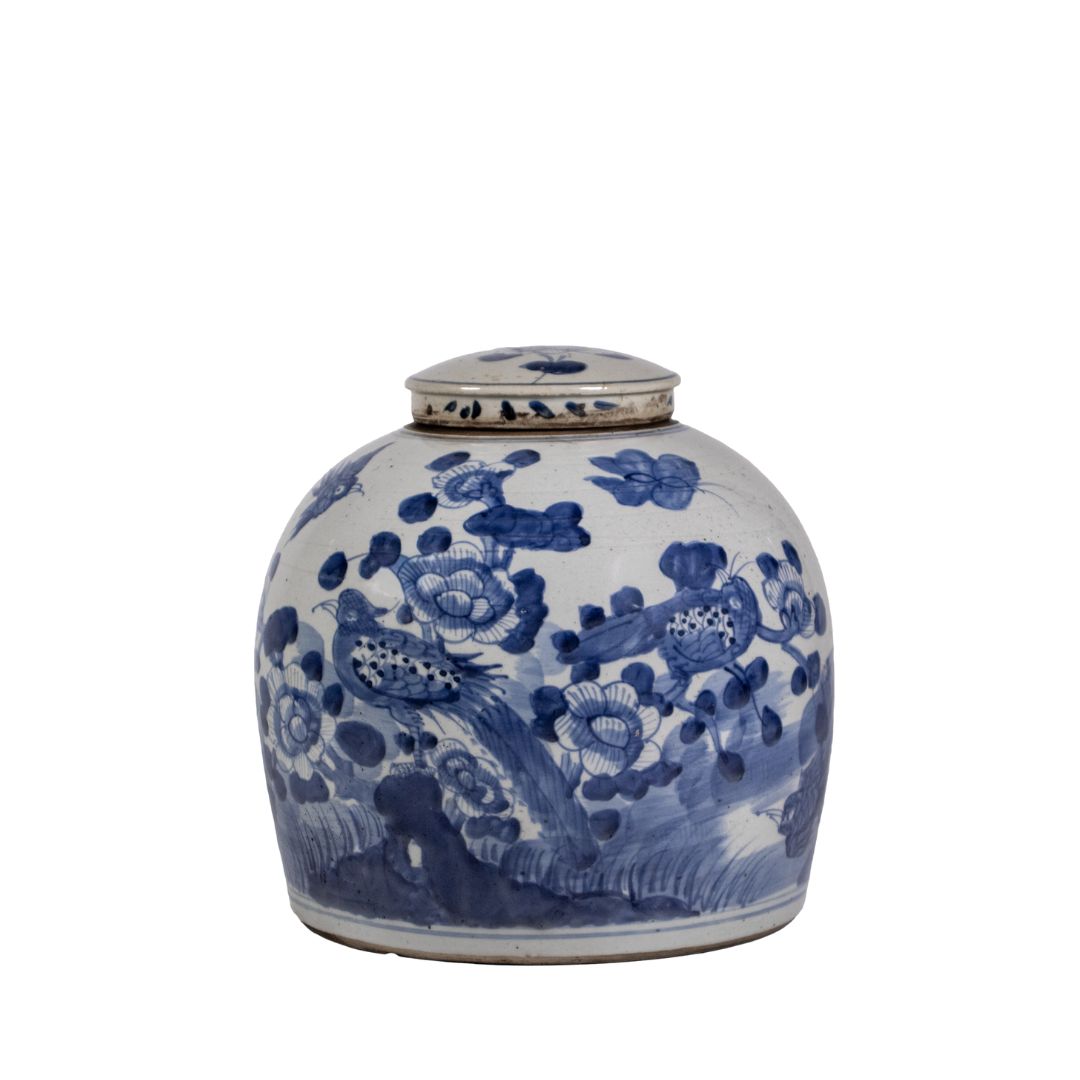
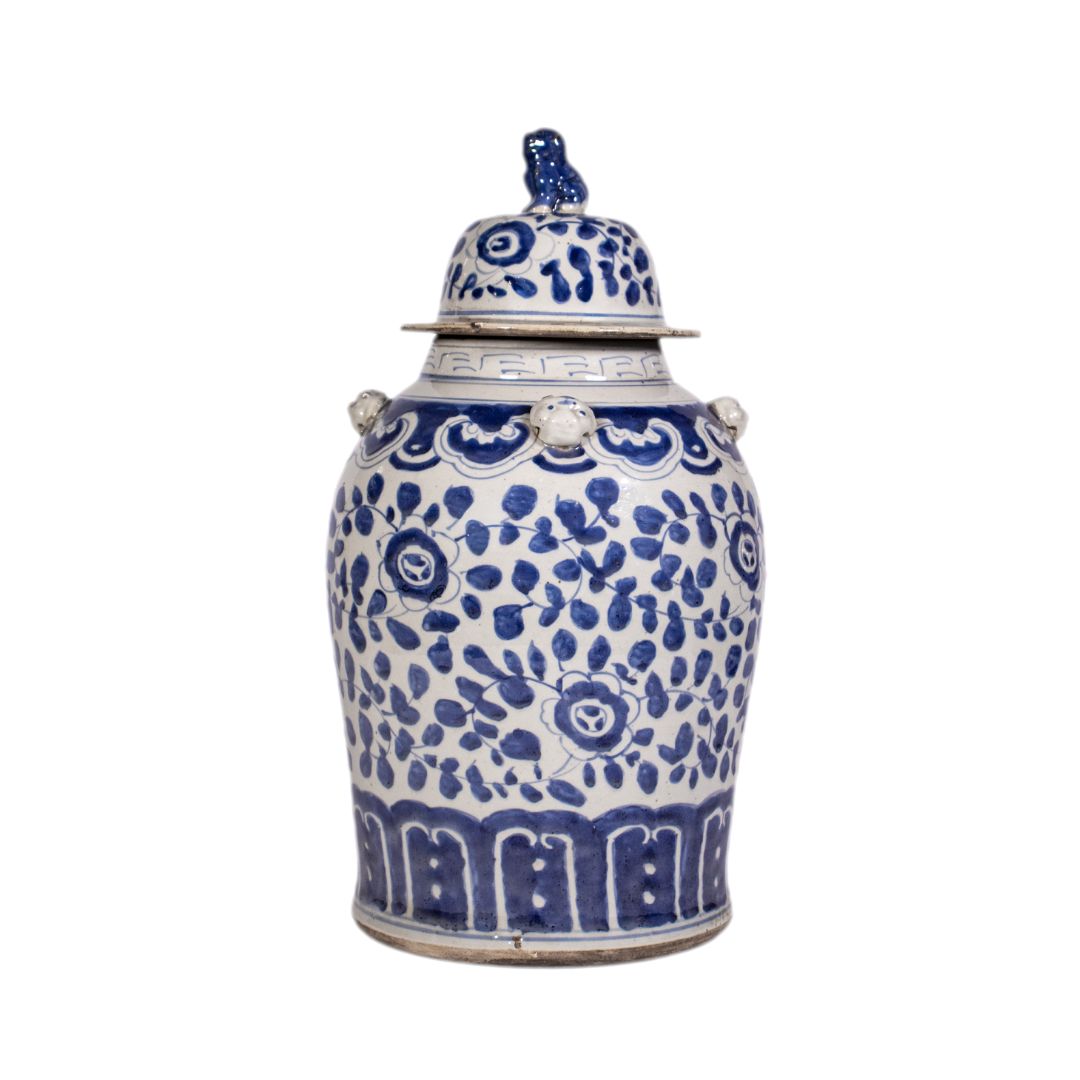
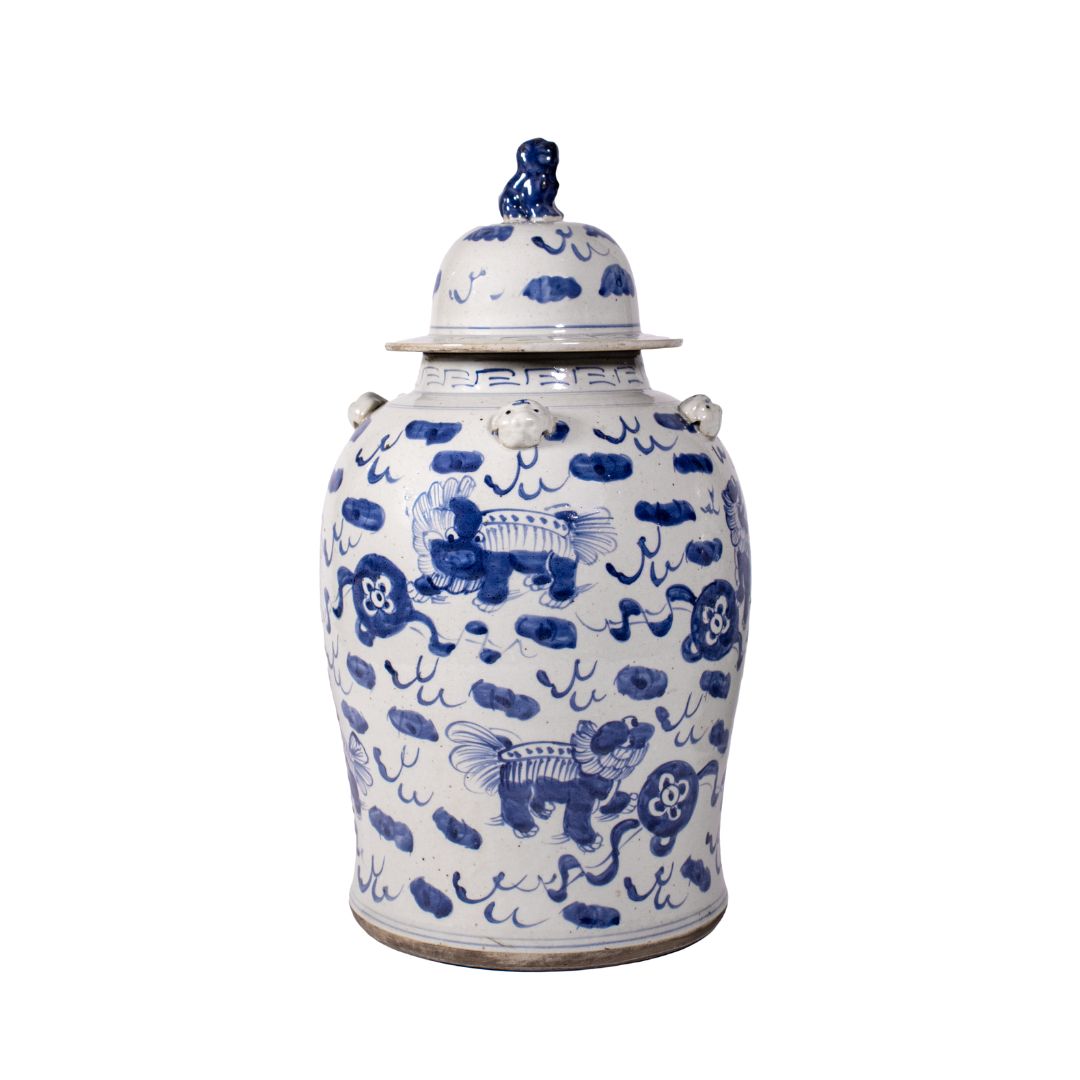
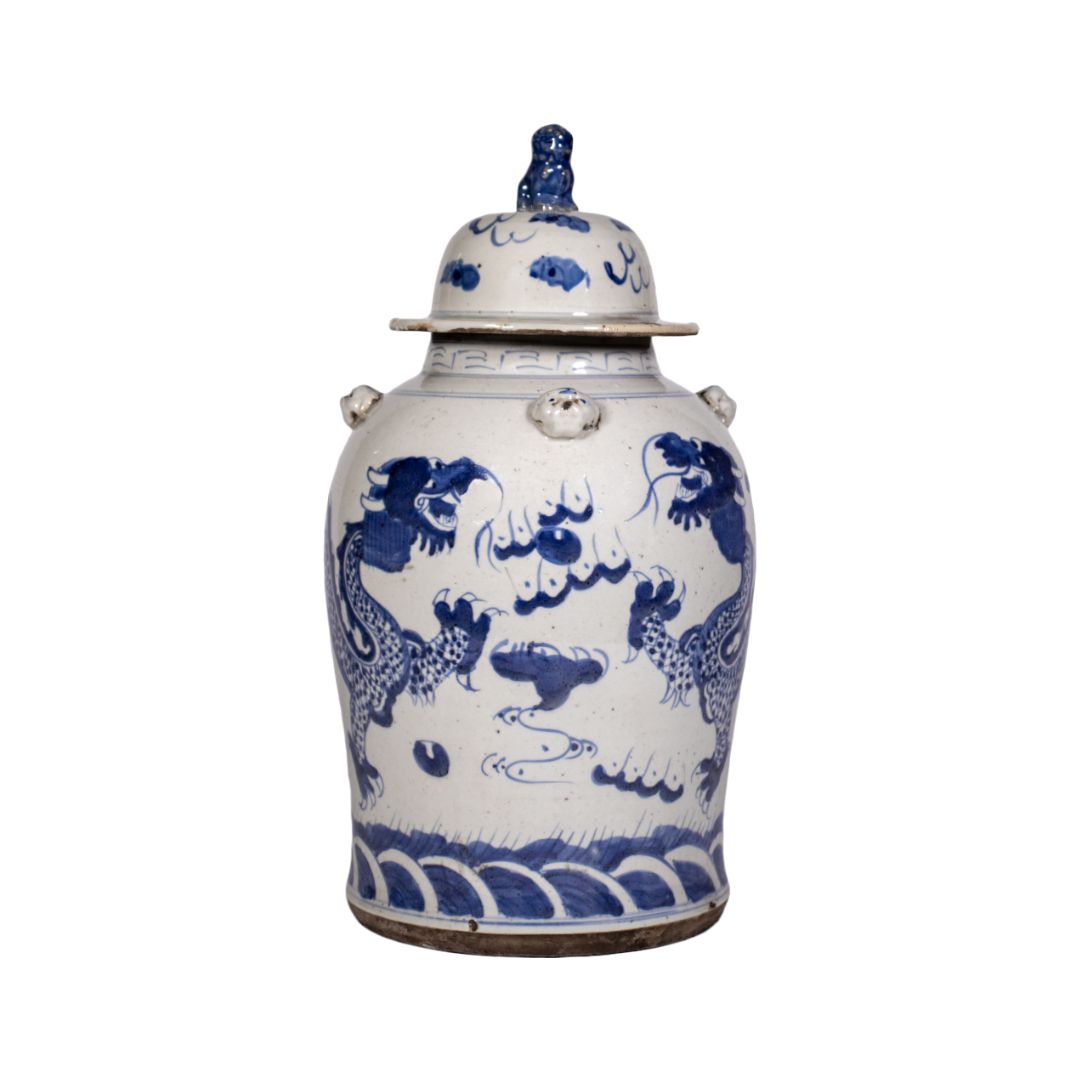
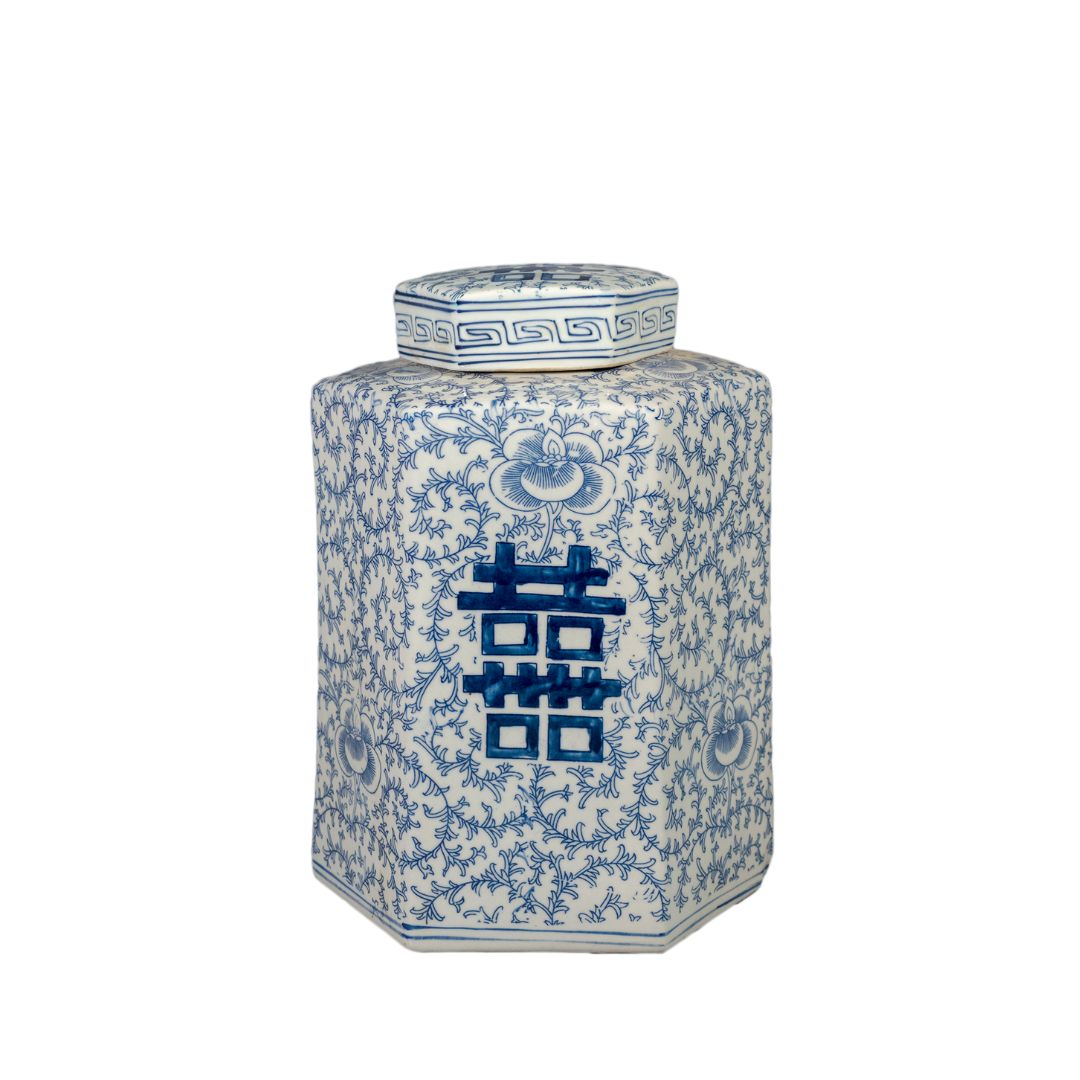
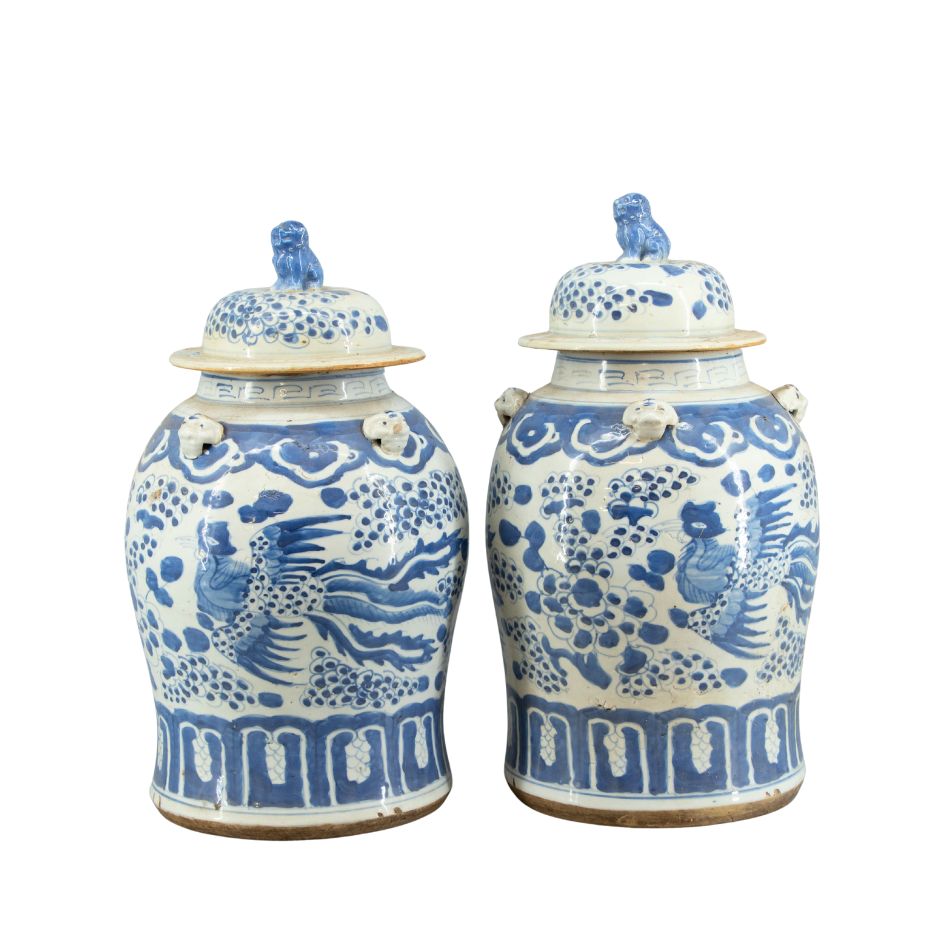
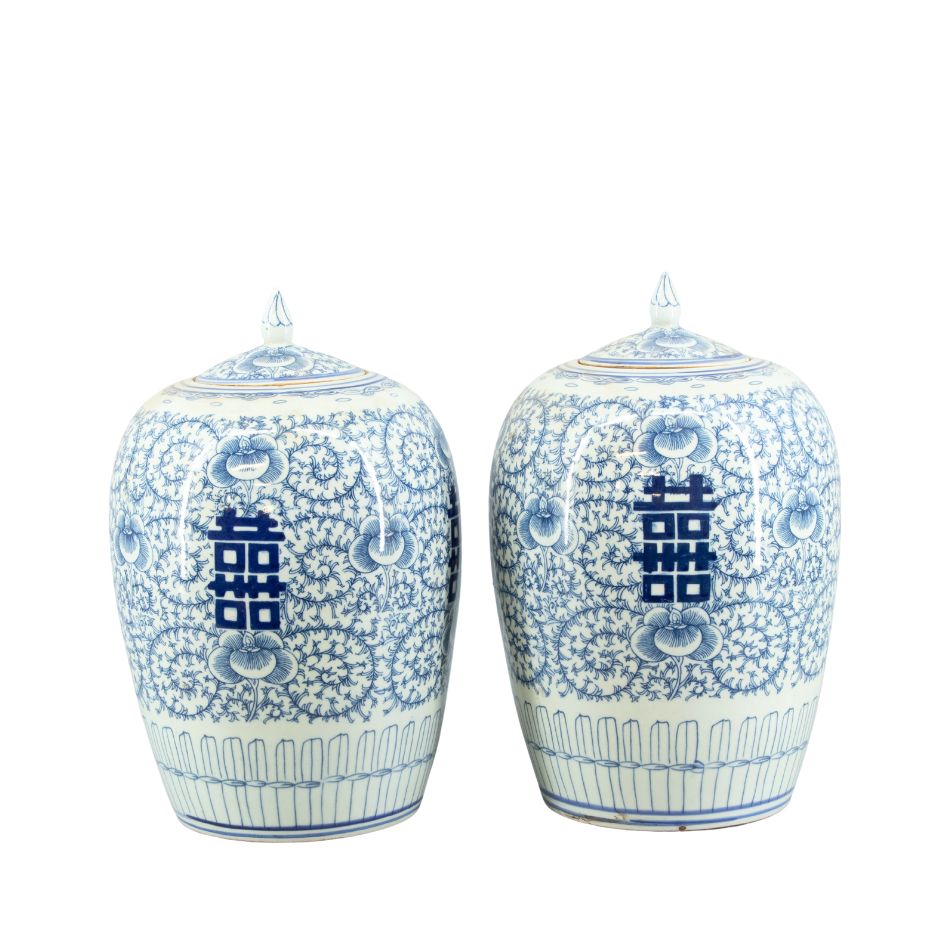
Ginger jars and lidded jars in blue and white Chinese porcelain, decorated with phoenixes, peonies, dragons, a Foo dog, the hundred antiques and the double happiness character. Most are painted by hand; a few carry transferred decoration completed by hand, as noted on each product page. Their rounded forms work alone or as a mirrored pair on a mantelpiece or sideboard.





Buying ginger jars
At Kuzco Art Maison a home should be as stimulating as an exhibition. Our ginger jars, all blue and white porcelain and many of them painted by hand, form a bridge between the museum display case and the interior. With a background in art history (Art, Market and Connoisseurship; Museum Studies), the collection has been put together to be looked at slowly.
What is a ginger jar?
A ginger jar (also known as a Chinese lidded jar) is a porcelain vessel with a globular body and a matching lid. The classic version is blue and white with a short neck (the lid is sometimes topped by a Buddhist lion, the so-called Foo dog finial).
Origin: a storage jar with a lid.
Today: a sculptural object, alone or in a pair, on a mantelpiece, sideboard or console table; with or without its lid it also serves as a vase.
Defining features
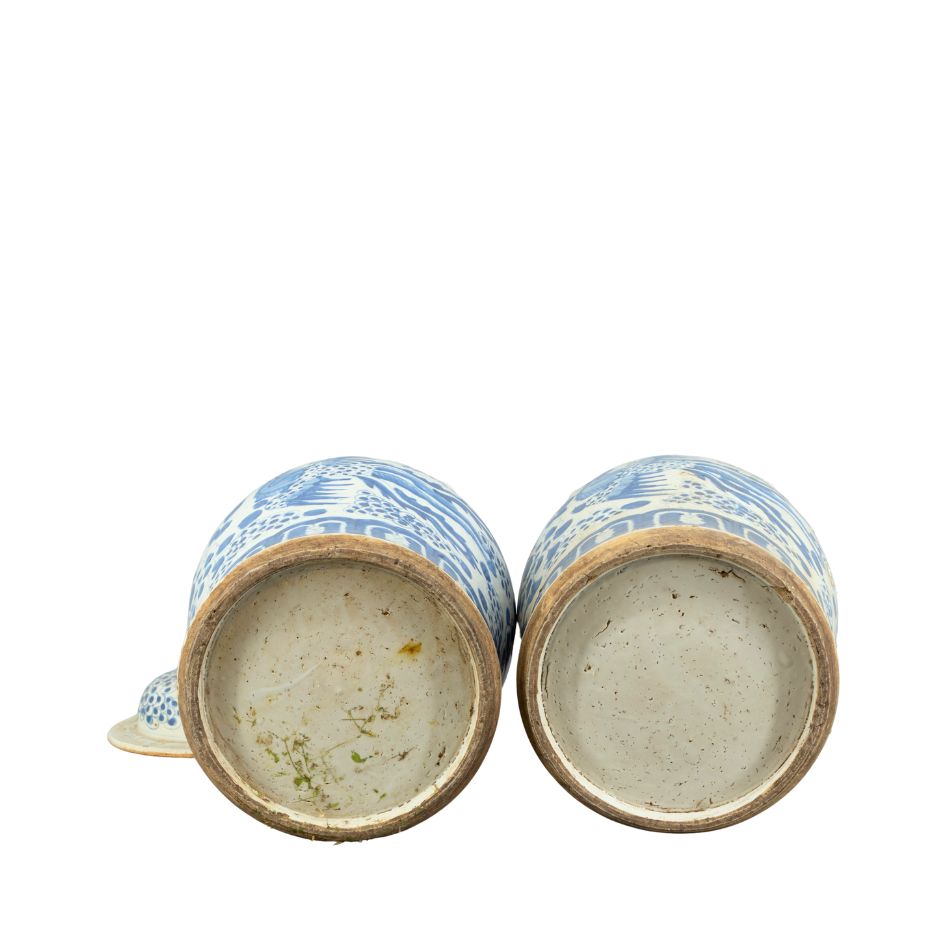
- Material: Chinese hard-paste porcelain of kaolin and petuntse (a feldspathic stone); high firing vitrifies the body and closes its pores.
- Sign of quality: a clear, almost musical note when the rim is tapped gently.
- Decoration: floral and symbolic motifs (the phoenix or fenghuang, the peony, clouds, ruyi borders and lambrequin bands), painted with the brush or, on some models, applied by transfer and completed by hand.
Why is it called a ginger jar?
The English name links these lidded Chinese jars with preserved ginger, an association that comes from the trade. Museums handle the name with care: the Smithsonian's National Museum of Asian Art in Washington records a Jingdezhen jar of the Kangxi period (1662–1722) as '"Ginger jar" with cover', the quotation marks being the museum's own.
Why choose a ginger jar?
- Blue and white in any style – blue and white porcelain sits naturally in a classically furnished house and adds a counterpoint of colour to a minimal space.
- A lasting material – hard, dense porcelain with an enduring sheen that is easy to clean.
- Auspicious imagery – the phoenix, bird of peace and prosperity, and the peony, emblem of wealth, make a ginger jar a gift with meaning.
- Presence in the room – one large jar as the centre of attention, or a mirrored pair for calm and symmetry.
- The Kuzco approach – each jar is chosen for quality, technique and historical accuracy; where it suits, a lightly aged finish gives the look of a piece with years behind it, without affecting its condition.
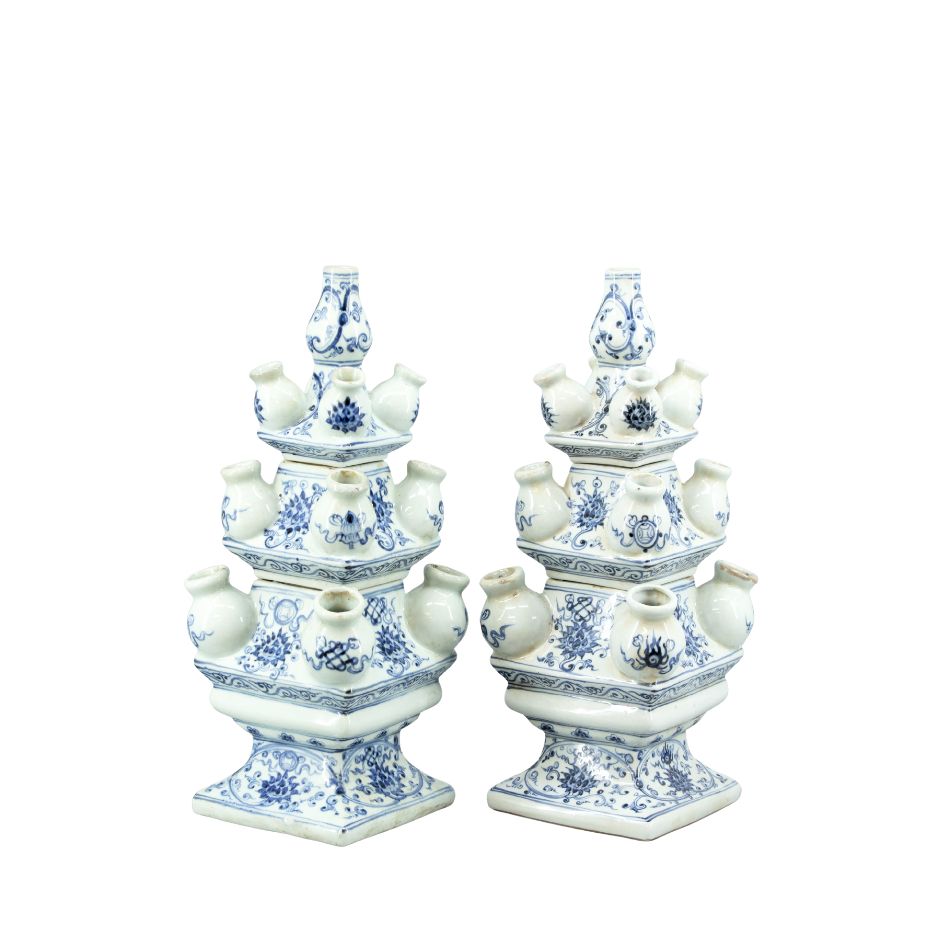
The method is the same as for models such as the tulip pyramid Amélie: pure kaolin and petuntse, high firing and full vitrification, the formula for porcelain with weight, density and that recognisable ring. The ginger jars are held to the same standard.
The history of Chinese ginger jars
Jingdezhen, in Jiangxi province, was the great centre of blue and white porcelain, and many of the ginger jars now in museums came from its kilns. Our models also take up two features that Western interiors have made familiar: the lid crowned by a lion and, on the shoulder, small lion masks modelled in relief.
Types of ginger jar and models
Blue and white ginger jar (classic)
Cobalt blue under the glaze; phoenixes, dragons, peonies, lotus flowers, shou characters and ruyi borders. The best-known variety.
Monochromes and coloured glazes
White, celadon, ox-blood red (sang-de-bœuf), black or turquoise: quieter coloured surfaces that work well in contemporary interiors.
The famille palettes
Famille verte and famille rose (overglaze enamels) with figures and garden scenes: brighter colours and richer decoration.
Temple jar versus ginger jar
The temple jar is taller, with a pronounced shoulder and a pointed lid; the ginger jar is rounder and more compact. Together they create a play of heights in an arrangement.
Antique, vintage or new ginger jars
- Antique (Qing dynasty and Republic period): the personal brushwork of each painter and a natural patina.
- Twentieth-century vintage: with character and more affordable.
- New, like those in this collection: sizes suited to the project, the option of forming sets, and craftsmanship that follows historical models.
How to place them (a curator's note)
- Symmetry works. A pair of ginger jars frames a chimneypiece or a console table and brings calm to the whole.
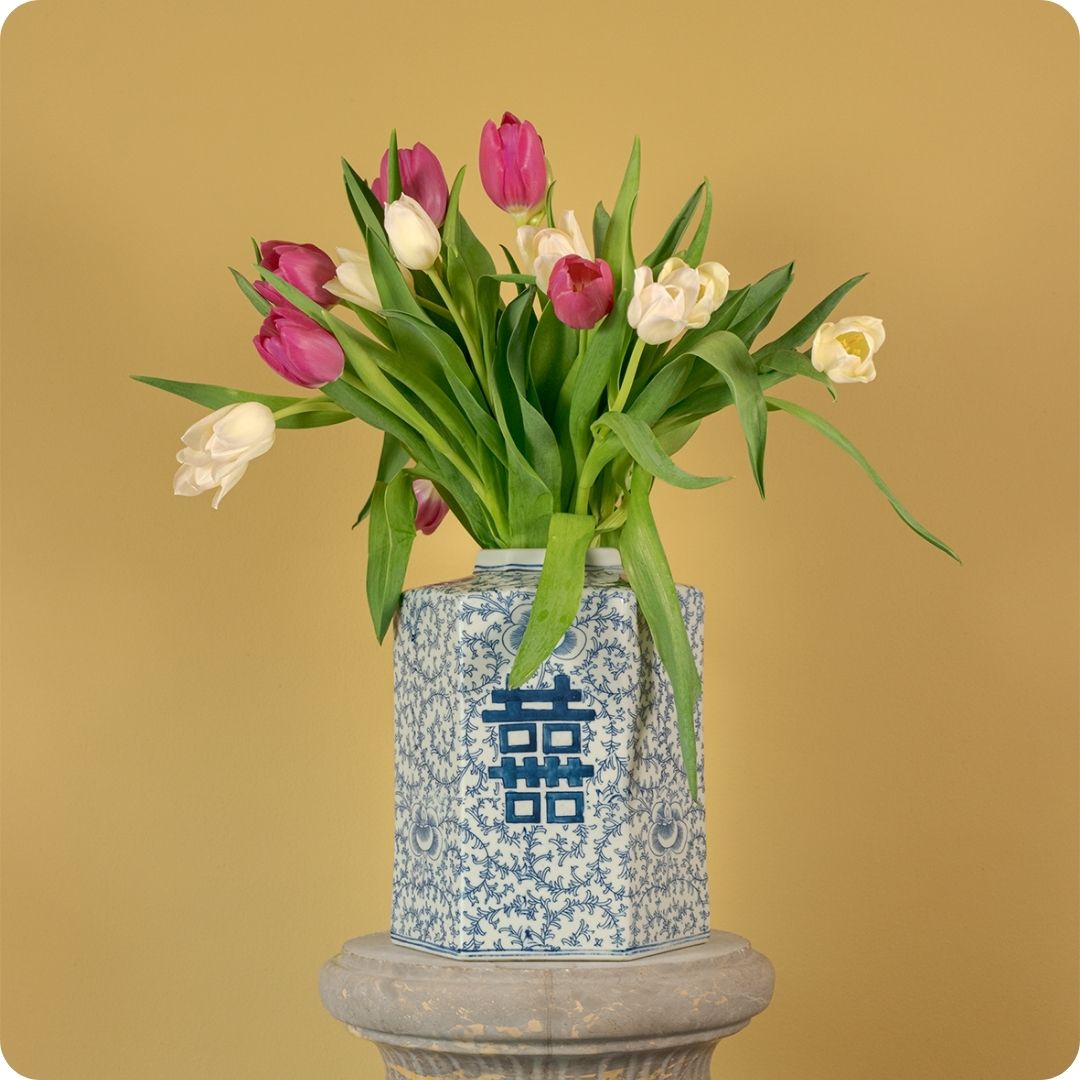
- With or without the lid. Lidded, the jar reads as a sculpture; open, it becomes a vase for branches or dried flowers.
- Mixed materials. Porcelain beside bronze or marble, the other Kuzco materials, brings out the tactile character of the arrangement.
Caring for ginger jars
Clean with a soft, dry cloth. If needed, wash by hand in lukewarm water with a mild soap, never in a dishwasher. Felt pads under the foot protect the furniture. Avoid sudden changes in temperature and strong direct sunlight.
Frequently asked questions about ginger jars
Can a ginger jar hold water?
Yes. Chinese porcelain is vitrified in a high-temperature firing and does not let water through.
How does it differ from Delftware?
Delft blue is tin-glazed earthenware: a softer white and a more porous body. Chinese blue and white is porcelain: harder, glassier and a brighter white.
Does a ginger jar suit a modern interior?
Yes, and that is often where it stands out most. A single jar gives a contemporary interior character and makes it memorable.