
Bronze Panthers
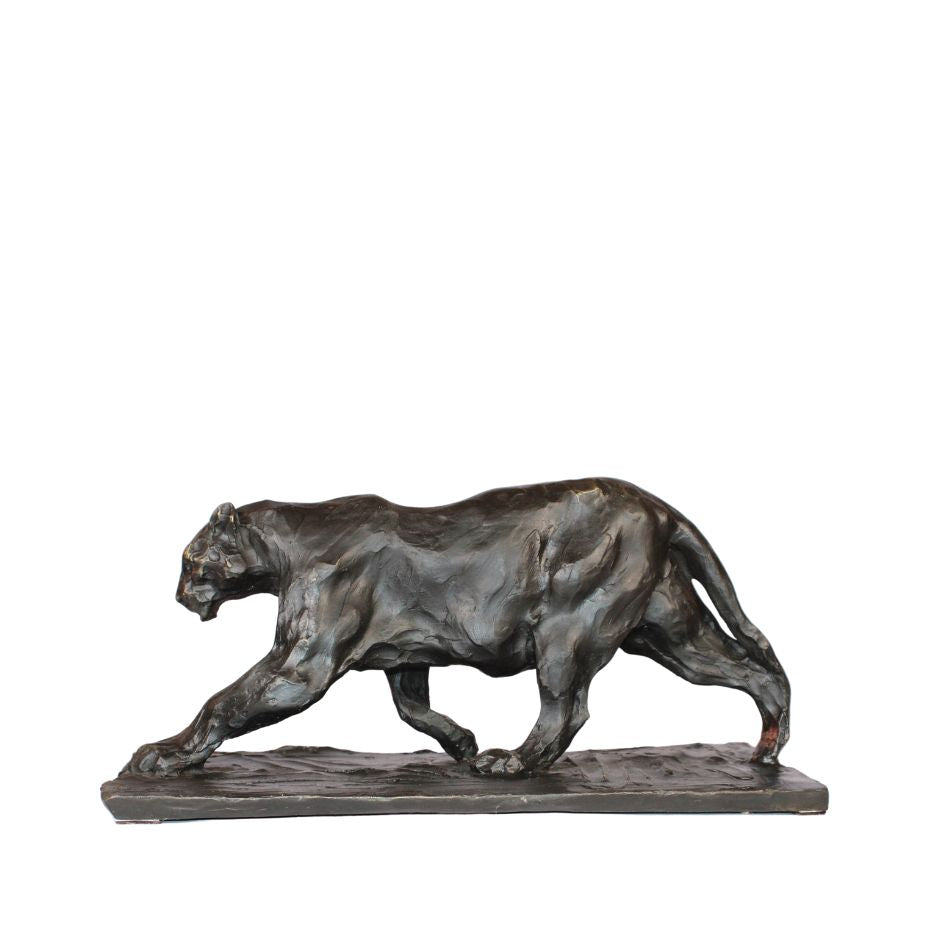
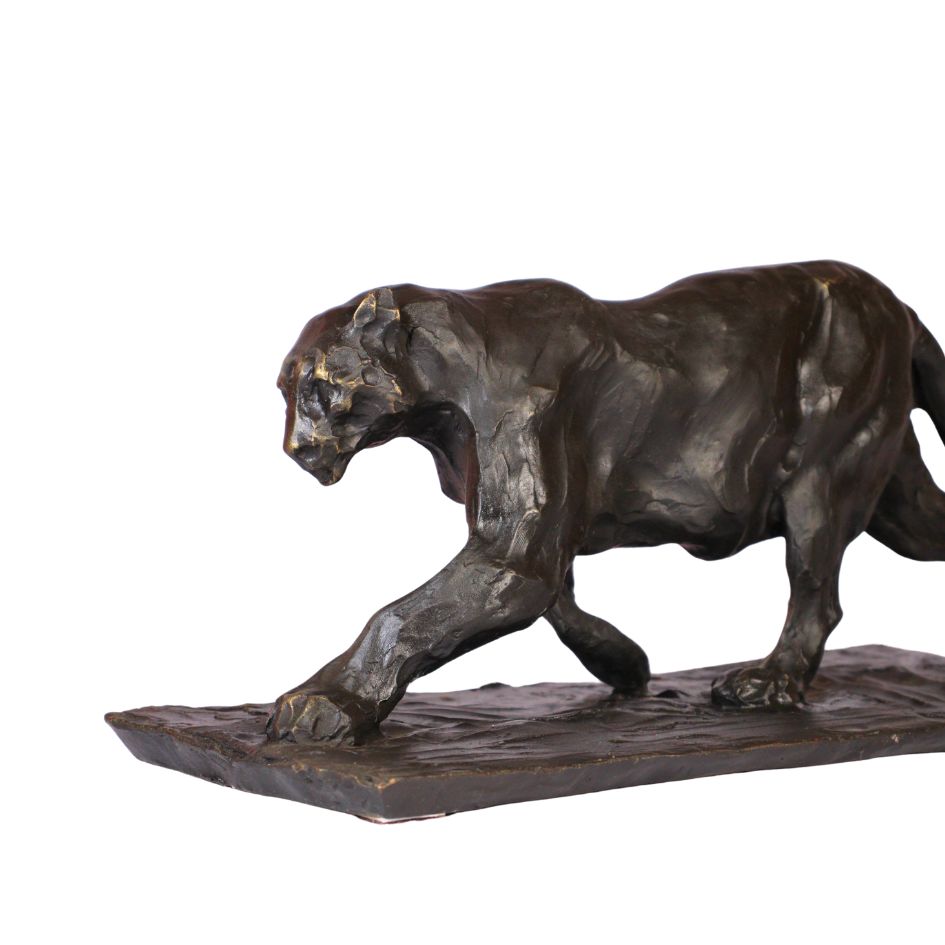
The panther was the animal of Art Deco. From the panther in full stride to the prowling, sitting or paired cat: handmade bronzes, cast using the lost-wax method and patinated one by one.
Buying a bronze panther
The panther is the most iconic animal of Art Deco — and a recurring motif in the French animalier sculpture that came before it. At Kuzco Art Maison you aren't choosing décor, but a hand-cast bronze big cat with weight, surface and a story you can tell. Each panther is cast in lost wax, then chased and patinated by hand. Our selection runs from a compact prowling panther to a pair of nearly a metre — a fitting piece for every space and every budget.
Selection and quality control are grounded in art-historical research. Kuzco Art Maison is led by Lilly-Ann de Zeeuw, MA — artist, art historian and curator (UvA & VU). Our bronzes have been shown at Maison & Objet in Paris and are trusted by interior designers in more than ten countries.
Why the panther became the symbol of Art Deco
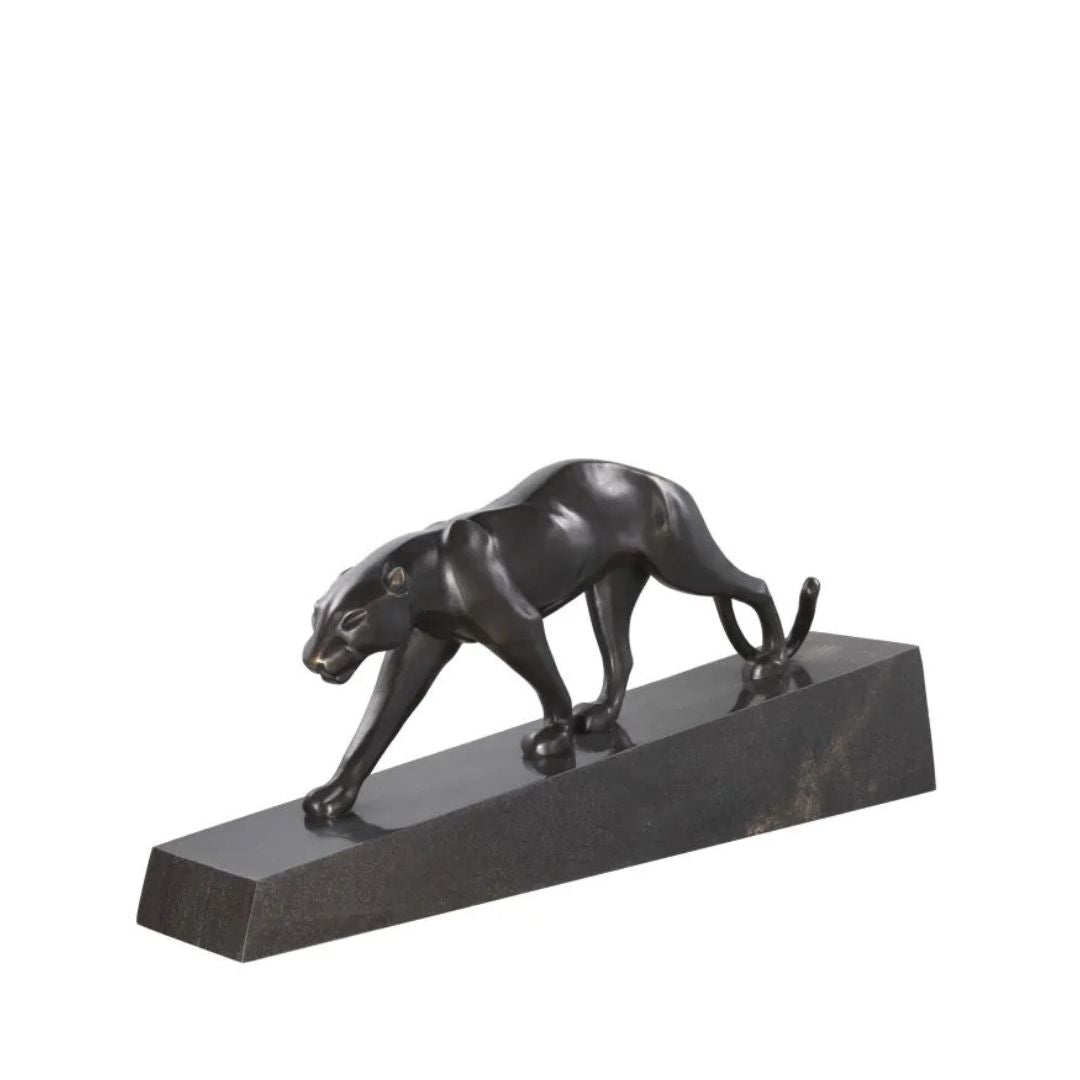
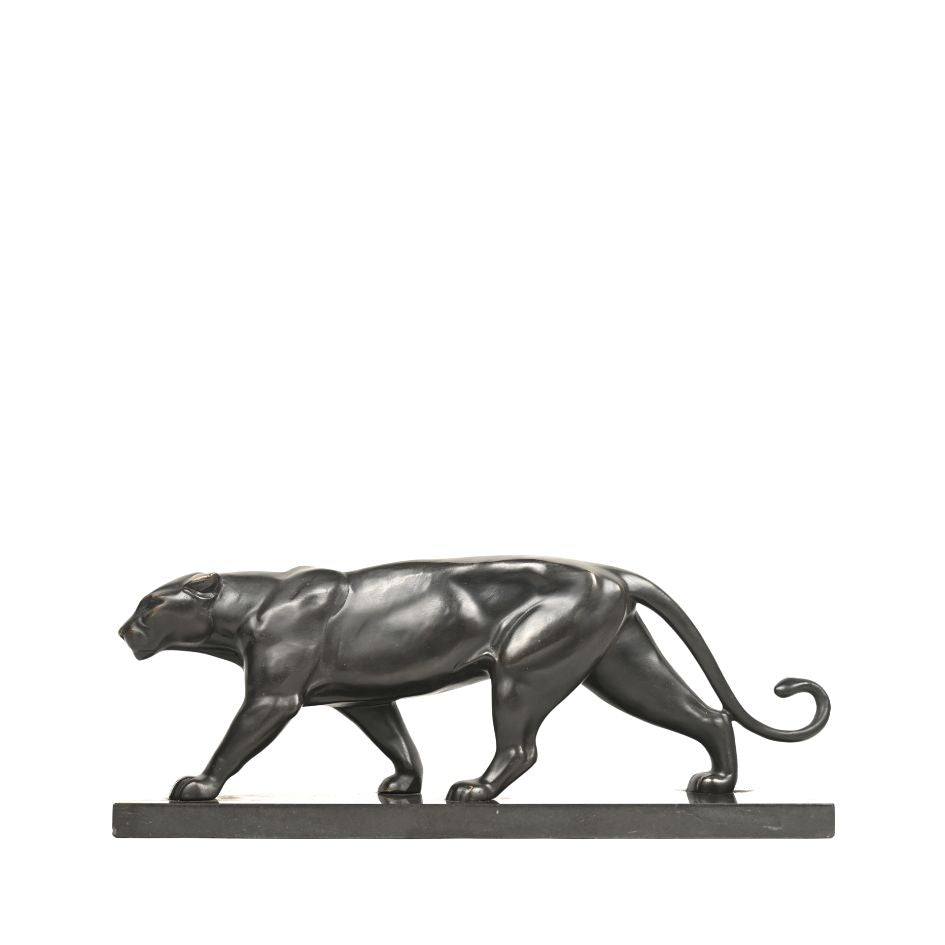
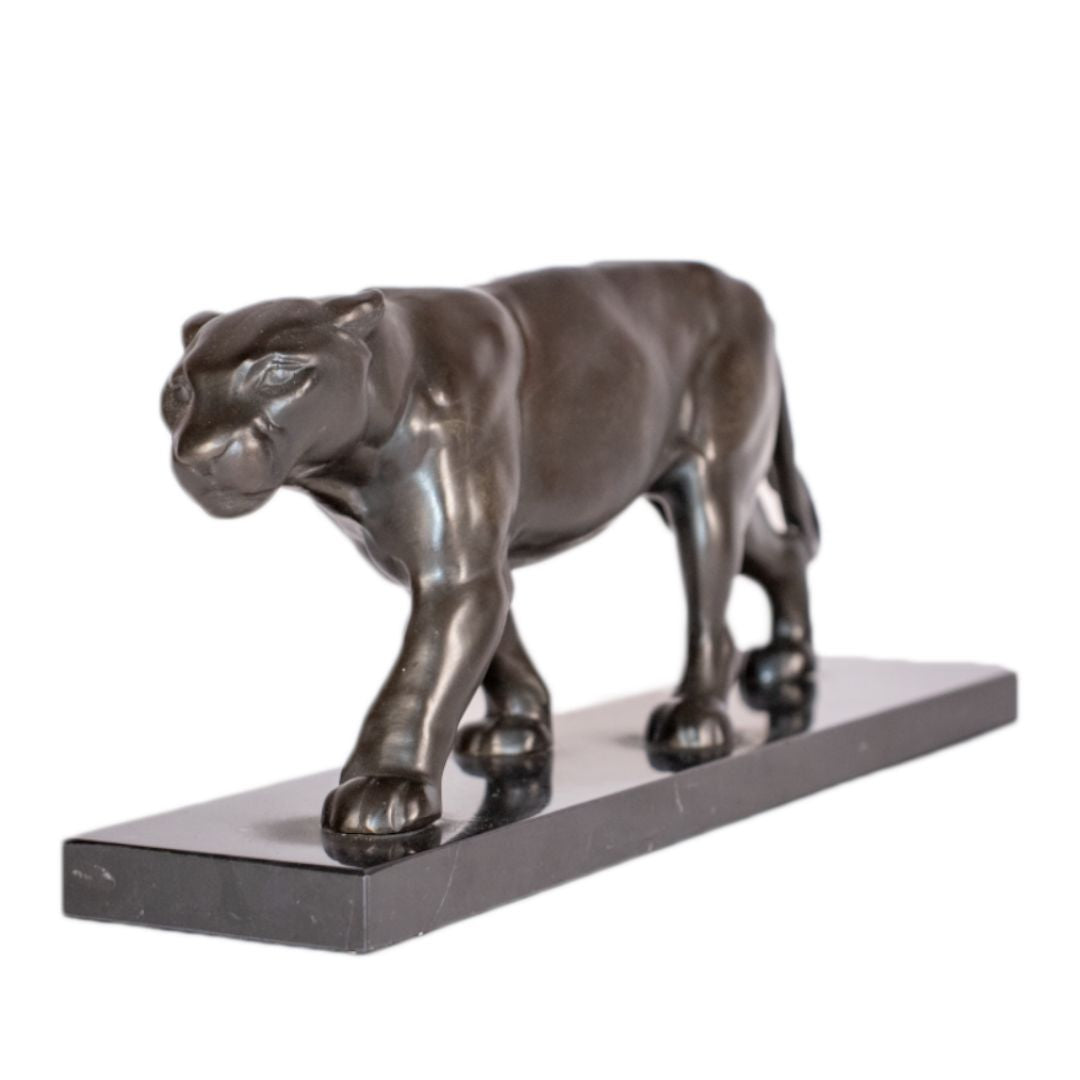
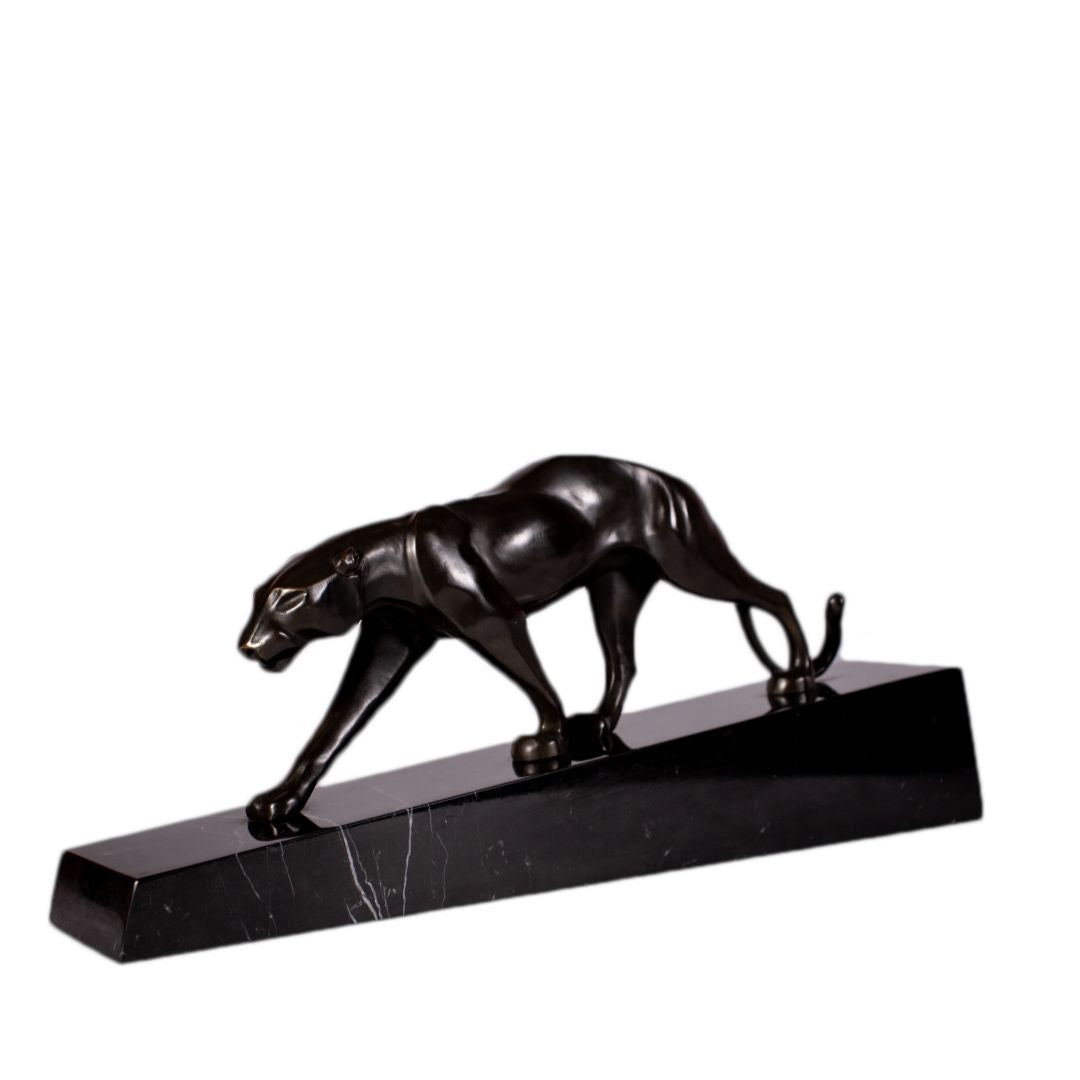
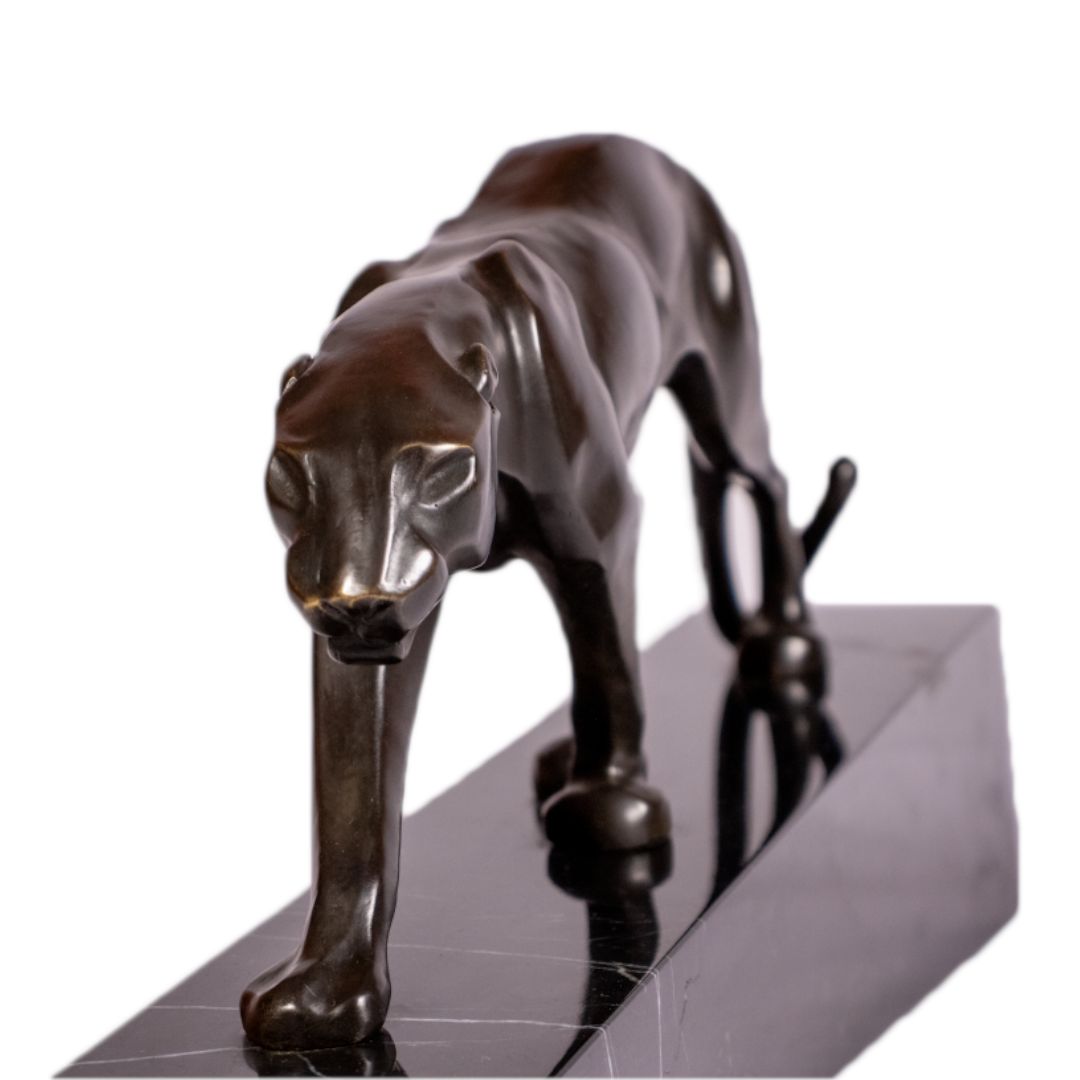
In the 1920s and 1930s the panther stood for strength and elegance at once, captured in clean, stylised lines — exactly the formal language of Art Deco. The walking panther on a black marble base became a signature motif of the period. Our collection shows both sides: the stylised Art Deco line and the more loosely modelled, naturalistic cat from the animalier tradition.
The animalier tradition and Rembrandt Bugatti
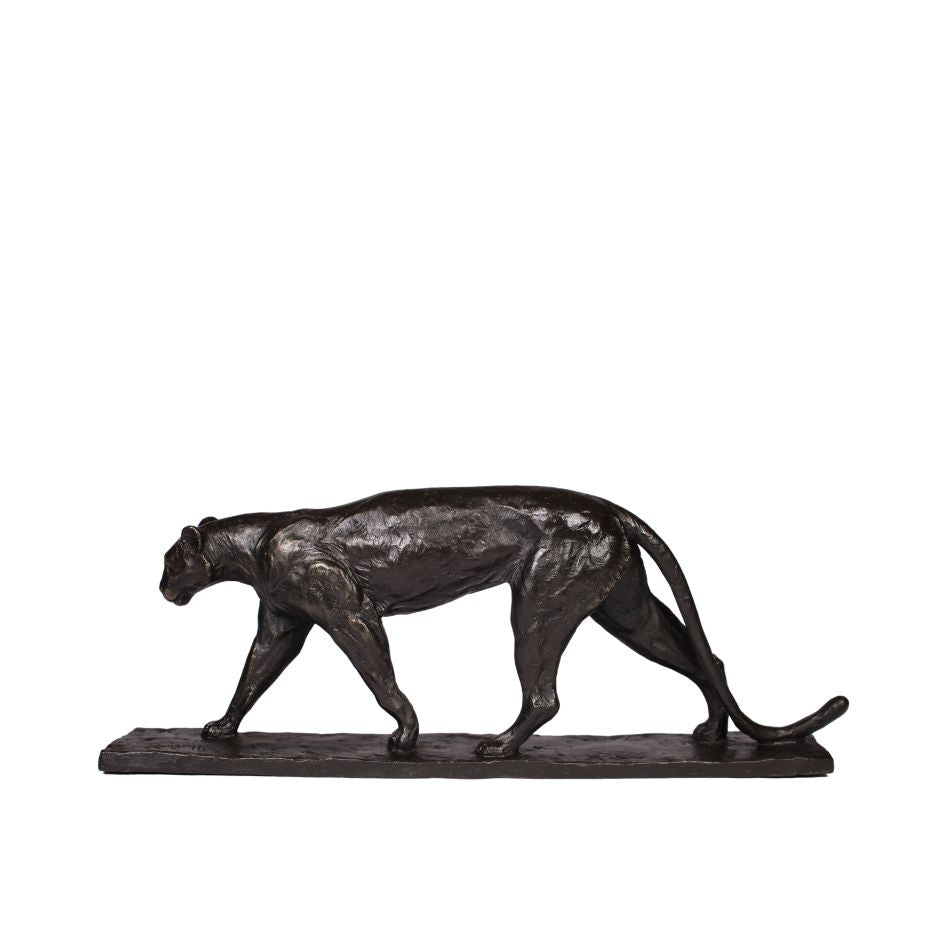
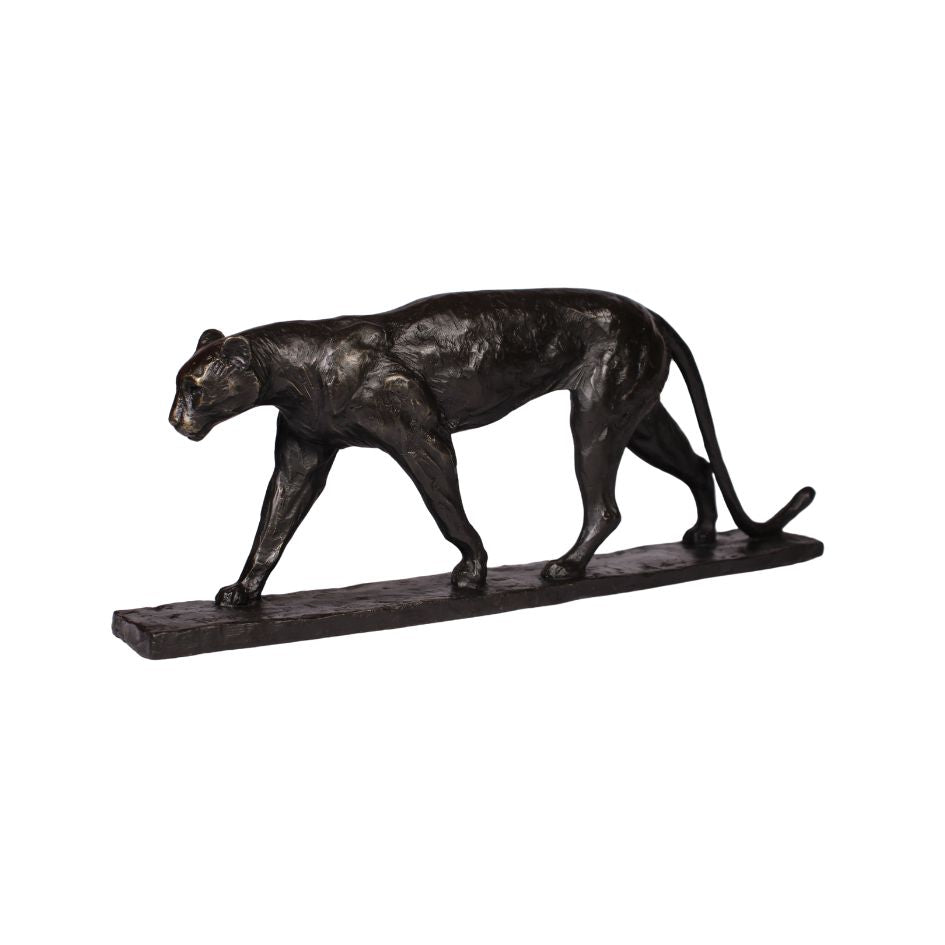
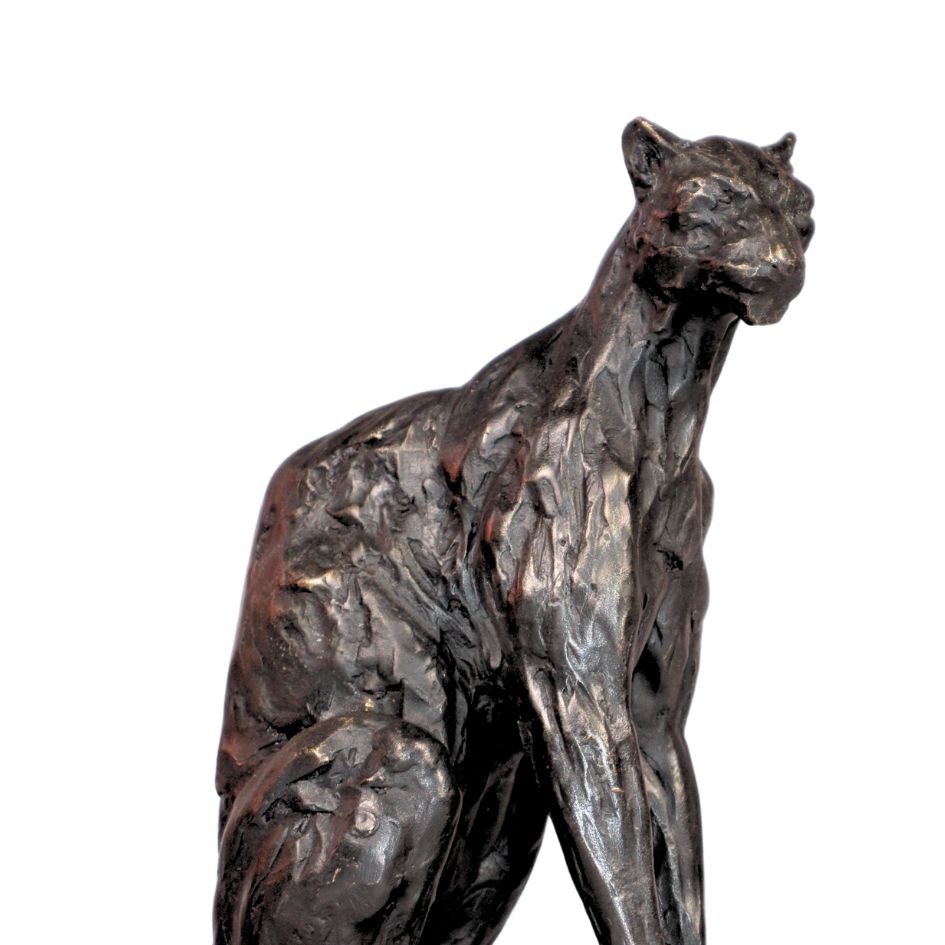
Many of our panthers go back to the work of Rembrandt Bugatti (1884–1916), the Italian-French sculptor who didn't invent his animals in the studio but observed them in the zoos of Paris and Antwerp and at the Jardin des Plantes. That let him capture movement no photograph fixes. On several pieces his loose, almost 'fingerprint' modelling is still visible in the surface, giving the bronze a living skin under raking light. Explore our wider Rembrandt Bugatti sculptures and the full Art Deco bronzes.
Which pose suits your space?
The posture decides how a panther 'reads' in an interior. Below are the poses in our collection, with their character and placement advice.
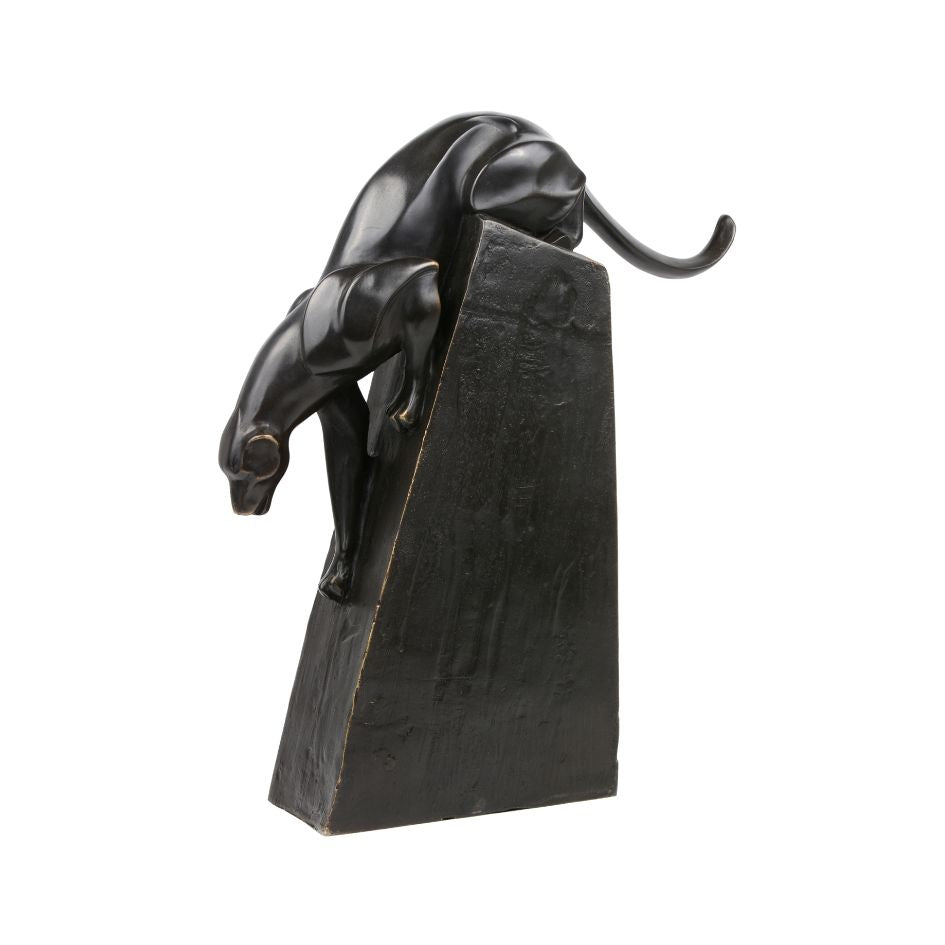
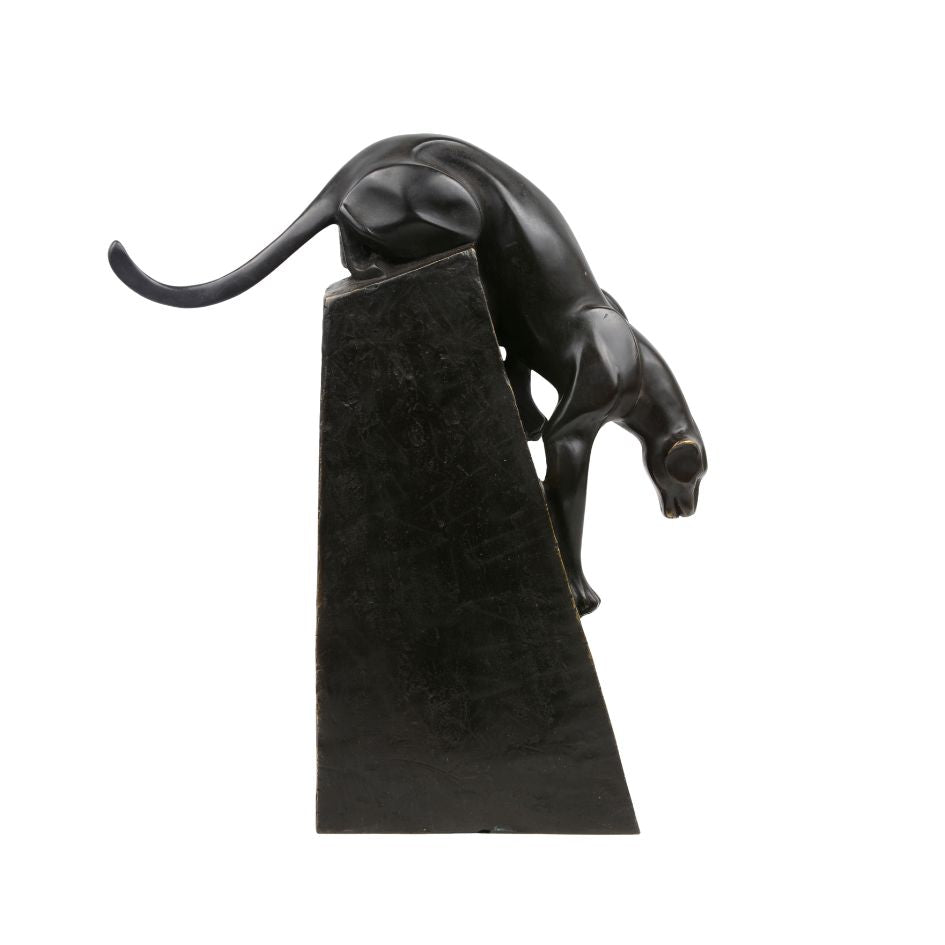
- Prowling / descending — the most tension and dynamism. The Prowling Panther descends head-down along a rock; striking from every angle on a sideboard or large table.
- Walking / in full stride — calm and tension together, on a long horizontal line. See the Black Panther and the polished Art Deco Panther on black marble.
- Hunting — a moment of contained power, foreleg extended. The Hunting Black Panther (approx. 20 cm) makes a refined focal point.
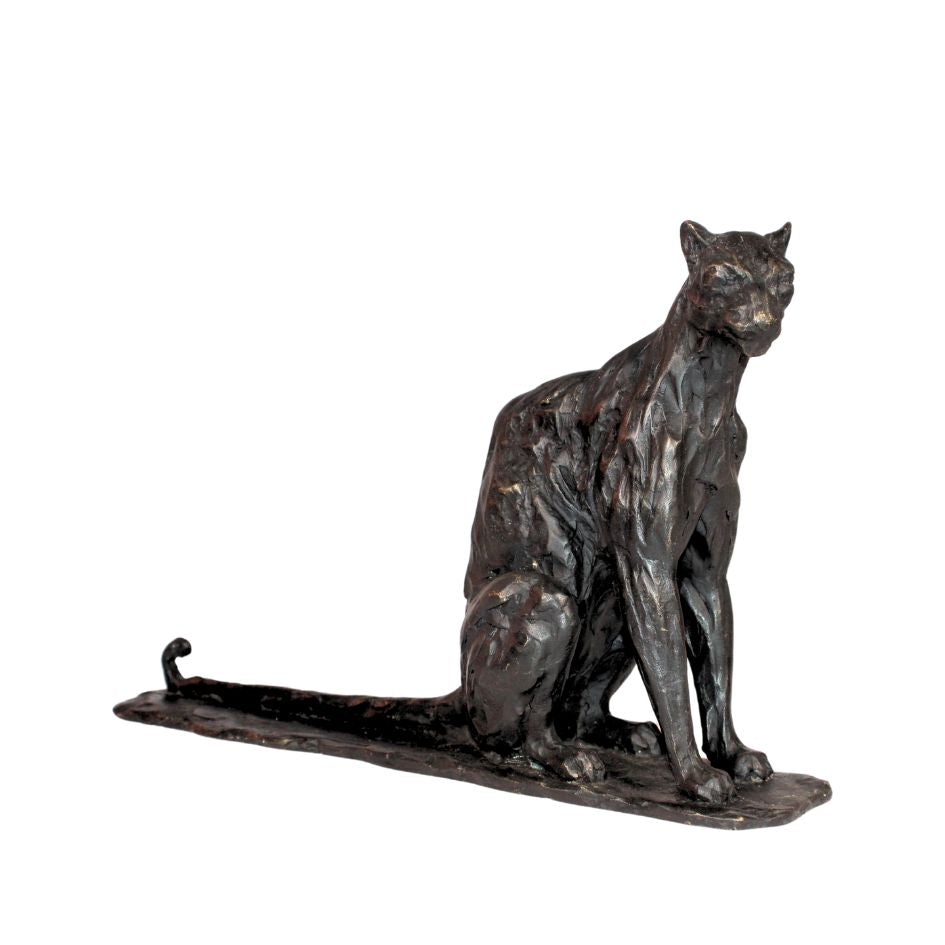
- Sitting — a calm, slender silhouette for a console or open shelf. See the Sitting Panther.
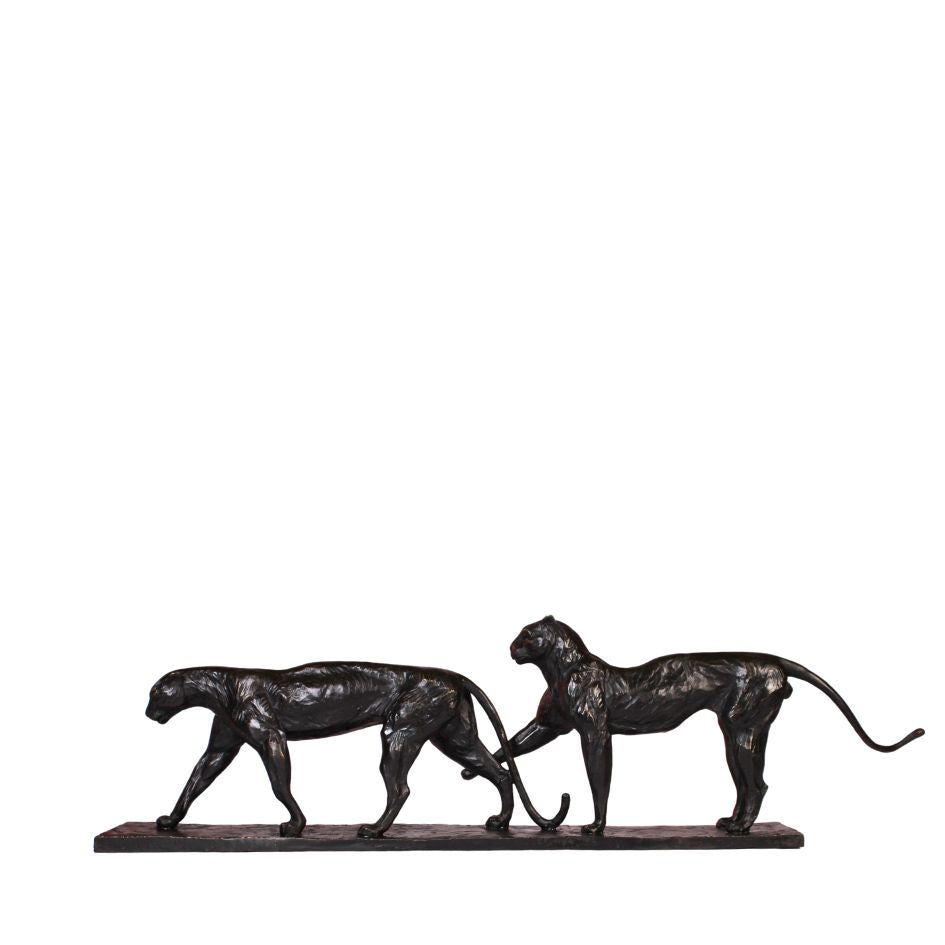
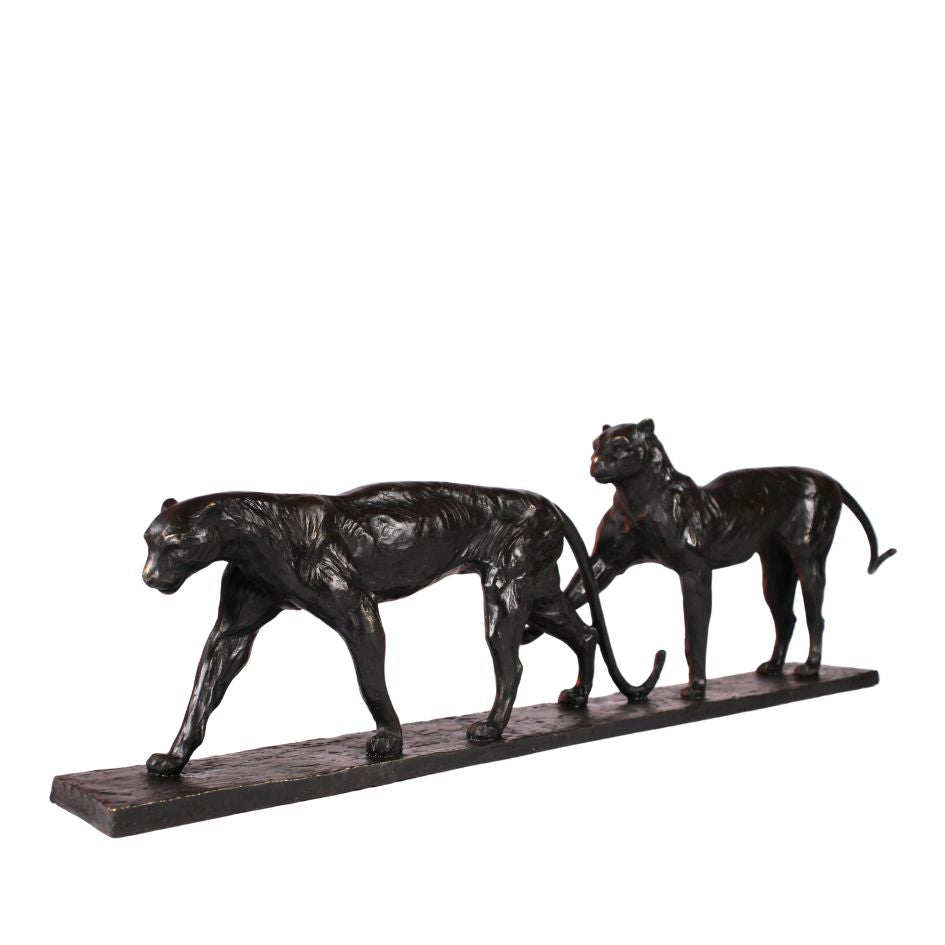
- As a pair — an anchor piece. The Art Deco Pair measures around 91 cm and calls for a console table or entrance hall as its centrepiece.
How our bronze panthers are made
Each panther is cast using the lost-wax method (cire perdue), a process applied since antiquity that makes every cast unique. After casting, casting seams are chased and the surface refined. Finally we apply a dark-brown to almost-black patina by hand, which emphasises the muscle lines and contours and gives the bronze its depth. These are new, handmade works in a historical style — not antiques, and not industrial casts.
What does a bronze panther cost?
Price depends on size, complexity and base. In our collection a compact piece starts around €625, most individual panthers sit between roughly €900 and €1,900, and a large pair reaches about €3,445. A bronze panther isn't bought for a season: good bronze lasts generations, holds its value and is passed on. Torn between two poses or sizes? Get in touch — we'll think it through with you, starting from your interior.
Frequently asked questions about bronze panthers
Are your bronze panthers solid or hollow cast?
Hollow cast. That has been the standard for museum-quality sculpture for centuries: it keeps the weight manageable without compromising strength or presence. The correct wall thickness, set during the lost-wax process, ensures stability and a refined finish.
Is every panther unique?
Yes. Although models are cast in small series, no two are identical. Casting, chasing and patination create subtle differences in surface, tone and detail. Each piece is finished and checked individually before shipping.
Who are the panthers modelled after?
Many of our panthers are made in the style of Rembrandt Bugatti (1884–1916), a figurehead of the animalier tradition. They are new creations in his style — not official casts and not antiques.
Which patina colours are available?
Most panthers have a dark-brown to almost-black patina. For larger works, such as the pair, other patina variants are available on request.
Can a bronze panther stand outdoors?
A patinated bronze withstands weather and frost. We do recommend keeping panthers with a marble base indoors, however, as marble is more sensitive to the elements. When in doubt, we advise per model.
How is a bronze panther delivered?
Carefully packed and shipped by insured art transport throughout Europe; shipments over 30 kg travel on a pallet. Weight and dimensions are listed on each product page.
Can I buy a bronze panther as a private individual?
Yes. Since 2026 we also sell directly to private customers through the webshop, with a 14-day right of withdrawal. Trade customers order via a dedicated account.