Kuzco Art Maison
Bronze Panthers - Art Deco Pair
Bronze Panthers - Art Deco Pair
Showroom Amsterdam
Hekelveld 1
1012 SN Amsterdam
Netherlands
Choose options
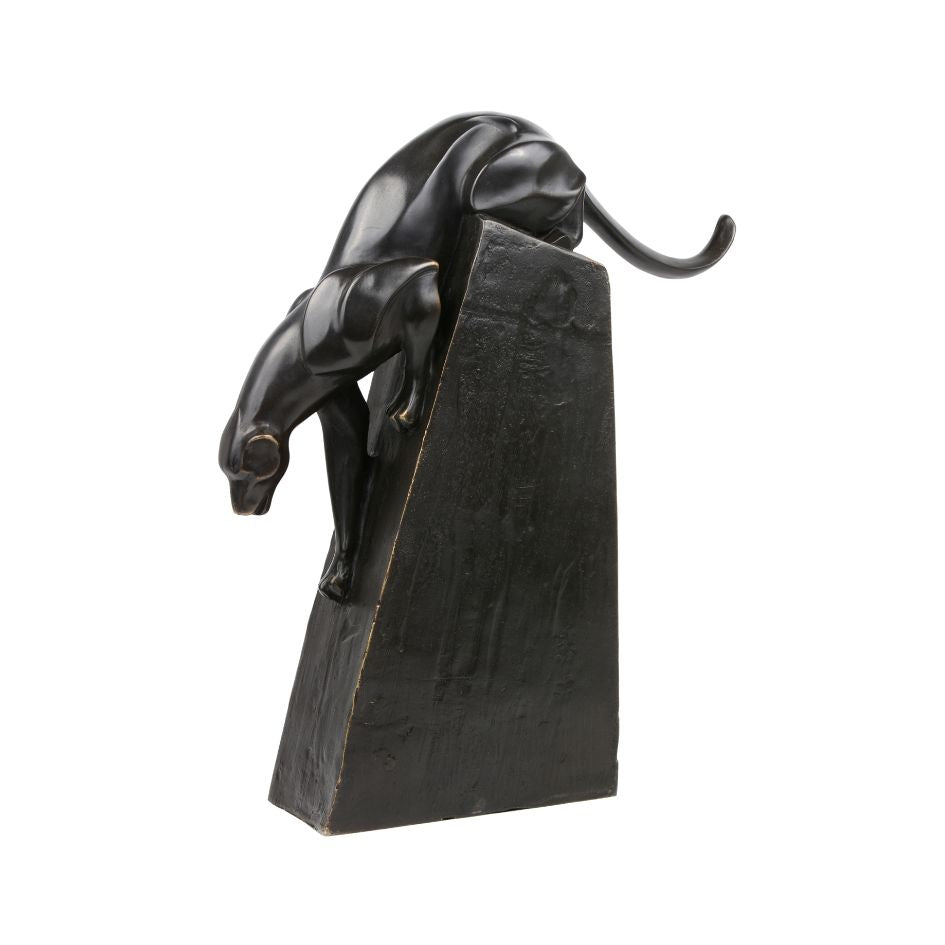
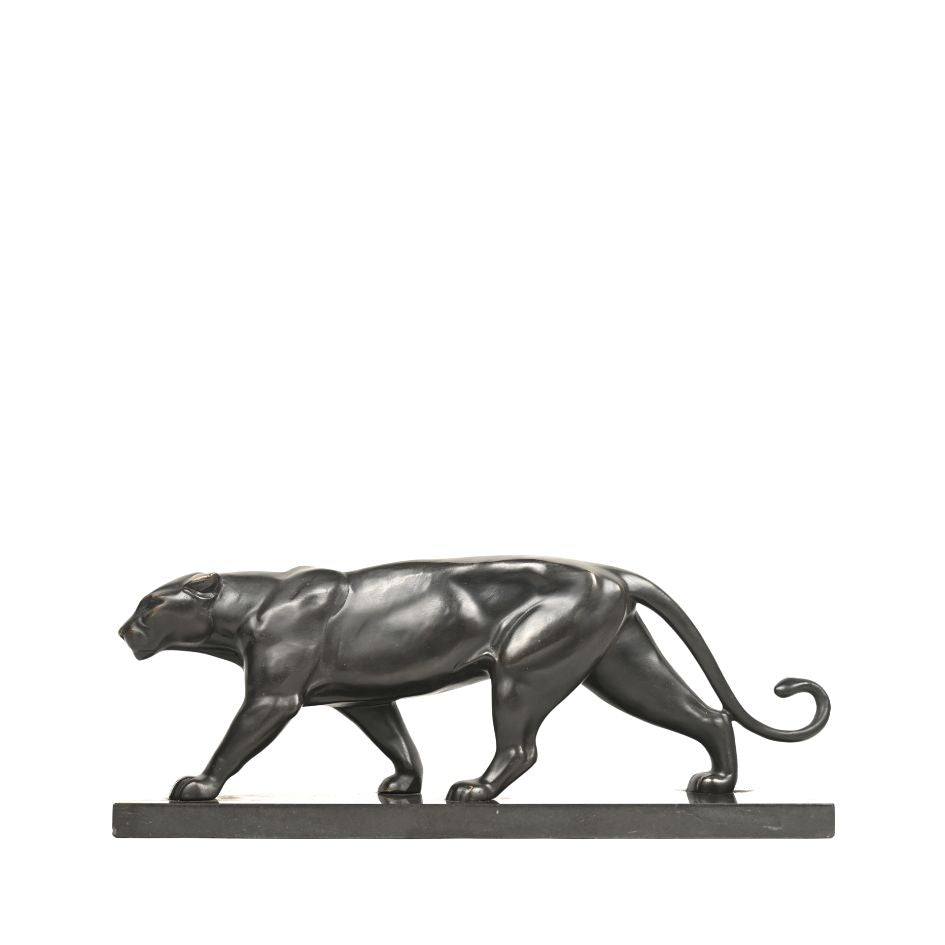
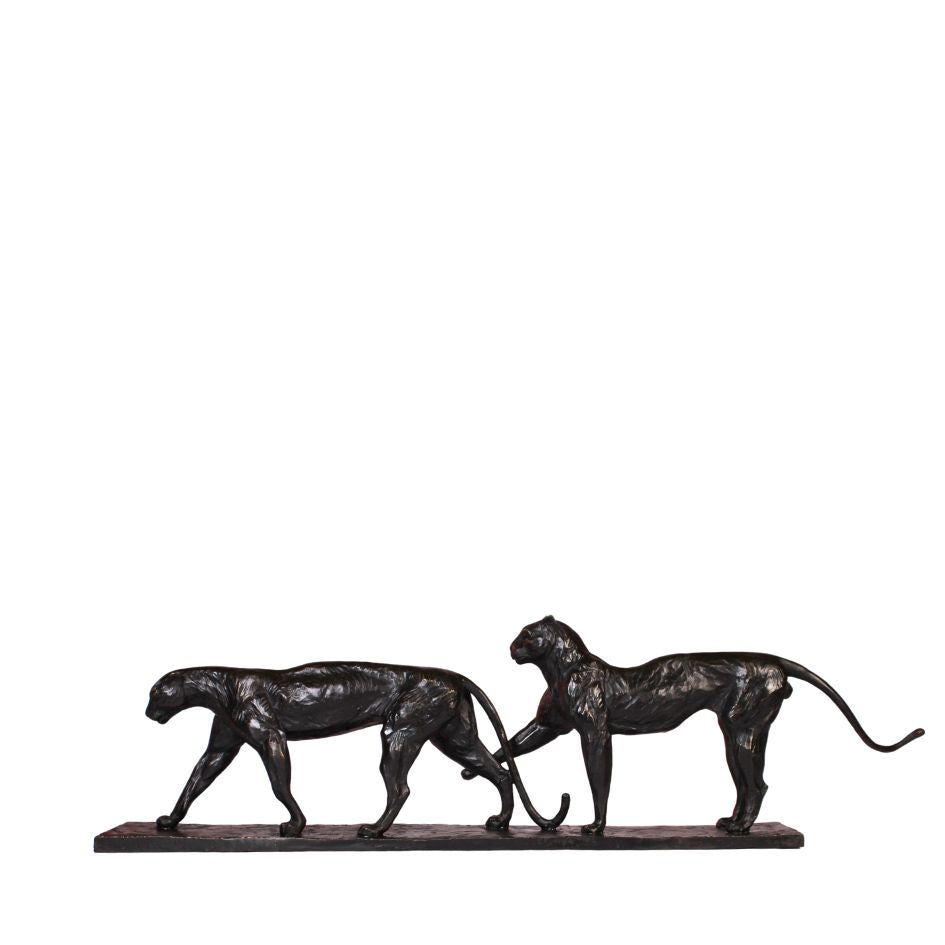
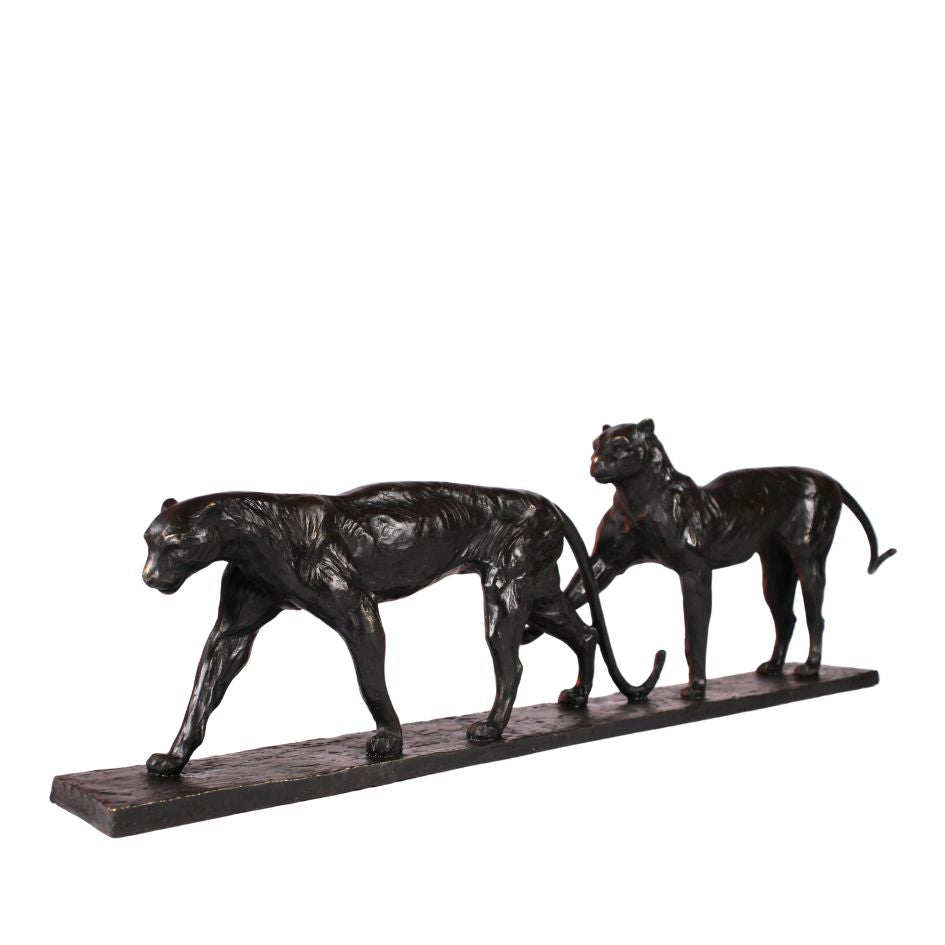
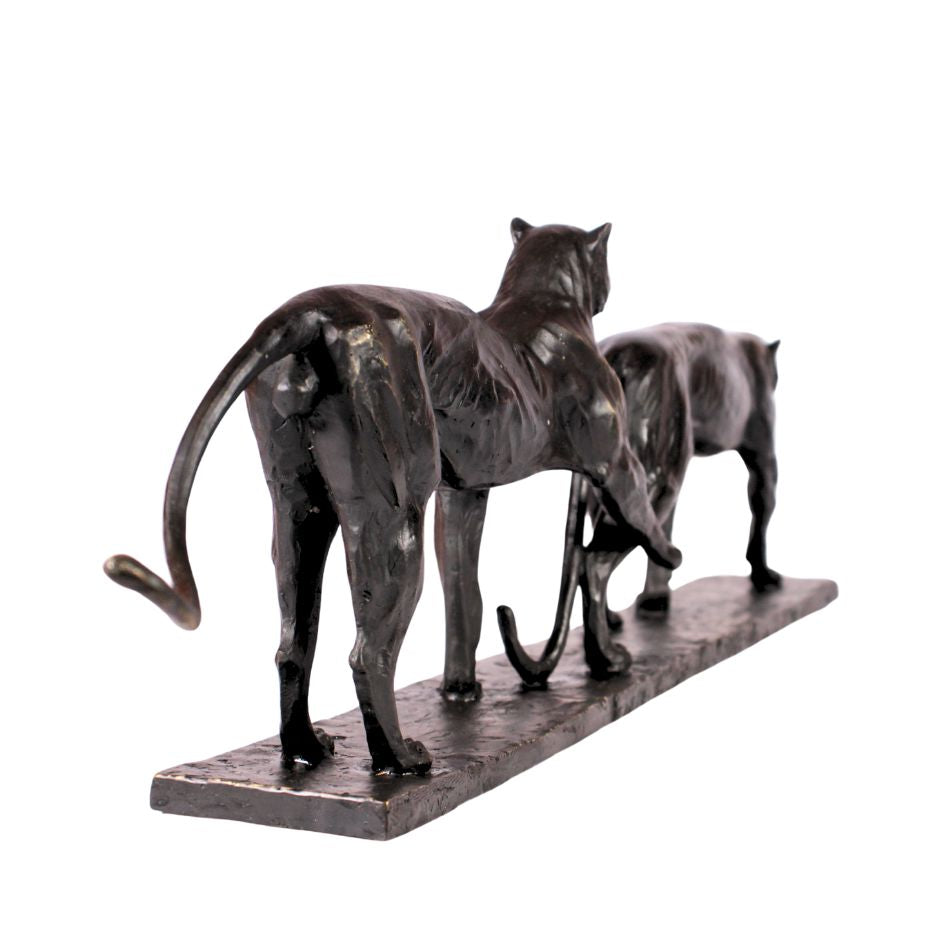
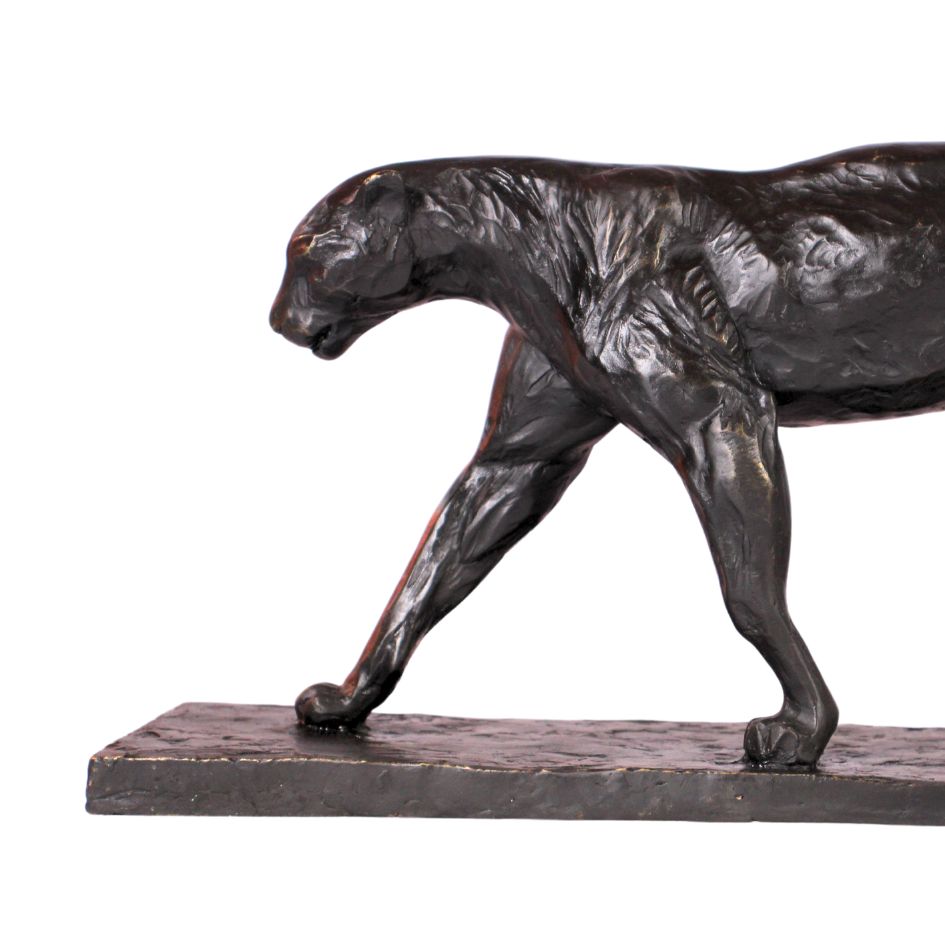
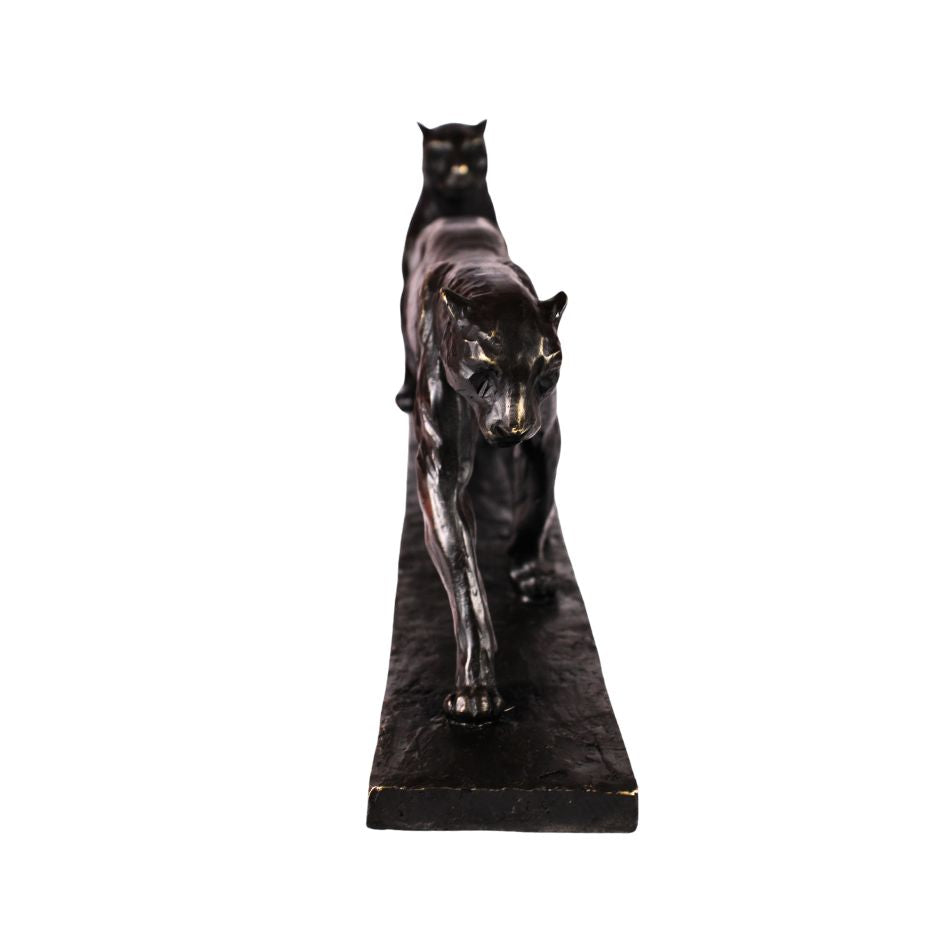
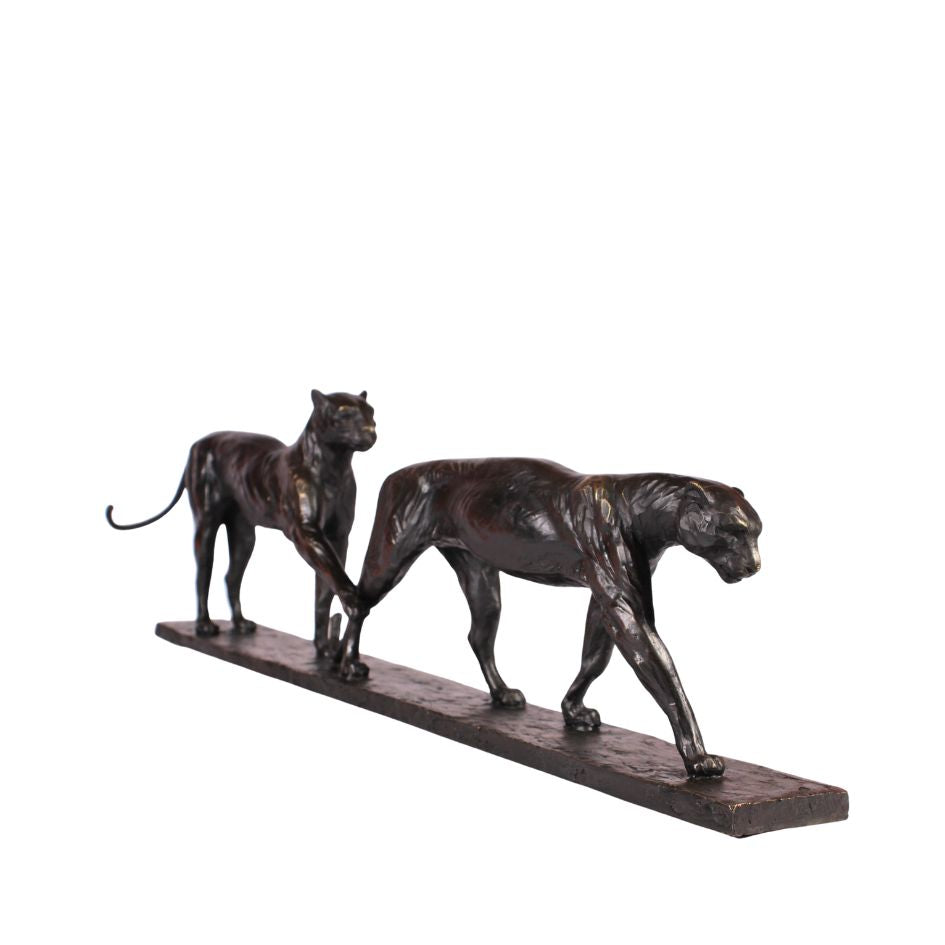
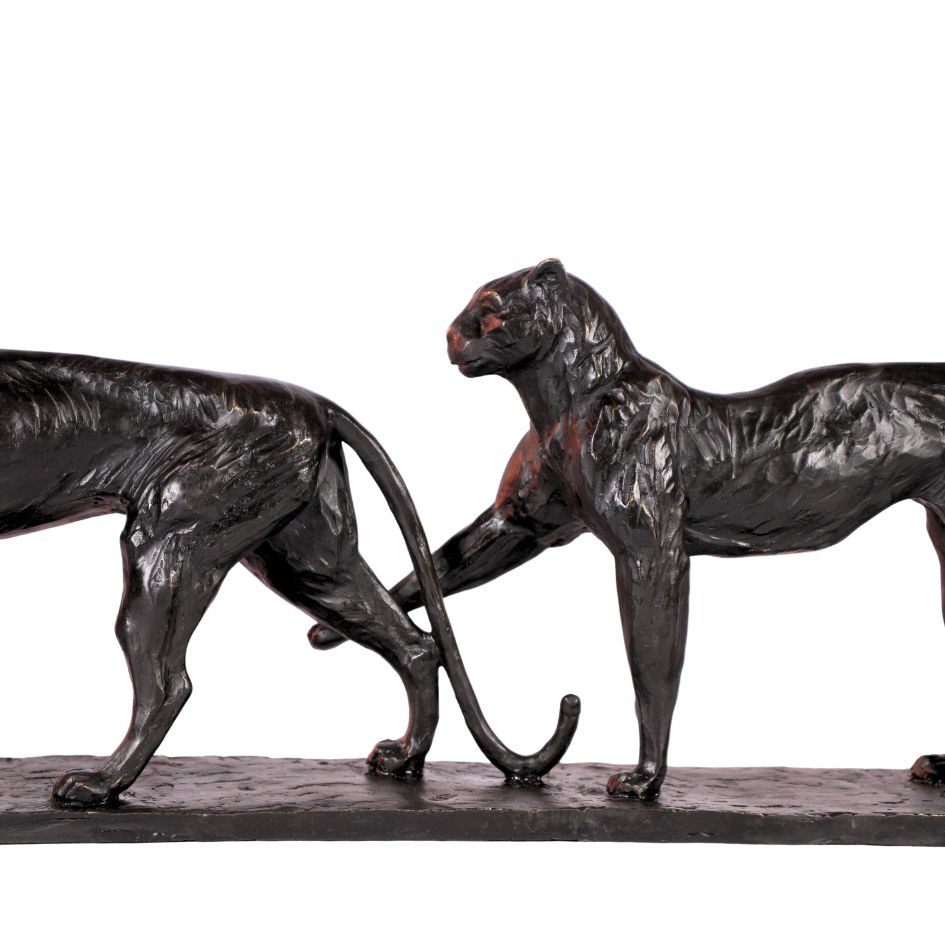
These bronze panthers walk in single file along one long plinth. The leader carries its head low with a foreleg reaching forward; the second follows a pace behind, head raised and turned to the side.
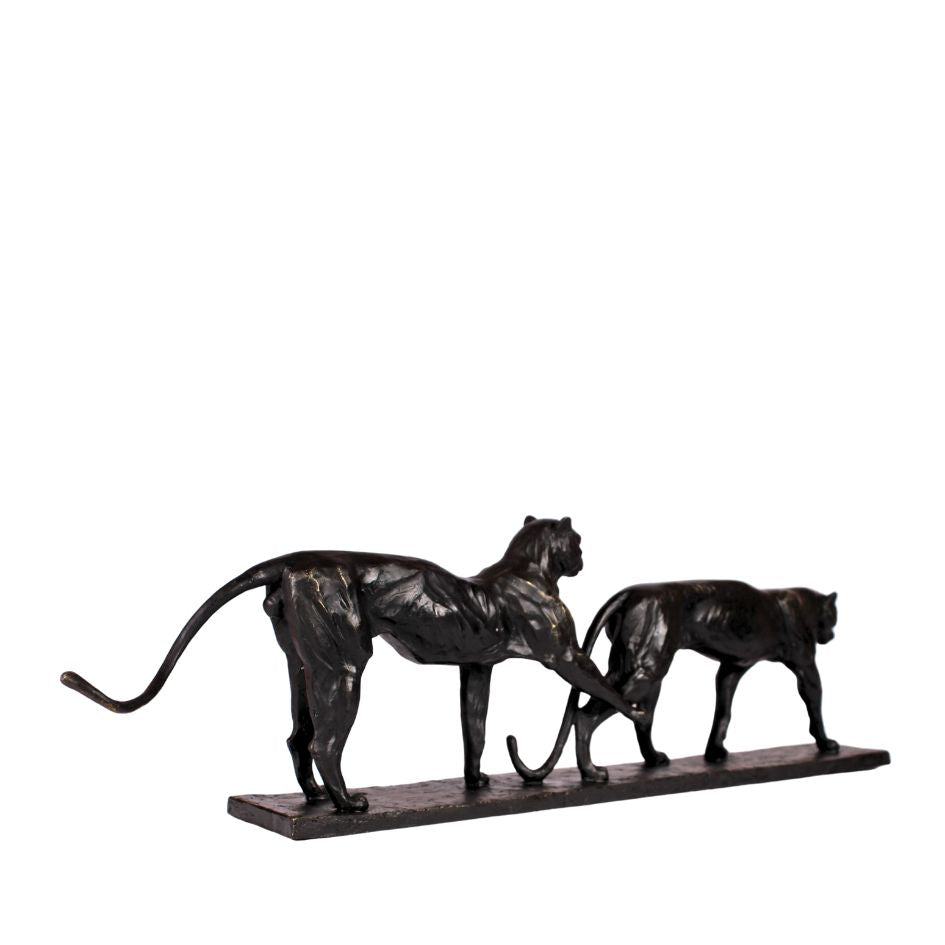
Their long tails cross between the two bodies and end in a downward hook. The modelling is left open: short gouged strokes stand for the fur, the flanks are cut in broad planes, and the lean, long-legged bodies carry heavy shoulders. A dark brown patina, almost black, turns reddish where the planes rise, and along the worn edges of the plinth the bronze shows through golden.
The group follows Rembrandt Bugatti (1884–1916) in its manner rather than in any one model: he studied animals from life, and from 1907 drew those of the Antwerp zoo. The pair is cast in bronze using cire perdue, the lost-wax technique, and patinated by hand afterwards; other patinas can be made on request.
At 91 cm long and only 11 cm deep, the group suits the top of a long chest in an entrance hall, the two animals walking towards the door. Walking round it shows how the crossed tails and the turned head of the second panther bind the pair into one composition.
Worldwide shipping
We work with reliable freight carriers worldwide who are experienced in transporting heavy and delicate works of art. This ensures that your order arrives safely. Shipping costs are calculated on the basis of the weight, dimensions and destination of your order. We aim for competitive rates and provide a detailed quote once the order has been confirmed.
Estimated delivery times vary depending on your location and the size of the order. Domestic shipments usually take 3-7 working days, while international deliveries can take 3-60 working days.
For shipments outside the EU, please note that import duties and taxes may apply under the rules of your country. These costs are not included in our prices and are payable by the buyer.
Warranty
We aim for the highest standards of quality and craftsmanship in our bronze sculptures. All our products carry a 24-month warranty against defects in materials and workmanship under normal use and care. This warranty covers any problems that arise during this period; we will repair or replace the product free of charge. For warranty questions, please contact our customer service.