Tulpenvazen

Tulip Vases

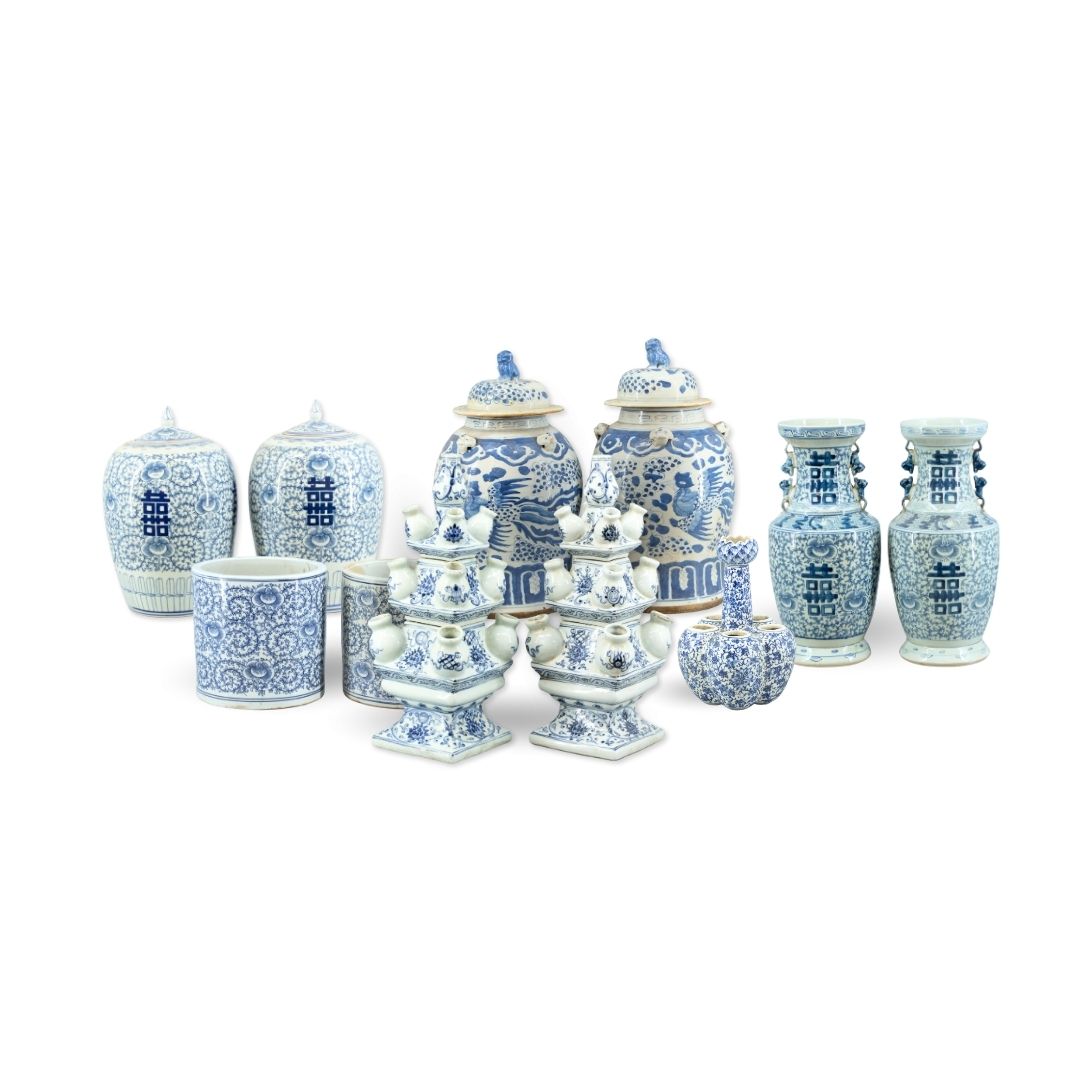
Discover our collection of Chinese porcelain tulip vases at Kuzco Art Maison. Hand-painted in cobalt blue and white. Each piece is perfect for an elegant interior.

Filters

3 products
Sort by
Sort by

Buy Tulip Vases

Our tulip vases are selected and designed to function as both sculptural objects and refined flower vessels, chosen for interiors that deserve more than trend-driven styling.

What distinguishes our collection is curatorial rigour combined with accessibility. Under the direction of Lilly-Ann de Zeeuw, MA (Museum Studies & Art, Market & Connoisseurship—UvA & VU), each tulip vase undergoes assessment for art-historical authenticity, material integrity and interior relevance. We travel directly to established ateliers in China to source hand-painted pieces that honour centuries-old techniques.

What is a Tulip Vase?

A tulip vase (also: tulip pyramid, flower pyramid, tulipiere) is a specially designed vase with multiple spouts. Each stem receives its own opening, allowing tulips to stand upright and airily, making the bouquet appear sculptural. Historically, tulip vases were crafted in high-quality Chinese porcelain and later in Delftware; at Kuzco Art Maison, we make only hand-painted premium Chinese porcelain tulip vases.

Why Buy a Tulip Vase?

A tulip vase combines flower arranging with object art. The spouts create height, rhythm and composure—perfect for a console, mantelpiece or dining table. Our vision: interiors should inspire like exhibitions. Therefore, we design and select tulip vases that are both functional and artworks—hand-painted, timeless and rooted in art history.

The History of Tulip Vases

Tulip vases emerged in the late 17th century within the context of tulip mania and trade with China. Blue-and-white porcelain from Jingdezhen set the standard; Delft potters translated this aesthetic into tin-glazed earthenware (Delftware). In the 19th century, fascination returned with so-called Kangxi Revival decorations—floral, deep indigo blue—which inspire several of our models.

Types of Tulip Vases: Choosing the Right Model

Different tulip vase forms suit different spatial contexts, bouquet sizes and interior aesthetics.

Small Tulip Vase with Neck and Spouts

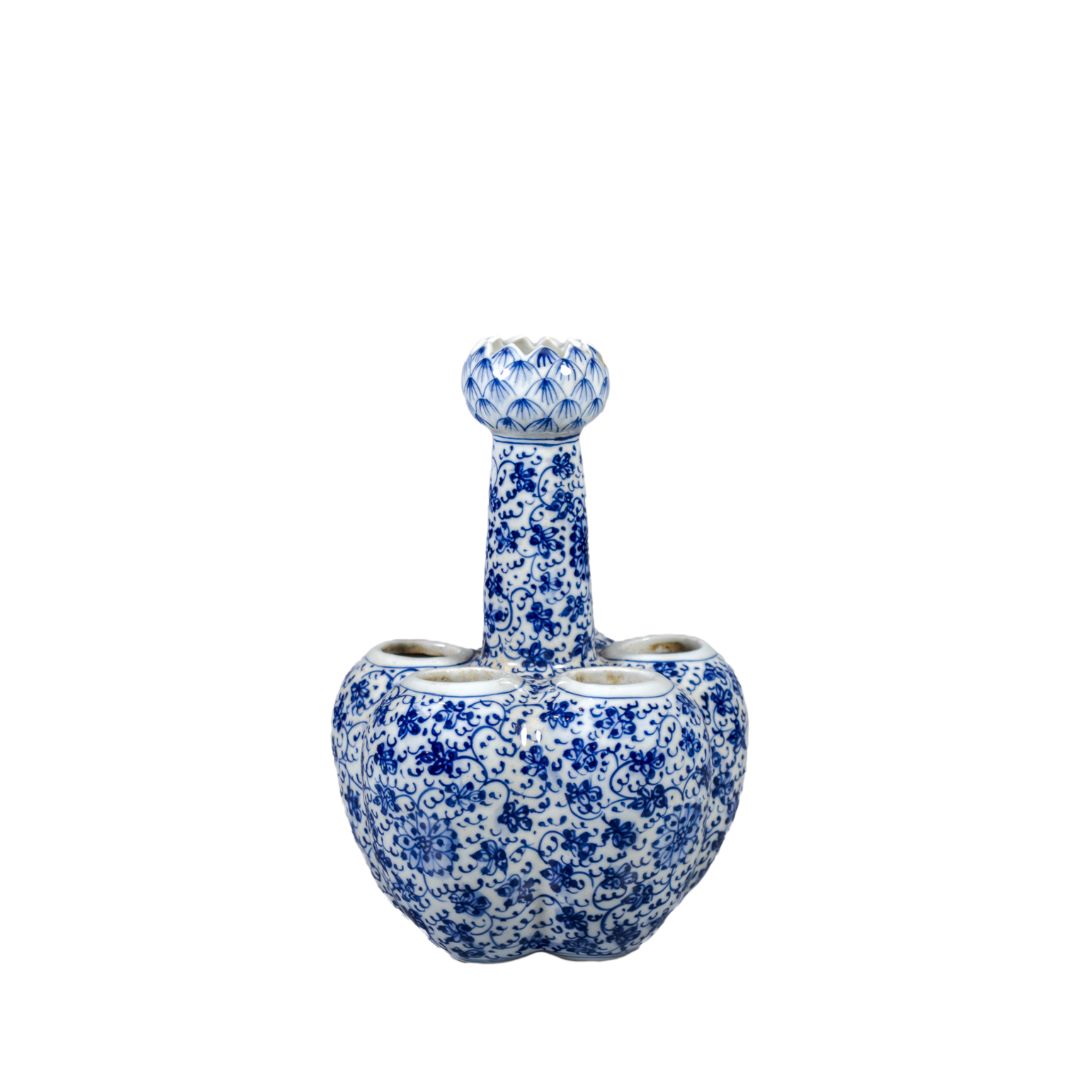
If you're seeking a tulip vase that works everywhere, the classic model with central neck and multiple spouts around the body is most versatile. This blue-and-white porcelain is designed to give each stem its own space; tulips remain upright, the silhouette stays airy. In compact living rooms or on a sideboard, its size is highly practical: sufficient volume to command attention, slender enough not to block sightlines.

Our Tulip Vase – Kangxi Revival aligns with 17th-century aesthetics: cobalt blue underglaze on a clear white body, high-fired around 1400°C for that recognisable, clear ring. Choose this model when you occasionally have tulips at home or seek a well-priced small all-round tulip vase for 10–20 stems.

Classic 3-Tier Tulip Vase (Stacking Model)

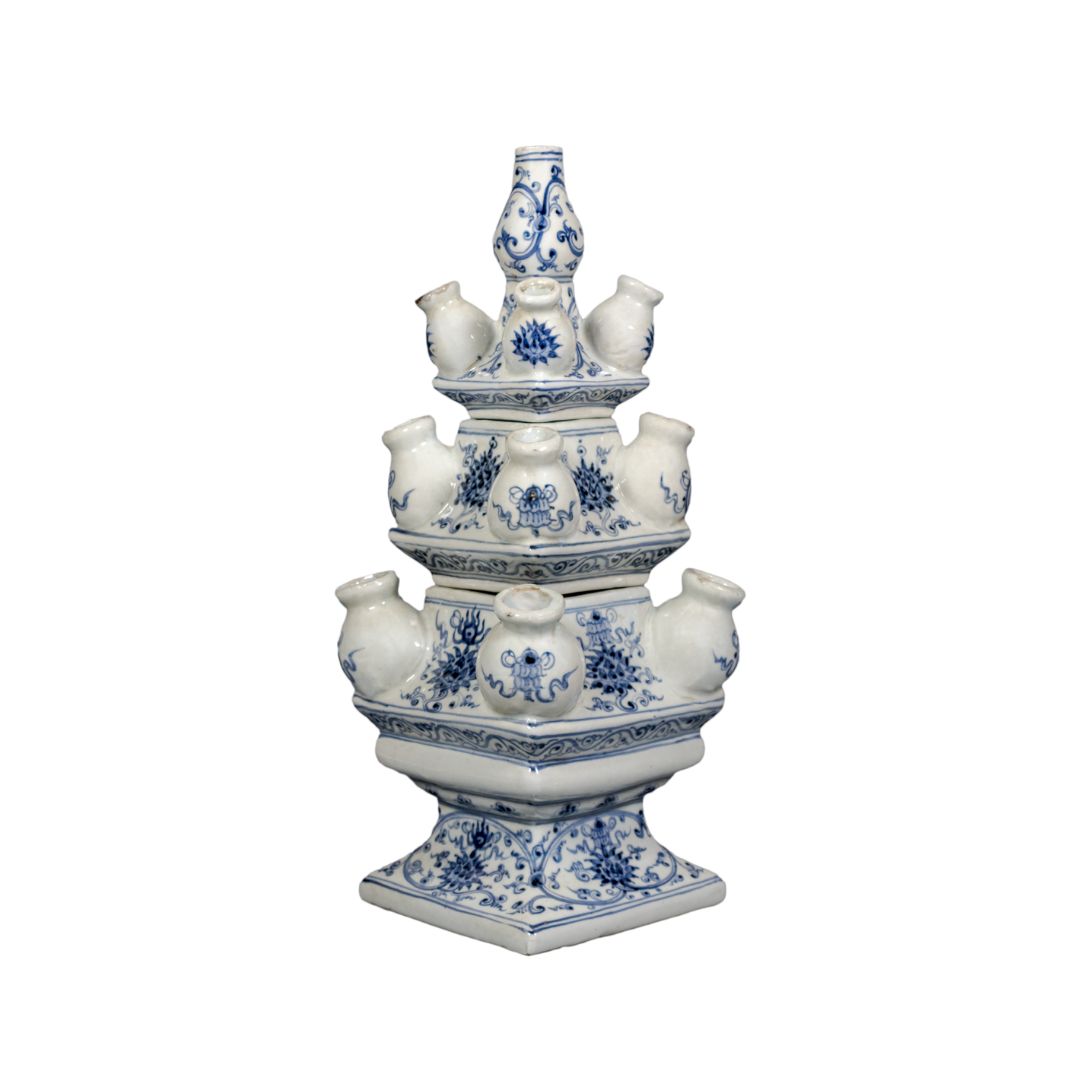
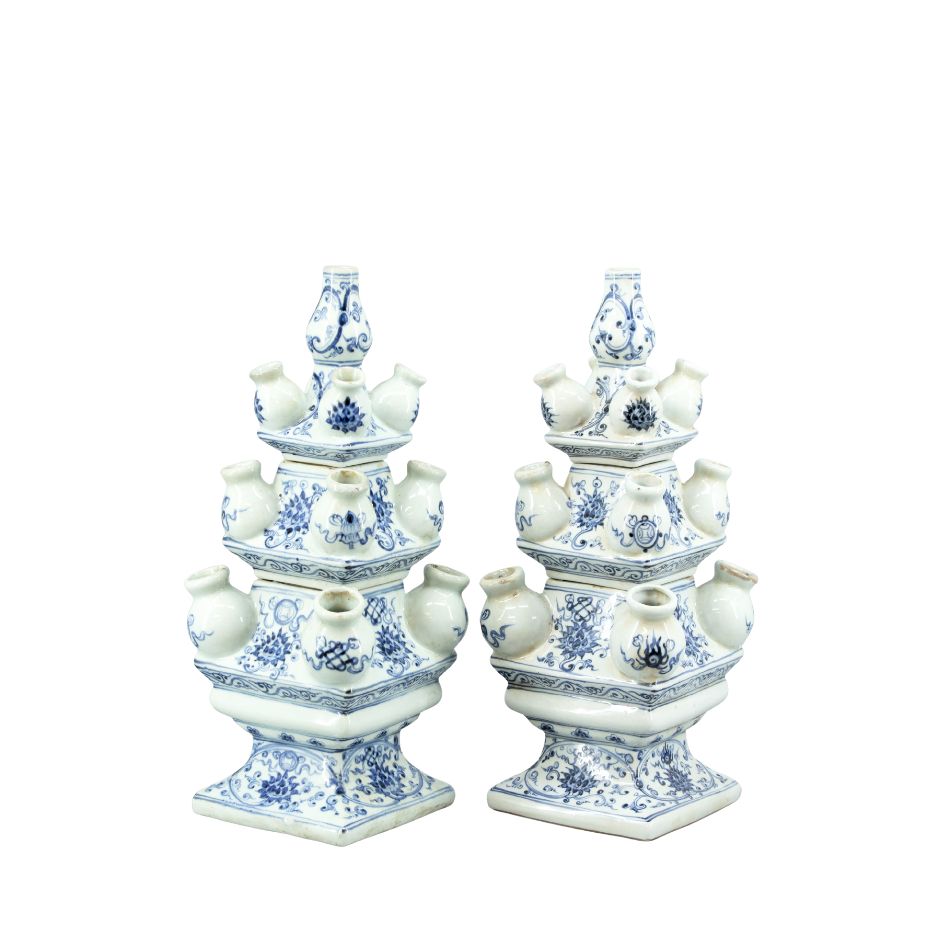
The 3-tier stacking model forms one fixed composition: the rings always belong together and are stacked as a set for proper proportions, stability and water distribution. Using separate tiers individually isn't intended and diminishes the form and linear interplay.

Our Chinese Tulip Vase 'Amélie' is hand-painted in a floral camaïeu of cobalt blue (blue-and-white), fired at high temperature for a dense, clearly ringing porcelain body. The subtly aged finish lends museum-worthy, Kangxi Revival character. This model is quintessentially suited for placing two identical vases as a symmetrical pair on a mantelpiece or console—classical, balanced and timeless.

Tulip Pyramid (Large Tulip Vase)

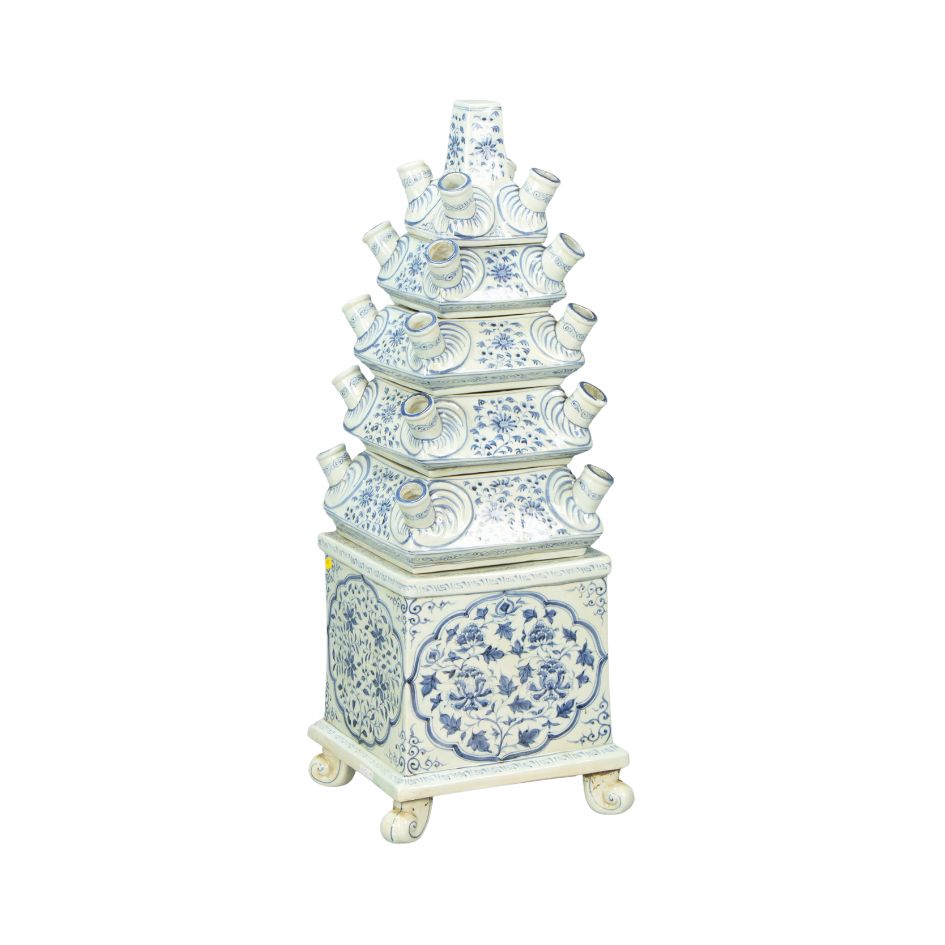
The tulip pyramid—also called flower pyramid or stacking vase—represents the architectural pinnacle amongst tulip vases. Each tier features spouts that allow the bouquet to grow as an ascending composition; perfect for high ceilings, entrance halls or classical fireplace mantels.

Our Large Tulip Pyramid 'George' is hexagonal, constructed from six separate pieces and richly painted in blue-and-white. This is the choice for those seeking a showstopper—for instance, in an entrance or hotel lobby, or for collectors desiring a museum-worthy centrepiece.

When to Choose One or Two Tulip Vases?

In historicising interiors (classical mirrors, consoles, panelling), two identical 3-tier vases create balance—consider the 'Amélie' set positioned left and right of a mirror. Working with a modern, minimalist space, one large tulip pyramid 'George' is often stronger: a solitary art object that disrupts the room's linear composition. For dining tables, we recommend the classic tulip vase with neck: sufficient height for presence, yet low enough not to hinder eye contact.

What Is the Perfect Vase for Tulips?

The perfect vase for tulips is one that lets your bouquet breathe and suits your space. Begin with size: on a dining or coffee table, you want height without blocking conversation—consider 25–40cm, with a calm, stable base. On a mantelpiece or in an entrance hall, a taller model (45–70cm) works better.

Material Determines Appearance and Longevity

Chinese porcelain (kaolin, approximately 1400°C) is vitreous, watertight and rings clearly when lightly tapped—a sign of quality. It keeps spouts rigid and prevents stems from drooping. In colour and decoration, blue-and-white is the most timeless choice: it feels familiar in classical interiors but also provides refined accent to modern minimalism. Hand-painted floral motifs bring depth to the surface; plain or sparse decoration reads more quietly.

Design and Number of Openings

Consider the design and number of openings, as these determine how many stems you can beautifully accommodate. The classic model with central neck and surrounding spouts is the all-round best vase for tulips: airy, elegant and suitable for approximately 10–20 stems. Our Tulip Vase – Kangxi Revival is the textbook example.

Want an eye-catcher on a mantelpiece? The classic 3-tier tulip vase 'Amélie' is perfect. For impact in a tall space, choose the tulip pyramid: tiers with spouts distribute 20–40 stems in an upward composition; 'George' is designed as such an architectural centrepiece.

Chinese Porcelain vs Delftware Tulip Vases: The Difference & Buying Advice

Those wishing to buy a tulip vase soon encounter two worlds: Chinese porcelain and European Delftware. And naturally, today you also have various contemporary interpretations in glass, ceramic or plastic.

Material Differences Explained

These three types are fundamentally different technically. Chinese porcelain originates from kaolin and feldspar (petuntse) and is fired around 1400°C into a fully vitrified, non-porous body. This produces the characteristic clear underglaze on a cool white body and that recognisable resonance when you gently tap the rim.

Delftware, conversely, is earthenware with tin glaze: beautifully soft in tone and historically charged, but due to lower firing and more porous body, less dense and less vitreous.

Which Should You Choose?

For daily flower use, Chinese porcelain is the best choice: completely watertight, rigid spouts and a lustre that remains beautiful for years.

Our recommendations:

Tulip Vase – Kangxi Revival: Cool white hard-paste porcelain with cobalt blue underglaze and that characteristic "singing" ring

3-tier set 'Amélie': For composure and symmetry on the mantelpiece, hand-painted in cobalt blue camaïeu

Tulip pyramid 'George': For monumental statement—hexagonal, layered, designed as centrepiece

Tulip Vase Styles: From Delft Blue to Kangxi Revival

Tulip vases evolved through distinct cultural and stylistic periods, each with characteristic decorative approaches.

Delft Blue Tulip Vases (Dutch Tin-Glazed Earthenware)

Delftware tulip vases emerged in the 17th–18th centuries as Dutch potters adapted Chinese porcelain aesthetics to European tastes and production capabilities. Using tin-glazed earthenware (majolica technique), they created charming, slightly irregular pieces with softer blue tones.

Delftware possesses particular character: warmer, less precise, more painterly than Chinese porcelain. The tin glaze creates an opaque white surface over red earthenware clay, with decoration applied before final firing. This results in slight bleeding of blue pigment—a characteristic softness.

Best for: Traditional Dutch interiors, collectors of European ceramics, spaces seeking historical warmth rather than formal precision.

Kangxi Period Porcelain (Chinese Blue-and-White)

The Kangxi period (1662–1722) represents a pinnacle in Chinese porcelain production. Blue-and-white wares from this era display exceptional clarity: brilliant white bodies, precisely controlled cobalt blue, refined brushwork and technical perfection.

True Kangxi porcelain commands museum and collector prices. Our Kangxi Revival pieces faithfully interpret this aesthetic—hand-painted floral motifs, proper underglaze application, high-temperature firing—making this formal excellence accessible.

Best for: Collectors seeking museum-quality aesthetics, interiors requiring visual refinement, spaces where material quality matters.

Contemporary Interpretations

Modern designers reinterpret tulip vases in various materials: glass (transparency, lightness), stoneware (organic texture), even metal or acrylic. These suit contemporary contexts but lack the cultural depth and material longevity of porcelain.

How to Use a Tulip Vase: Arranging Tulips Properly

Tulip vases impose delightful discipline on flower arrangement—the architecture of the vase itself guides composition.

Preparing the Vase

Fill each tier with fresh water. If your tulip vase is multi-tiered, ensure water in upper levels can drain to lower tiers (most well-designed pieces include internal channels). Change water every 2–3 days to maintain freshness.

Selecting and Preparing Stems

Choose tulips at similar developmental stages—mixing tight buds with fully opened blooms creates uneven visual weight. Trim stems at an angle, removing any leaves that would sit below waterline (submerged foliage causes bacterial growth).

Inserting Stems

The beauty of a tulip vase lies in giving each stem individual space. Insert tulips gently into spouts—they should stand securely but not be forced. Avoid overcrowding; the negative space between stems is part of the composition.

For tiered pyramids, work bottom to top, placing slightly shorter stems in upper tiers to create ascending lines. The goal is architectural clarity—each bloom visible, the whole reading as sculptural arrangement rather than casual bunch.

Colour Approaches

Monochromatic: Single-colour tulips (all white, all pink, all burgundy) create formal elegance and architectural clarity.

Tonal variation: Shades within one colour family (pale to deep pink, cream to burgundy) add depth whilst maintaining cohesion.

Complementary contrast: Blue-and-white vases particularly suit white, pink or yellow tulips—the cool porcelain sets off warm bloom colours beautifully.

Caring for Your Chinese Porcelain Tulip Vase

High-quality porcelain requires minimal maintenance but benefits from informed care.

Regular Cleaning

After each use, rinse thoroughly with lukewarm water. For stubborn residue (mineral deposits, stem stains), use a soft bottle brush or cloth with pH-neutral cleaner. Avoid abrasive scrubbers that might scratch the glaze.

Preventing Stains

Porcelain's non-porous glaze resists staining, but prolonged contact with certain flowers or hard water can leave marks. Change water regularly during use and don't leave stale water sitting for weeks.

Storage

When not in use, store tulip vases in stable conditions—avoid extreme temperature fluctuations or excessive humidity. For multi-tier pieces, you may store tiers nested (if they fit) or separately wrapped to prevent chipping where rims meet.

Handling Multi-Tier Vases

When moving stacked tulip vases, support from underneath rather than gripping the decorative elements or upper tiers. The weight concentrated in lower tiers makes top-heavy arrangements unstable if lifted incorrectly.

Tulip Vases in Interior Design: Placement and Context

Strategic placement maximises both functional and aesthetic potential.

On Console Tables

Console tables in entrance halls benefit enormously from tulip vases. A symmetrical pair of 3-tier vases flanking a central mirror creates formal welcome whilst the flowers provide living colour. The vertical emphasis draws the eye upward, increasing perceived ceiling height.

On Mantelpieces

Fireplace mantels are traditional locations for tulip vases. The architectural formality of the vase complements the mantel's own structure. For wide mantels, a single large pyramid centred creates focal point; for narrower mantels, a pair of smaller vases at either end maintains balance without overcrowding.

Dining Tables

On dining tables, tulip vases must balance presence with practicality. Choose models low enough (under 40cm) not to obstruct sightlines across the table. The structured arrangement tulip vases impose—each stem separate, the composition airy—prevents the visual clutter casual bouquets sometimes create.

Commercial and Hospitality Interiors

In hotels, restaurants and corporate reception areas, tulip vases signal cultural sophistication and attention to detail. They function as both art objects (when not holding flowers) and elegant display (when in use). The investment in quality porcelain demonstrates institutional commitment to excellence.

Tulip Vases as Collectible Objects

Beyond functional use, quality tulip vases constitute collectible decorative art.

What Makes a Tulip Vase Collectible?

Historical authenticity: Genuine period pieces (17th–18th century Delft or Kangxi) command significant prices at auction.

Quality reproduction: Museum-quality reproductions like our Kangxi Revival pieces offer accessible entry to serious collecting—hand-painted, proper materials, traditional techniques.

Rarity and edition size: Limited production or discontinued models appreciate over time.

Condition: For antique pieces, original condition with minimal restoration affects value significantly. For contemporary pieces, pristine condition maintains investment potential.

Investment Considerations

Quality Chinese porcelain tulip vases retain value well. Unlike decorative ceramics that follow trends, historically grounded pieces maintain cultural relevance. Our hand-painted porcelain vases are positioned as heirloom objects—purchased once, enjoyed for generations, potentially appreciating if market conditions favour Chinese export porcelain.

Tulip Vase FAQ

What's the difference between a tulip vase and a regular vase?

A tulip vase features multiple individual spouts or openings, each designed to hold a single stem upright and separate from others. This creates structured, architectural arrangements. Regular vases have single openings where stems crowd together, creating looser, more casual compositions. Tulip vases impose discipline; standard vases offer freedom. Both have merit—tulip vases suit formal contexts and showcase each bloom individually.

Can I use a tulip vase for flowers other than tulips?

Absolutely. Whilst designed for tulips, these vases accommodate any straight-stemmed flowers: daffodils, irises, roses with foliage stripped, even branches or dried grasses. The key is stem diameter—should fit comfortably in the spouts without forcing. Avoid floppy stems (peonies, ranunculus) that lack structural integrity to stand upright in individual openings.

How many tulips does a tulip vase hold?

This varies by model:

Small single-neck vases: 8–15 stems typically

Medium 3-tier vases: 15–25 stems across all tiers

Large pyramids: 25–40+ stems depending on tier number and spout arrangement

Our product descriptions specify spout counts for each model.

Are tulip vases dishwasher safe?

We don't recommend dishwashing high-quality hand-painted porcelain. The combination of high heat, harsh detergents and jostling can damage delicate decoration over time. Hand-washing with lukewarm water and pH-neutral cleaner preserves both glaze and painted decoration indefinitely.

What's the difference between Chinese porcelain and Delft tulip vases?

Chinese porcelain: Fired at approximately 1400°C, fully vitrified, non-porous, hard, produces clear ring when tapped. Cobalt blue is precise, brilliant white body. Waterproof and extremely durable.

Delftware: Tin-glazed earthenware fired at lower temperature (circa 1000–1100°C). More porous body, softer blue tones with slight bleeding, warmer character. Less durable for regular water use but historically significant.

For functional flower arranging, Chinese porcelain is superior. For collecting European ceramics history, Delftware has particular charm.

Can tulip vases be used outdoors?

Chinese porcelain is frost-resistant once fully dried, but we don't recommend leaving valuable tulip vases outdoors permanently. Temperature fluctuations, UV exposure and weather can stress even high-fired porcelain. Use indoors, or bring outside temporarily for events, returning inside afterwards.

How do I display a tulip vase when not using it for flowers?

Quality tulip vases function as sculptural objects even when empty. Their architectural forms—the tiered construction, blue-and-white decoration, rhythmic spout arrangement—possess visual interest independent of floral content. Display on consoles, mantels or in cabinets as you would any decorative porcelain. Many collectors rotate between using for flowers and displaying empty.

Do you supply to private collectors or only trade?

Kuzco Art Maison operates primarily B2B, serving interior designers, decorators, hospitality projects and retailers. In exceptional cases, we supply to private collectors, with retail pricing applied. This maintains market positioning and protects our trade relationships.

Can I view tulip vases before purchasing?

Yes. Viewing is available by appointment at our showrooms in Amsterdam and Bleiswijk. For interior professionals and collectors, we can discuss sizing, decoration style and placement within specific design schemes—ensuring the tulip vase genuinely enhances your space or collection.

The Kuzco Art Maison Difference: Why Our Tulip Vases

Hand-painted decoration: Each vase individually painted, not transfer-printed or mass-produced

High-temperature firing: True porcelain fired at approximately 1400°C for vitrified, non-porous body

Museum-quality aesthetics: Inspired by Kangxi period excellence and European collecting traditions

Functional design: Proper spout sizing, water channels in multi-tier models, stable bases

Art-historical grounding: Selected by curators with expertise in Chinese export porcelain and European decorative arts

B2B expertise: Trusted by interior designers, hotels and galleries across 10+ countries

Transparent sourcing: Directly from established ateliers in Jingdezhen, China's porcelain capital

European service: Viewing in Amsterdam and Bleiswijk, secure shipping throughout EU

Exhibition presence: Featured at Maison & Objet Paris and La Maison Creative Salon Amsterdam

Need expert guidance on tulip vases? Contact Kuzco Art Maison for advice on model selection, sizing for your space, or building a collection of Chinese blue-and-white porcelain. Our expertise in ceramics history and interior application ensures you'll find tulip vases that function beautifully whilst retaining cultural and investment value.