
Chinese Vases
Discover our collection of Chinese vases at Kuzco Art Maison. Hand-painted in cobalt blue and white. From unique brush pots to classic blue-and-white tulip vases. Each piece is perfect for high-end interiors.



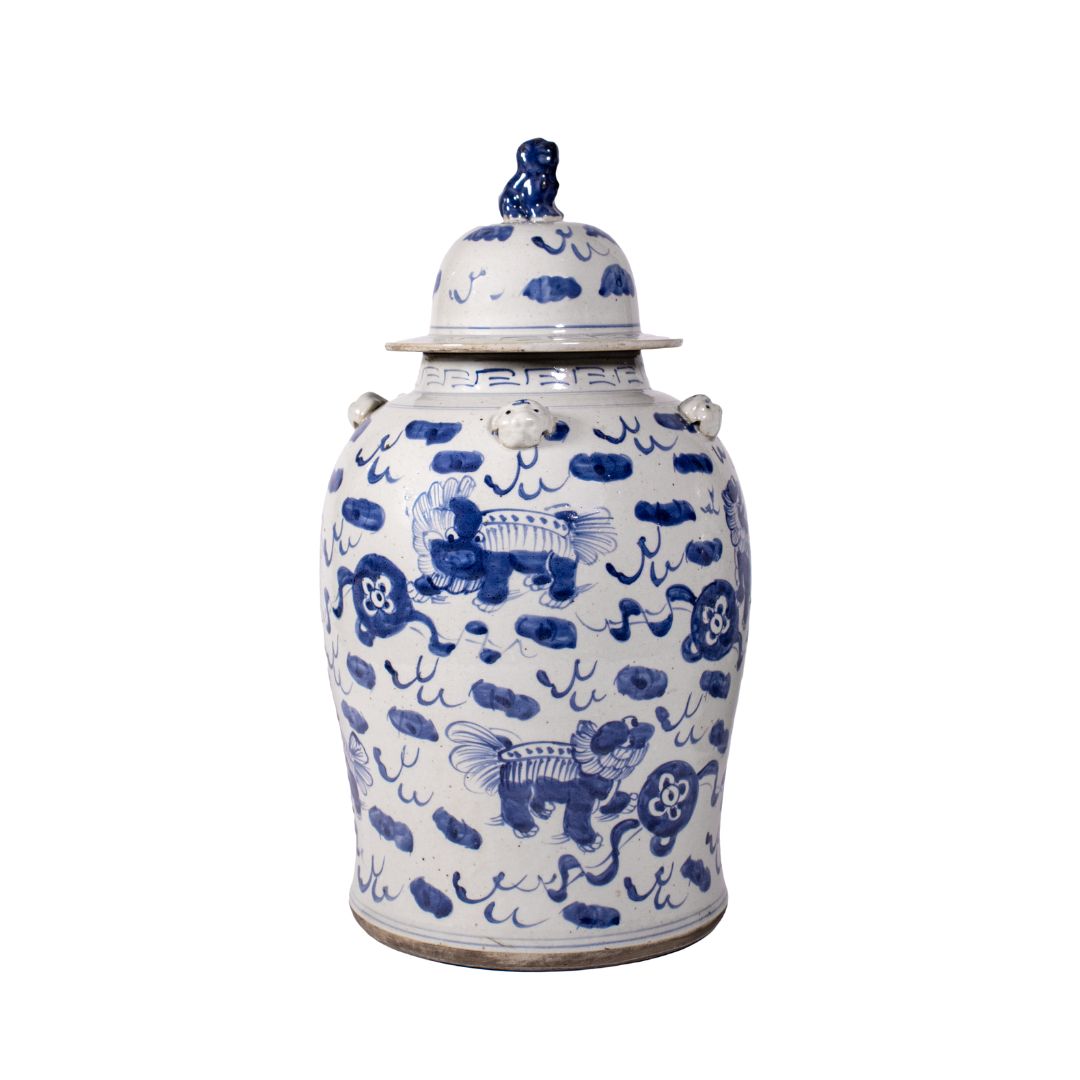

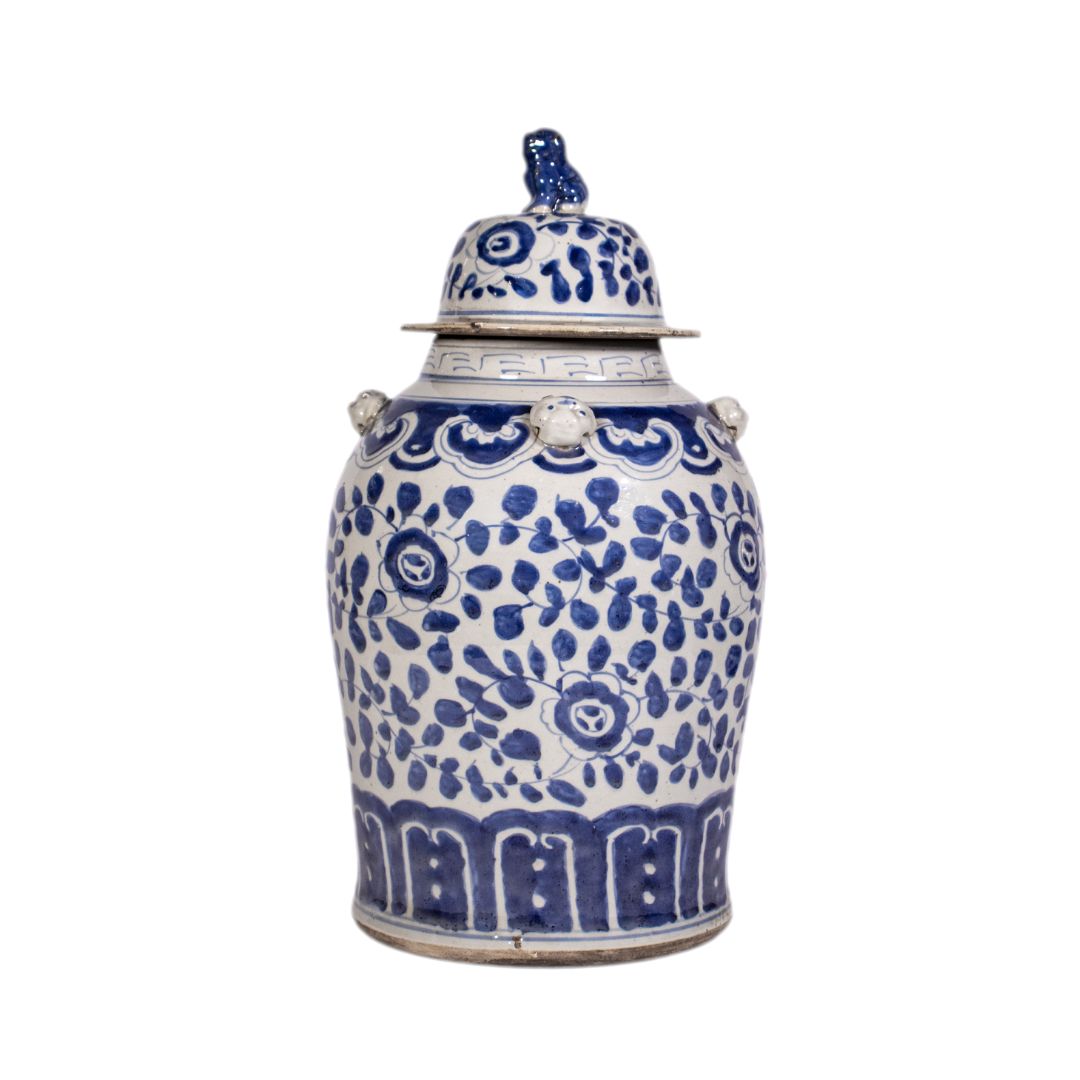

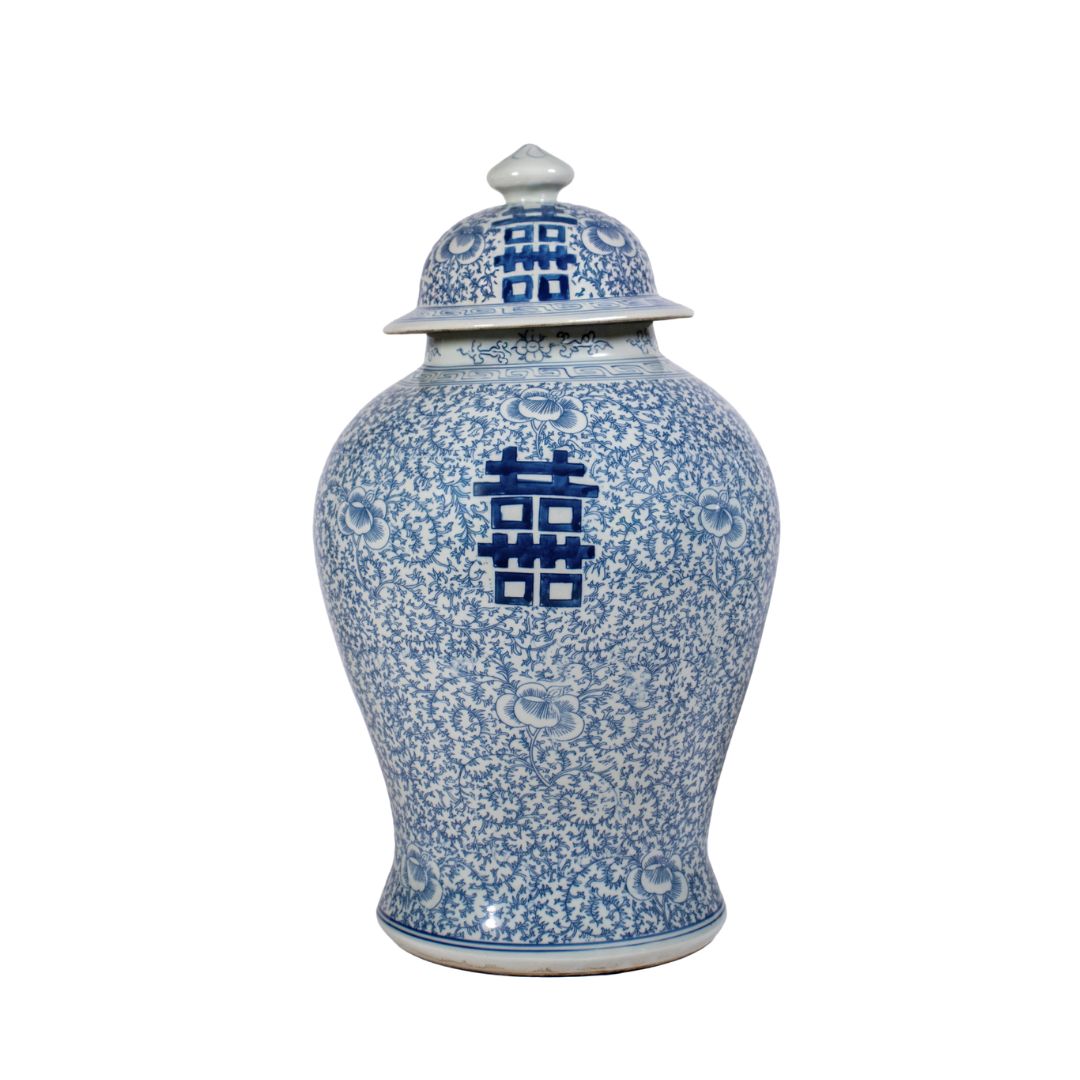


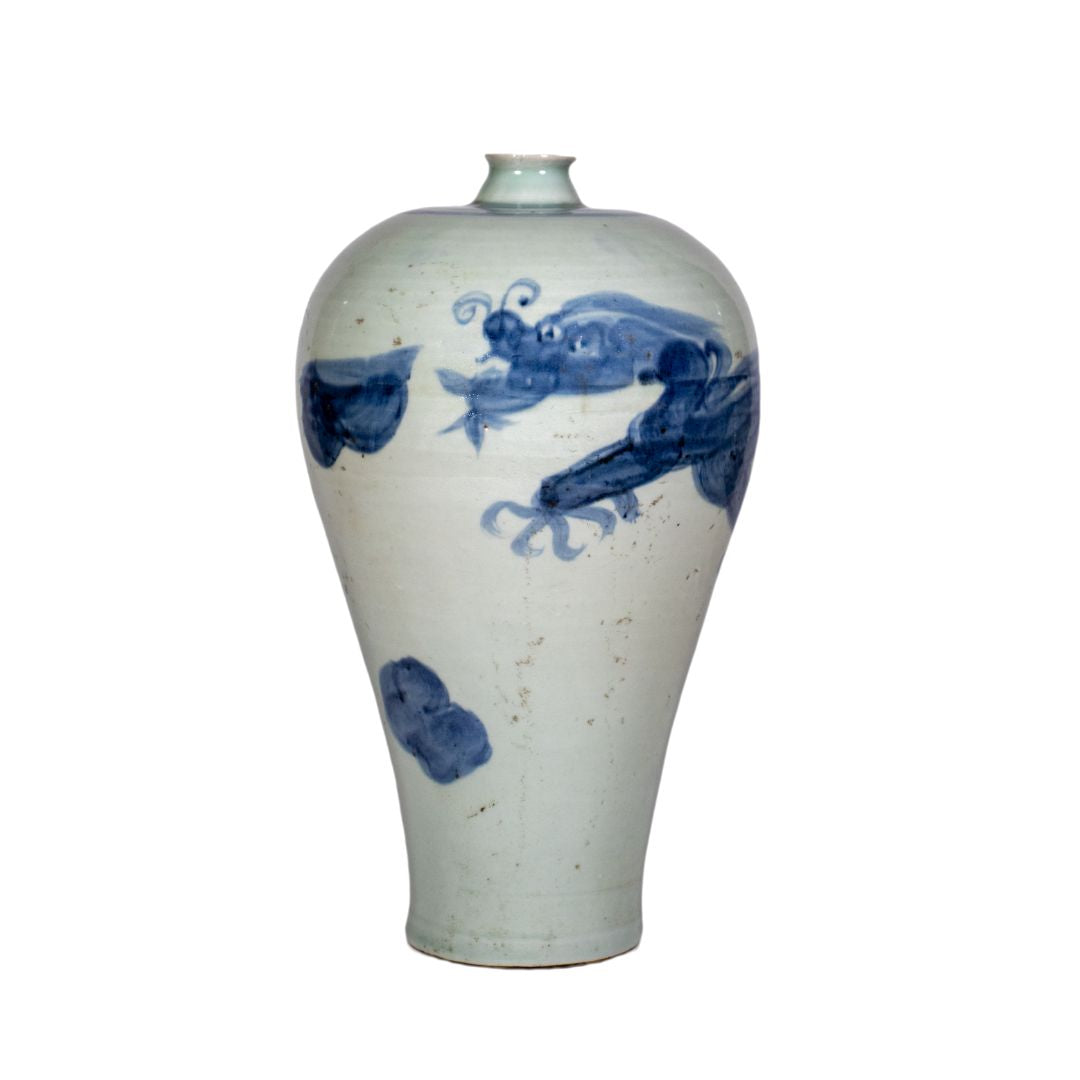


Chinese Vases for Sale
A Chinese vase is more than an interior piece. The form, glaze, and brushwork bear witness to technical perfection achieved nowhere else in the world.
All vases are crafted from Chinese porcelain and made in China. Here, the finest hard-paste porcelain is created from kaolin and petuntse, fired at over 1400°C.
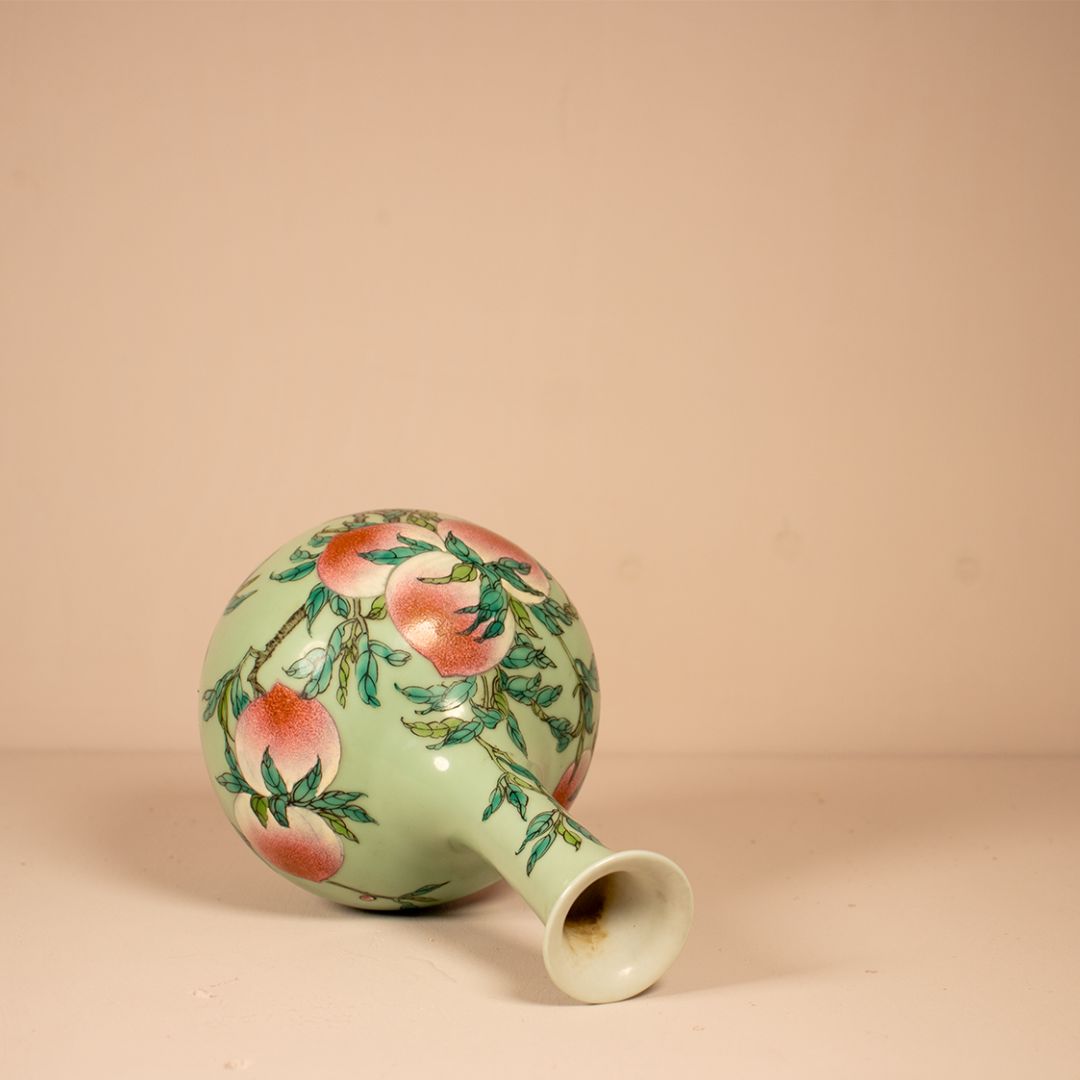
The decoration is hand-painted, often in underglaze cobalt blue, or in refined hues such as celadon green and famille rose pink. Each piece carries the traces of human gesture and historical continuity.
Why Buy a Chinese Vase?
A Chinese vase is functional art—a sculptural object that can be displayed individually or in composition. Through its symmetrical forms, subtle lustre, and refined decoration, it suits a console or mantelpiece as naturally as a central position on a dining table.
The vase embodies timeless design and cultural meaning: harmony, balance, and reverence for nature and symbolism.
At Kuzco Art Maison, we believe interiors can move people the way exhibitions do. Our collection of Chinese vases aligns with that vision: each piece is carefully selected or reissued to translate the aesthetic of museum objects into contemporary interiors.
History of Chinese Vases
The Chinese vase has a rich heritage, from the Song dynasty (960–1279) with its restrained celadon glazes, to the Qing dynasty (1644–1911), when the celebrated Kangxi, Yongzheng, and Qianlong periods brought refinement to its zenith.
In the 17th century, Chinese porcelain reached Europe, where the court of Louis XIV and the Dutch Republic embraced it as a symbol of prestige. This fascination led to the production of Delftware, directly inspired by blue and white Kangxi vases.
The 19th century saw the Kangxi Revival, when classical motifs and colours were reappraised—a tradition Kuzco Art Maison continues today.
Types of Chinese Vases & Styles
Chinese vases exist in myriad forms, each with its own purpose and character:
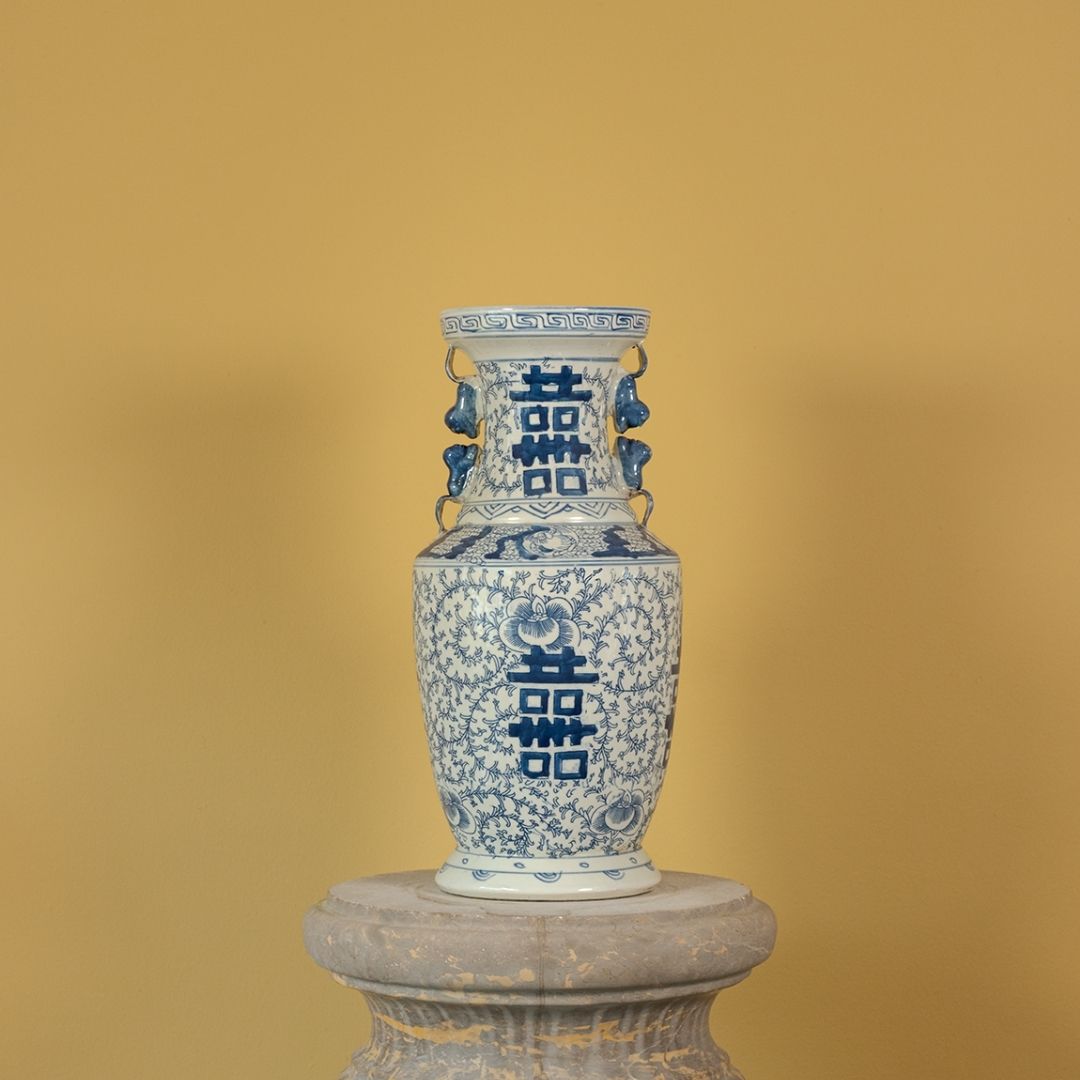
- Baluster vase – Classic vase form with narrow neck and rounded shoulder.
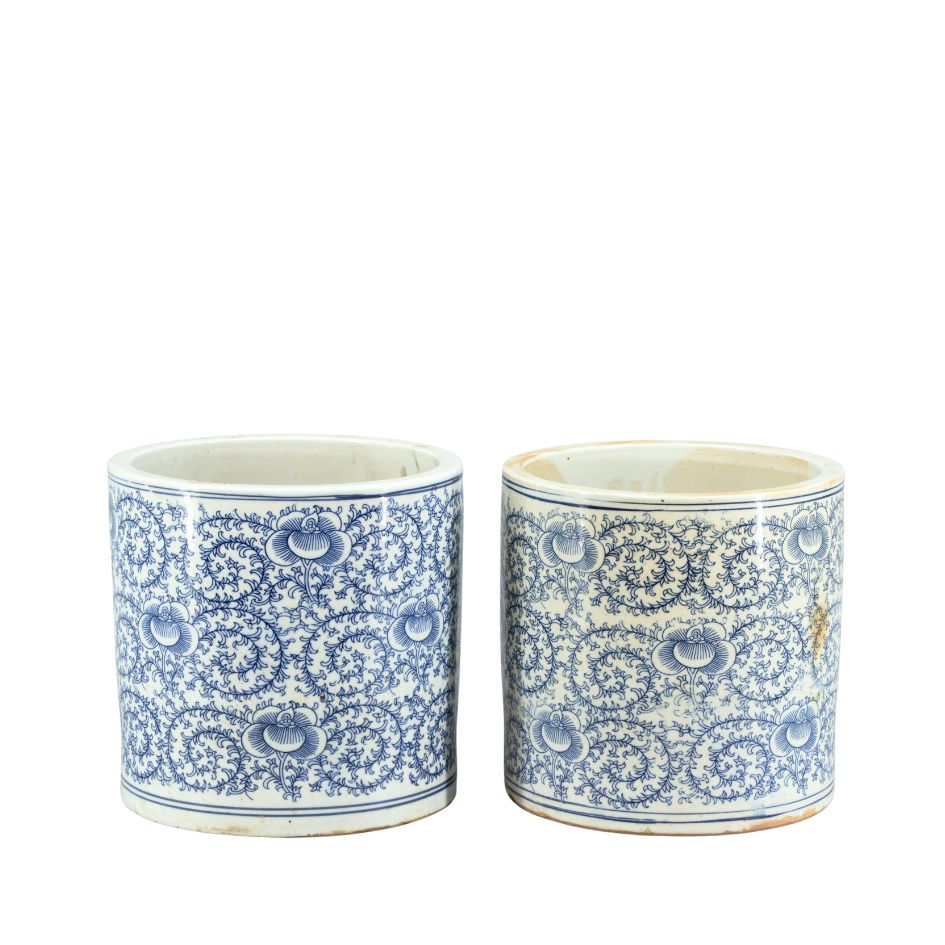
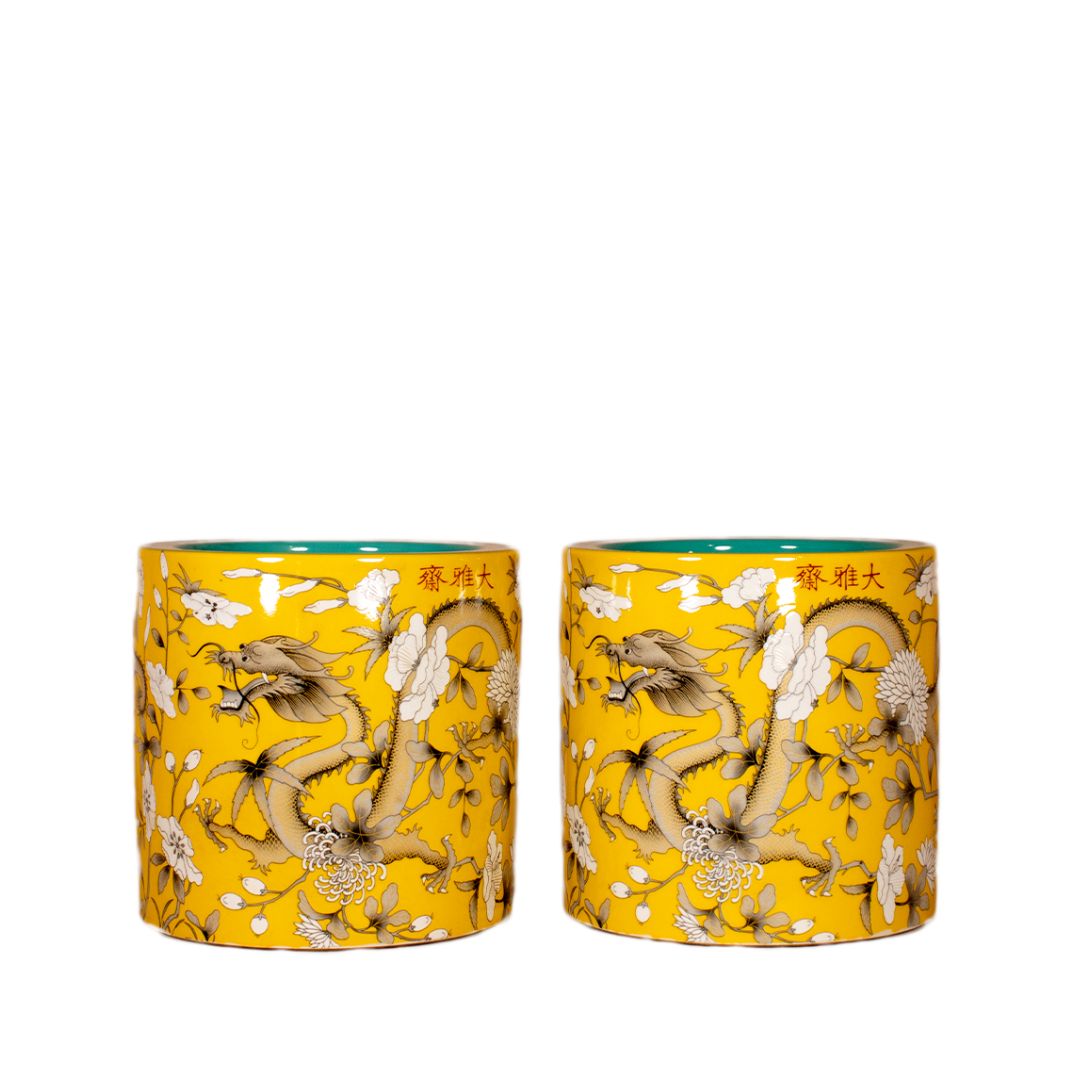
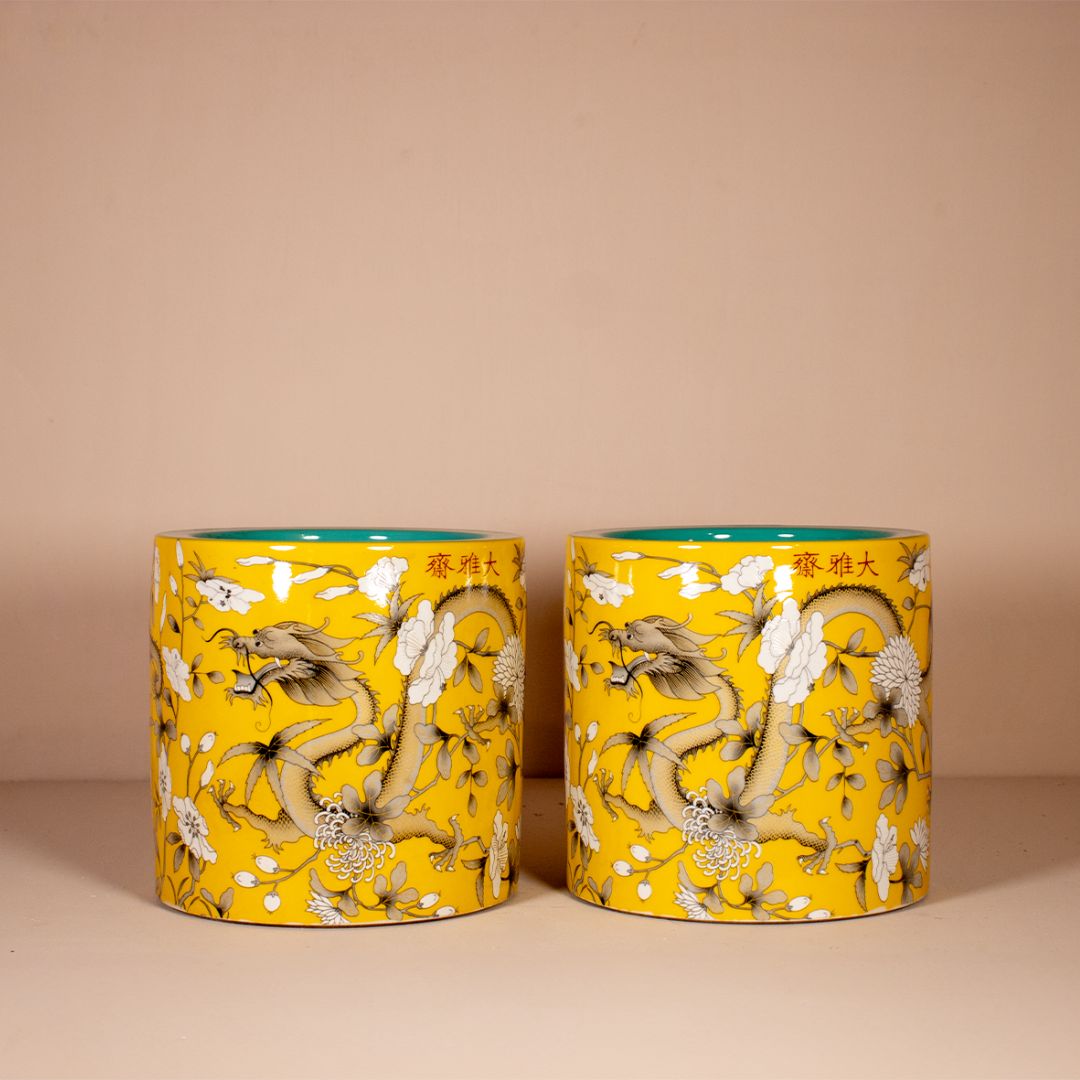
- Brush pot – Cylindrical form, originally for calligraphy brushes.
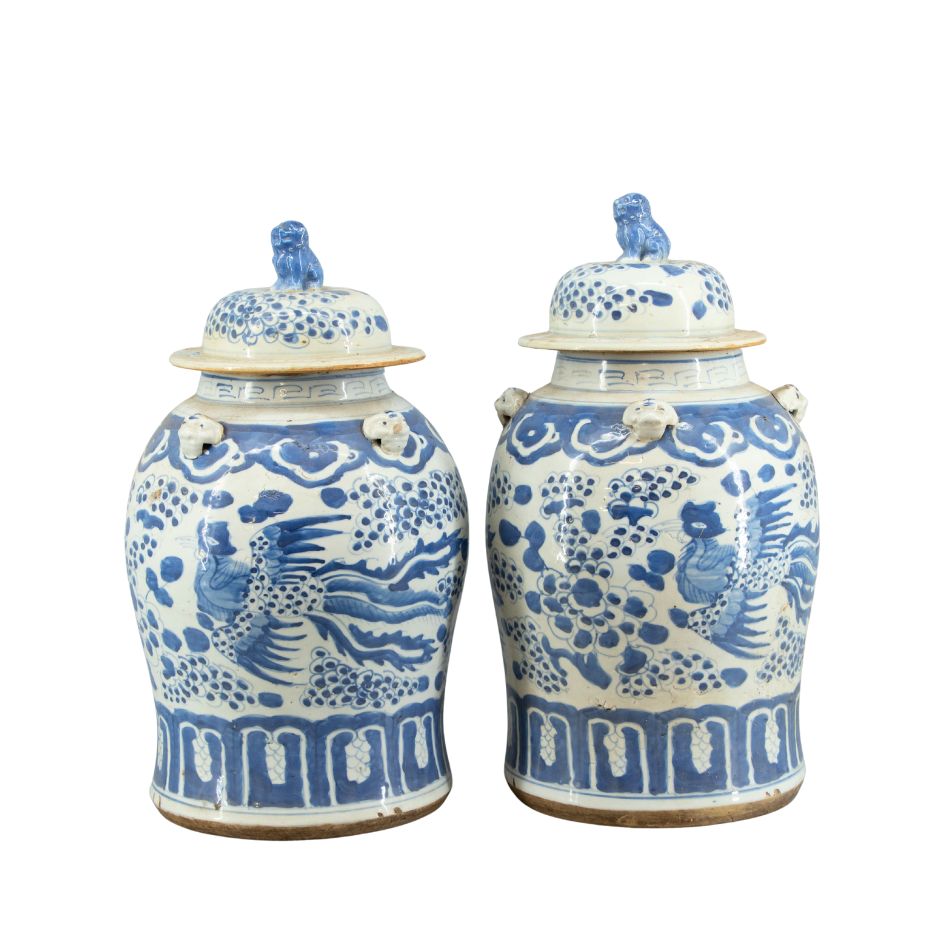
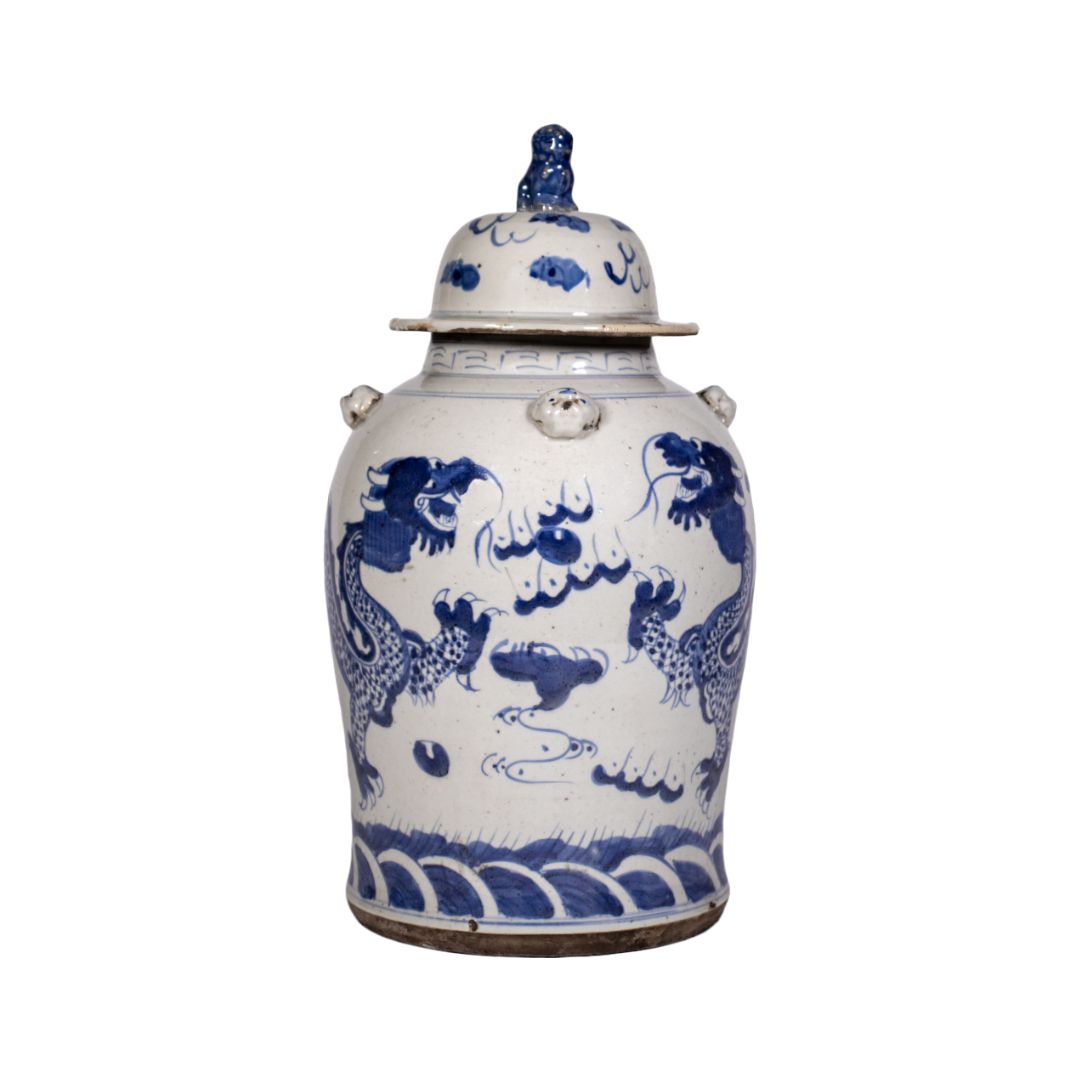
- Ginger jar – Bulbous lidded jar, often used in pairs.
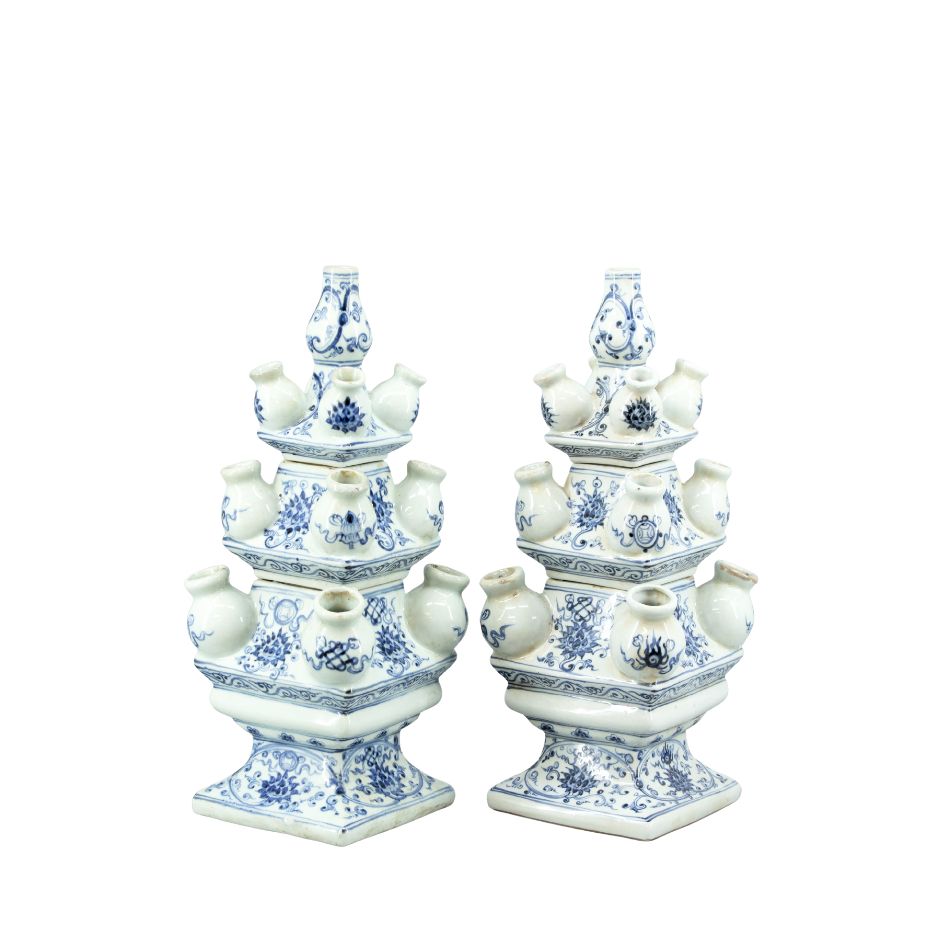
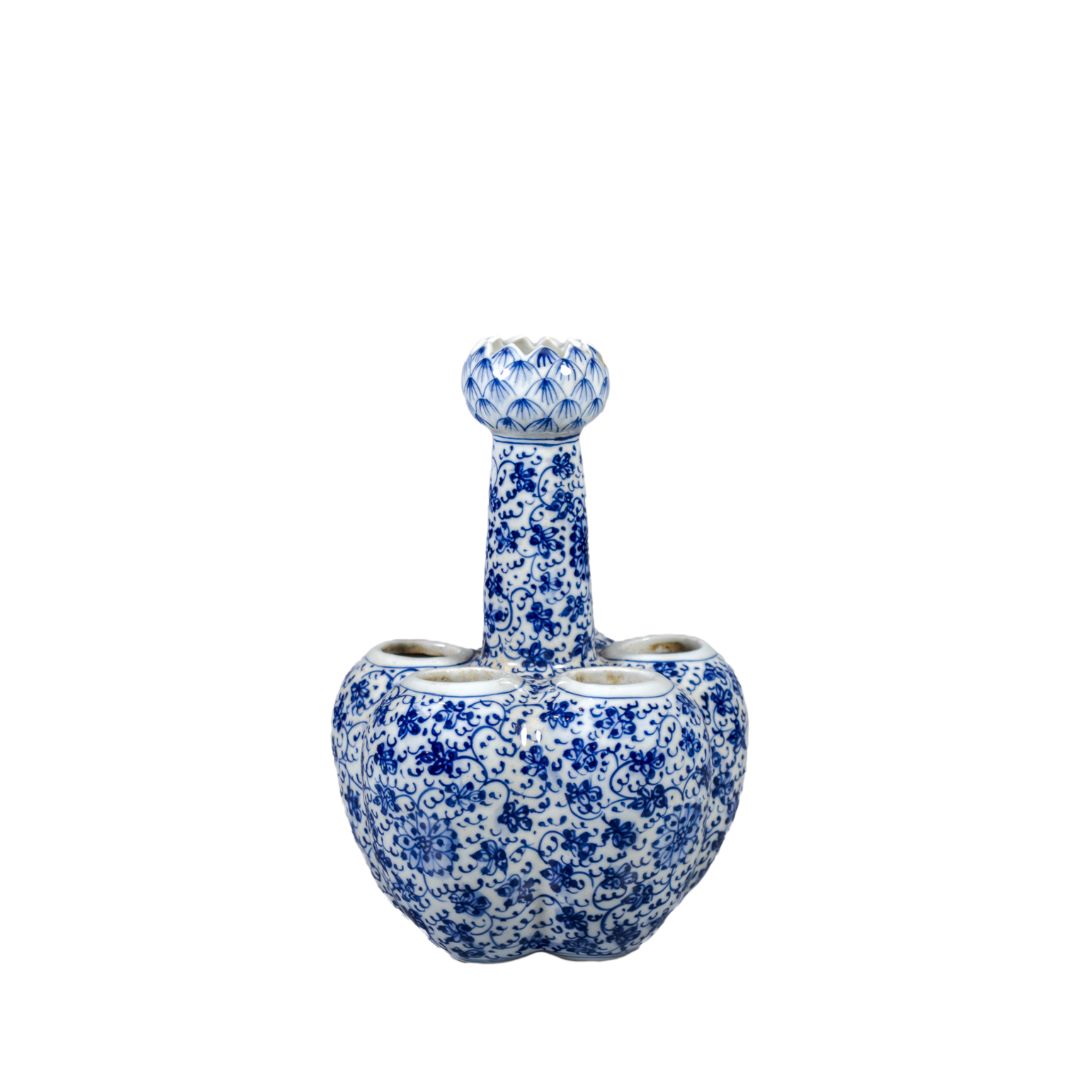
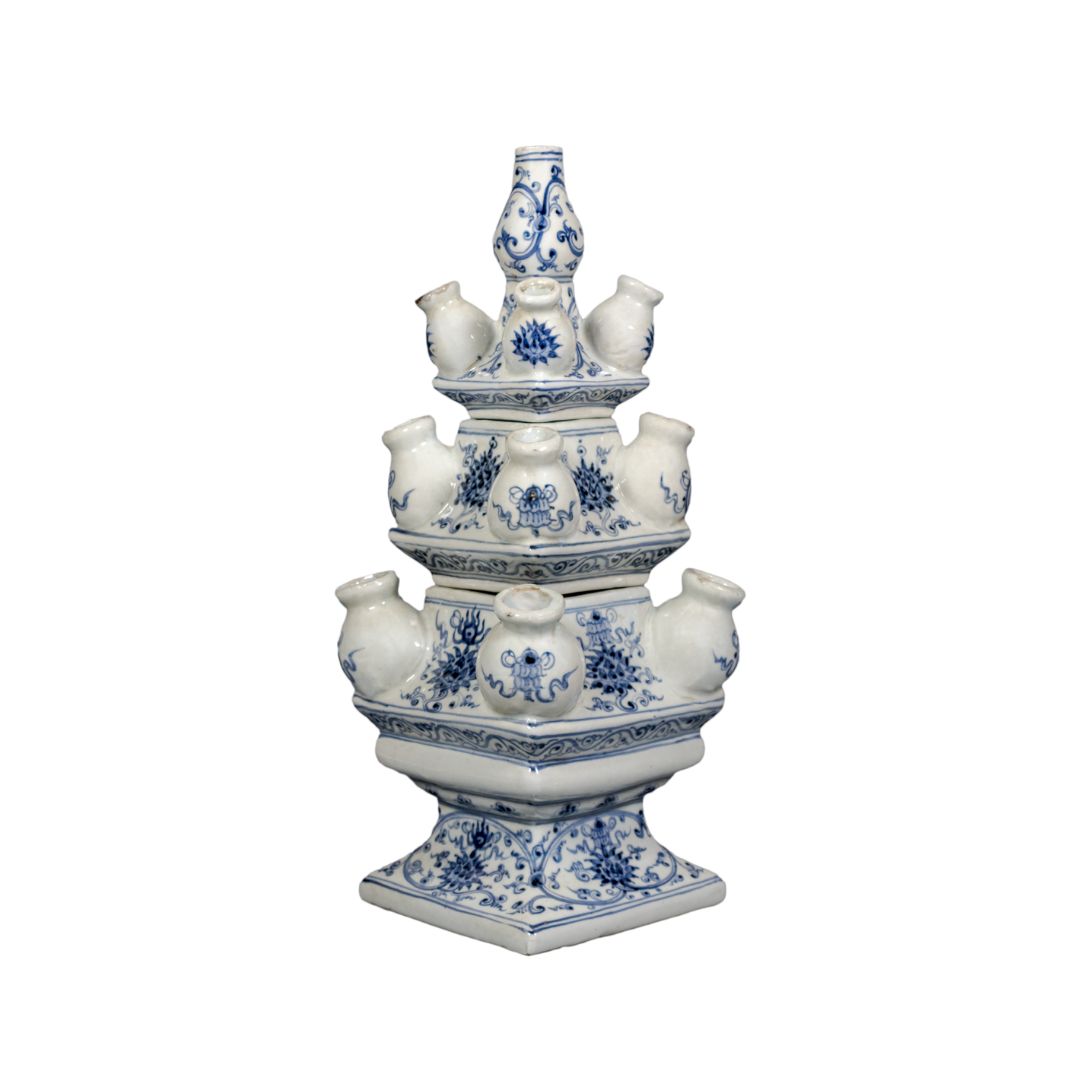
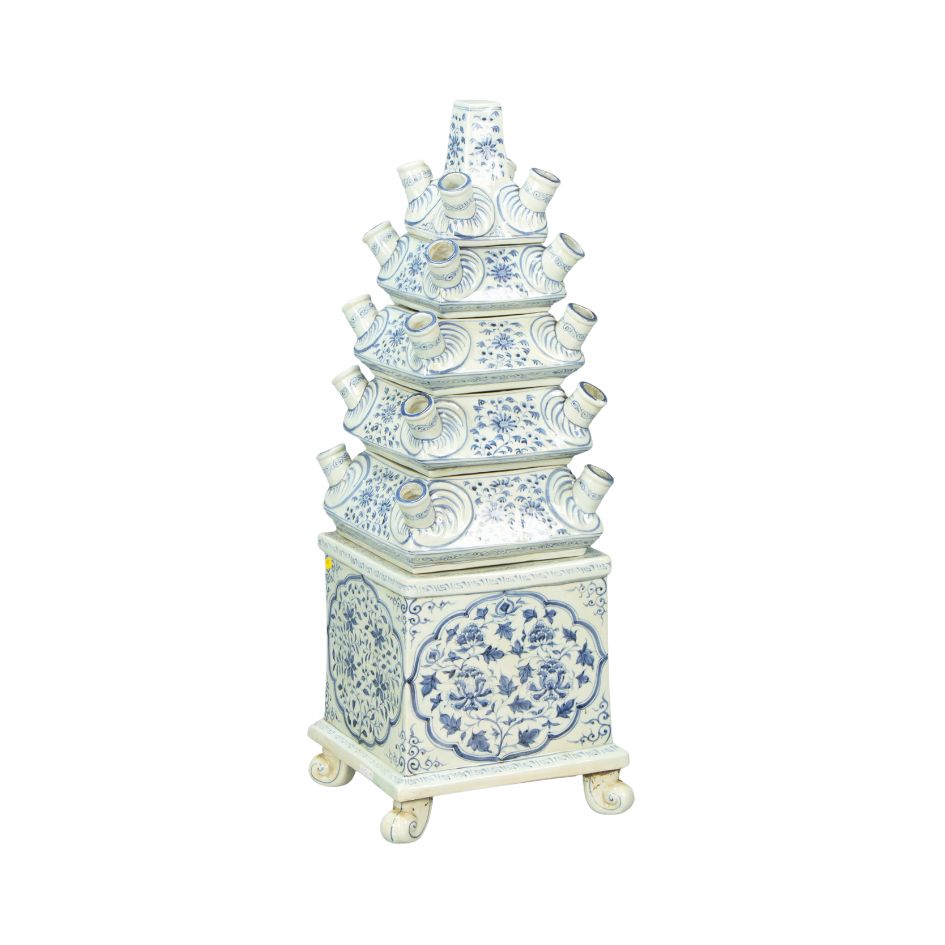
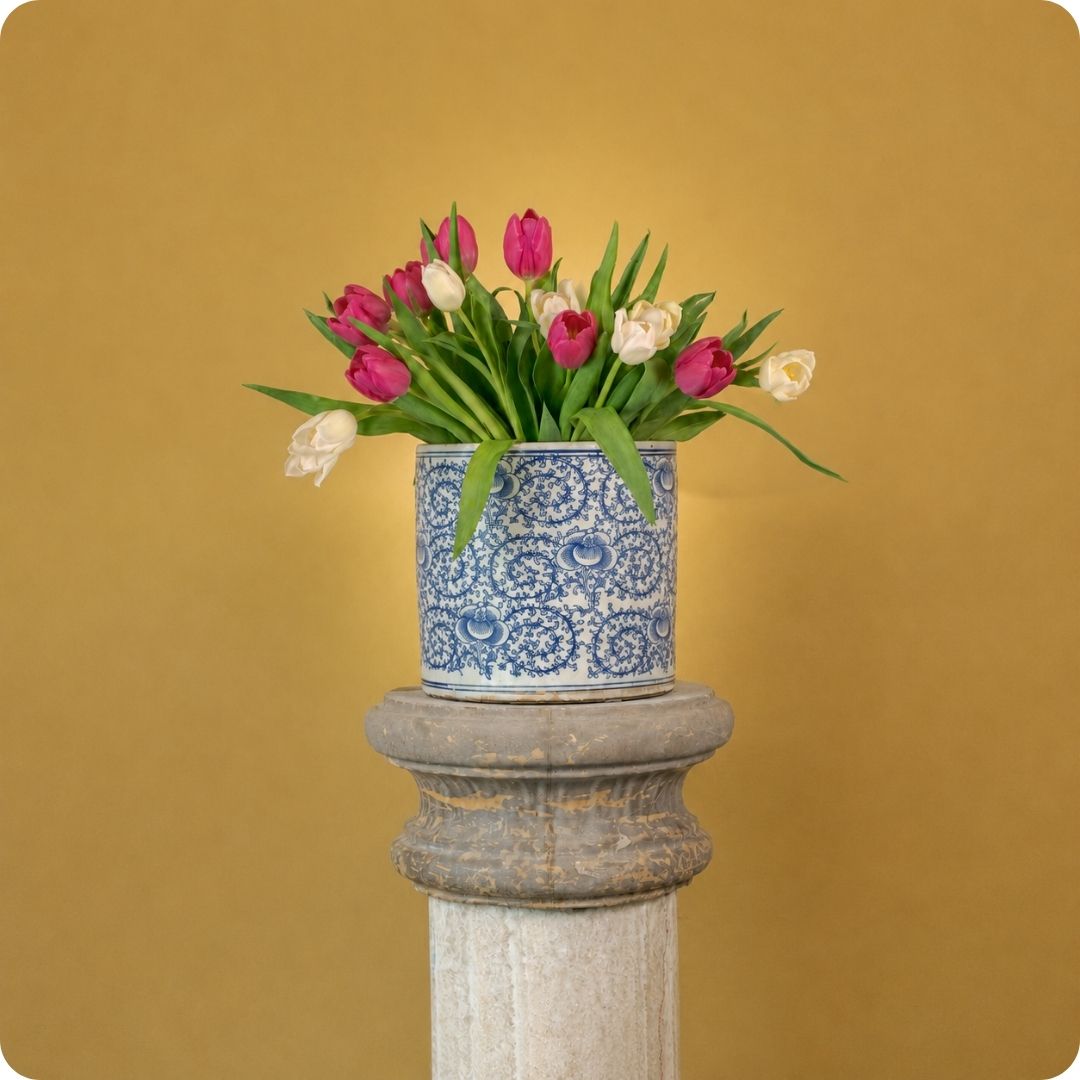
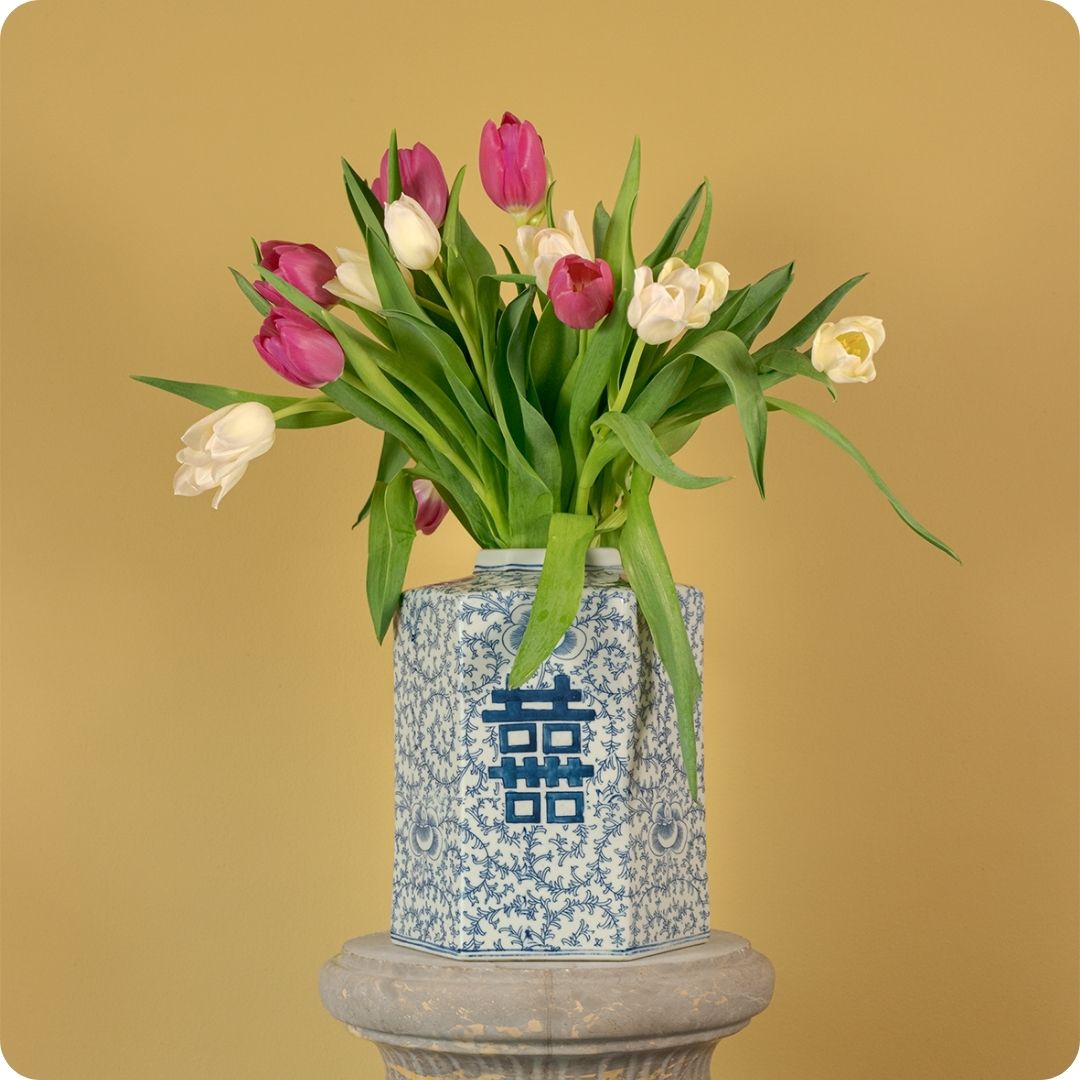
- Tulip vase & flower pyramid – Typically Dutch-Chinese design with multiple spouts.
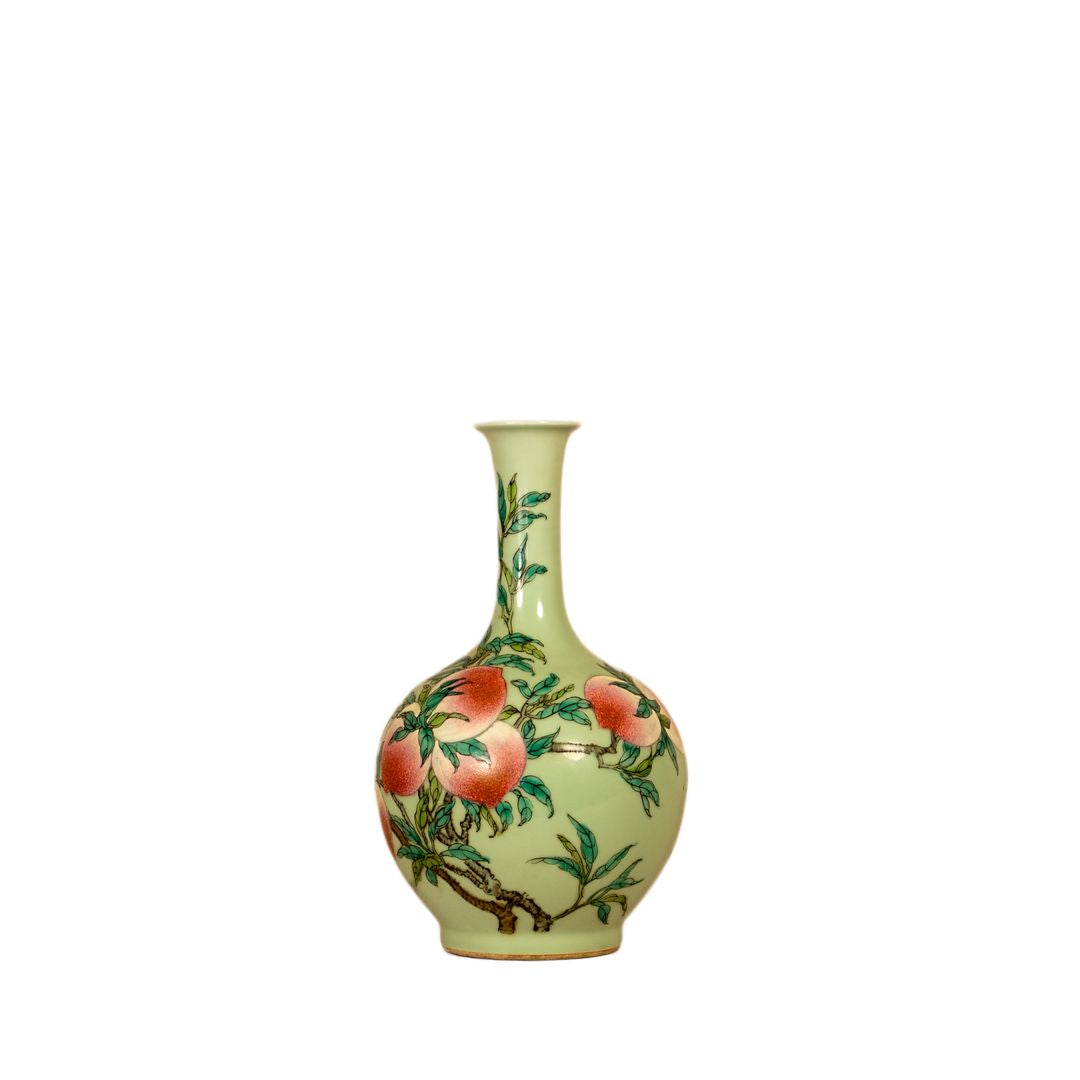
- Peach vase / Meiping / Moonflask – Elegantly curved forms with symbolic nomenclature.
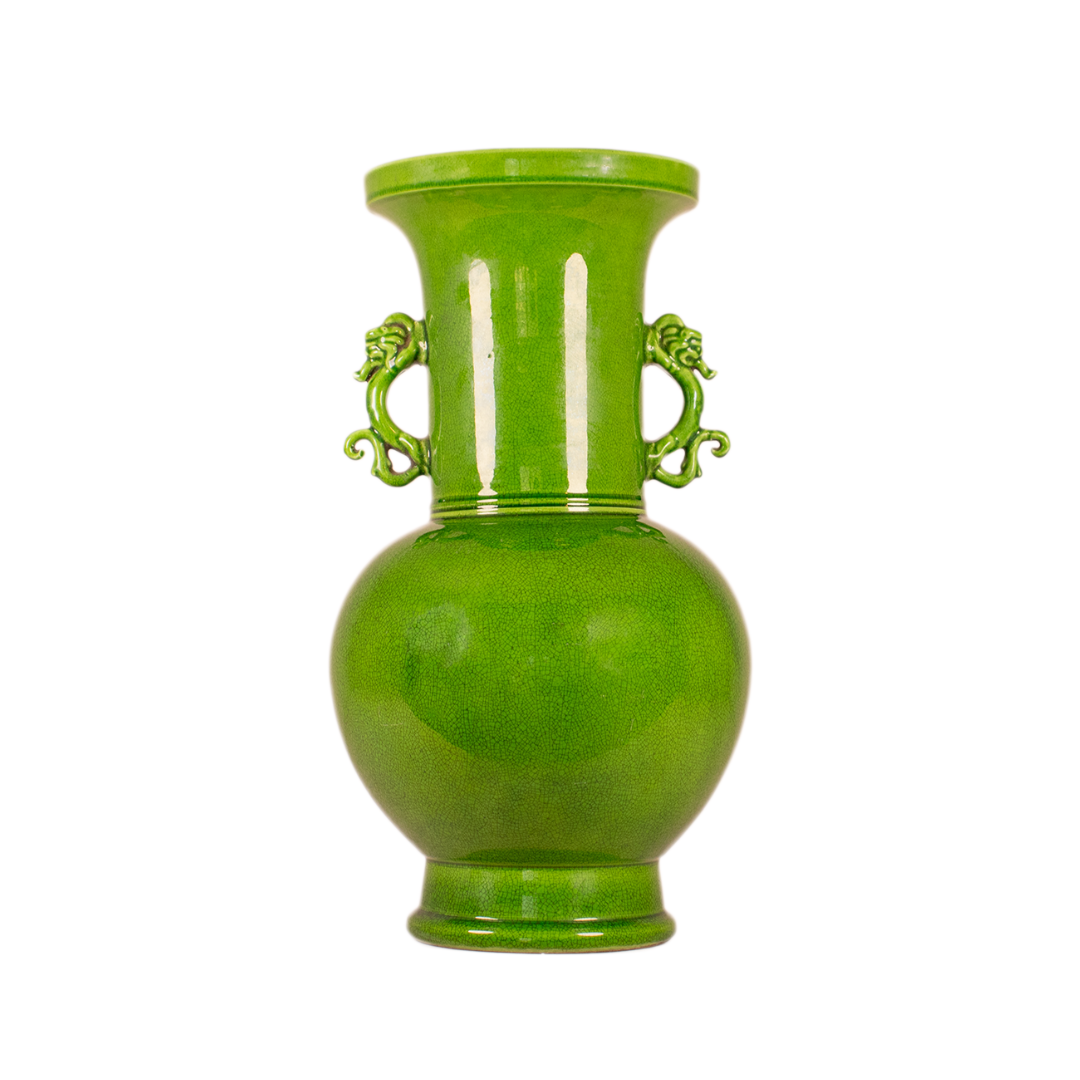
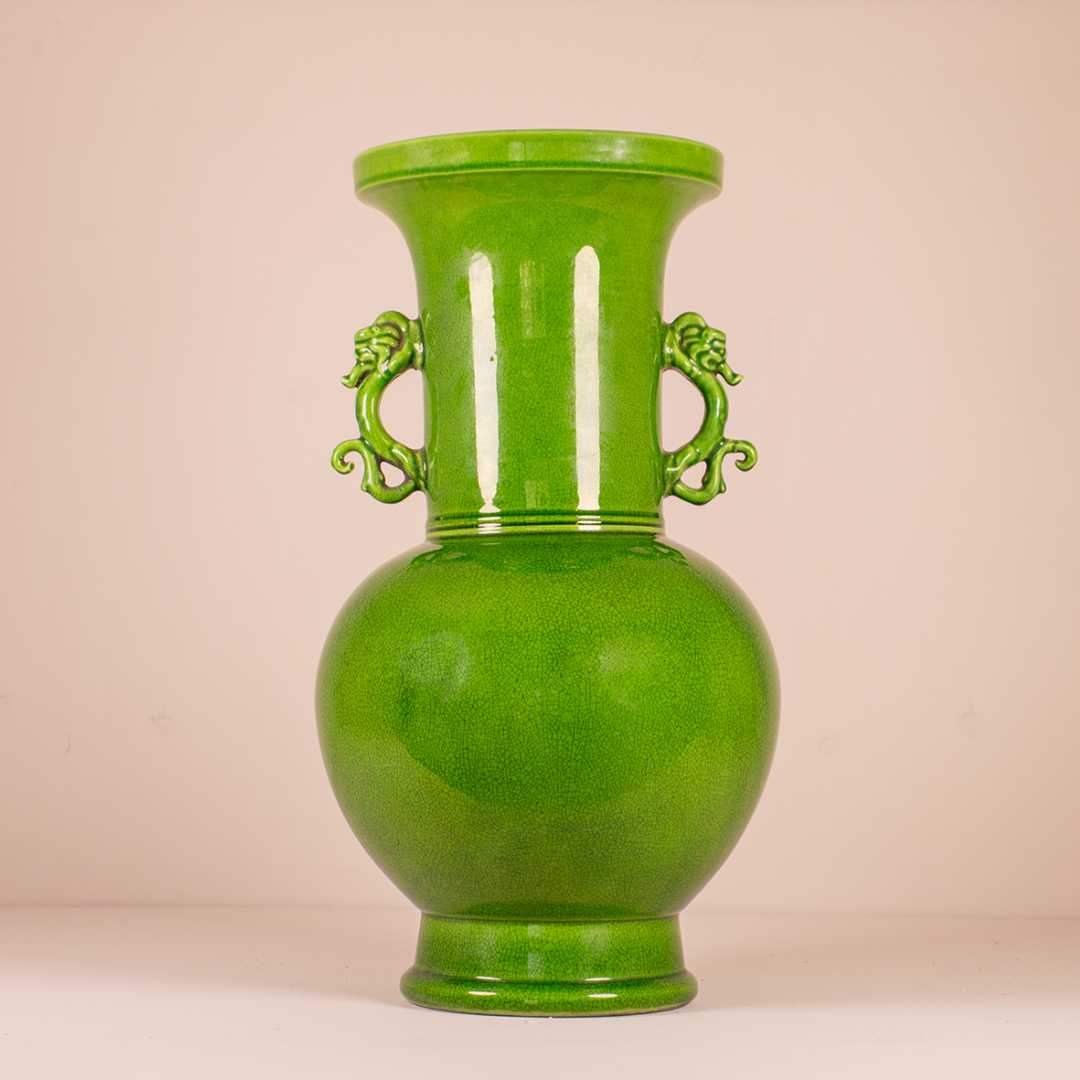
- Monochrome vases – Plain glazes such as celadon, sang-de-boeuf, or white.
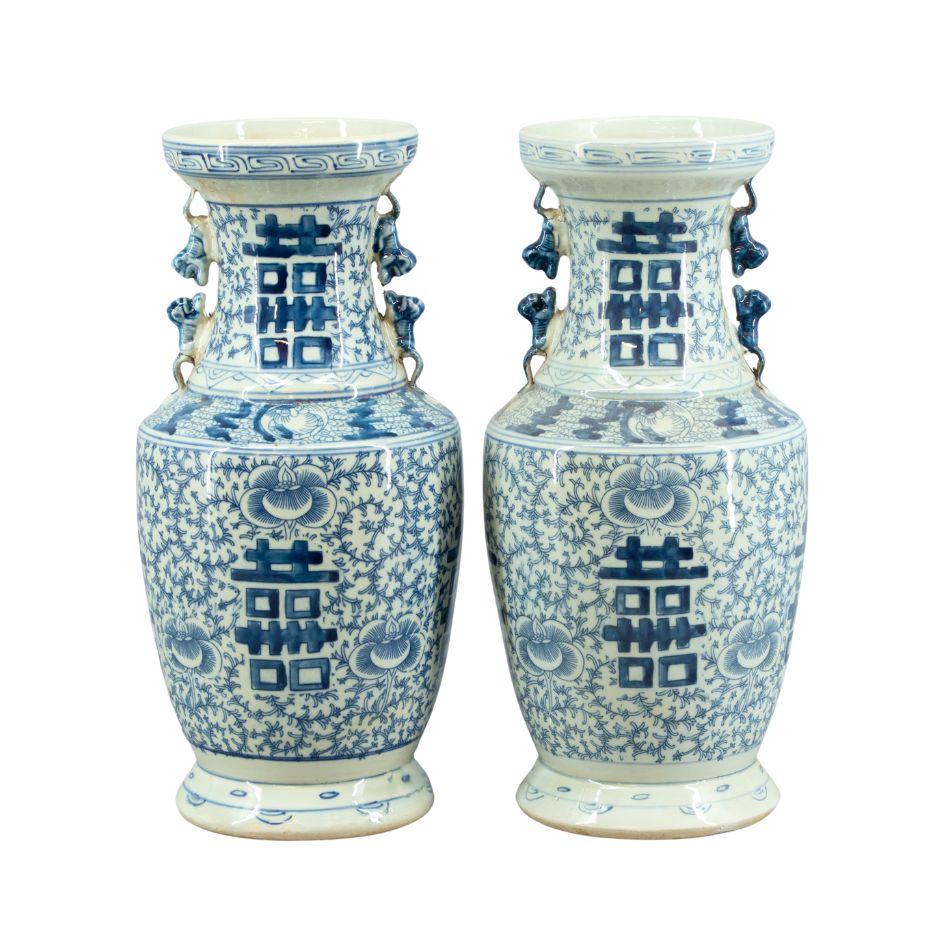
- Pair vases – Symmetrically arranged for calm and balance in interiors.
Materials & Techniques of Chinese Vases
The quality of Chinese porcelain stems from the combination of kaolin and petuntse—ingredients that fuse at extreme heat into a glassy, dense body.
The firing process at approximately 1400°C gives the vase its clear sound when lightly tapped—the so-called singing ring characteristic of hard-paste porcelain.
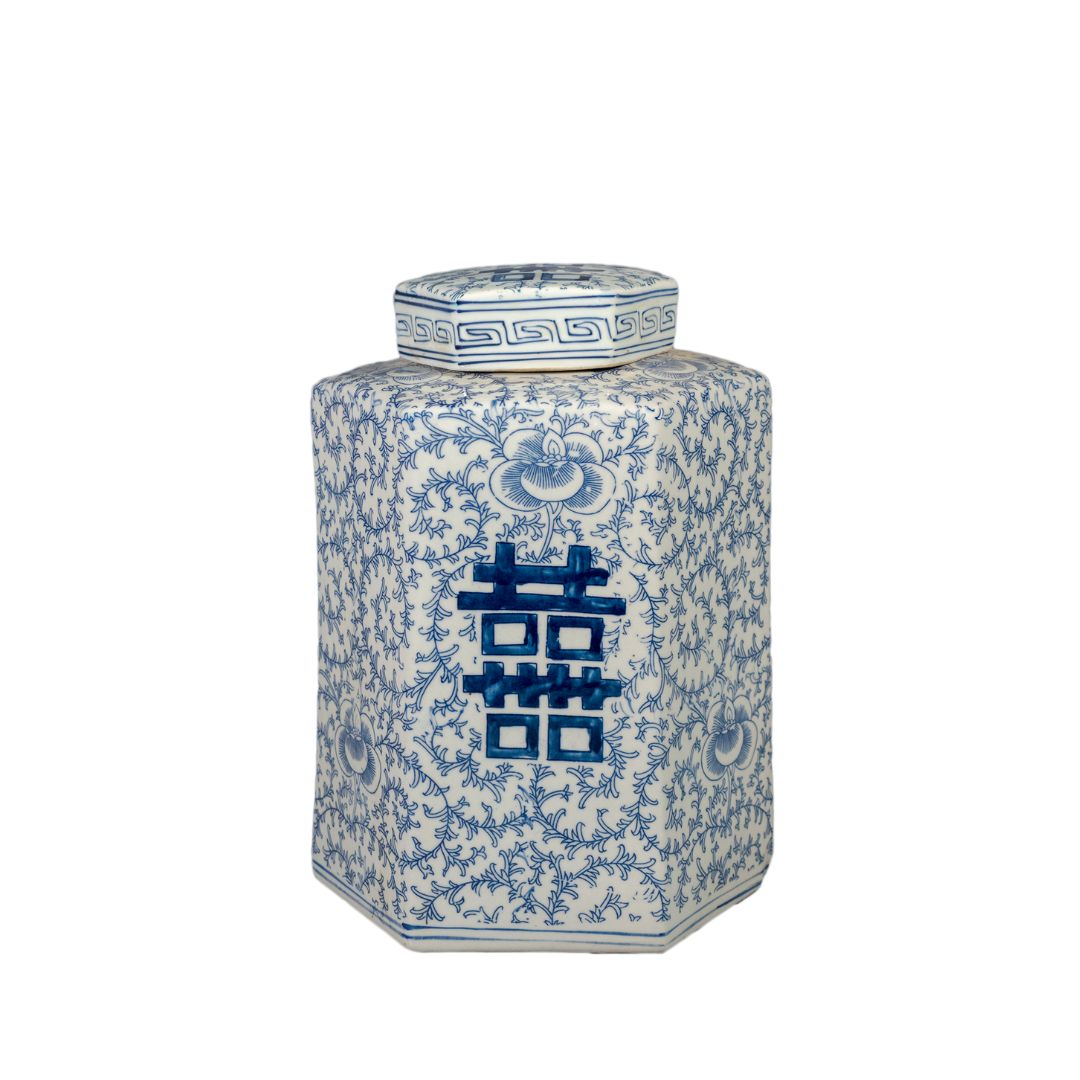
Decoration can be applied under or over the glaze: cobalt blue, iron red, enamels in famille rose or famille verte. The motifs—lotus, dragon, phoenix, cloud, or peach—often carry symbolic meanings such as prosperity, longevity, or harmony.
Chinese Porcelain vs European Porcelain
Chinese porcelain distinguishes itself from European through its hardness, translucency, and tone. Whilst European porcelain, such as later Delftware, is often softer and more porous, Chinese porcelain has a fully vitrified core and exceptional density.
Aesthetically, Chinese porcelain is more refined in brushwork and balance; Delftware translated this style with local pigments and iconography but remained an homage to the Chinese original.
Why Chinese Porcelain is Superior for Daily Use
The fully glazed surface makes Chinese porcelain watertight, hygienic, and durable. Vases retain their lustre, decoration, and structure even after centuries. For everyday use—with or without flowers—it is a material that excels both practically and aesthetically.
How to Recognise Quality in a Chinese Vase
A high-quality vase is identified by:
- Sound: A clear, ringing tone when lightly tapped.
- Weight: Solid yet balanced.
- Glaze: Smooth, deep, with subtle craquelure or sheen.
- Brushwork: Fluid and precise; no template repetition.
- Signature: Sometimes marked with a reign mark from the imperial kiln.
At Kuzco Art Maison, we distinguish authentic reproductions from modern copies through material and pigment analysis, and close collaboration with traditional workshops.
Chinese Vase Collection from Kuzco Art Maison
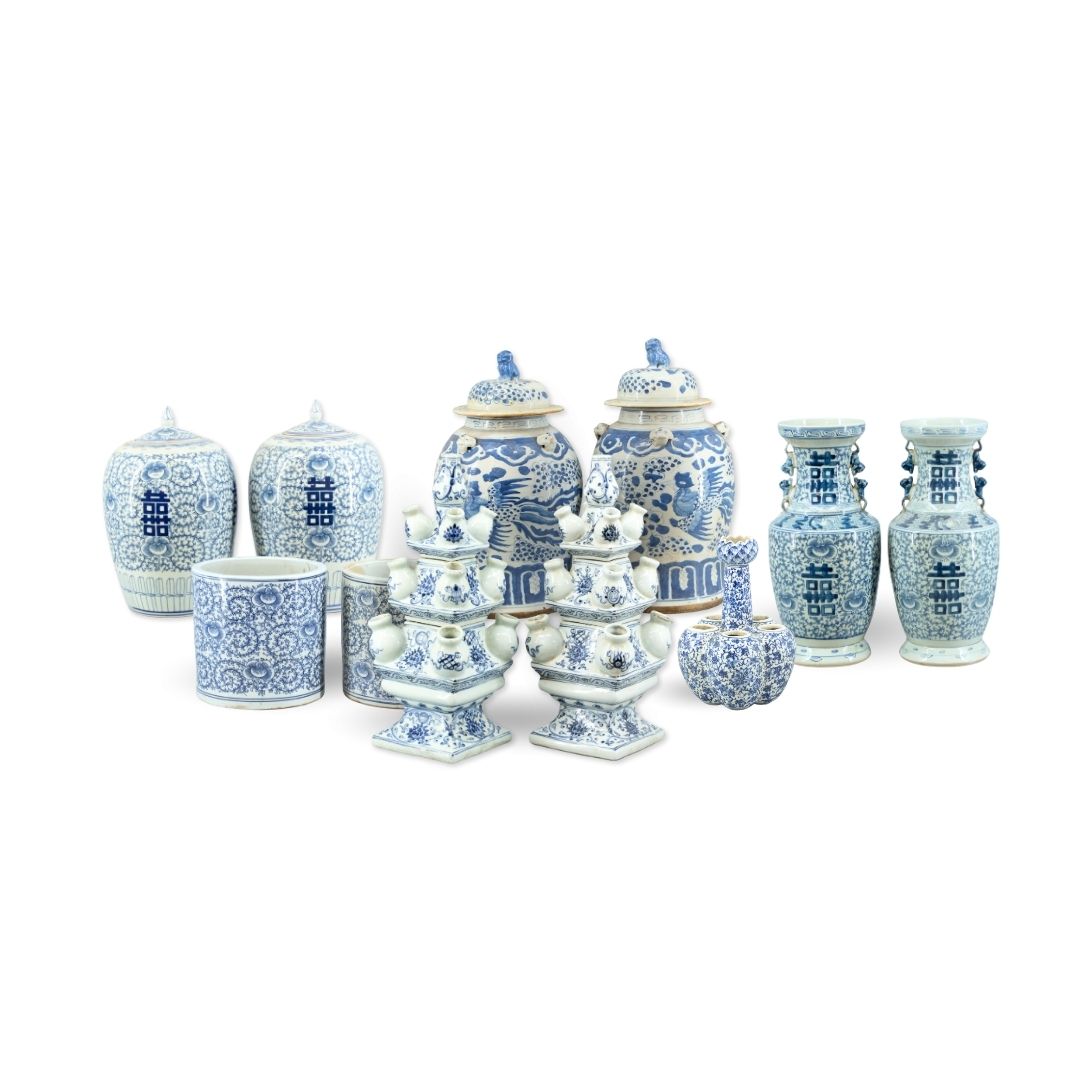
Our collection comprises carefully selected models, each referencing historical prototypes:
- Tulip vase – Kangxi Revival
- Three-piece tulip vase 'Amélie'
- Large tulip pyramid 'George'
- Baluster vase 'Longevity' (Shou decoration)
- Brush pots 'Jasmine' (blue and white)
- Green dragon-ear vase (celadon)
- Famille rose peach vase (pastel)
All vases are handcrafted in China, preserving traditional glazing techniques and colour pigments.
How to Choose the Right Chinese Vase
- Size & placement – A tall floor vase or a symmetrical pair on a mantel creates calm and harmony.
- Colour & decoration – Combine blue and white with celadon for depth and serenity.
- Single or pair – A single vase works as a statement; a pair brings balance.
- Styling advice – Use white or pink blossoms, orchids, or lotus for a subtle Oriental accent.
Our team advises designers and collectors on assembling combinations that unite light, texture, and meaning.
Craftsmanship & Artistic Vision
Each vase is produced in limited editions, respecting centuries-old methods. The forms and decorations are curated through an art-historical lens, ensuring each model remains a faithful interpretation of its historical exemplar.
At Kuzco Art Maison, we pursue sustainability and authenticity—objects that retain their value across generations.
Why Choose Our Chinese Vase Collection?
- Hand-painted porcelain from China
- Authentic glazes and traditional pigments
- Exclusive curation by art historians
- Small editions, no mass production
- Personal advice for interior projects
- B2B delivery across Europe
Chinese Vase FAQs
How Do You Identify Antique Chinese Porcelain?
By the glaze, brushwork, sound, and imperial reign marks.
Are Chinese Vases a Good Investment?
Yes, Chinese vases are an excellent investment—provided you select for quality. Due to their art-historical value and limited production, they retain long-term value.
What's the Difference Between Chinese and Japanese Vases?
Japanese ceramics are often earthenware-based and asymmetrical; Chinese porcelain is finer, more symmetrical, and harder in structure.
What Do the Symbols on Chinese Vases Mean?
Motifs such as dragon, phoenix, lotus, or peach represent strength, harmony, purity, and immortality.
Why Do Some Vases Sound "Singing"?
Due to the high density of the porcelain and glaze tension achieved at 1400°C.
How Do You Care for a Porcelain Vase?
Use only a soft cloth; avoid abrasive cleaners or sudden temperature fluctuations.
Service & Delivery
- Securely packed and insured worldwide transport
- B2B project service and styling advice for designers
- Delivery within Europe and beyond via our logistics partners
About Kuzco Art Maison
Kuzco Art Maison was born from a passion for art, museums, and interiors. With academic expertise in Art, Market & Connoisseurship and Museum Studies, we bridge art history and contemporary design.
Our mission: to create interiors that inspire like exhibitions.
We make art accessible through high-quality reproductions of masterworks and artisanal objects that are both aesthetic and sustainable—for those who wish to experience beauty in daily life.