


Furniture
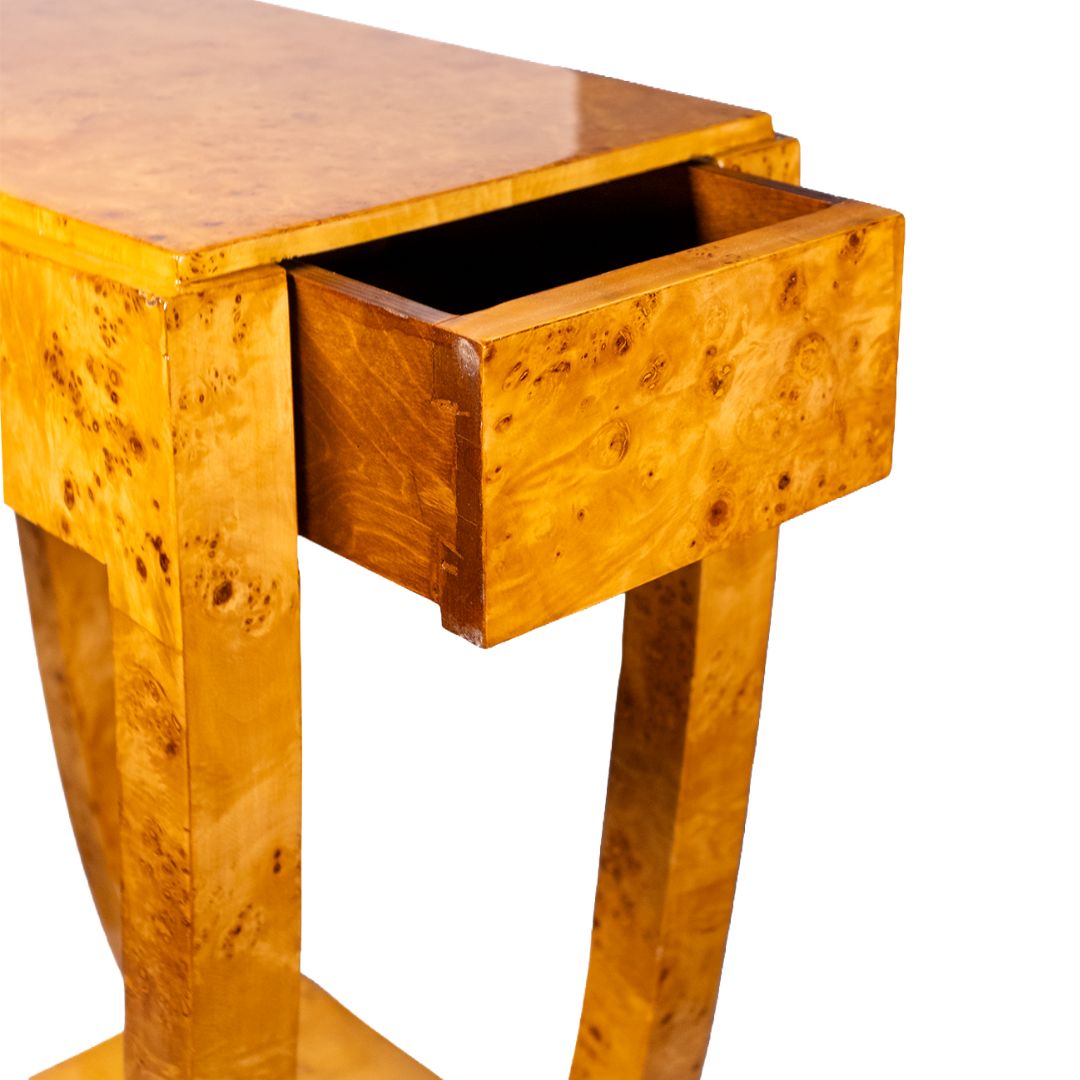
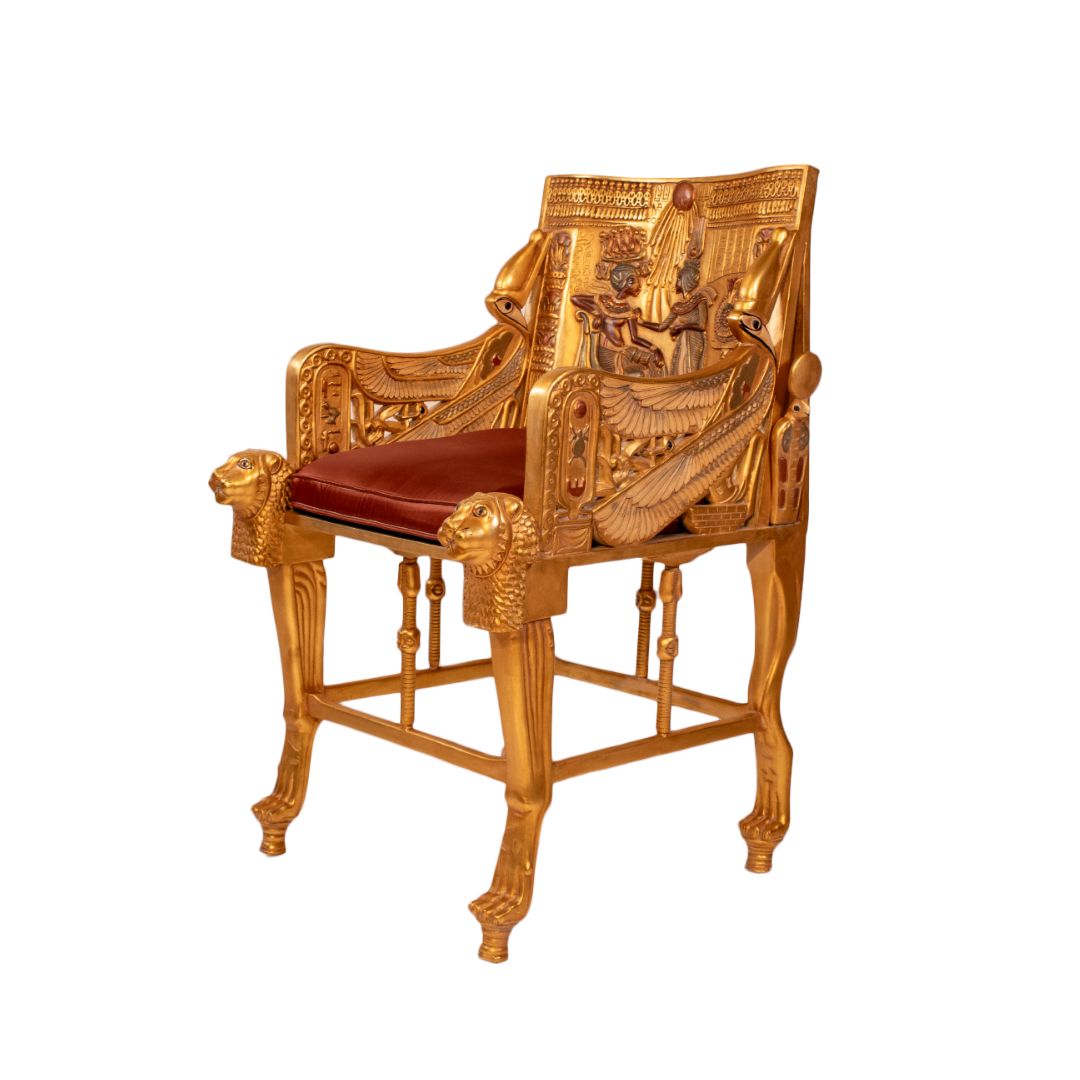
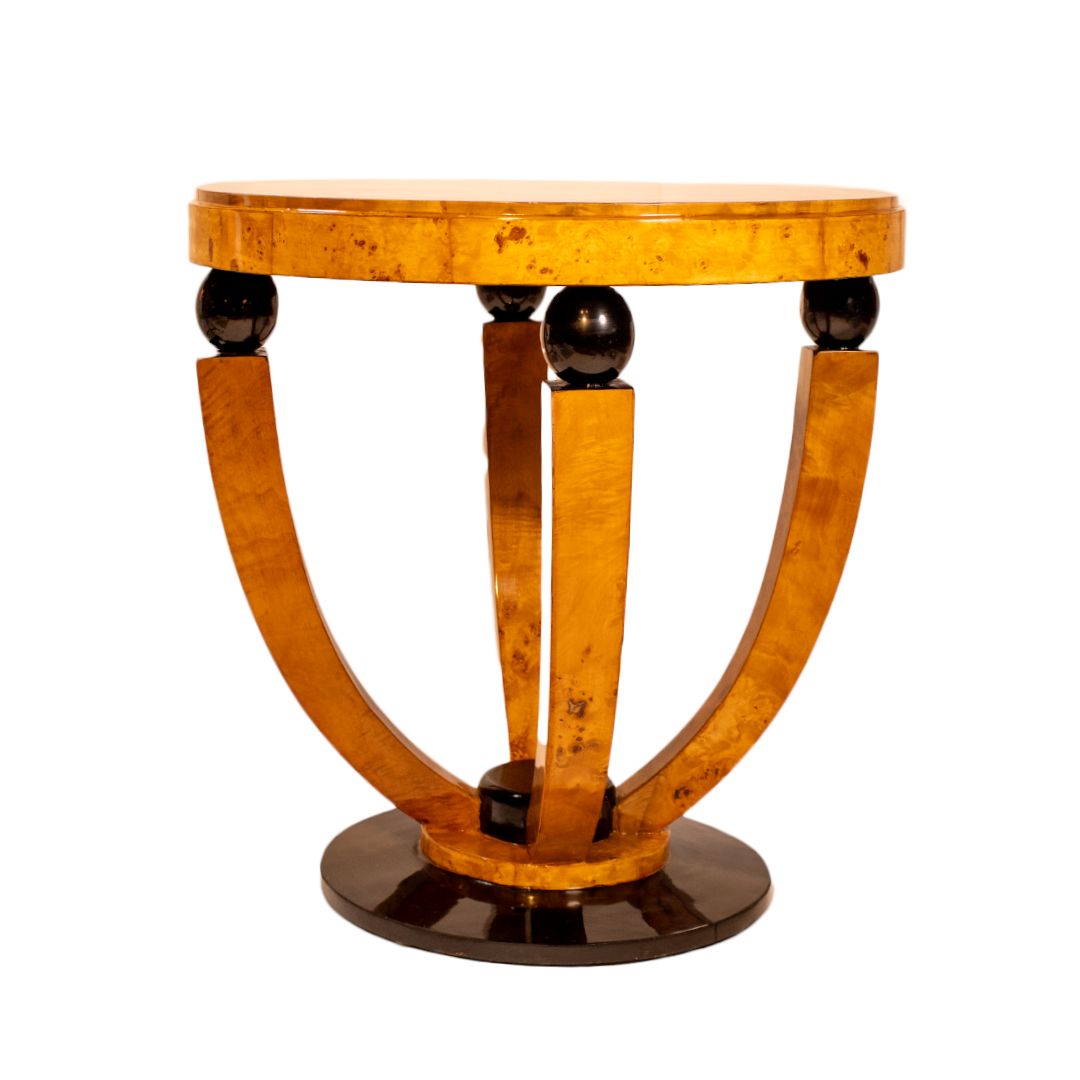
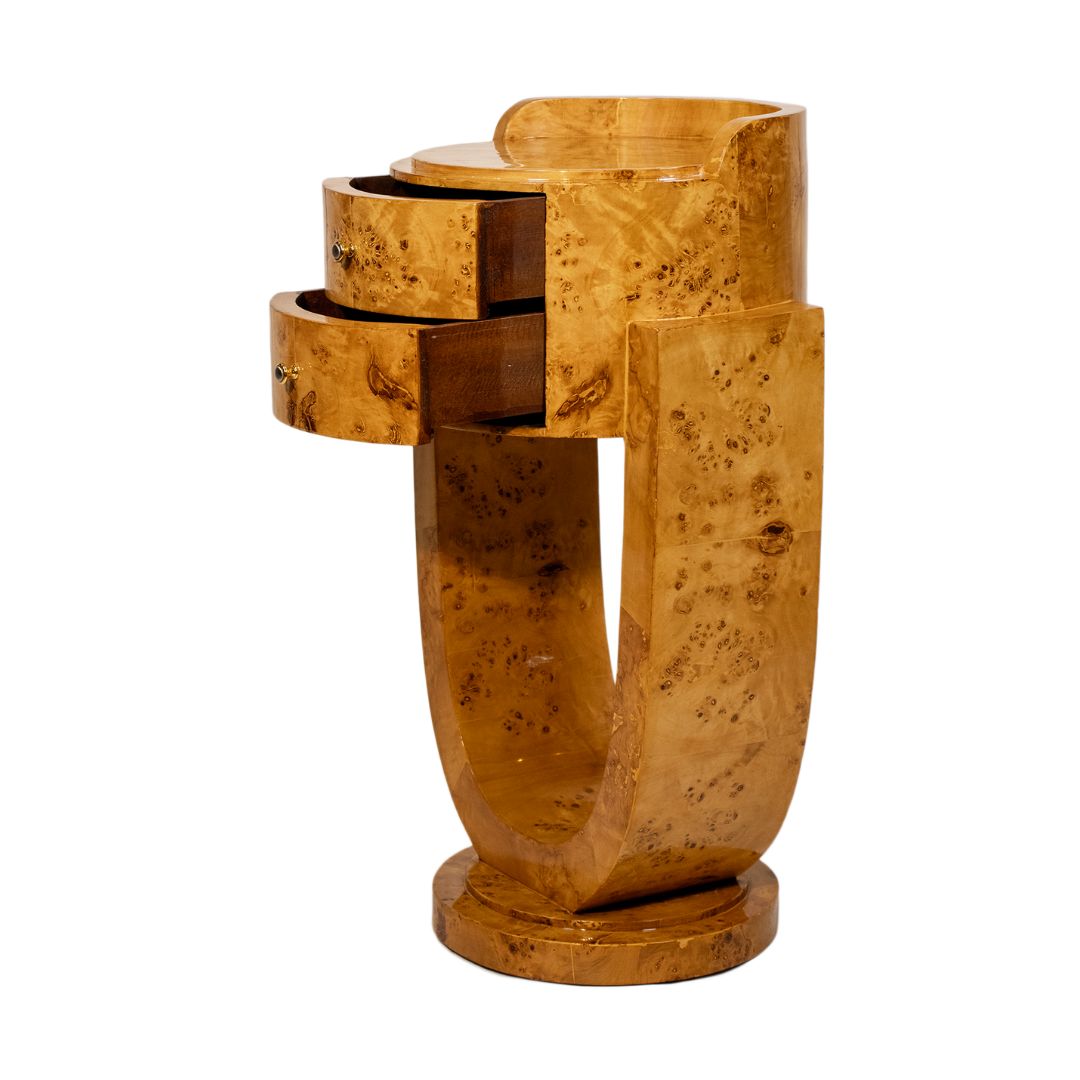
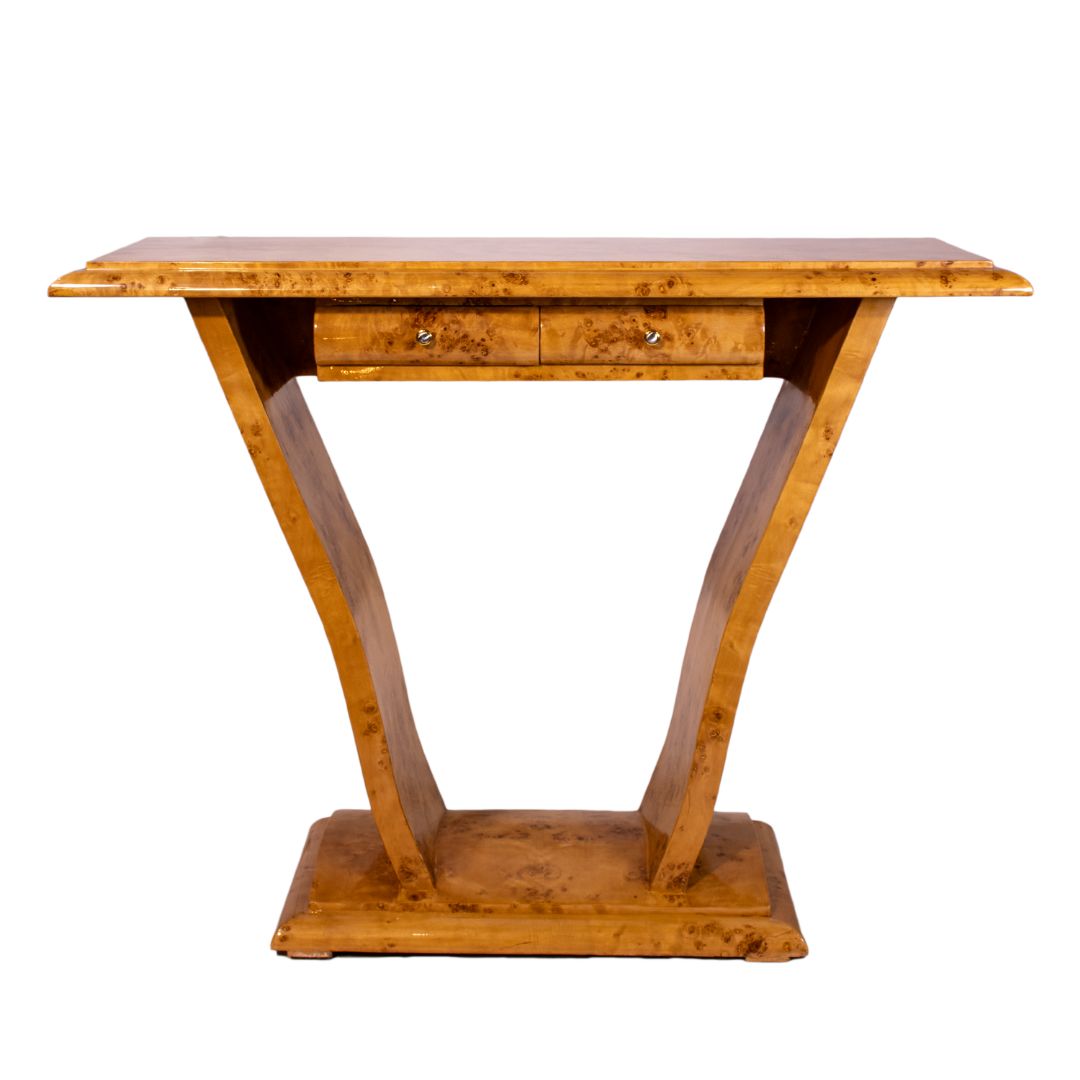
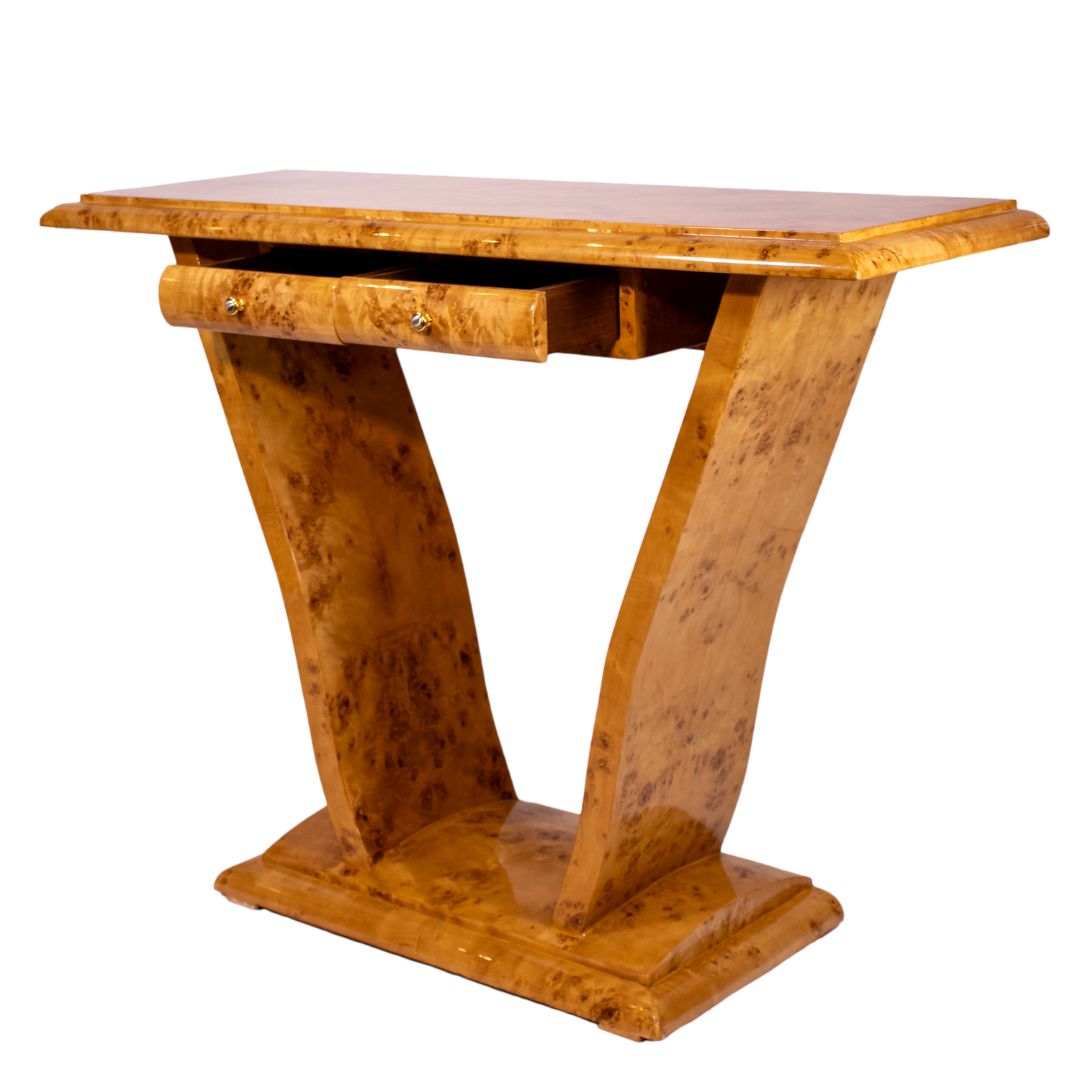
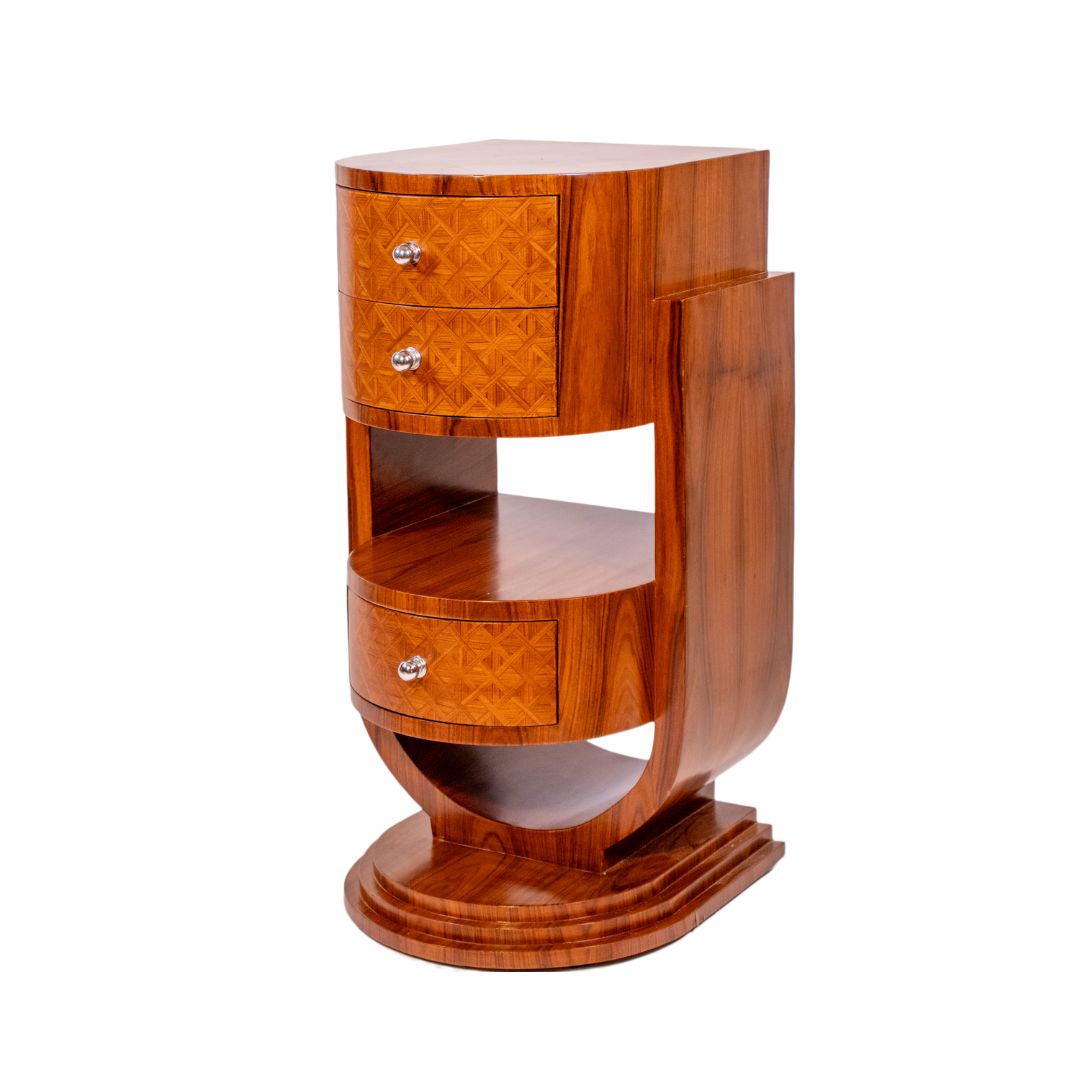
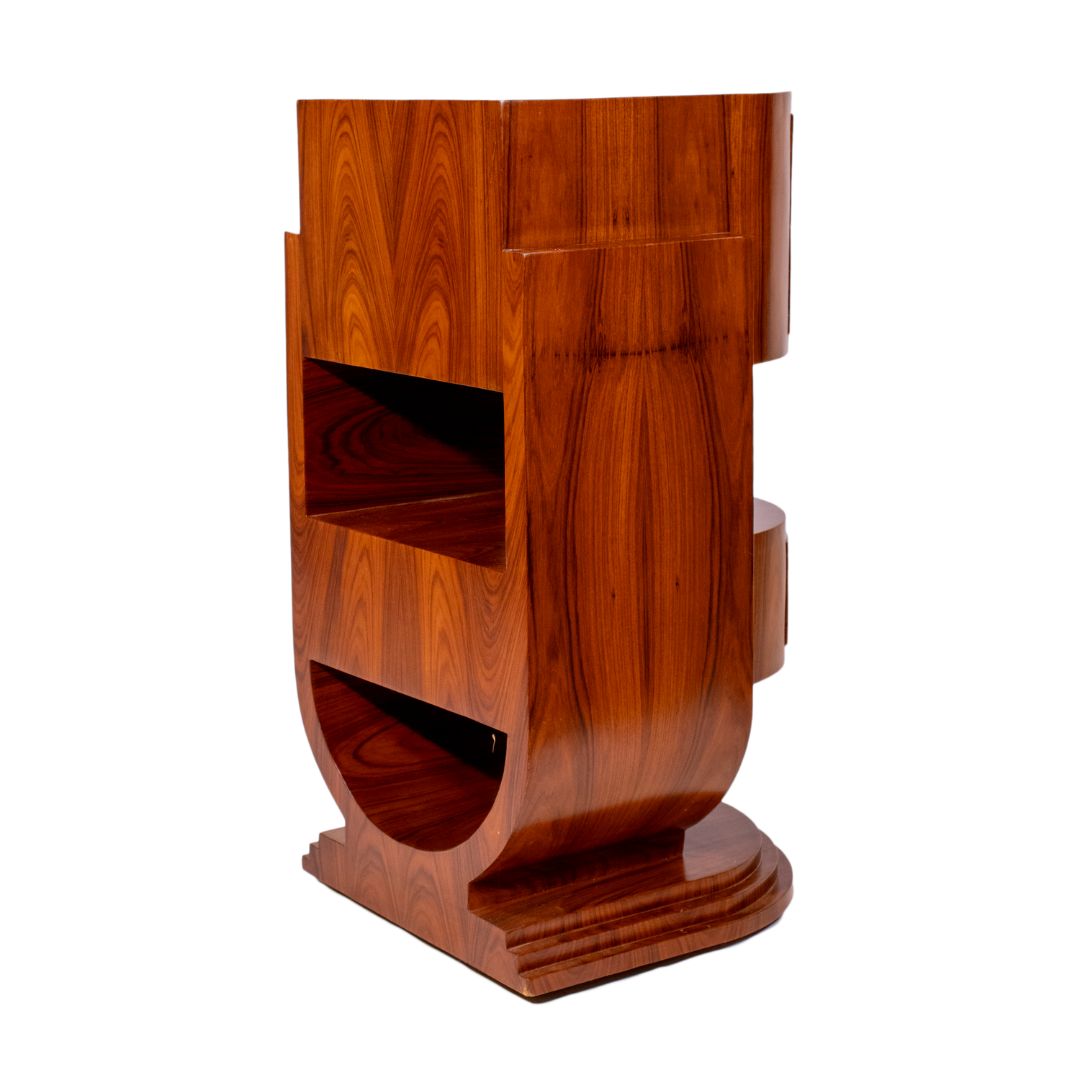
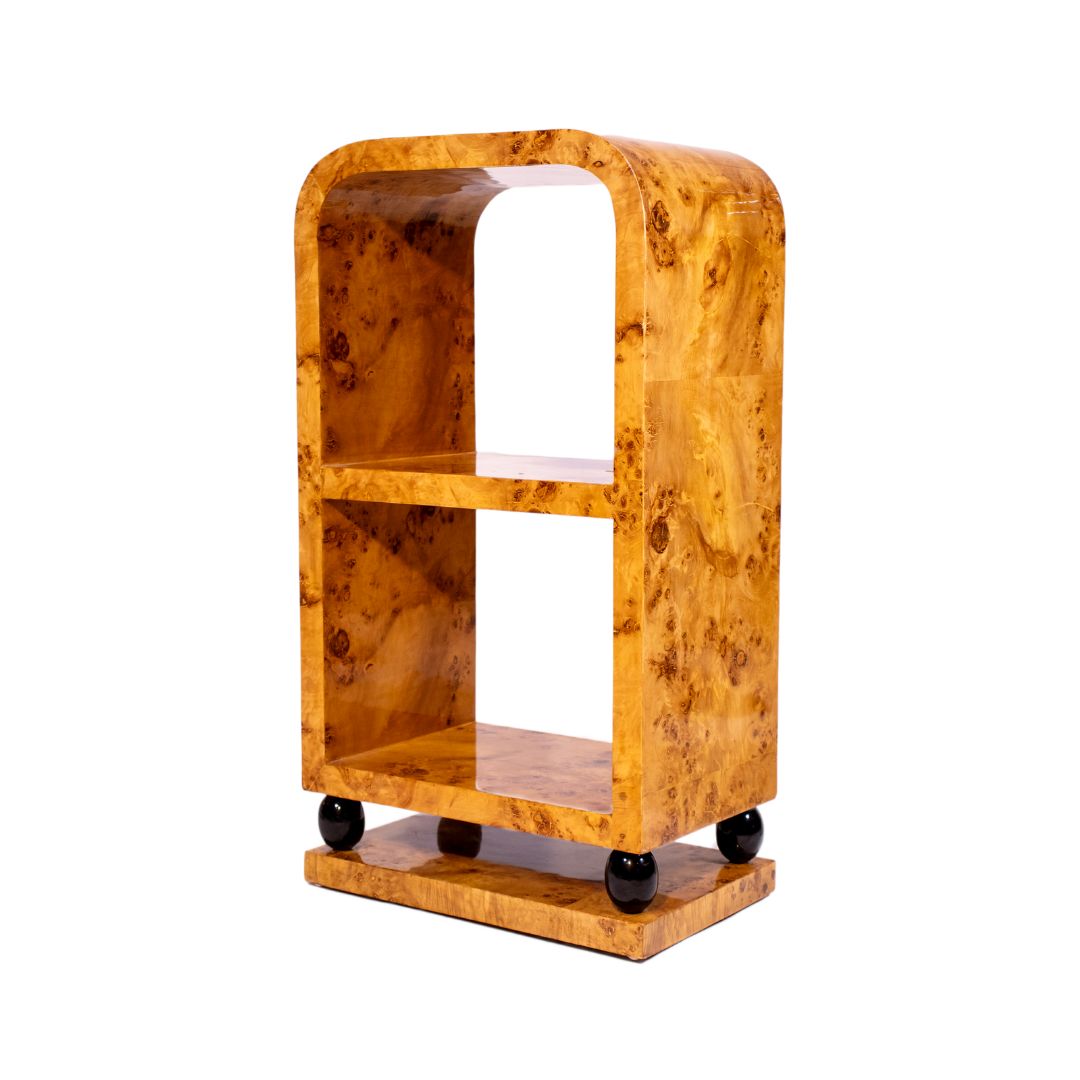
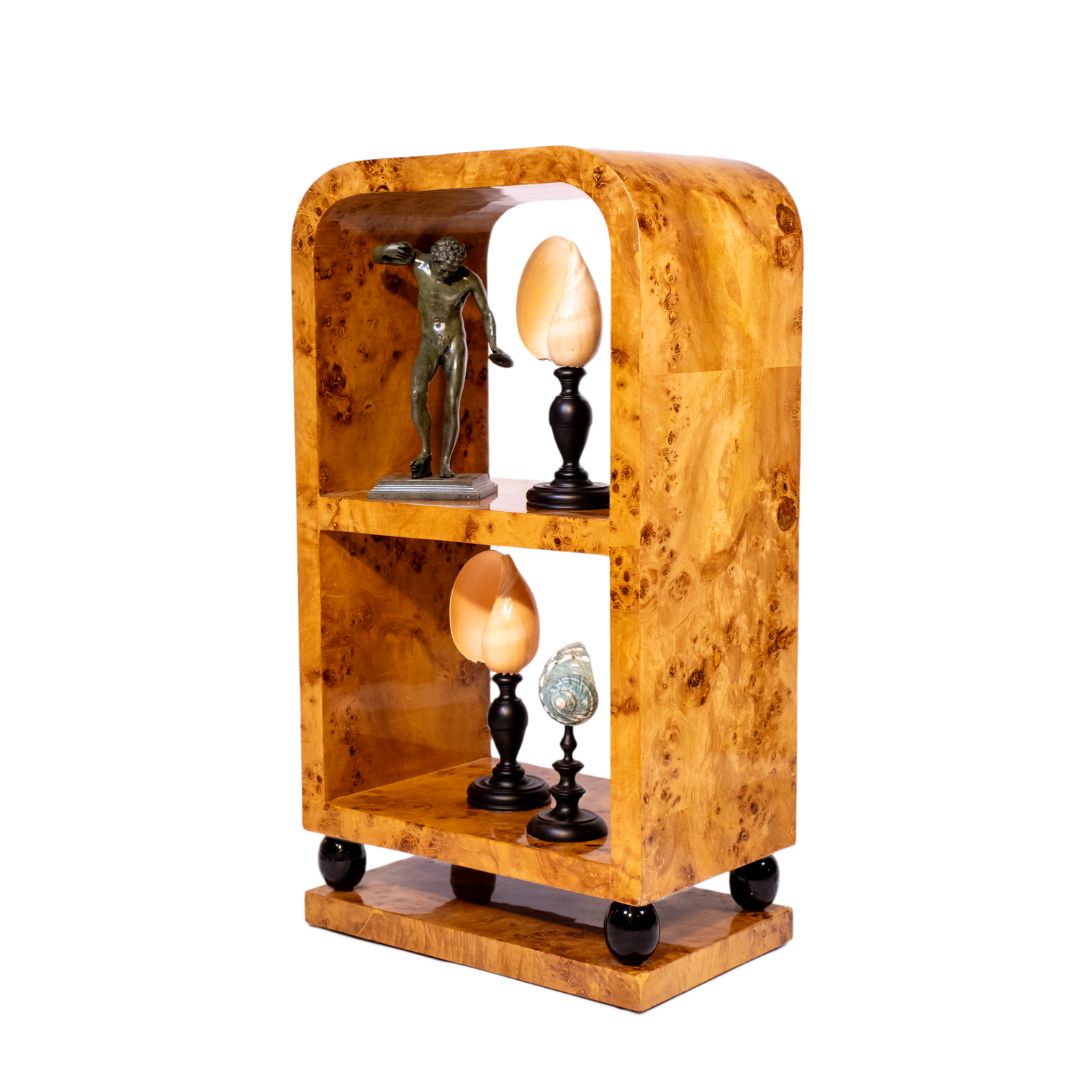
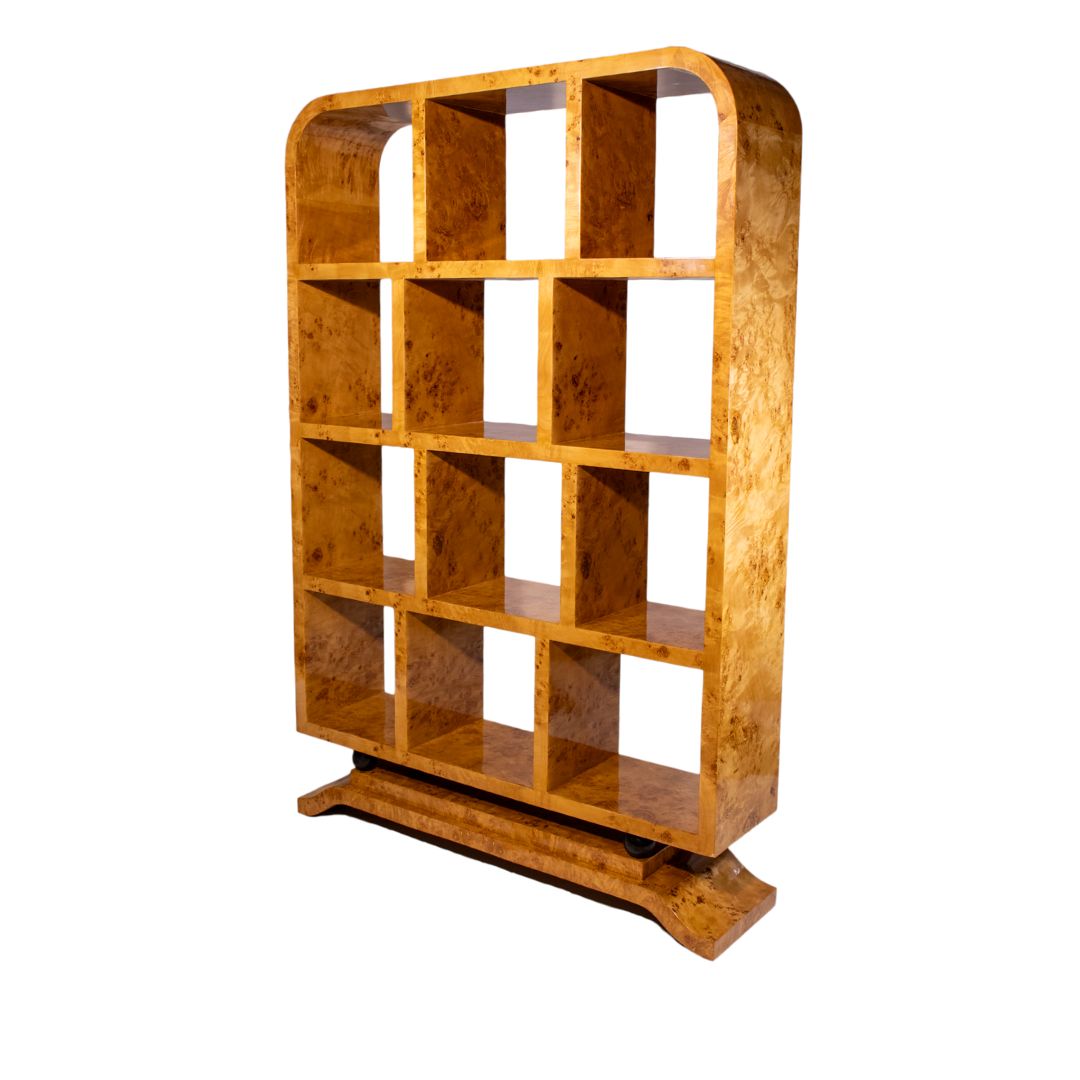
Art Deco furniture made by hand after the style of the 1920s and 1930s: round side tables, coffee tables, console tables, a bedside table, a side cabinet and an open bookcase, nearly all in burr walnut veneer under a gloss varnish. Beside them stands one piece from another world, a gilded throne after that of Tutankhamun. Dimensions and finish are given on every product page.
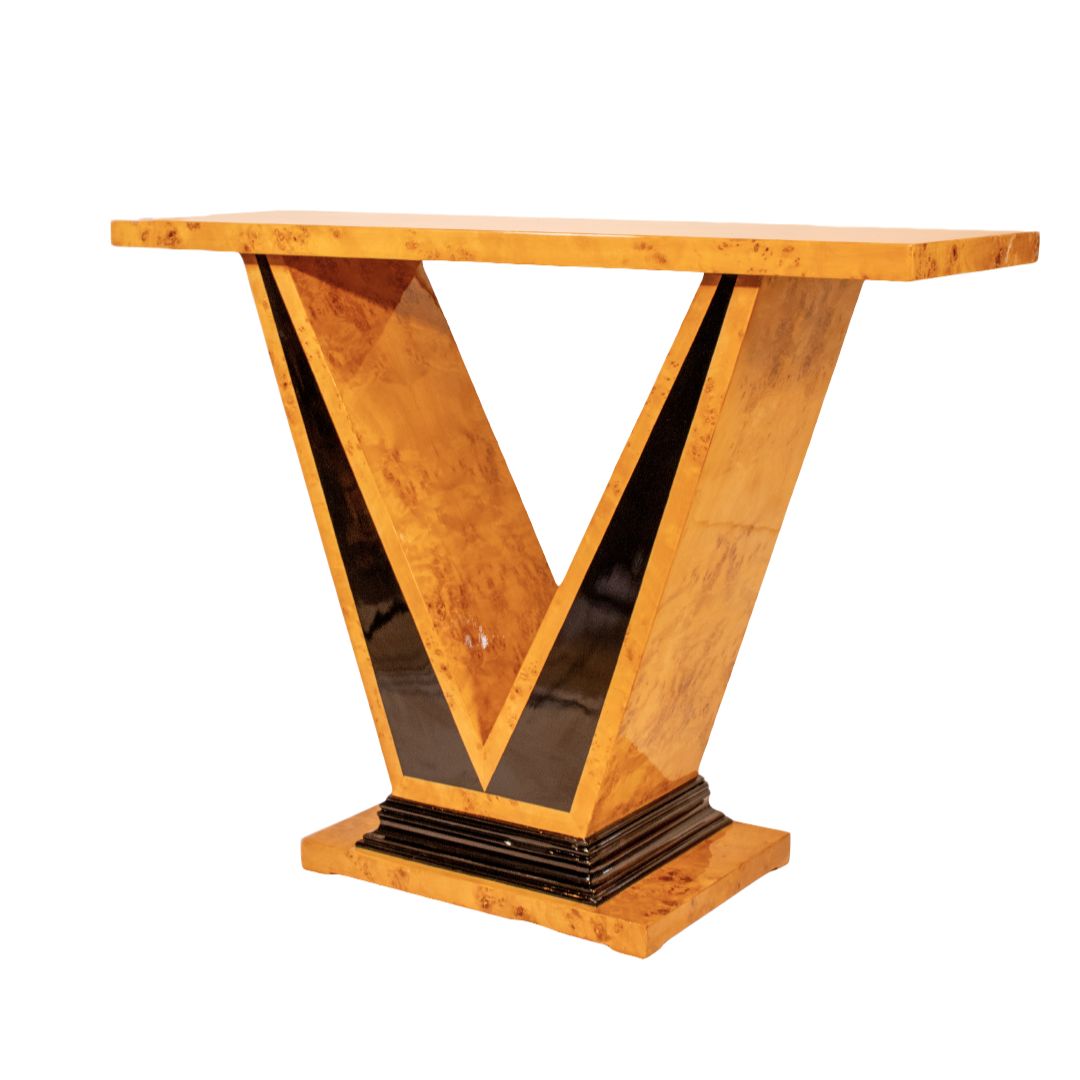
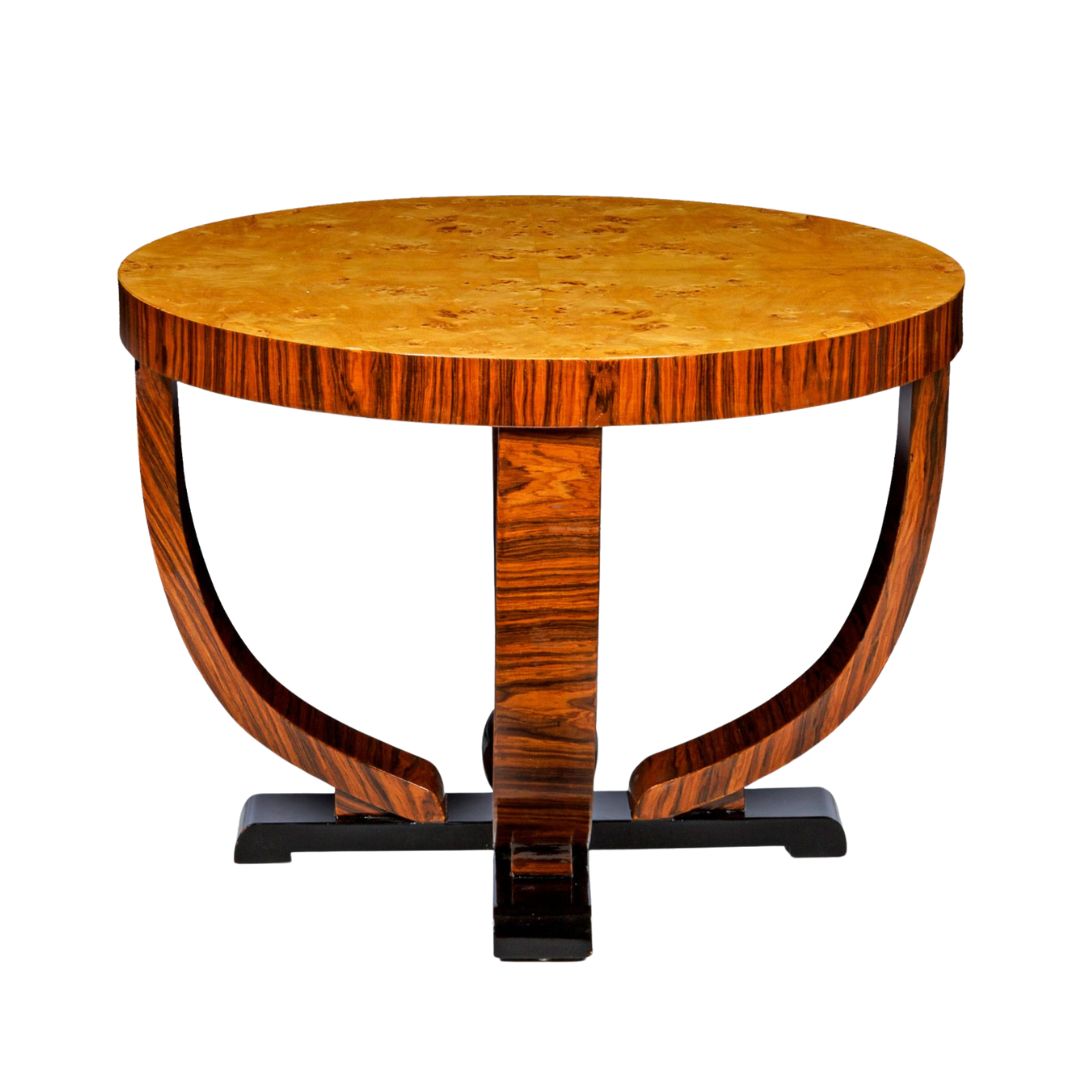
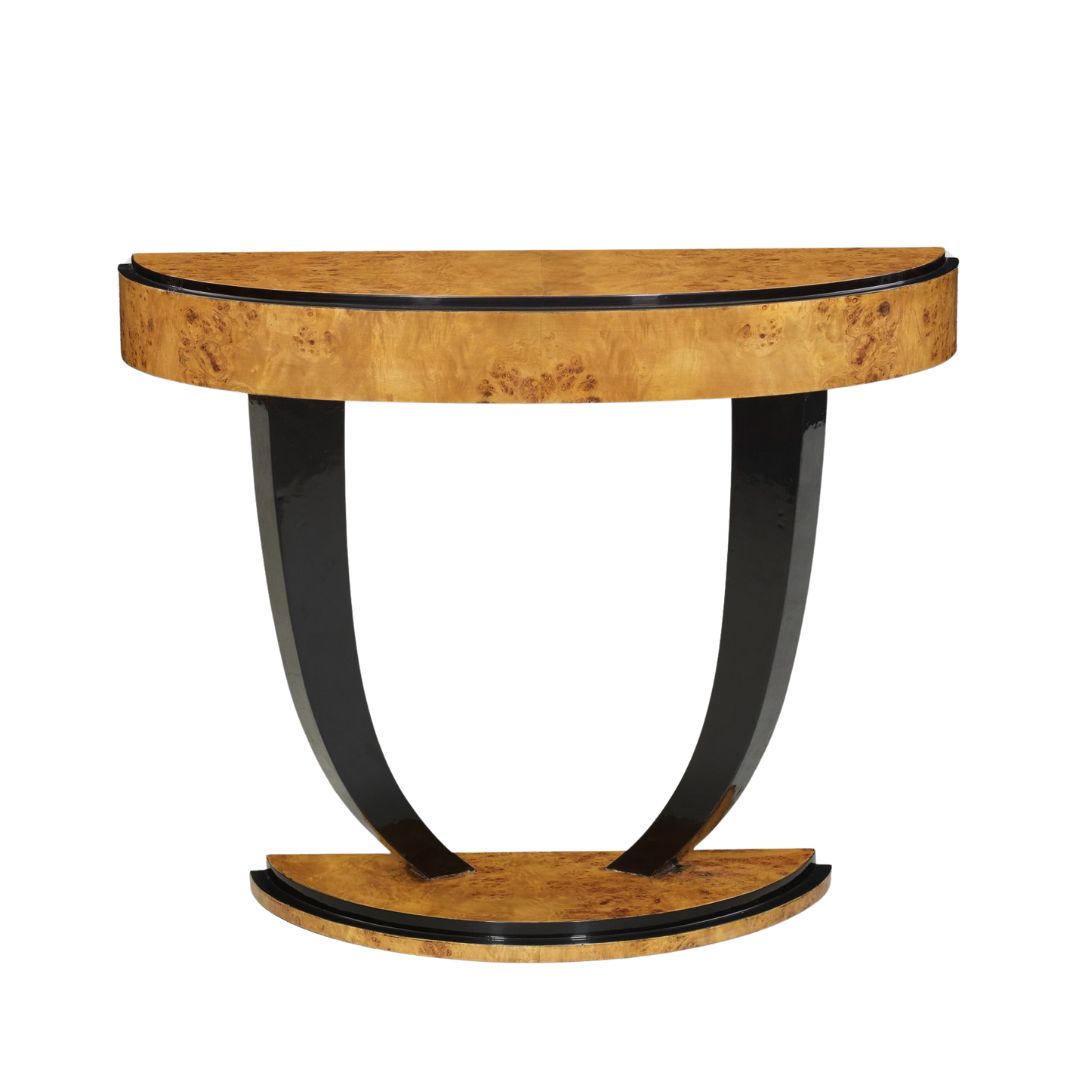
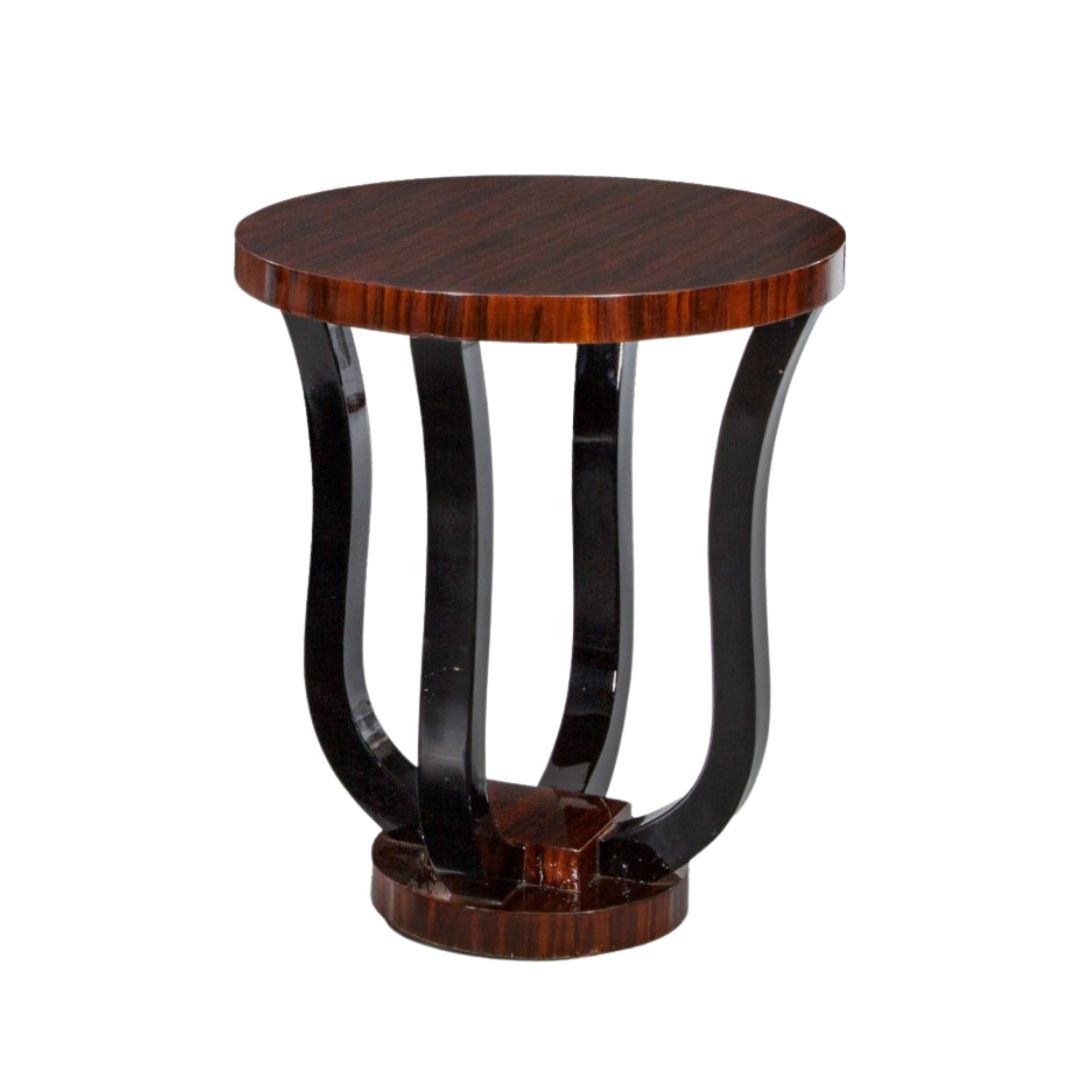
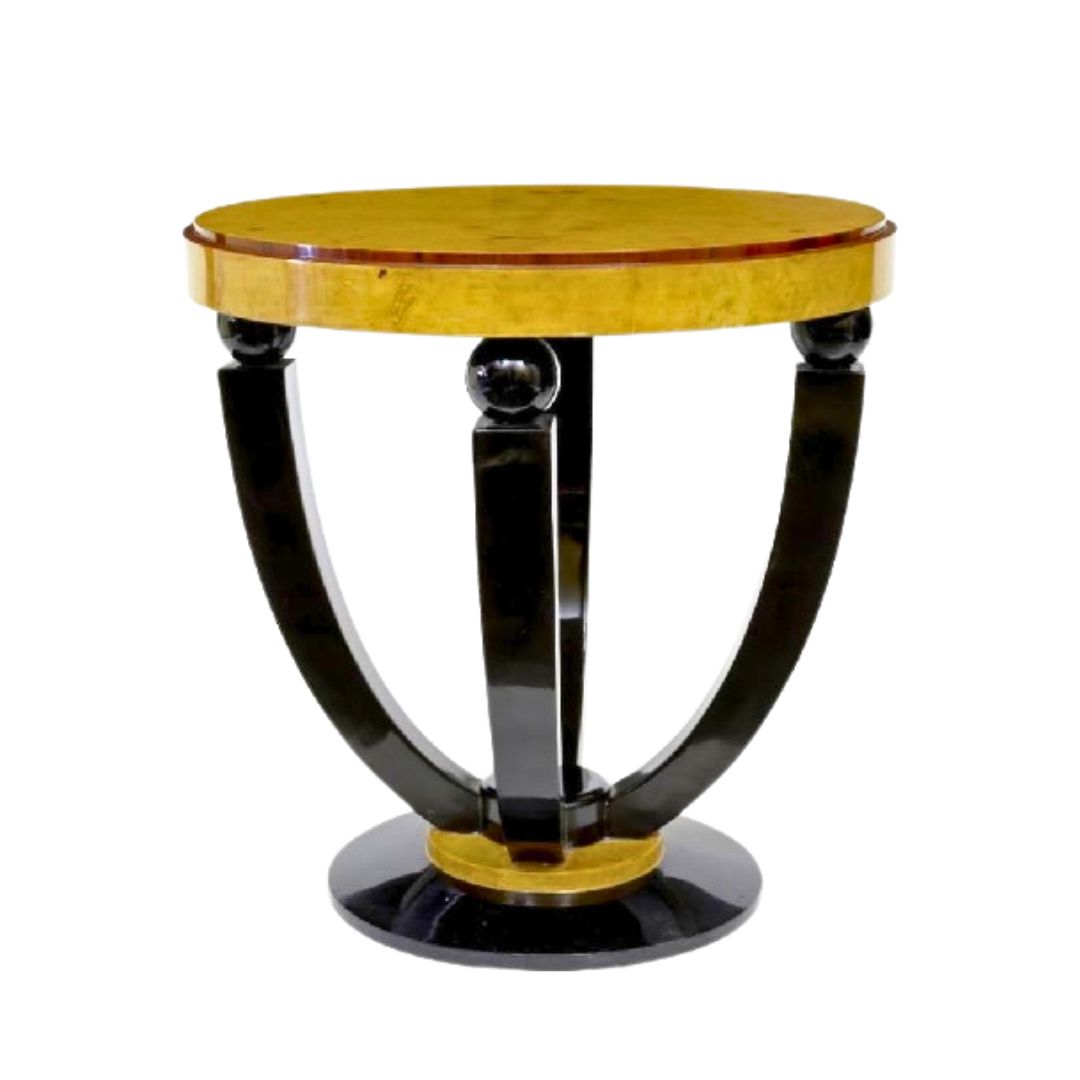
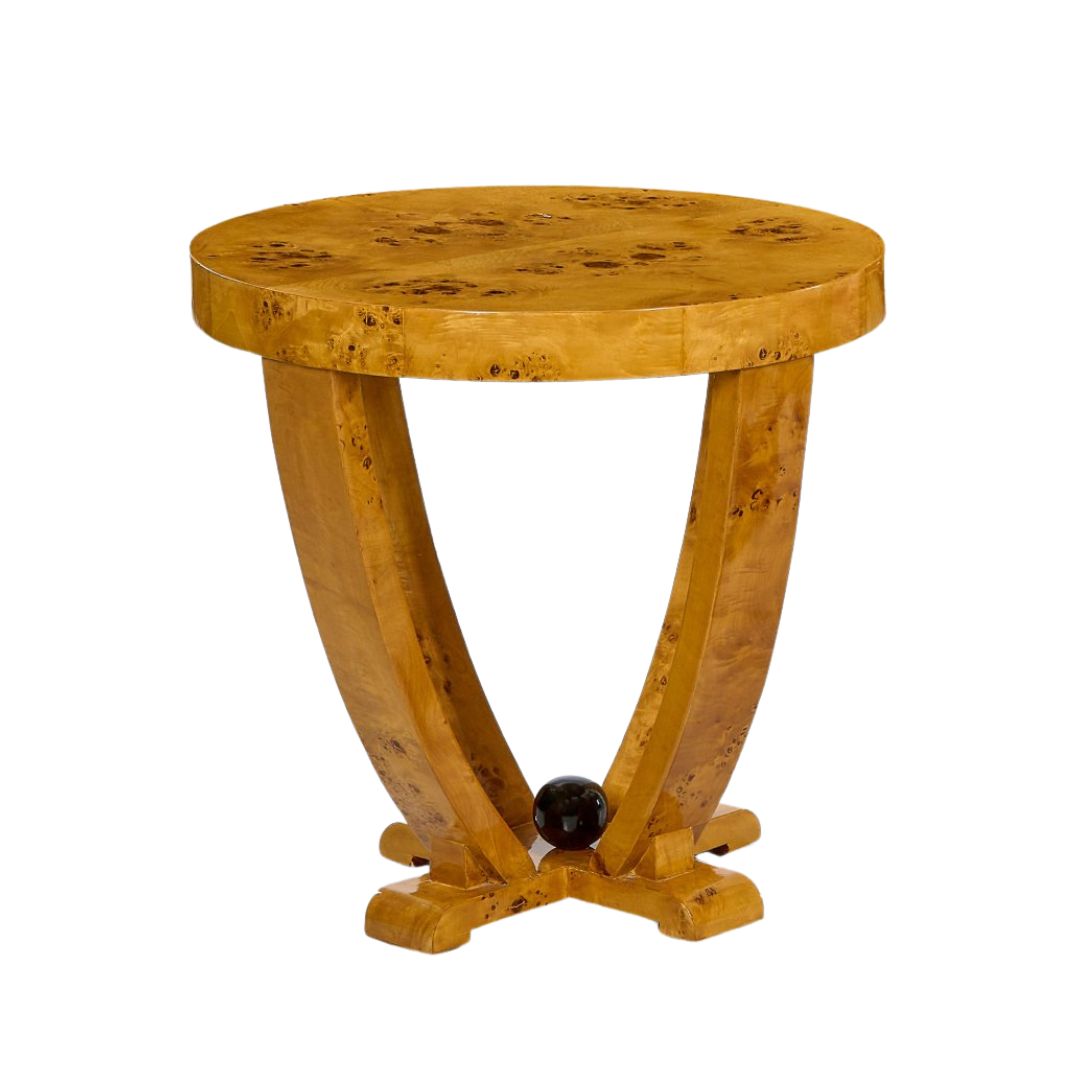
Buying furniture: Art Deco side tables, console tables and bookcases
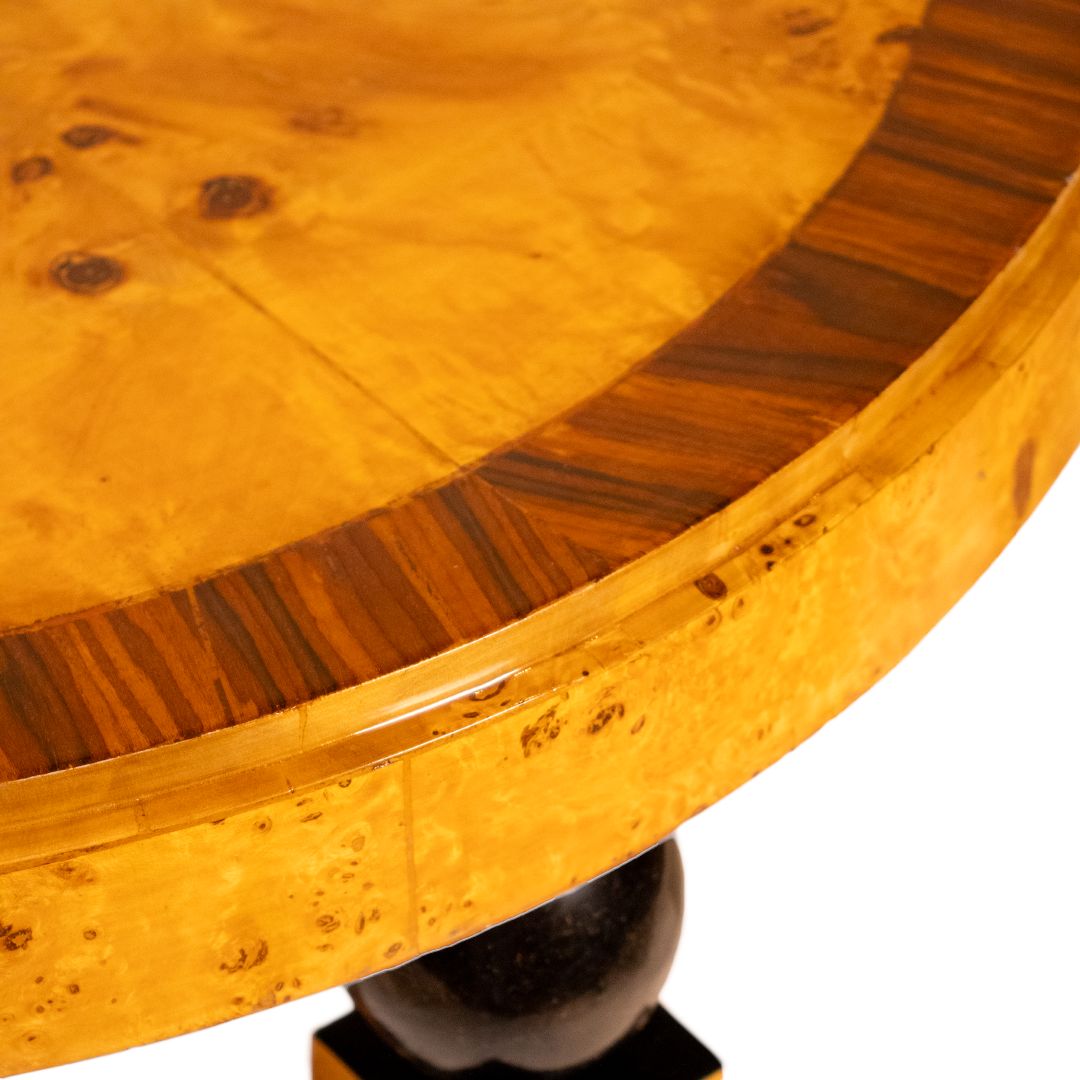
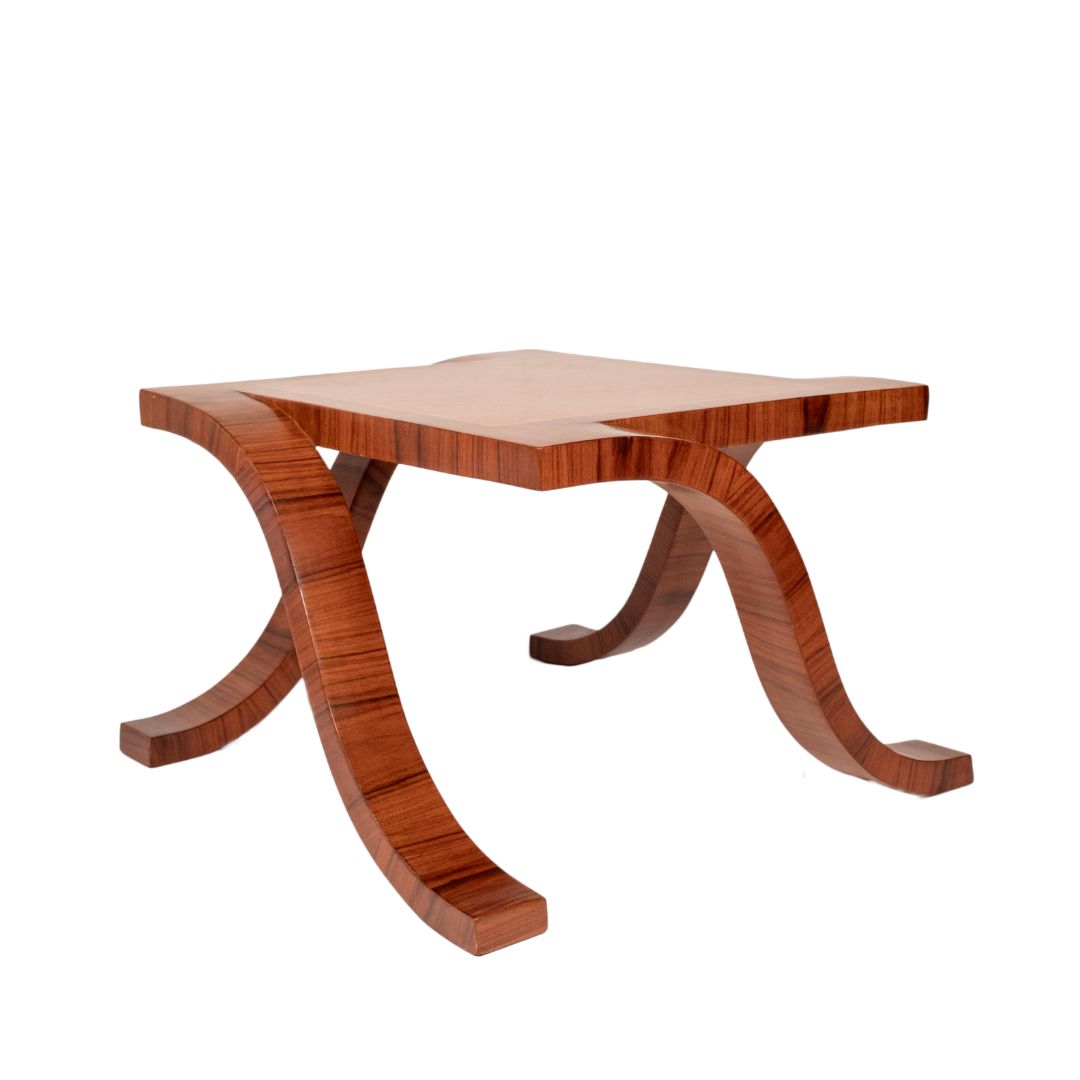
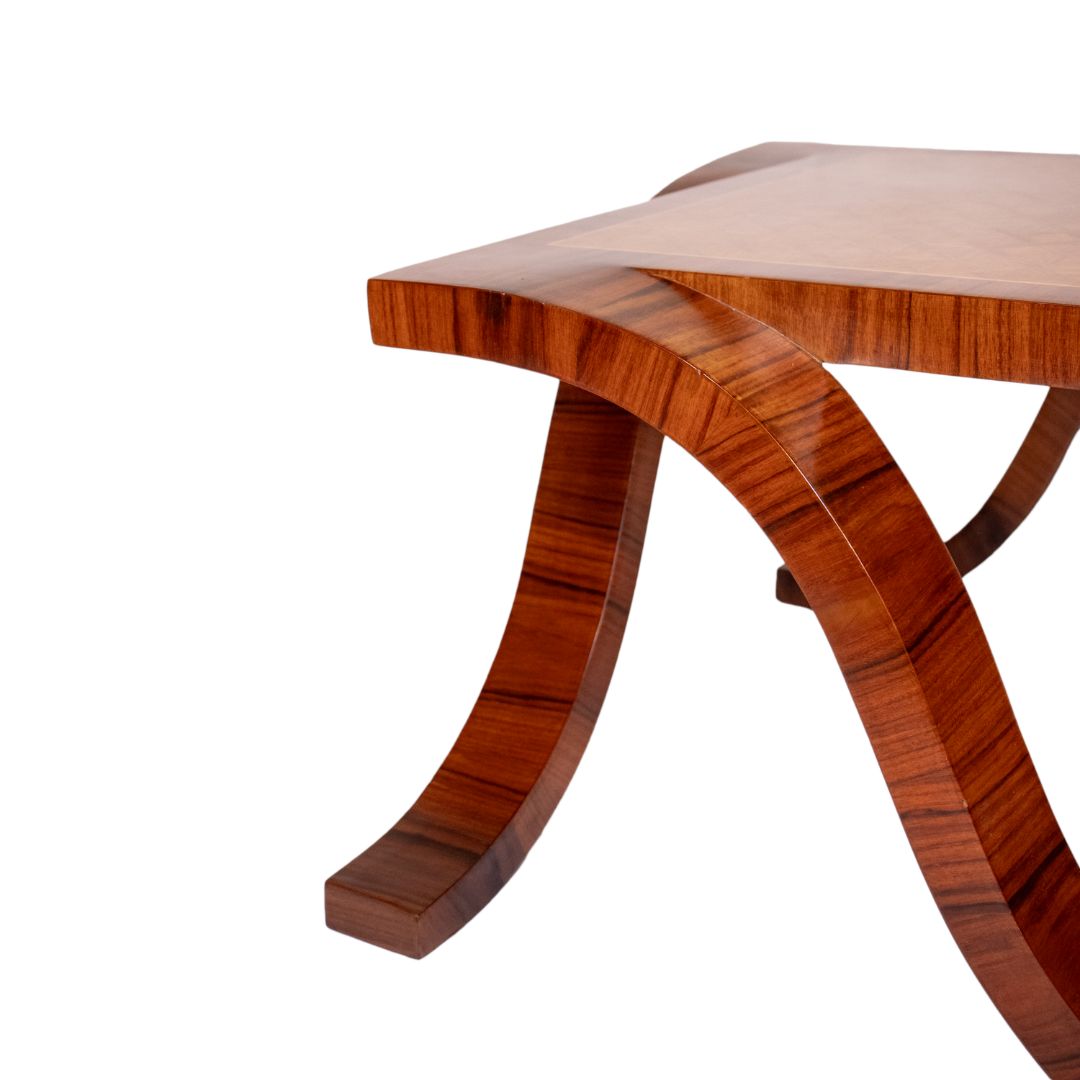
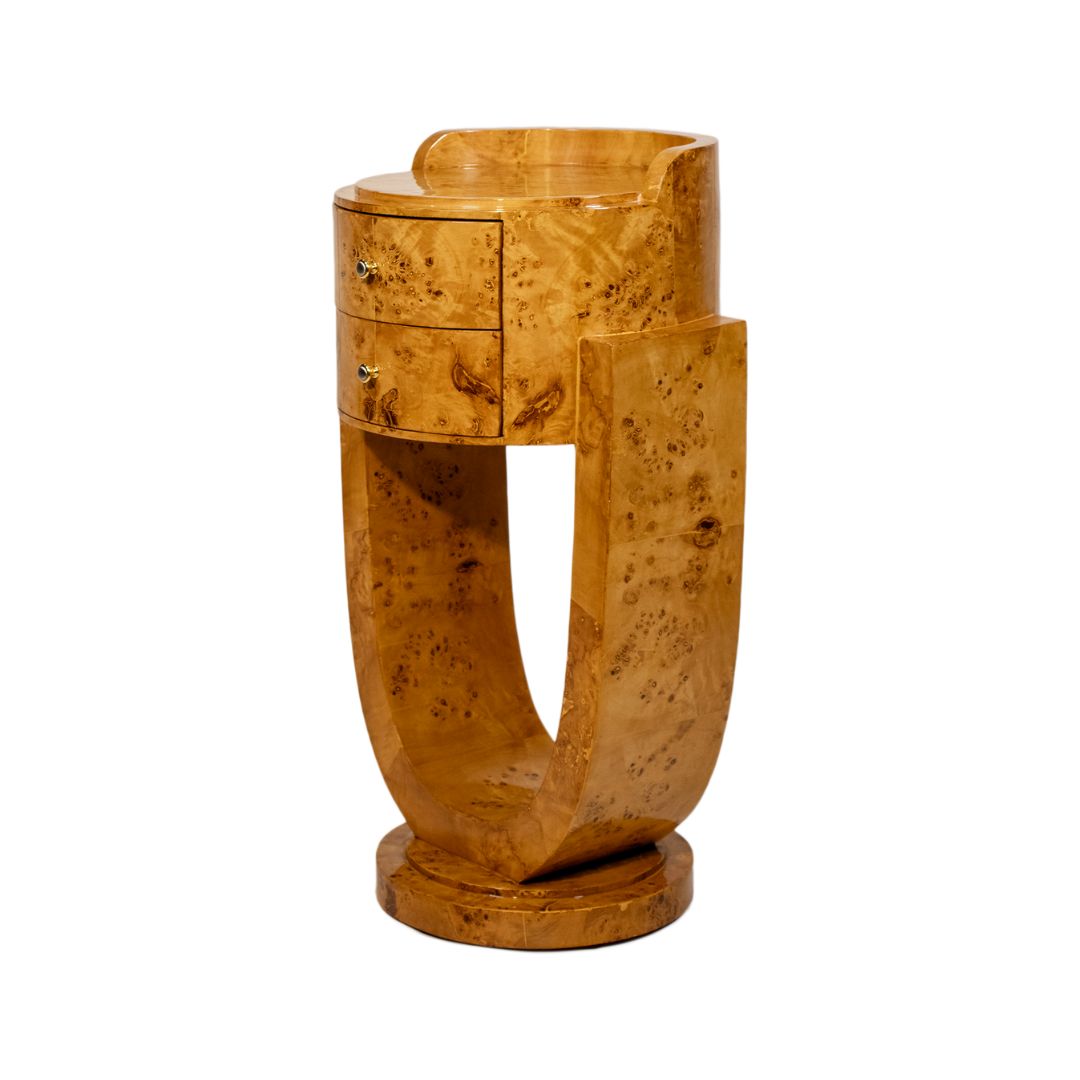
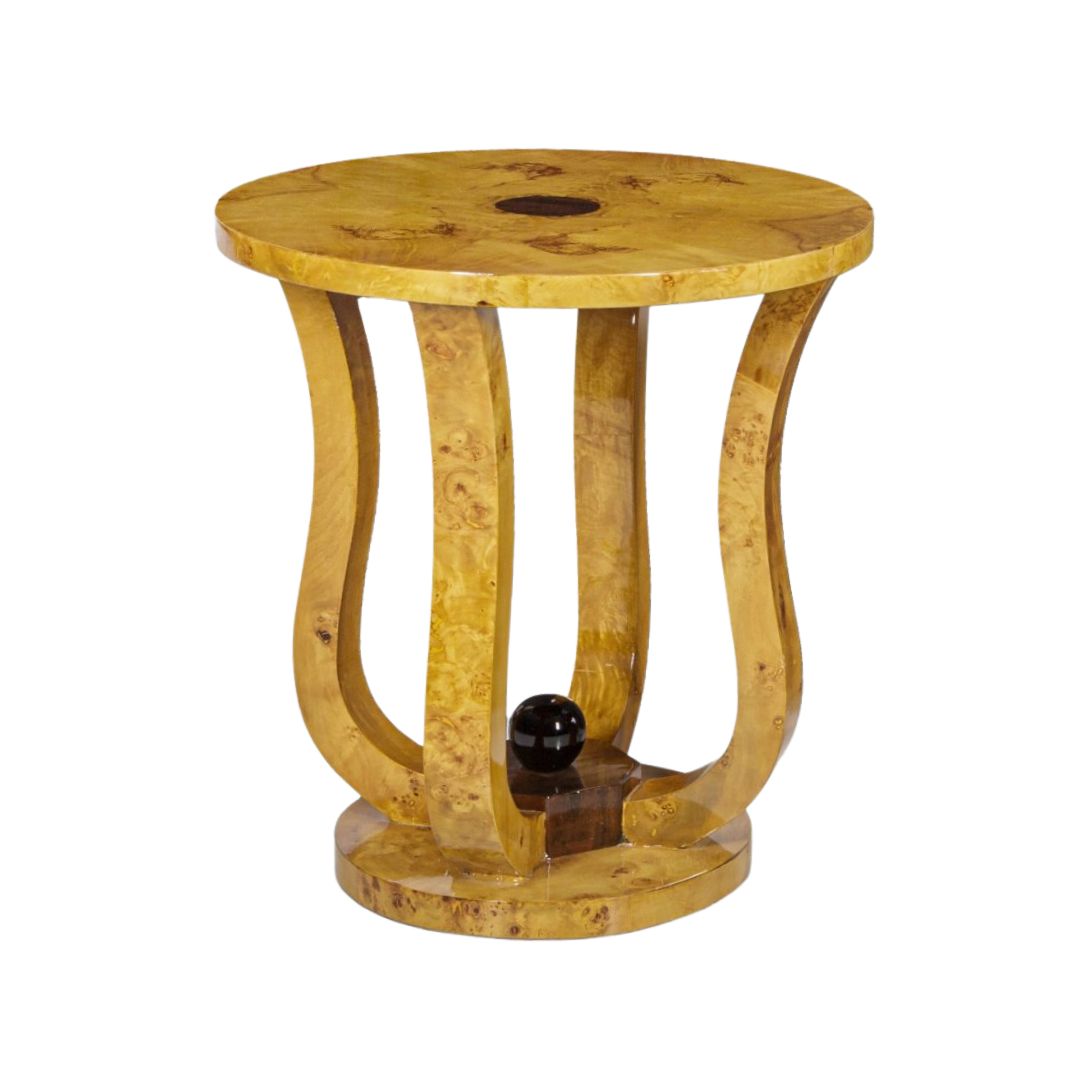
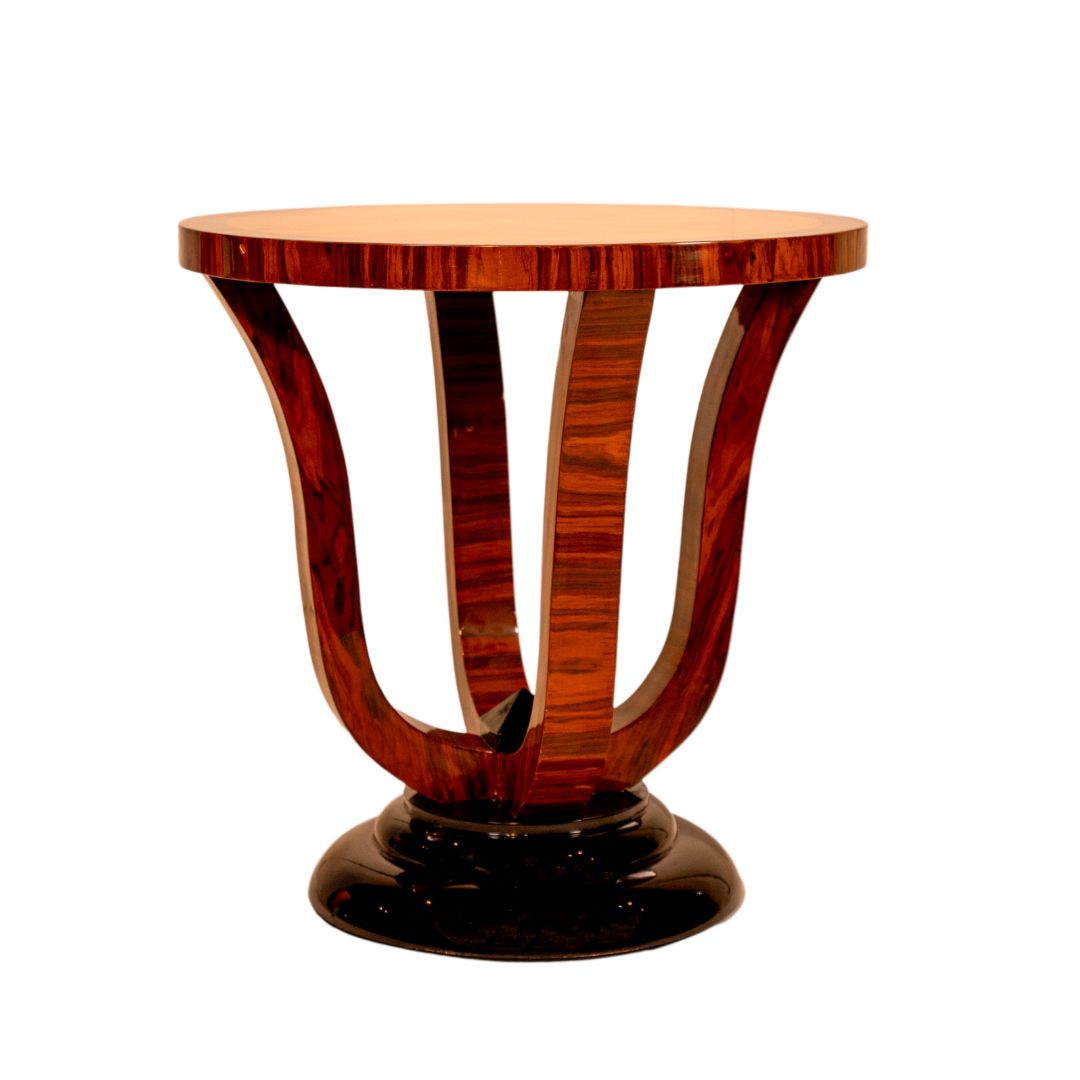
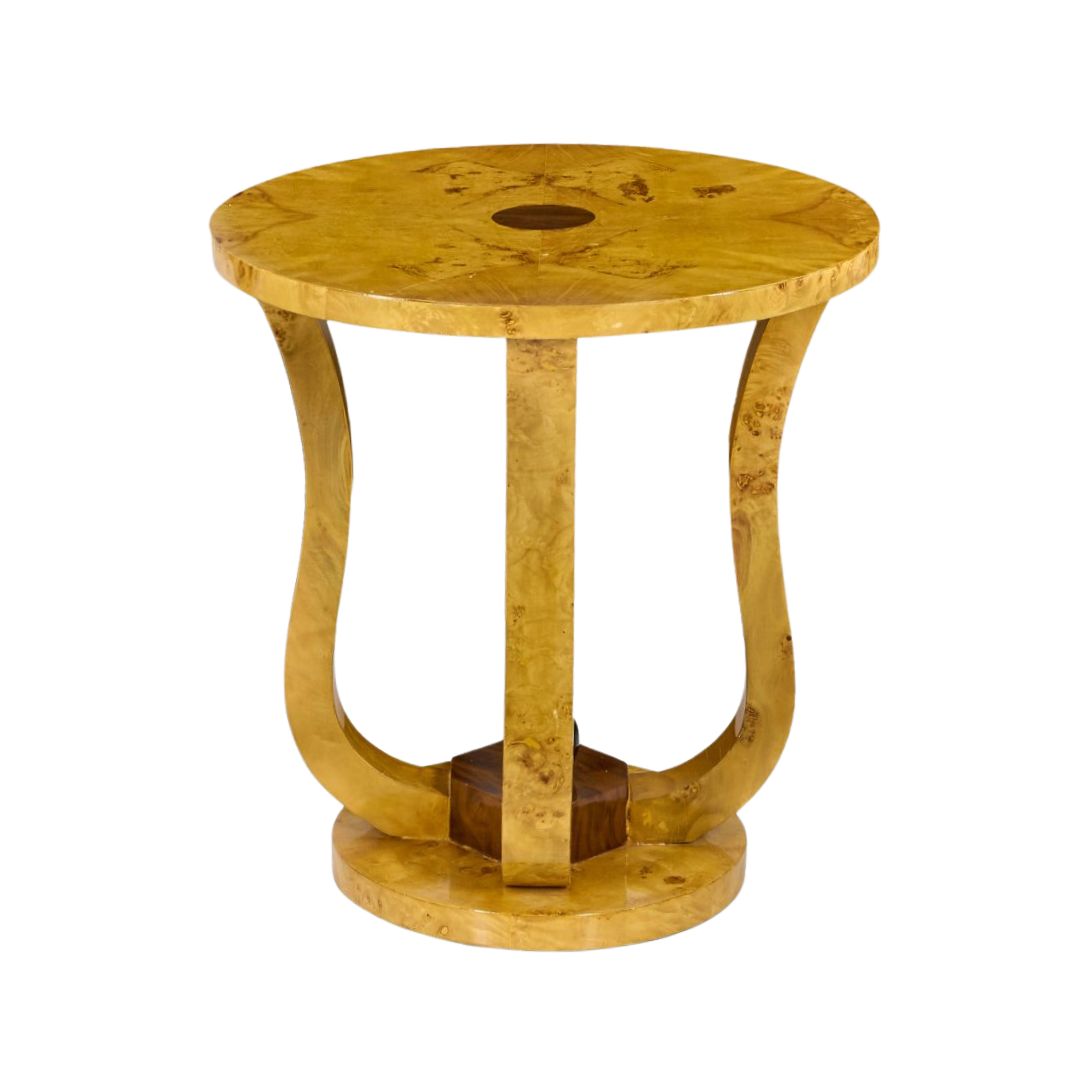
A good piece of furniture brings calm and order to an interior: a side table beside the sofa, a console table in the hall, a bookcase that completes a room. At Kuzco Art Maison, an art gallery and studio in Amsterdam, the furniture collection centres on Art Deco, the style of the 1920s and 1930s, with the occasional singular piece from outside it. Everything is newly made by hand, following the style of that period. The range includes side tables and bouts de canapé (tables for the end of the sofa), console tables, guéridons, a bedside table, a side cabinet and an open bookcase, nearly all in burr walnut veneer and varnished by hand. See the full selection of Art Deco furniture, or read on by type of piece. The collection is made for private clients, interior designers and stylists alike.
Our Art Deco furniture
Furniture in this style is recognised by strict geometry, warm woods and a richness of material that never tips into clutter. For the Victoria and Albert Museum, the Paris exhibition of decorative arts in 1925 was one of the pivotal moments of Art Deco. The style joined the cabinetmaker's craft to a modern clarity: straight lines, stepped forms, round tops and an almost graphic play with the grain of the wood. The collection carries that language into new pieces:
- Side tables and coffee tables with round, square or rectangular tops, nearly always in burr walnut. See the Art Deco side tables.
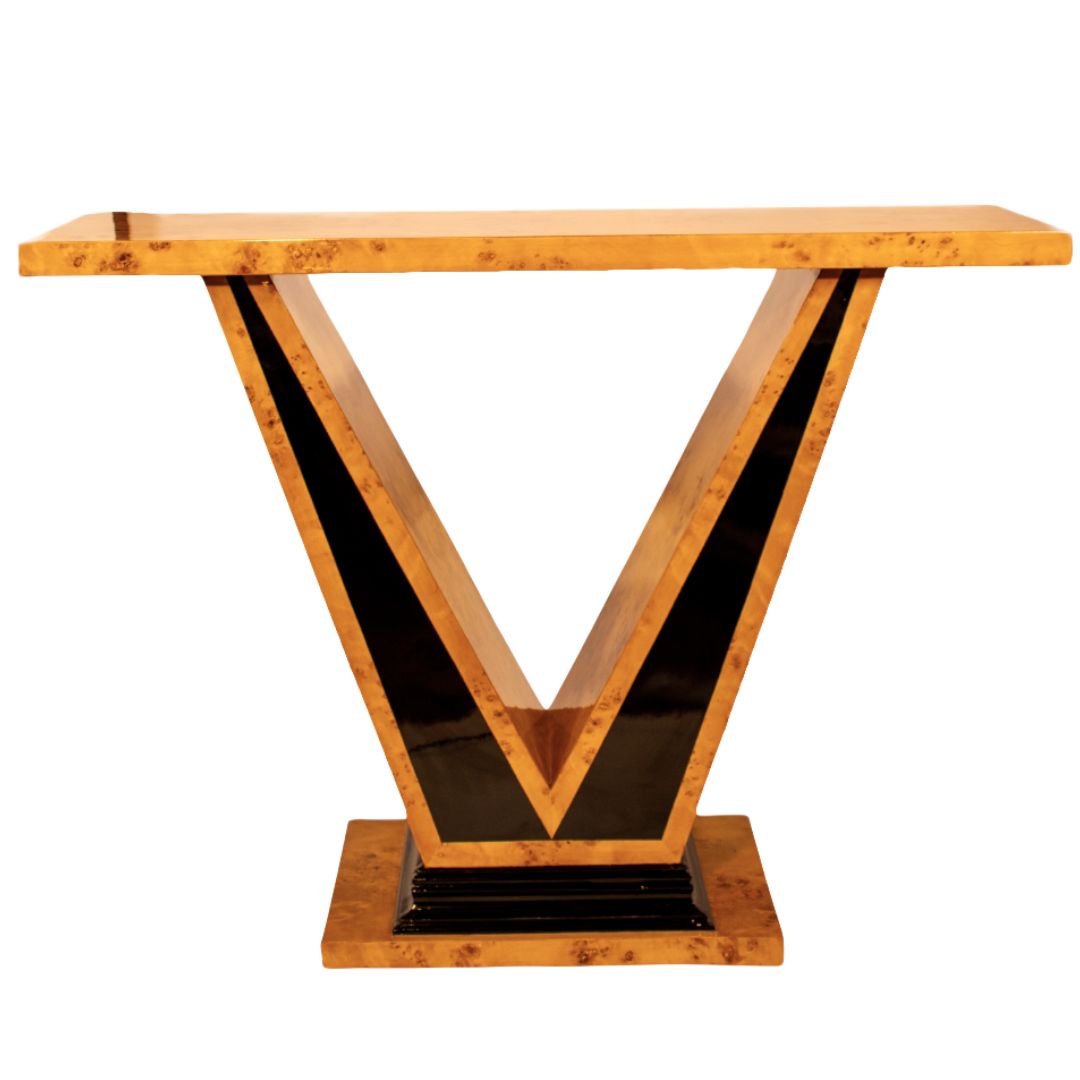
- Console tables for the hall or to stand behind the sofa.
- Bedside tables and side cabinets with the same Art Deco line.
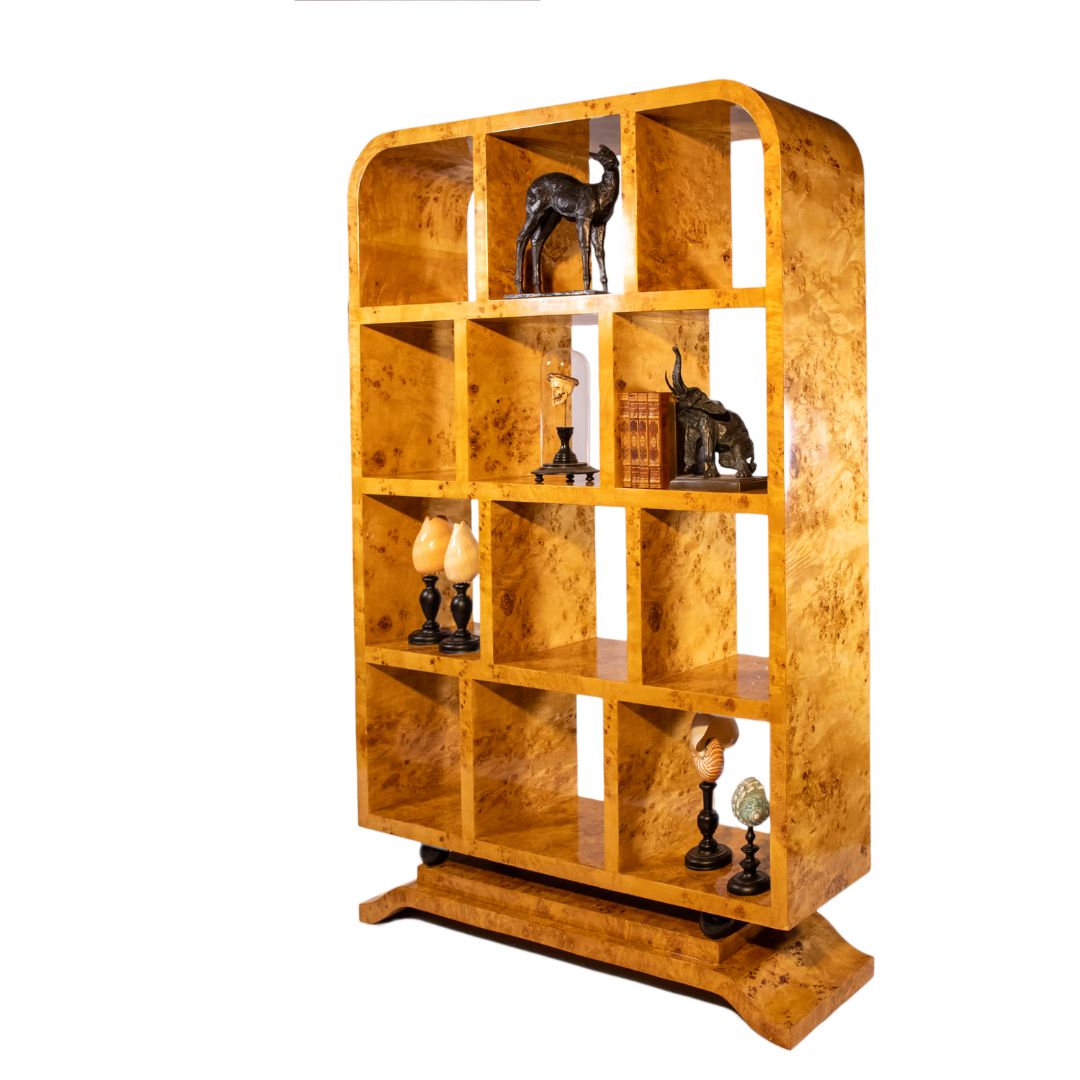
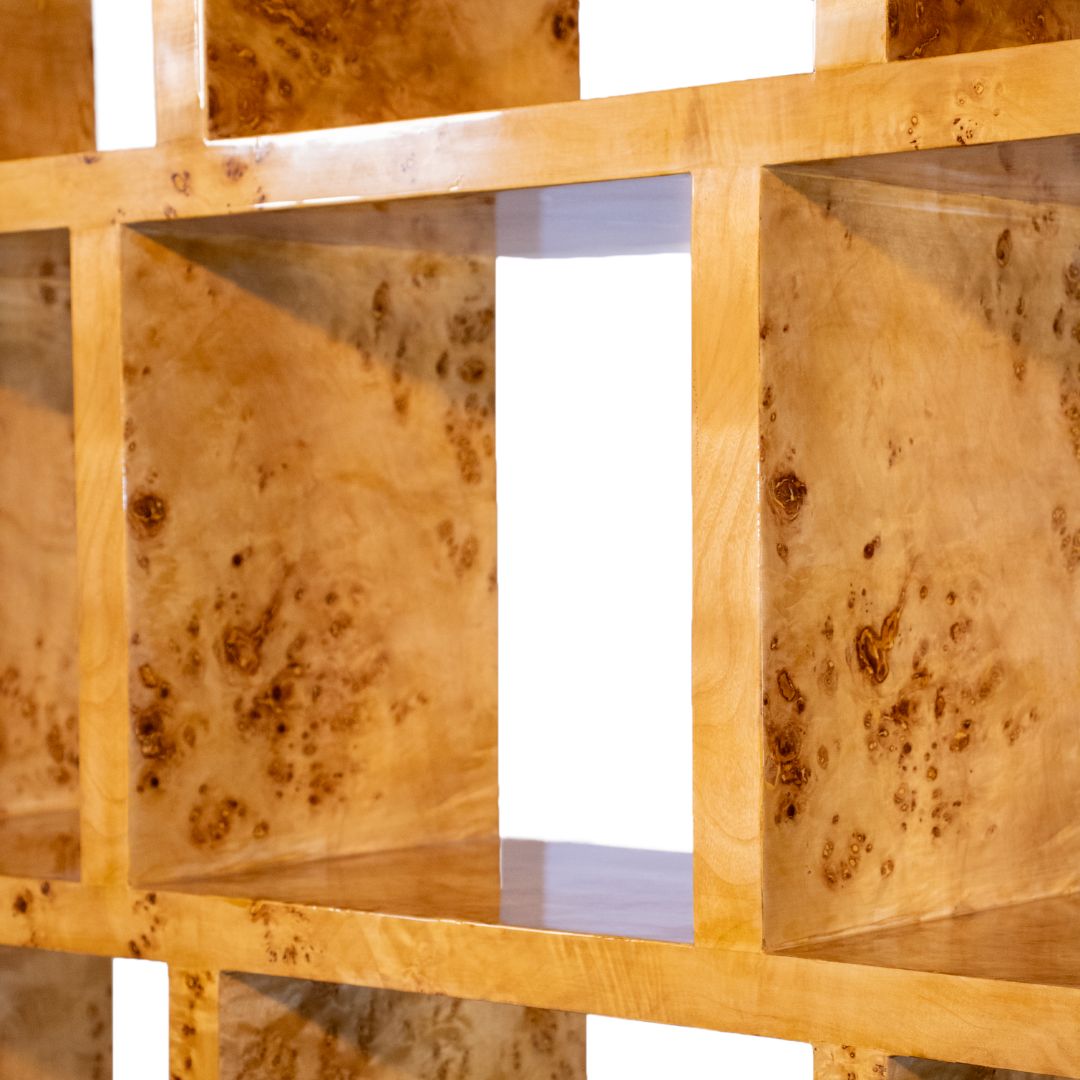
- Open bookcases that give a room its structure. See the Art Deco bookcases.
Side tables, bouts de canapé and guéridons
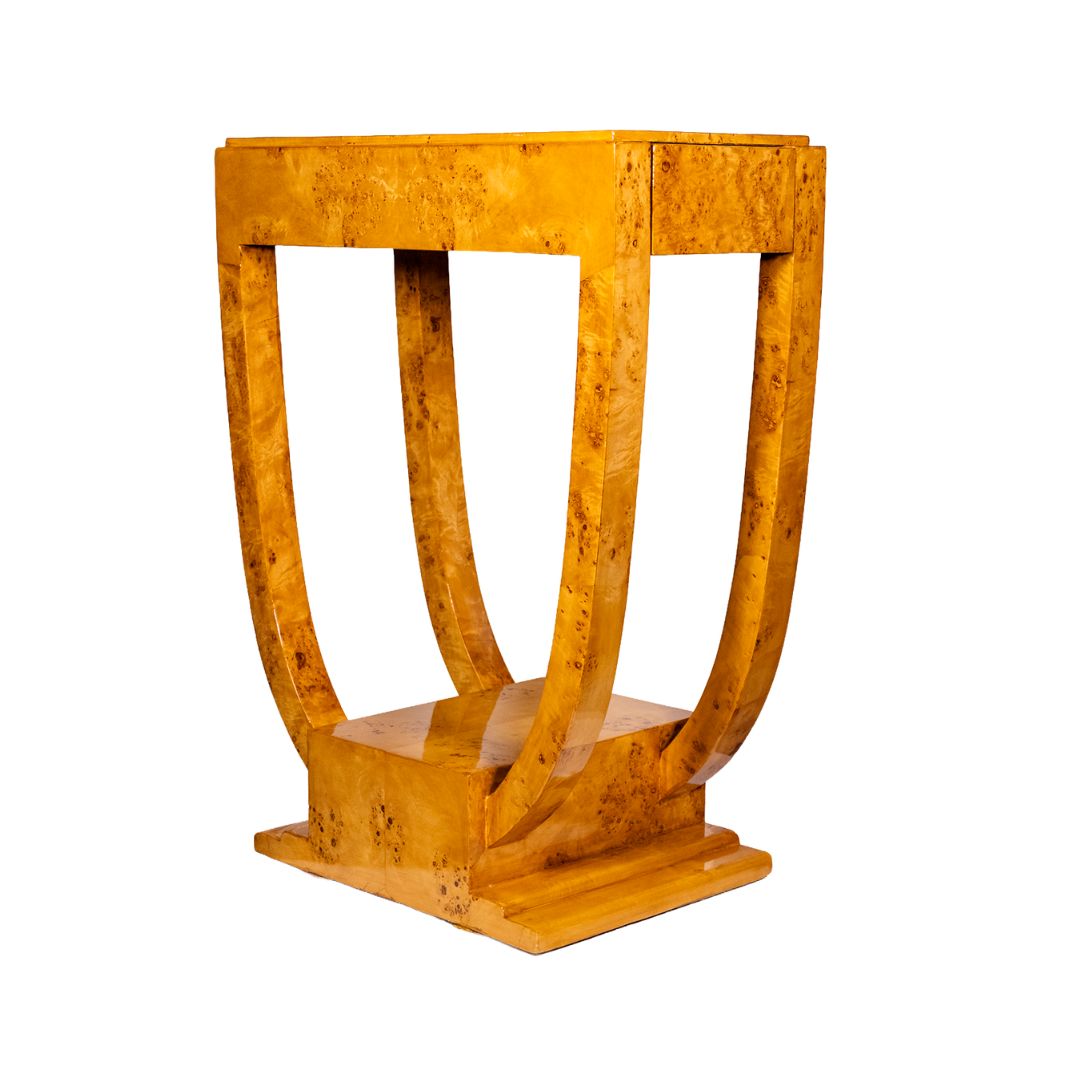
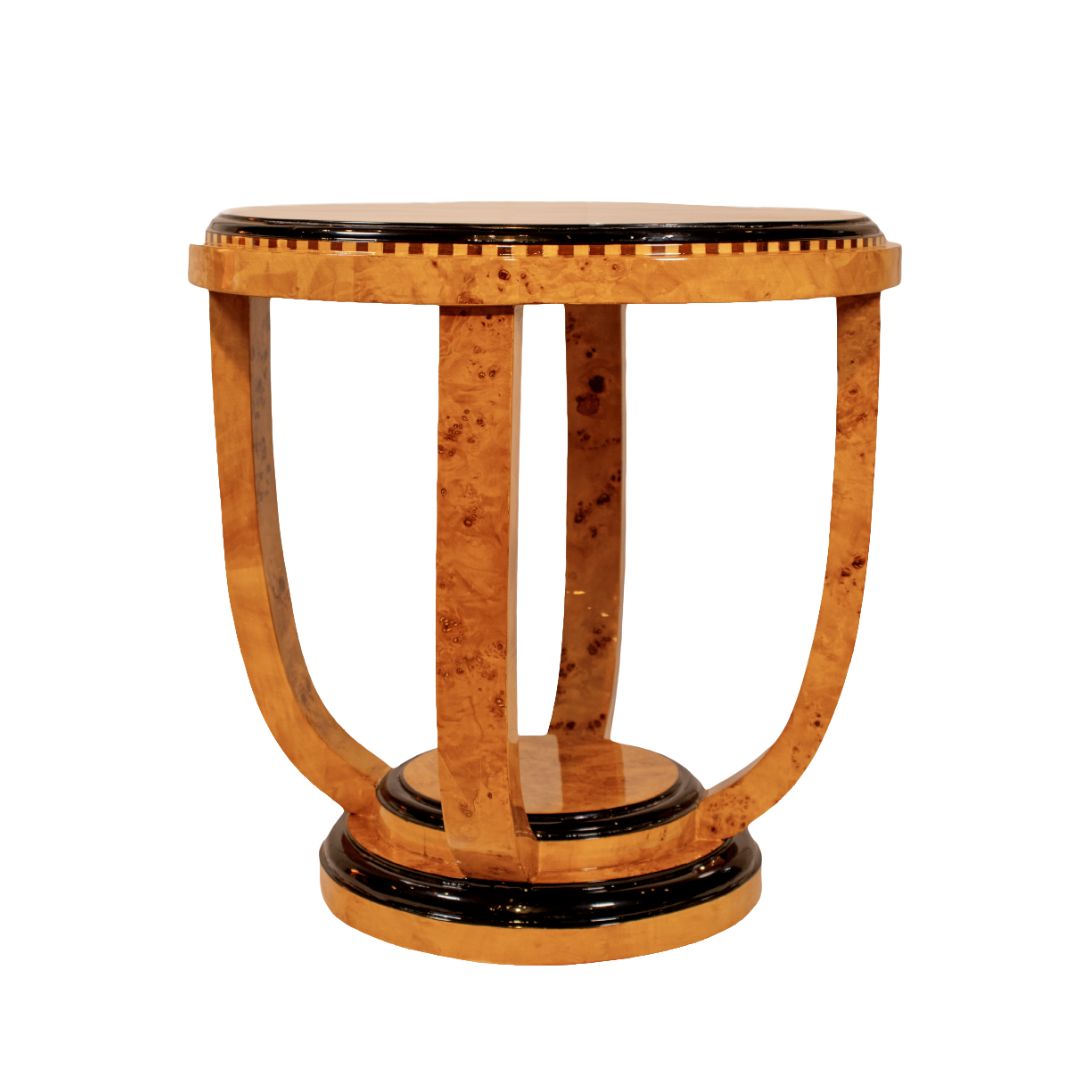
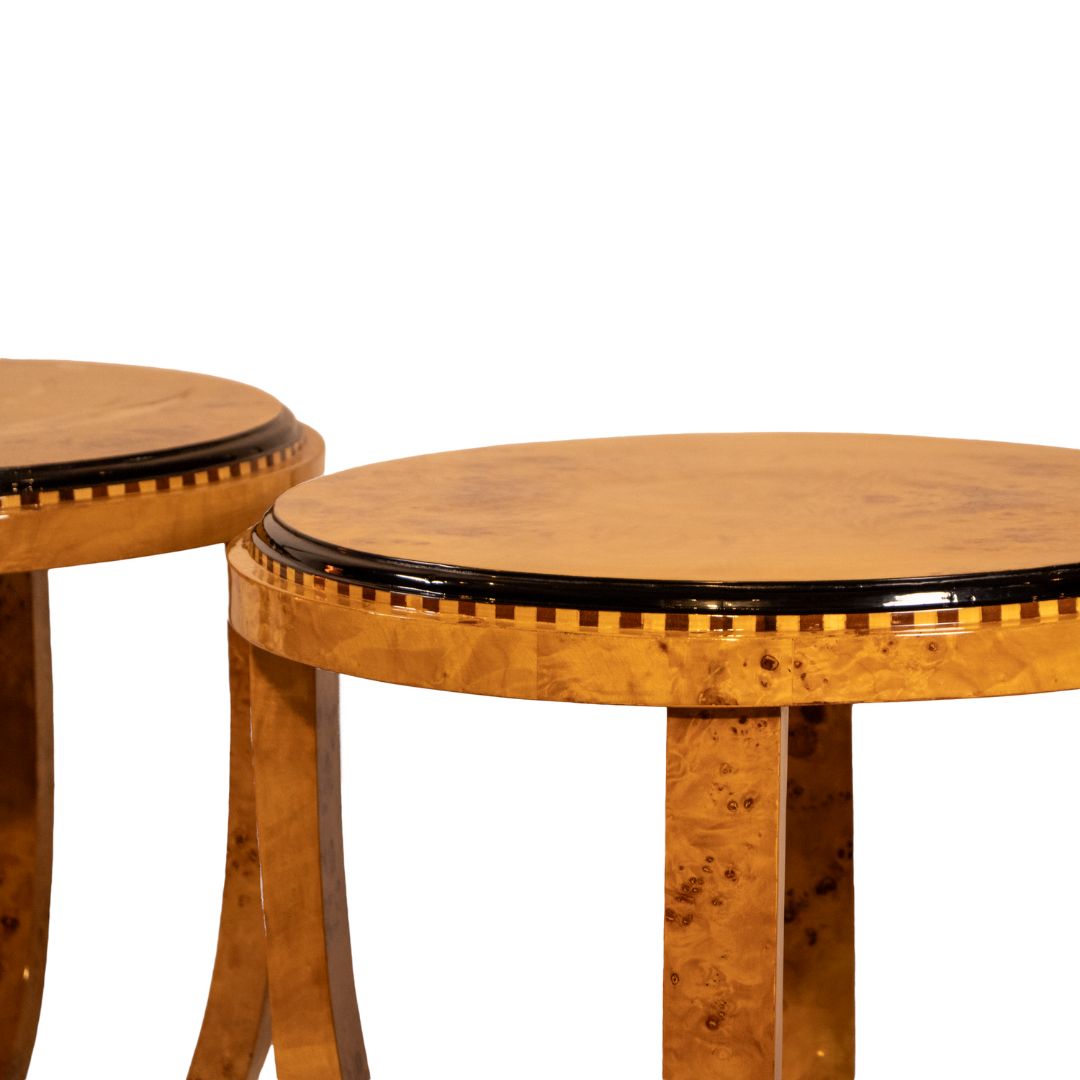
The side table is the most versatile piece in the house. A bout de canapé is originally a low table placed at the end of the sofa, at arm height, for a glass, a book or a lamp; a guéridon is a small, usually round table that stands free in the room. Round tops dominate the collection, set on a central pedestal or on legs that meet at the centre, in burr walnut or with dark ebony accents. A console table does the same work against the wall: narrow and space-saving, with room for a lamp, a vase or a sculpture.
Beyond Art Deco: the golden throne of Tutankhamun
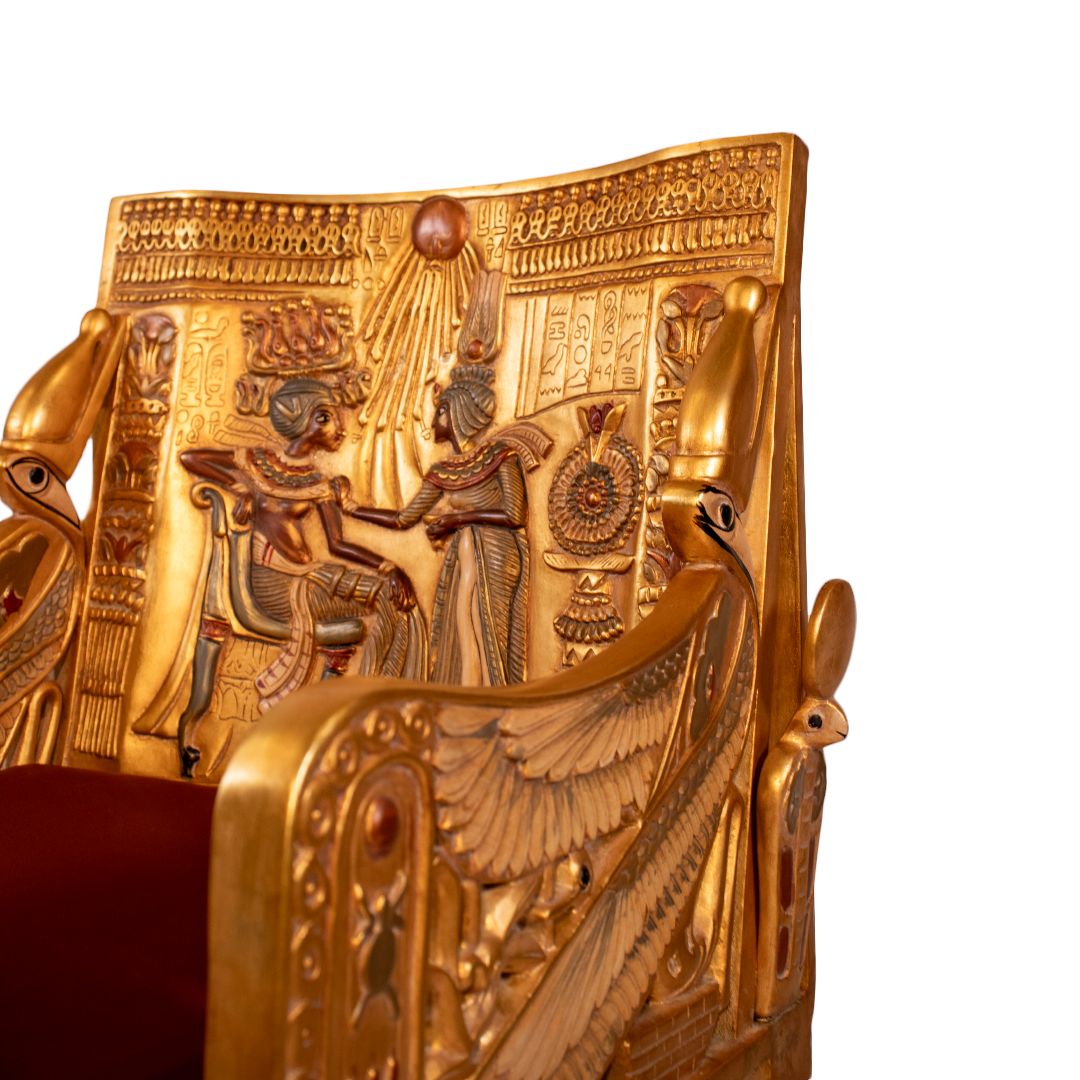
Not every piece in the collection is Art Deco; the exception is Tutankhamun's golden throne, gilded with gold leaf, which looks back to the Egypt of the pharaohs and still belongs here. Howard Carter found the pharaoh's tomb in 1922 and, as the Victoria and Albert Museum points out, Egyptian motifs such as the lotus, the scarab and hieroglyphs multiplied in Art Deco design in the wake of that discovery. Finished in gold leaf, the throne is a piece for anyone seeking a bold focal point.
Burr walnut, dark woods and varnish: the materials of our furniture
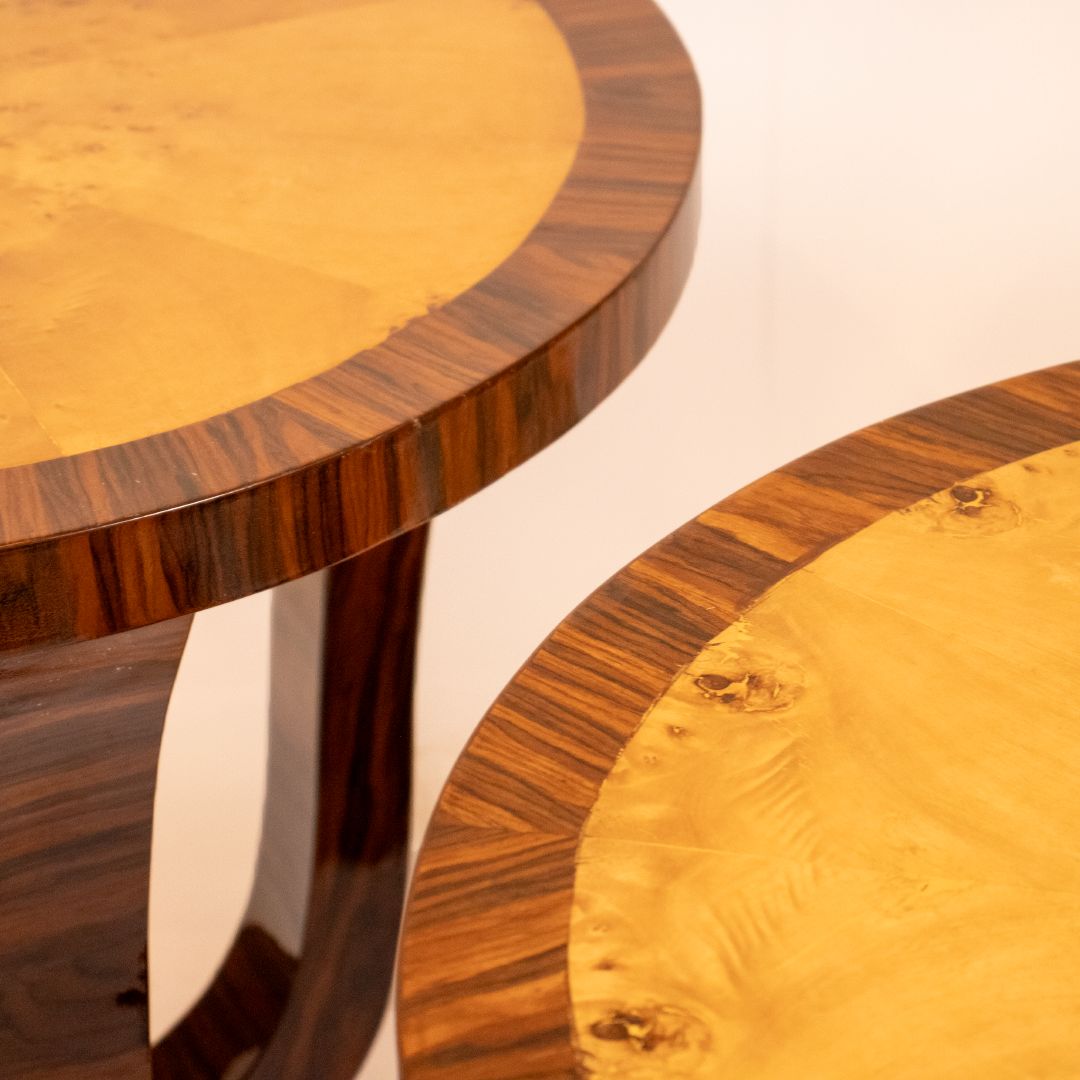
Veneer and varnish are the basis of the collection. Burr (loupe in French) comes from the swellings a tree forms at its roots and has a swirling, almost cloud-like figure with no fixed direction; it is cut into very thin leaves that are laid on the furniture like a drawing, on some pieces book-matched. Alongside burr walnut, Macassar ebony appears, with its regular striped grain.
- Burr walnut (loupe) – a warm, lively figure; no two tops are the same, because no two burrs grow alike.
- Ebony and black accents – dark and graphic, they bring contrast and crisp lines.
- Varnish – several coats, sanded and polished, give a deep, almost liquid gloss.
Because veneer is a natural material, each top varies slightly in figure and colour. That belongs to the wood and makes each piece unlike any other.
A frequent mistake with Art Deco-style furniture
The usual mistake is to choose by the photograph rather than by the material. In a picture, a printed foil on MDF looks very like burr walnut veneer; the difference only shows in person, in the depth of the figure and the weight of the top. Watch for words such as 'foil', 'print' or 'melamine': they often point to imitations. Nor is an old piece better by definition: after almost a century, veneer often lifts and varnish crazes. Our pieces are new, handmade in the same tradition: the forms of that period and fine veneers, with present-day stability.
Unsure about a model, a size or a combination? Appointments can be made at the Amsterdam office or the Bleiswijk workshop to talk it through.
The gallery behind the furniture
There is an art gallery behind this furniture. A home is treated as a small exhibition, and each model is chosen with an art historian's judgement and a practised eye for quality.
- Made by hand – in natural burr walnut or Macassar ebony veneer, and varnished by hand as well.
- A client base in more than ten countries: shops, interior designers, decorators and stylists.
- Chosen for proportion and finish; every model is judged on its lines, its veneer and its varnish before it joins the collection.
- Insured delivery across Europe – every shipment travels protected from the workshop to the client's door; items above 30 kg are sent palletised.
- Lilly-Ann de Zeeuw, MA, as director – who combines the work of artist, art historian and curator; in 2025 she made a solid gold sculpture that ranks among the largest in Europe.
Since 2026 private clients can buy too, with fourteen days to change their mind; trade clients order through a dedicated trade account.
Placing an Art Deco piece at home
A piece in this style looks best with space around it. Art Deco asks for calm: let a round side table stand free beside the sofa, give a console table a clear wall behind it, or allow a bookcase to be the one large form that orders a wall. Pair warm wood with a few cool materials (marble, bronze, a mirror) and the Art Deco character appears of its own accord.
- Sitting room – a round side table or a coffee table as the calm centre of the seating area.
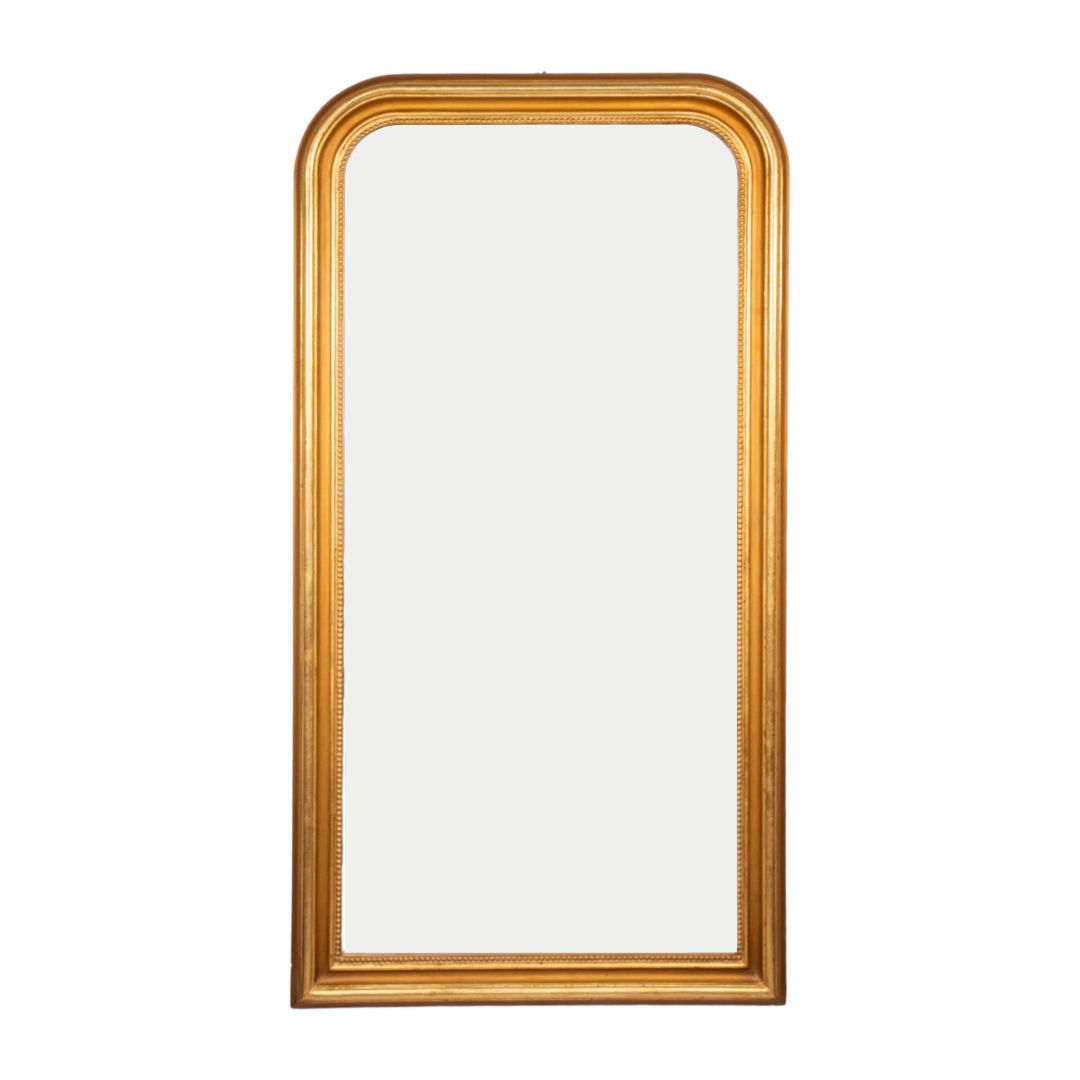
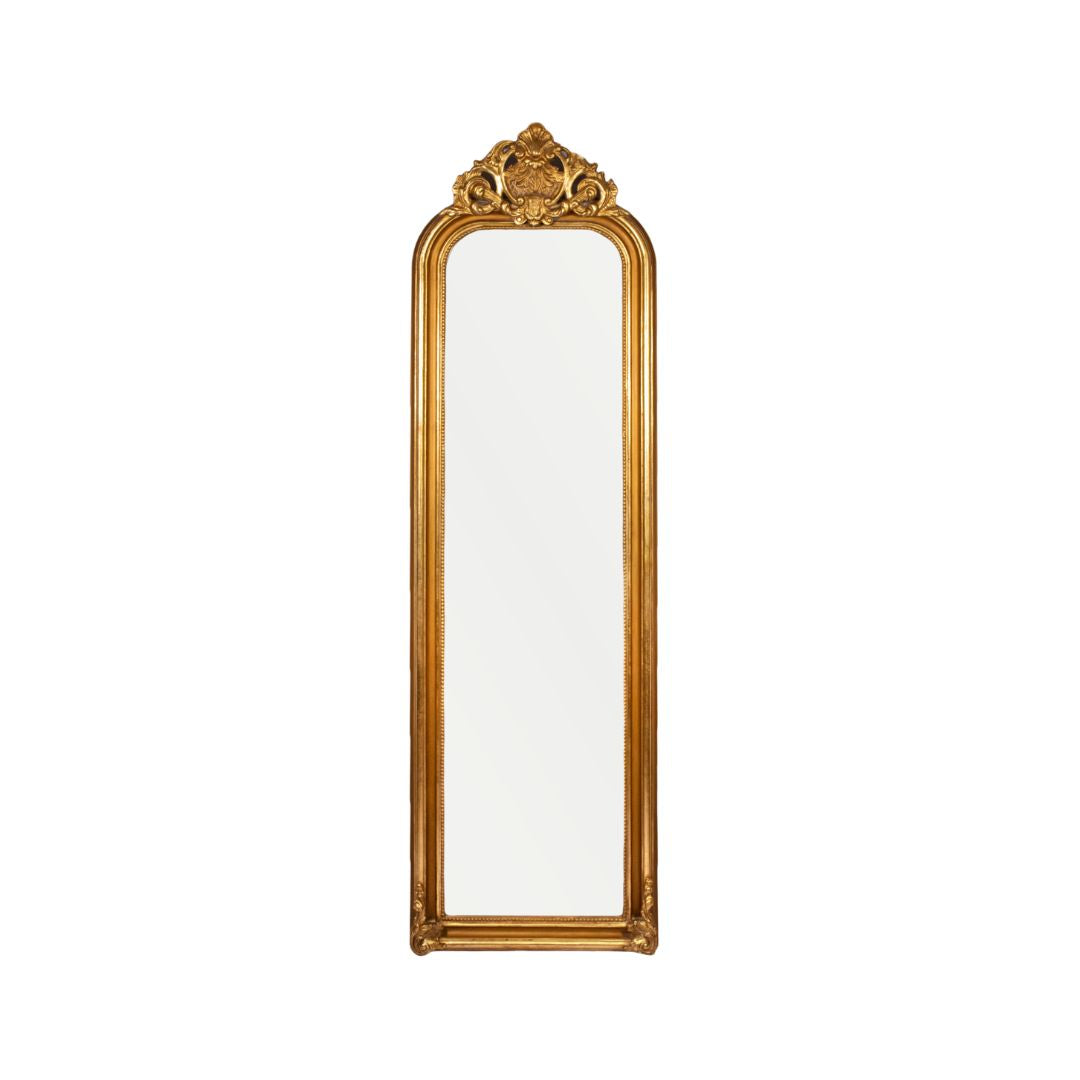
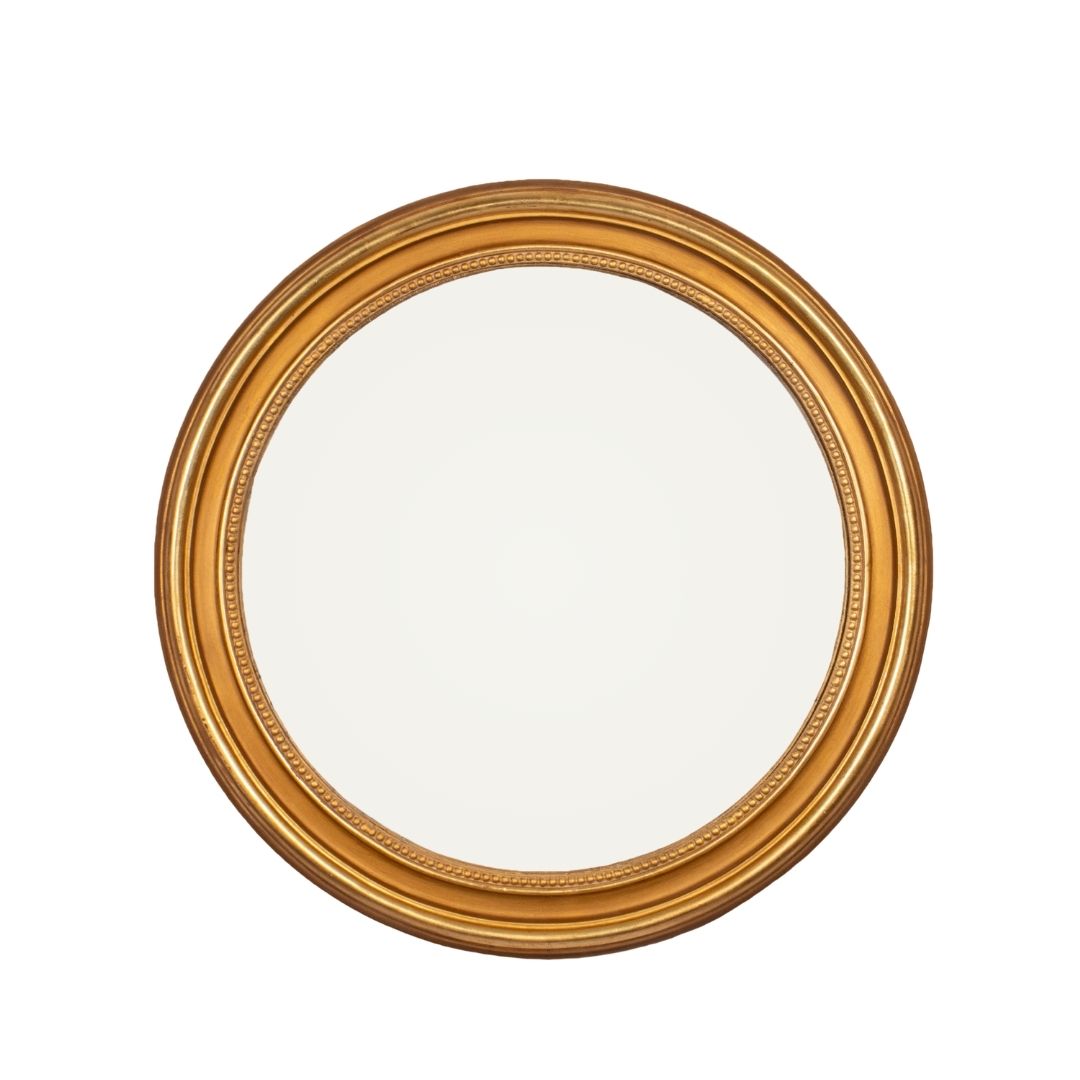
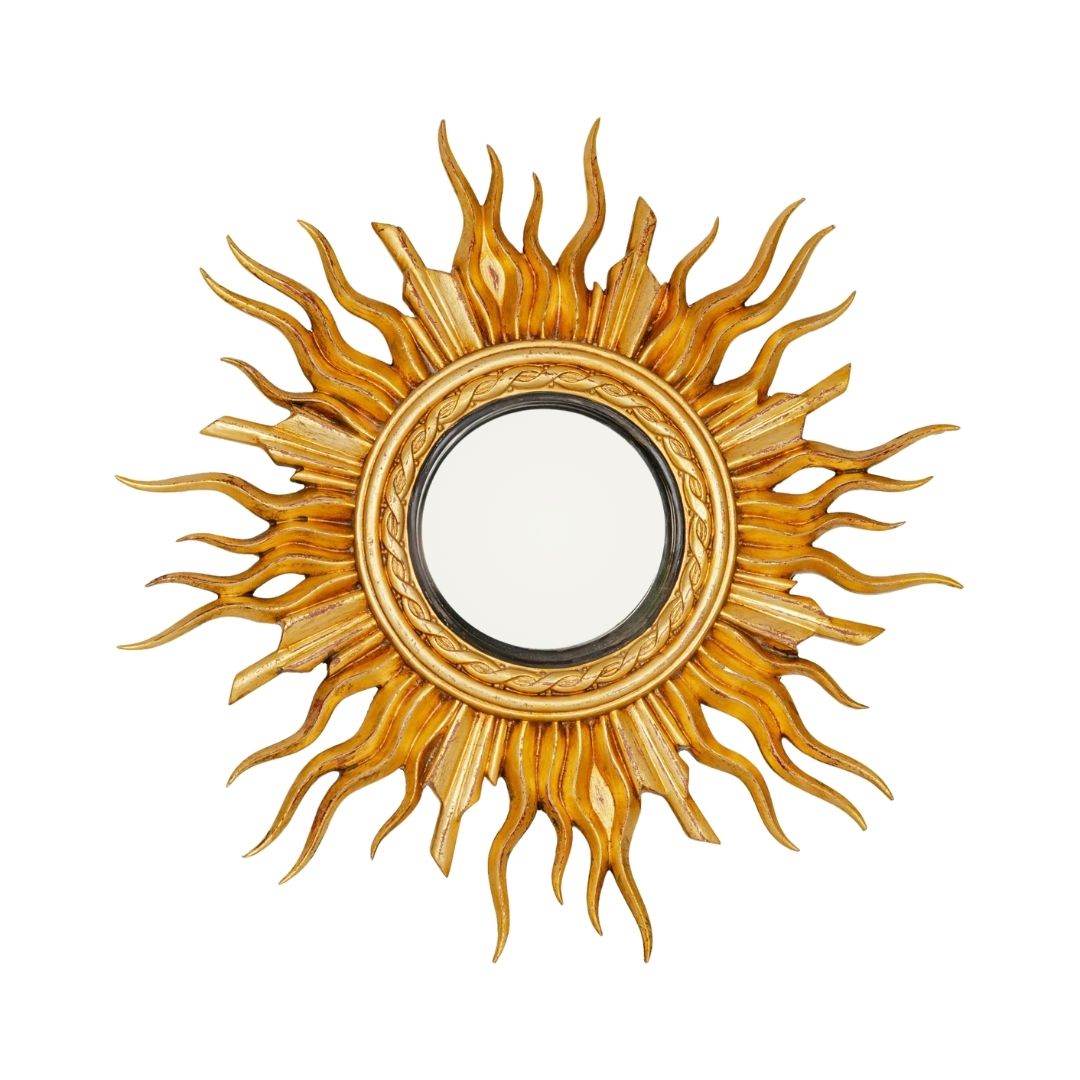
- Hall – a narrow console table with a lamp and a gold mirror hung above it.
- Bedroom – two bedside tables in the same style, one on each side of the bed.
Caring for wooden furniture
Wood and varnish above all need protection from damp, heat and direct sun:
- Dust with a soft cloth, dry or barely damp, and dry thoroughly afterwards.
- Wipe up any spill at once and avoid harsh or abrasive products, which damage the varnish.
- Keep the furniture out of full sun and away from radiators: the veneer could shrink or move.
- Use coasters under glasses and vases to prevent rings and scratches.
Frequently asked questions about furniture
What defines Art Deco-style furniture?
It is furniture made in the style associated with France in the 1920s and 1930s, with strict geometry and warm woods. Ours is made by hand today in that style, in burr walnut or Macassar ebony veneer under a gloss varnish.
Is the furniture antique or newly made?
Every piece is new, handmade after the style of the 1920s and 1930s, and is described plainly as new furniture in the Art Deco manner.
What is burr walnut, or loupe?
Burr, or loupe, is the wood from the swellings a tree forms at its roots, with a swirling figure that recalls clouds. It is cut into thin leaves that are applied to the furniture. Because no burr grows the same way, no two tops are identical.
What is a bout de canapé?
A low table set at the end of the sofa, at arm height, for a glass, a lamp or a book. In Art Deco it is often round, with a central pedestal and a veneered top.
What is the difference between a console table and a guéridon?
A console table is a narrow table that stands against the wall, very practical in a hall. A guéridon is a small, usually round table that can stand free in the room.
Does the figure of the wood vary from piece to piece?
Yes. Veneer is a natural material, so figure and colour vary slightly from one piece to the next. It is part of the wood and makes each piece different; it is not a defect.
Can private clients buy furniture, and how is it delivered?
Yes. The online shop has welcomed private clients since 2026, with a fourteen-day cooling-off period. Each piece is packed with care and travels by insured transport throughout Europe; heavier items, above 30 kg, are shipped on a pallet.
Where can the furniture be seen in person?
Visits are by appointment: the office and gallery in Amsterdam (Hekelveld 1-1) or the workshop in Bleiswijk. The complete collection can always be viewed online.