
Kuzco Art Maison
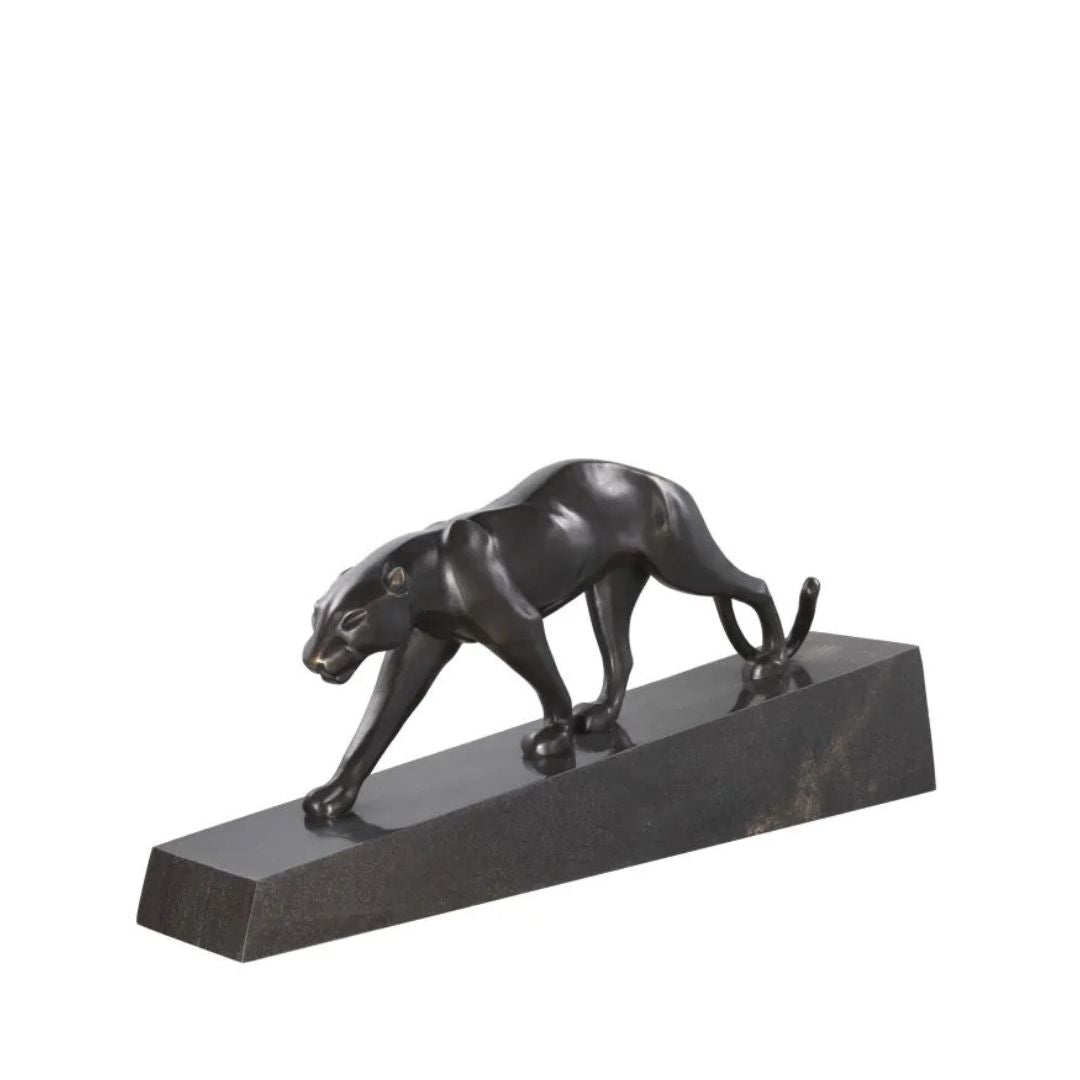
Art Deco Bronze Panther Sculpture on Marble Base
Art Deco Bronze Panther Sculpture on Marble Base
Showroom Amsterdam
Hekelveld 1
1012 SN Amsterdam
Netherlands
Choose options
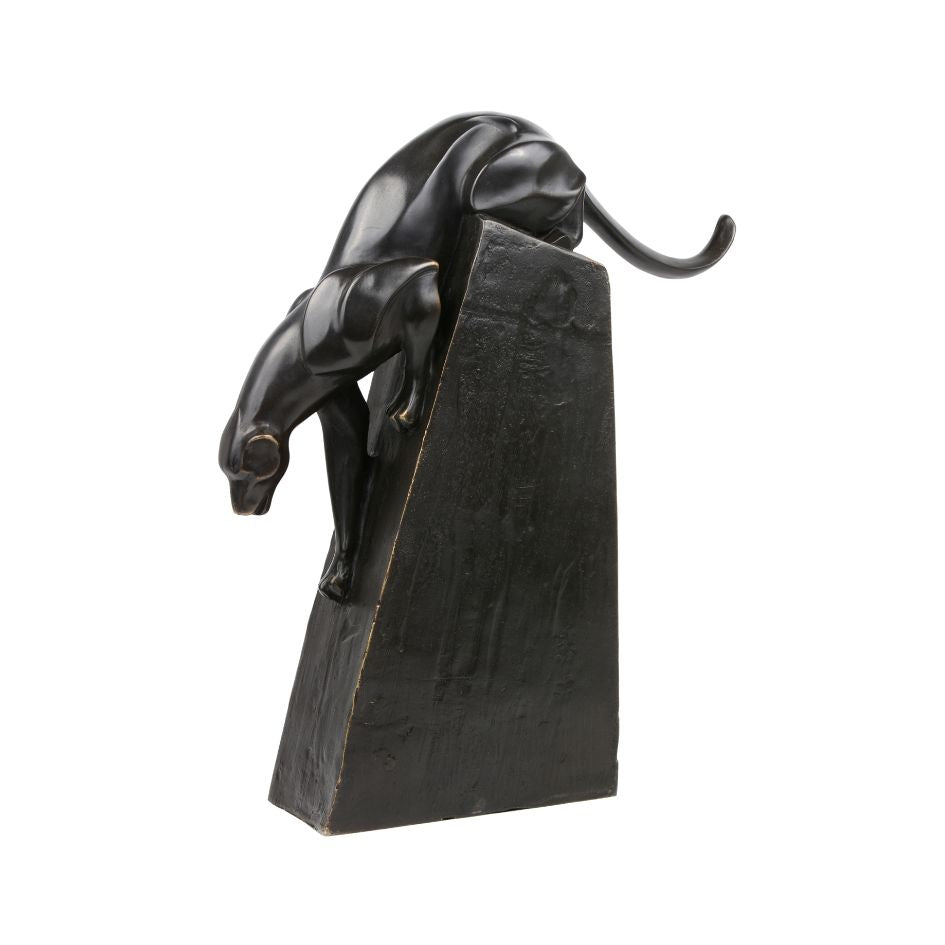
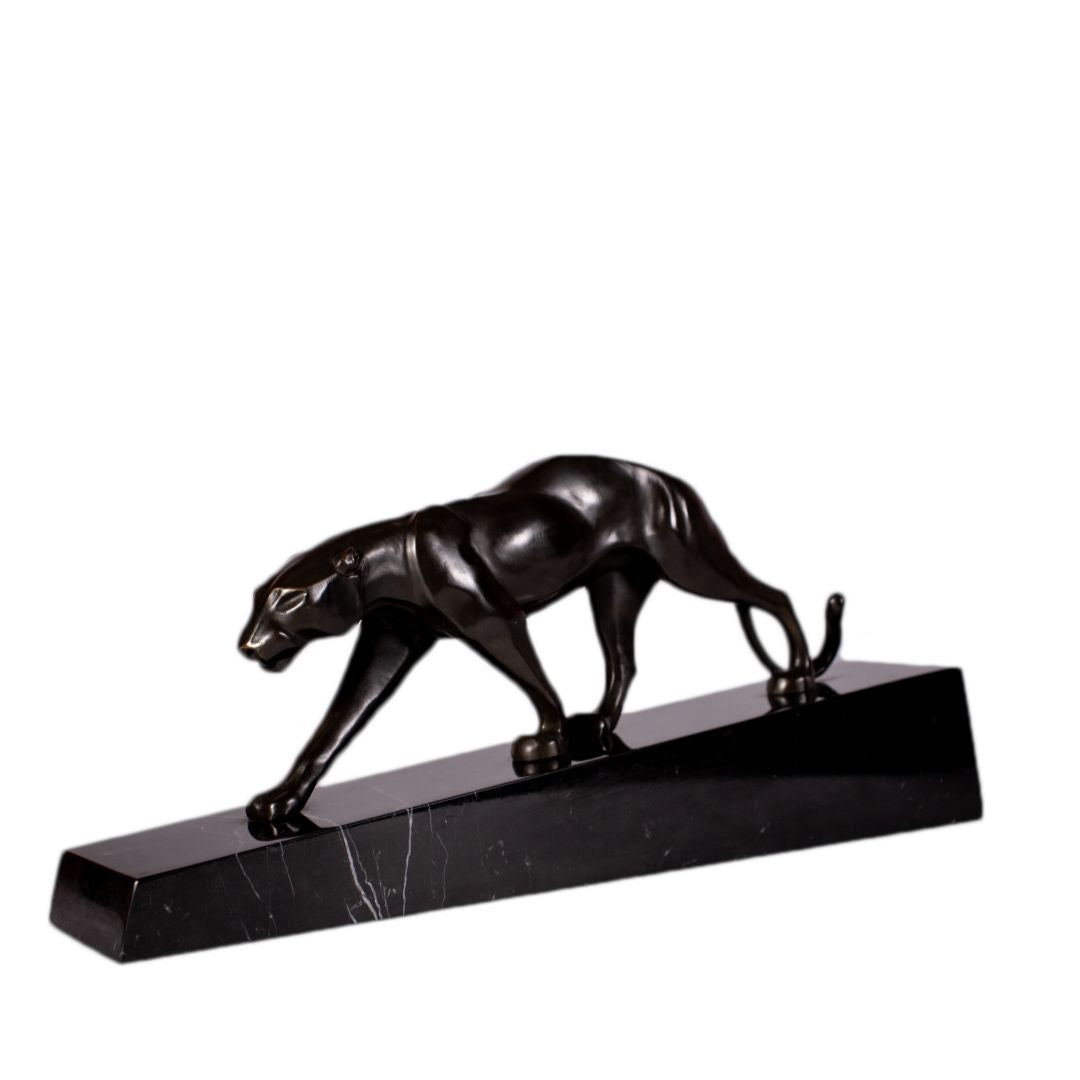
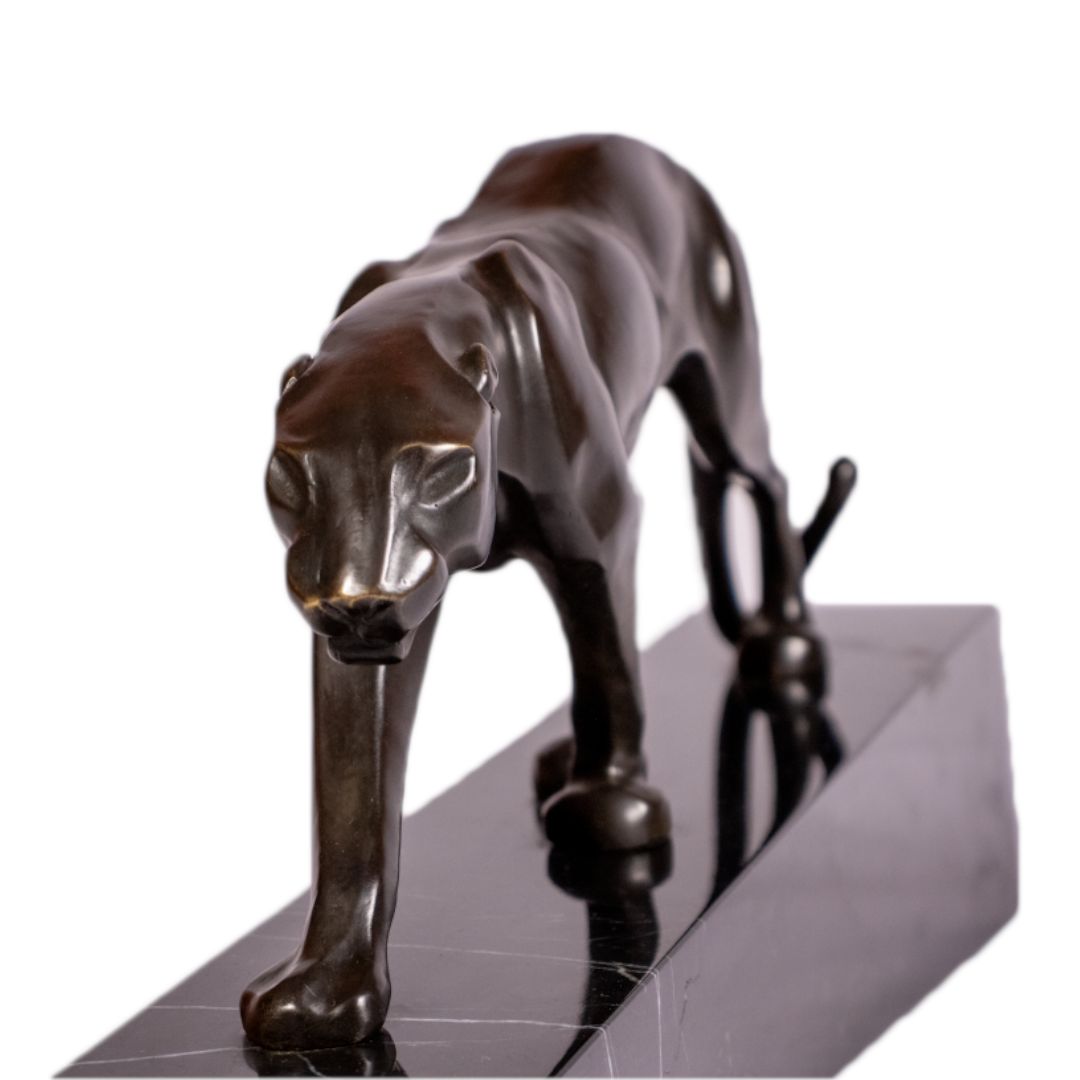
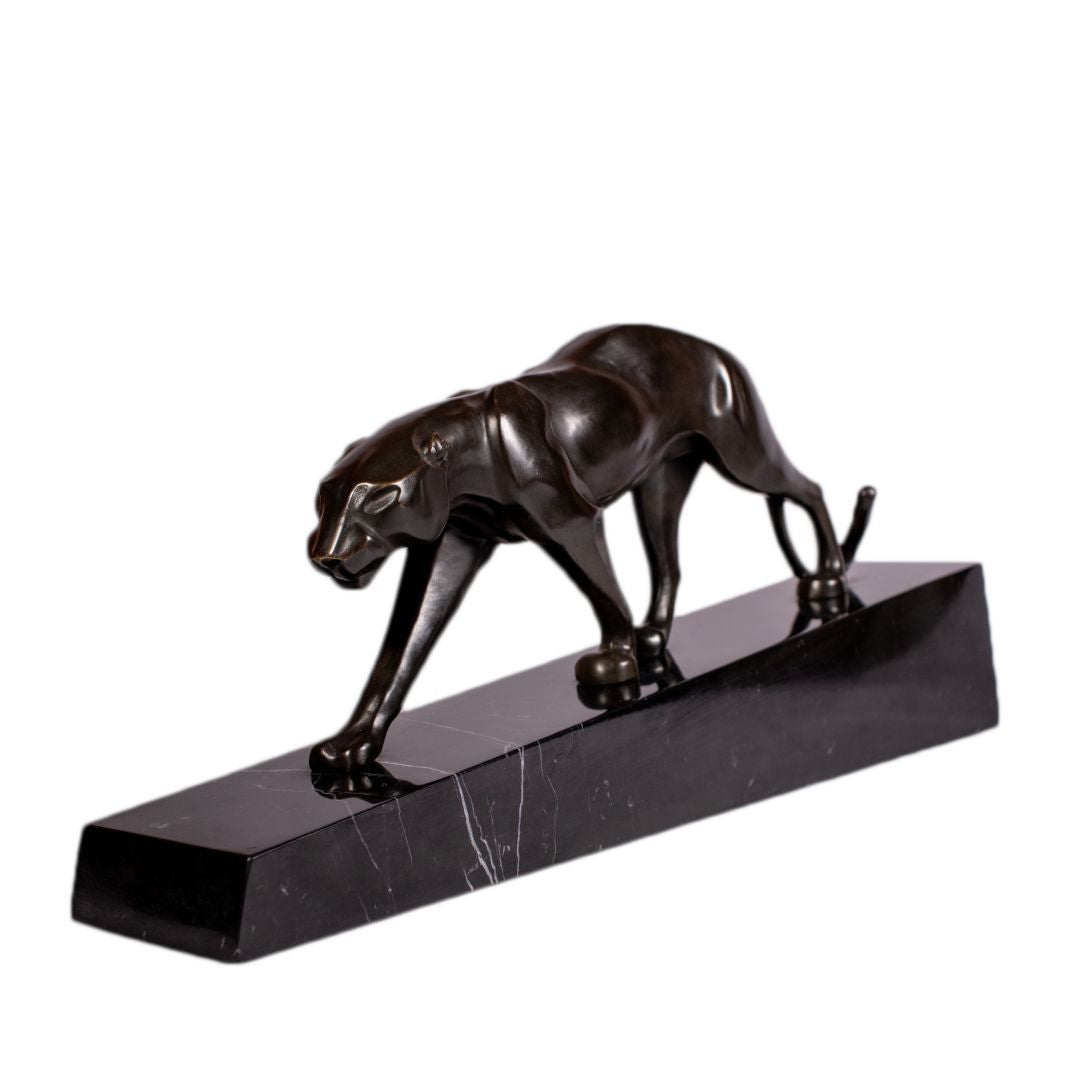
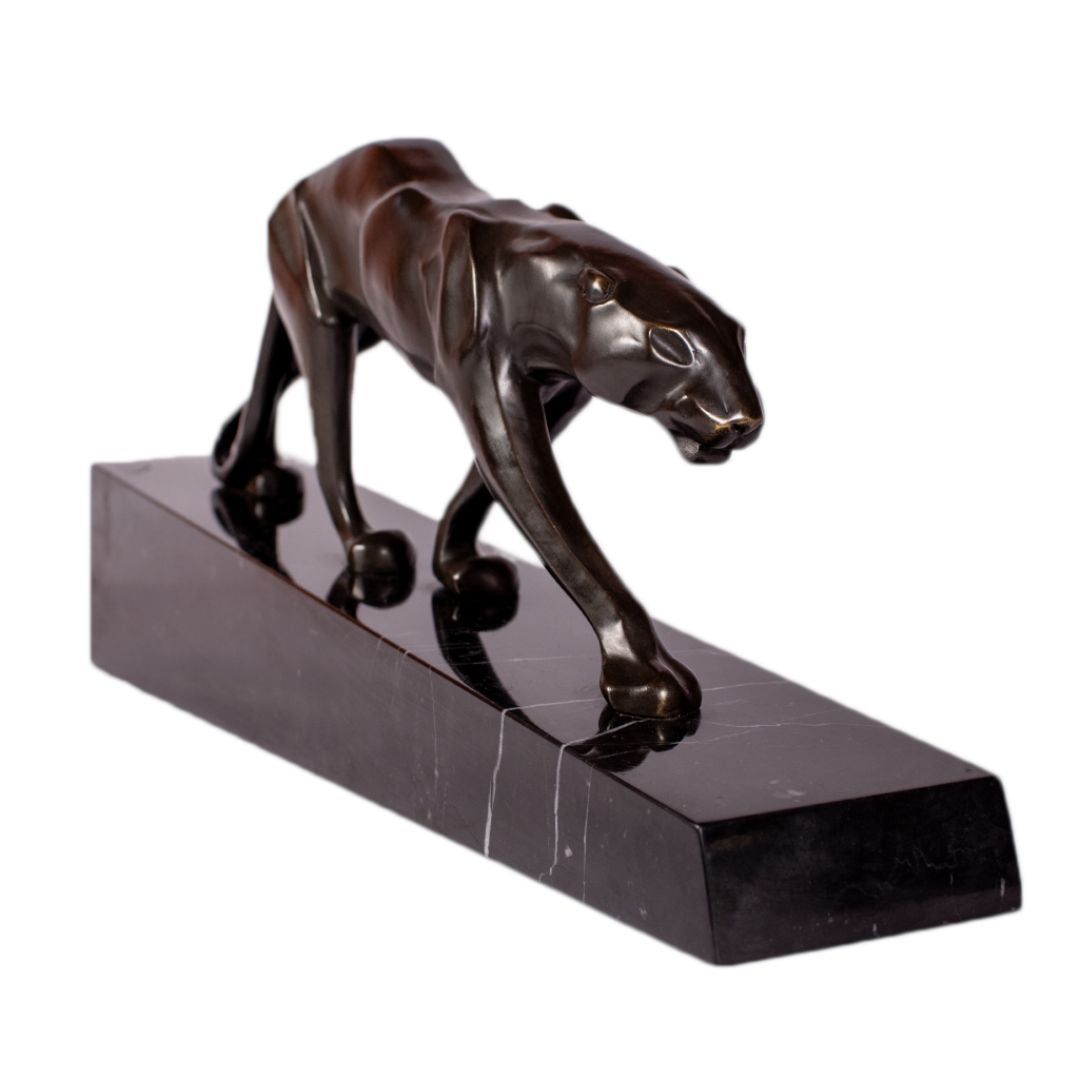
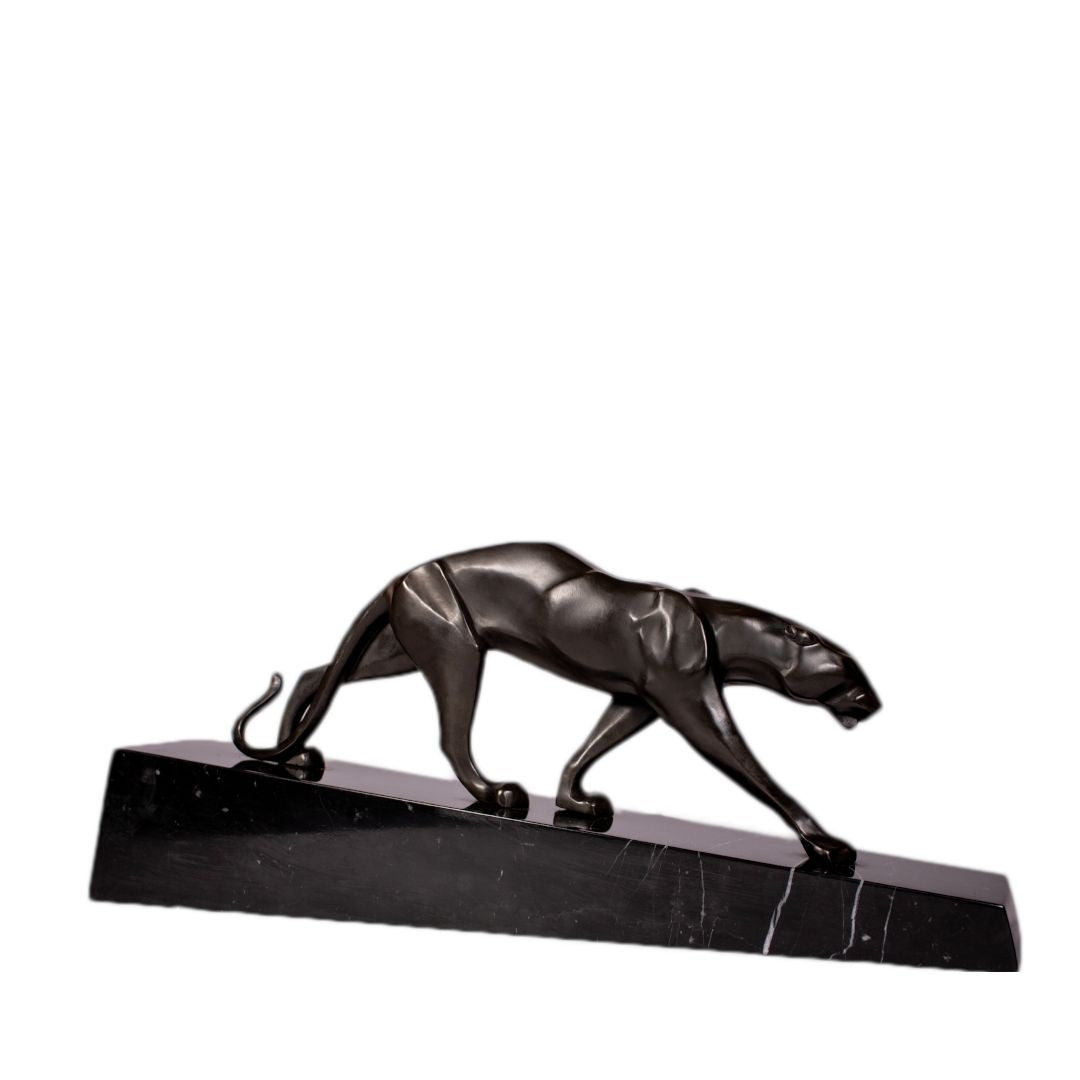
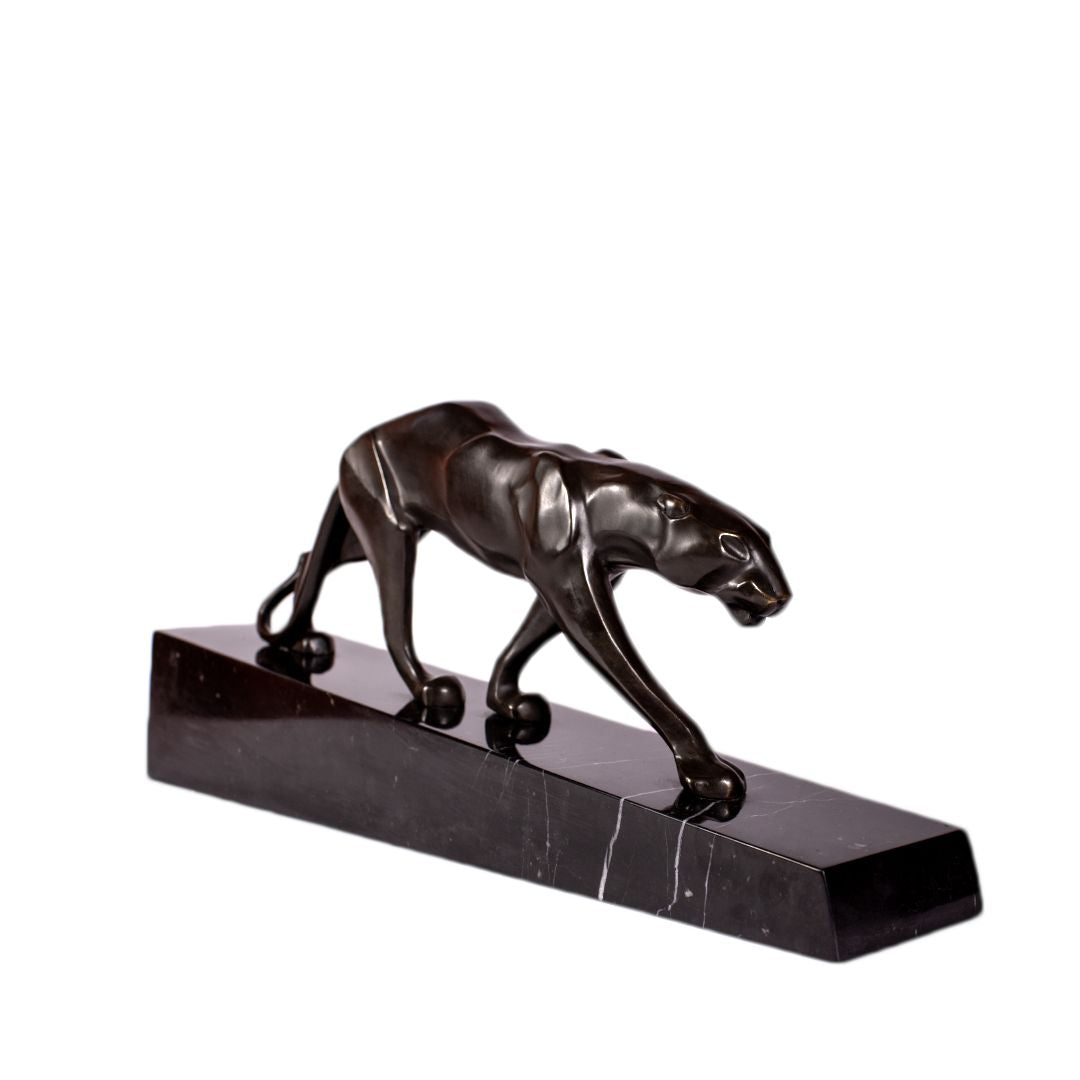
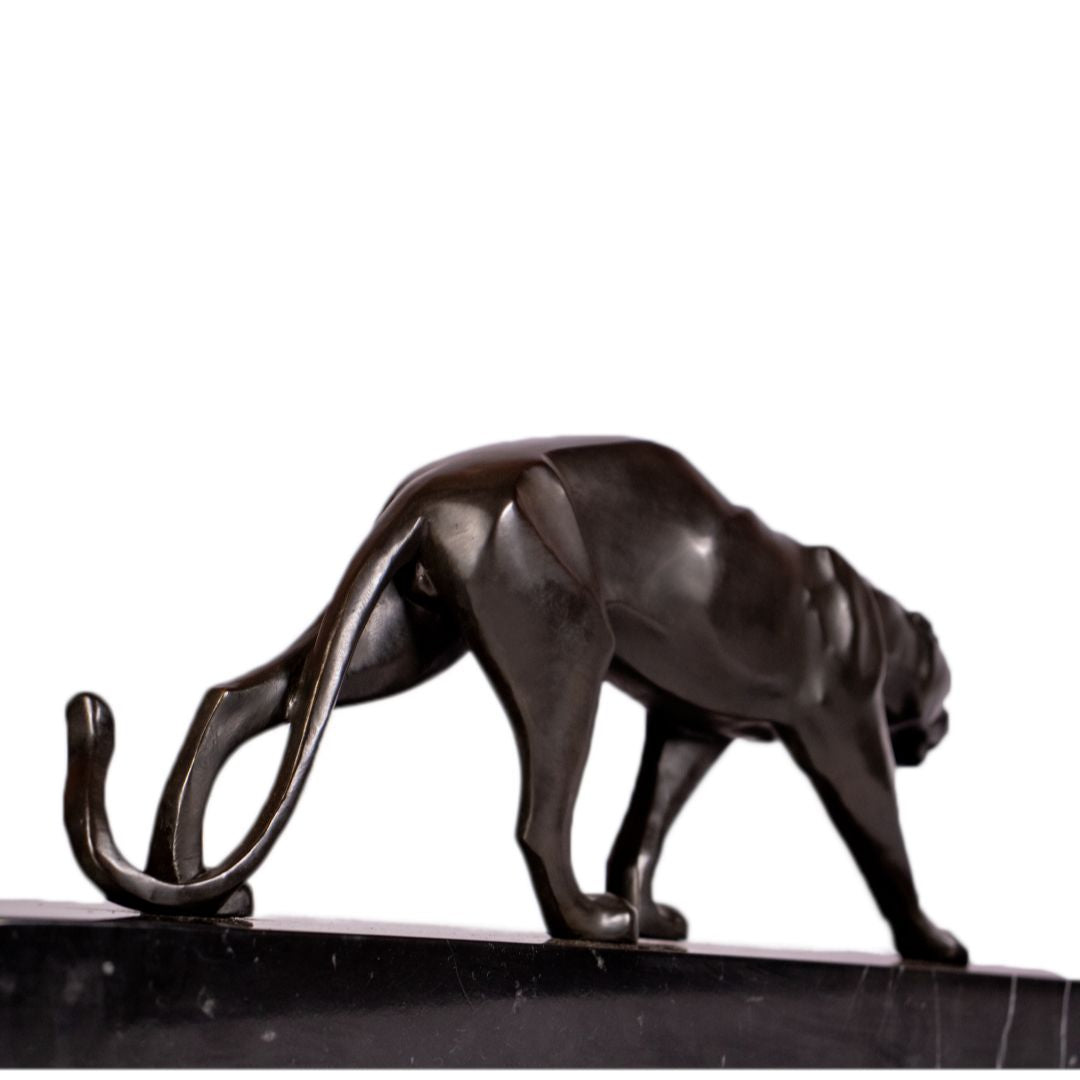
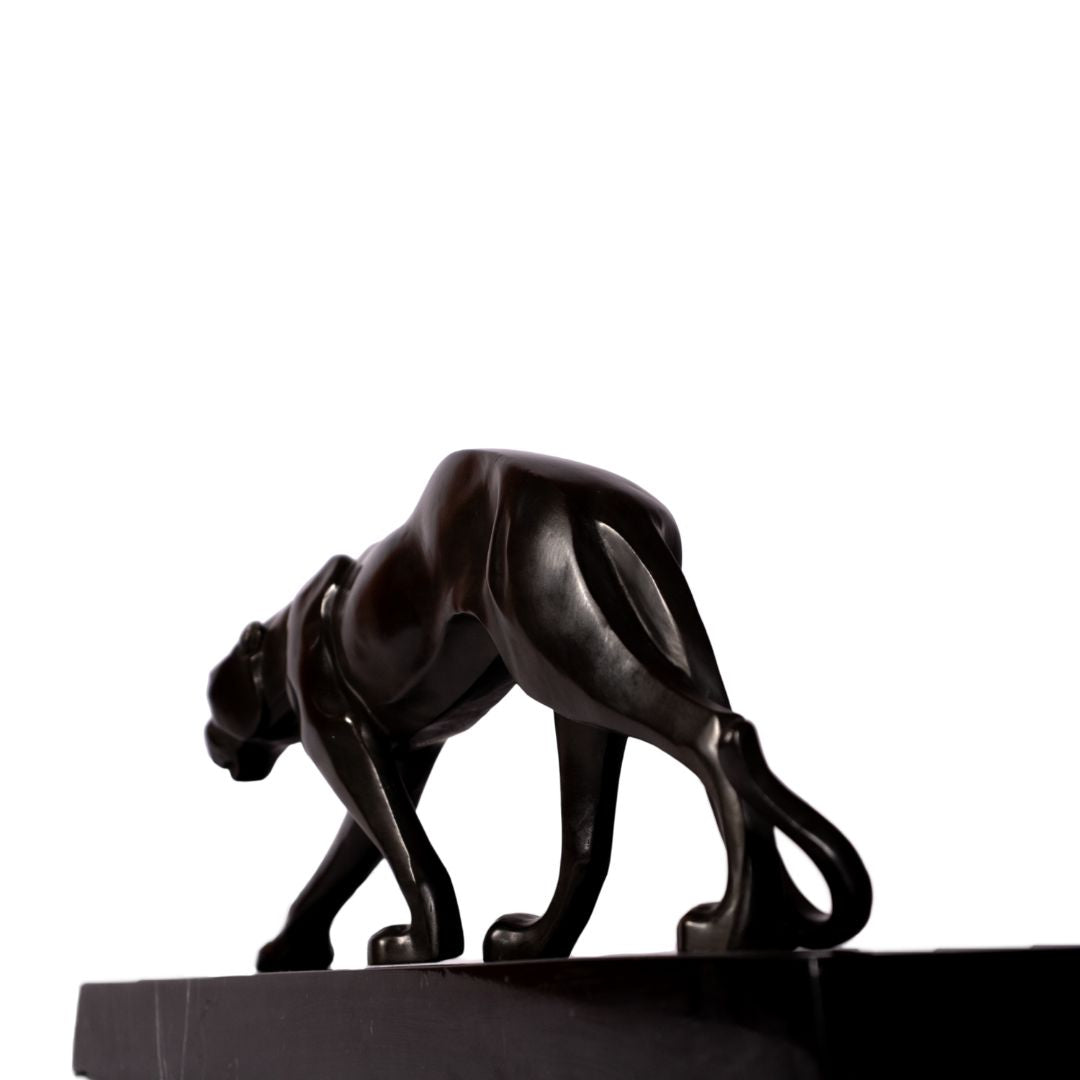
This Art Deco panther stalks down a long wedge of black marble, its supple body stretched low and the head held beneath the line of the shoulders. The forelegs reach down the incline while the hind legs keep to the high end, so the whole figure tilts with the stone.
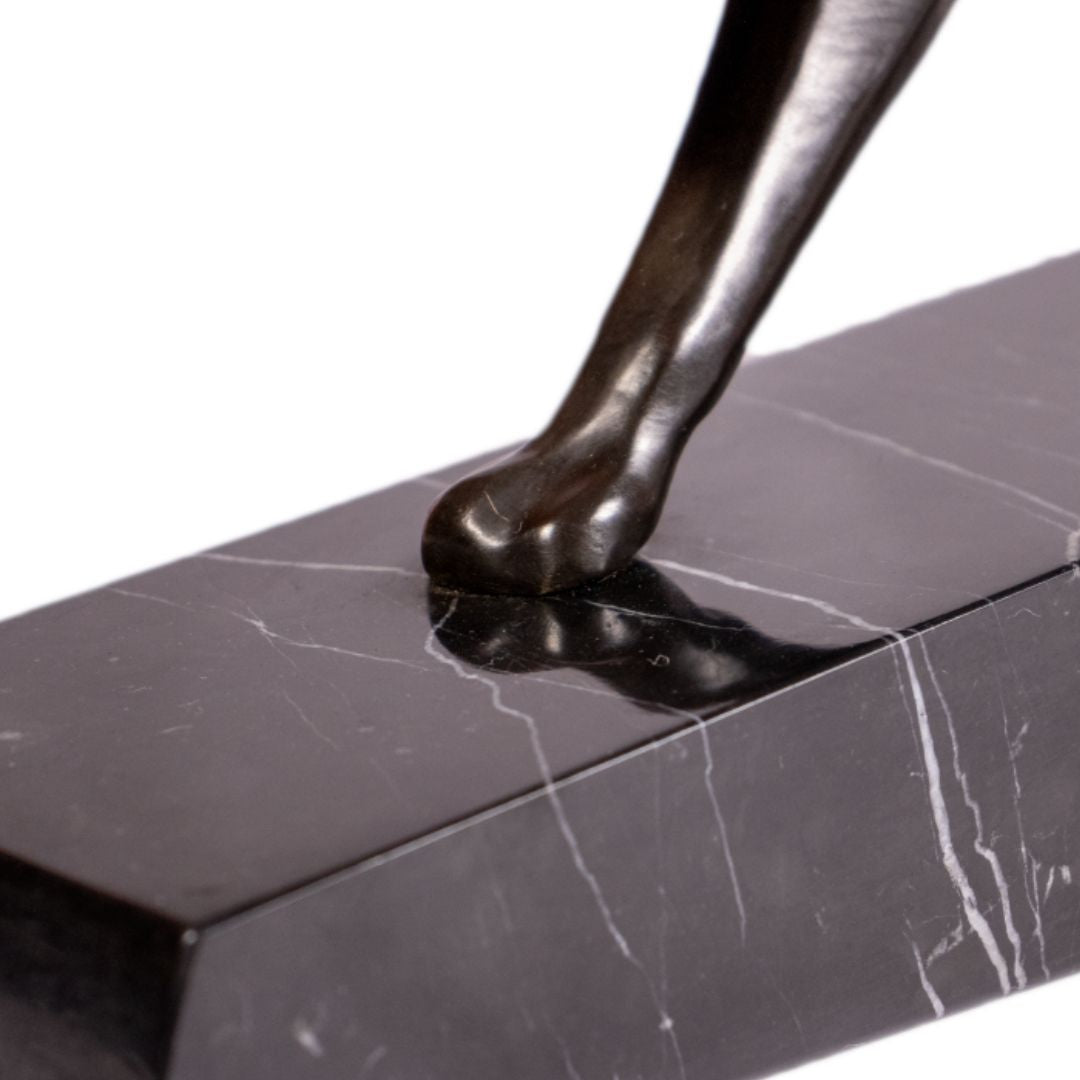
Head and chest are cut into flat, angular facets with no attempt at fur, and the smooth patina runs from dark brown to near black. Behind, the tail swings down in a loop and rises again. The marble is veined in white and polished, so that the front paws are reflected where they touch it.
The stalking panther was one of the favoured subjects of Art Deco animal sculpture in the 1920s and 1930s: taut, elegant and powerful in one outline. This new piece is made entirely by hand, the bronze cast by the lost-wax method (cire perdue) and finished with a dark brown patina.
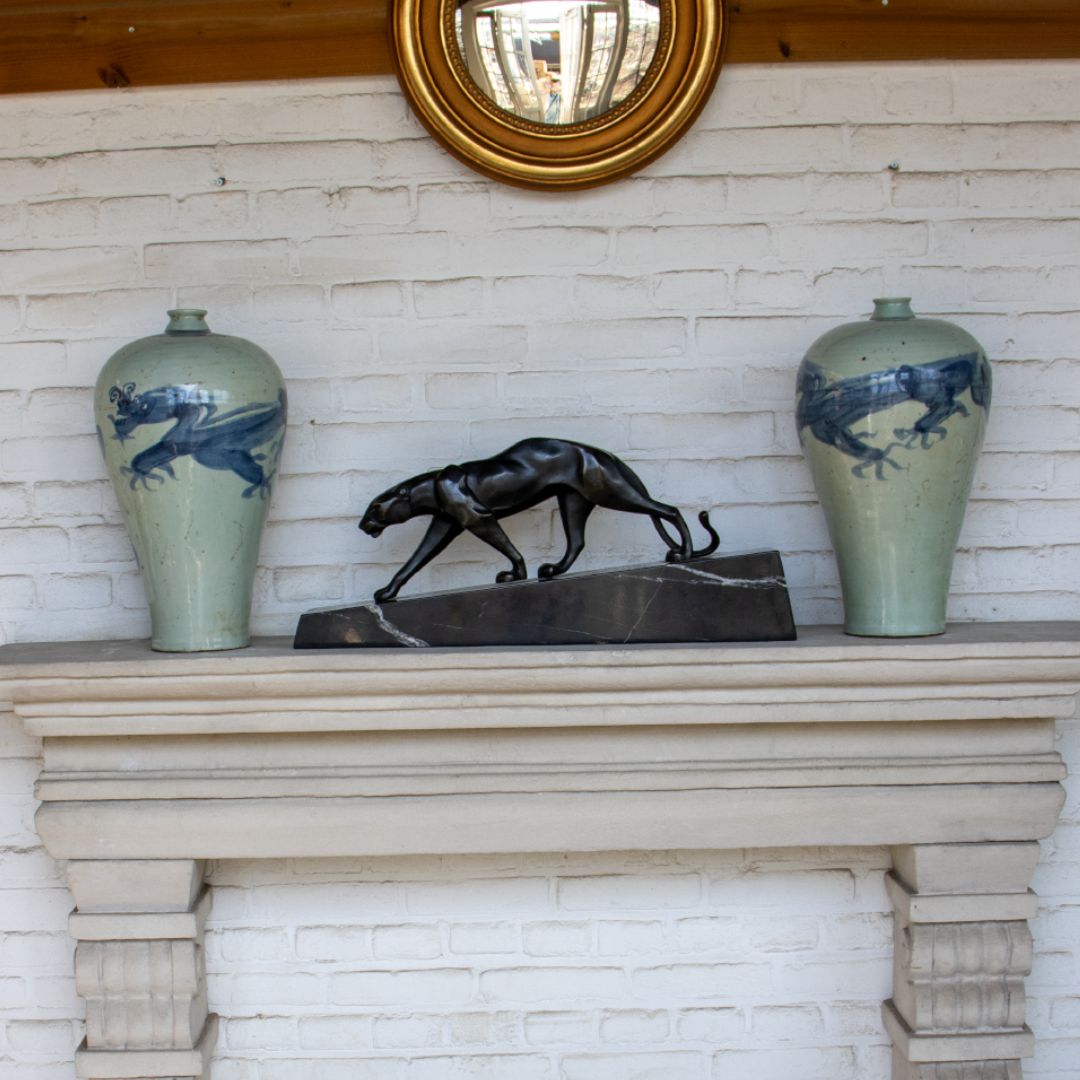
Sixty-four centimetres long but only 11 cm deep, it lies comfortably along a mantelpiece, the slope of the marble leading the eye from the raised hindquarters down to the lowered head.
Worldwide shipping
We work with reliable freight carriers worldwide who are experienced in transporting heavy and delicate works of art. This ensures that your order arrives safely. Shipping costs are calculated on the basis of the weight, dimensions and destination of your order. We aim for competitive rates and provide a detailed quote once the order has been confirmed.
Estimated delivery times vary depending on your location and the size of the order. Domestic shipments usually take 3-7 working days, while international deliveries can take 3-60 working days.
For shipments outside the EU, please note that import duties and taxes may apply under the rules of your country. These costs are not included in our prices and are payable by the buyer.
Warranty
We aim for the highest standards of quality and craftsmanship in our bronze sculptures. All our products carry a 24-month warranty against defects in materials and workmanship under normal use and care. This warranty covers any problems that arise during this period; we will repair or replace the product free of charge. For warranty questions, please contact our customer service.