
Kuzco Art Maison
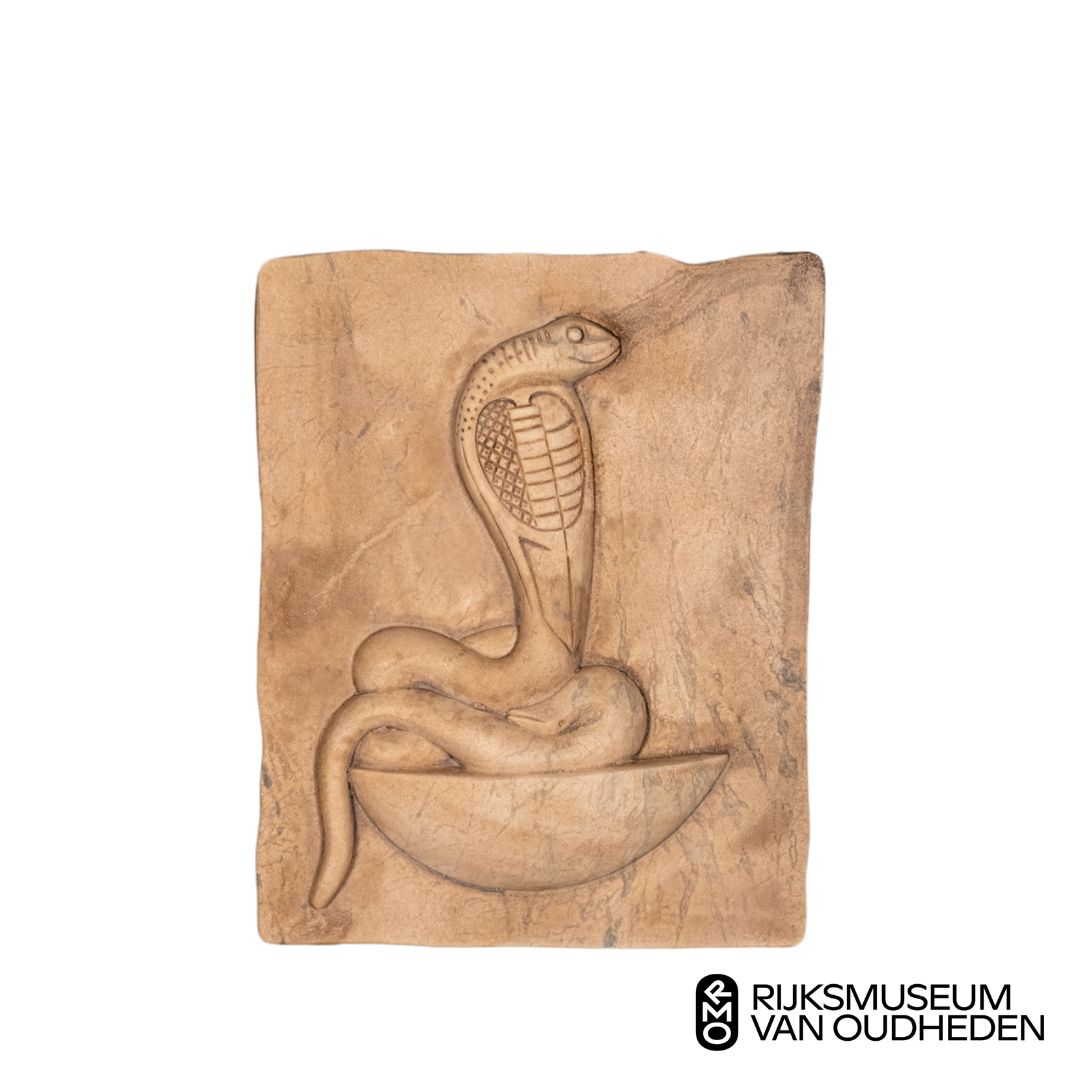
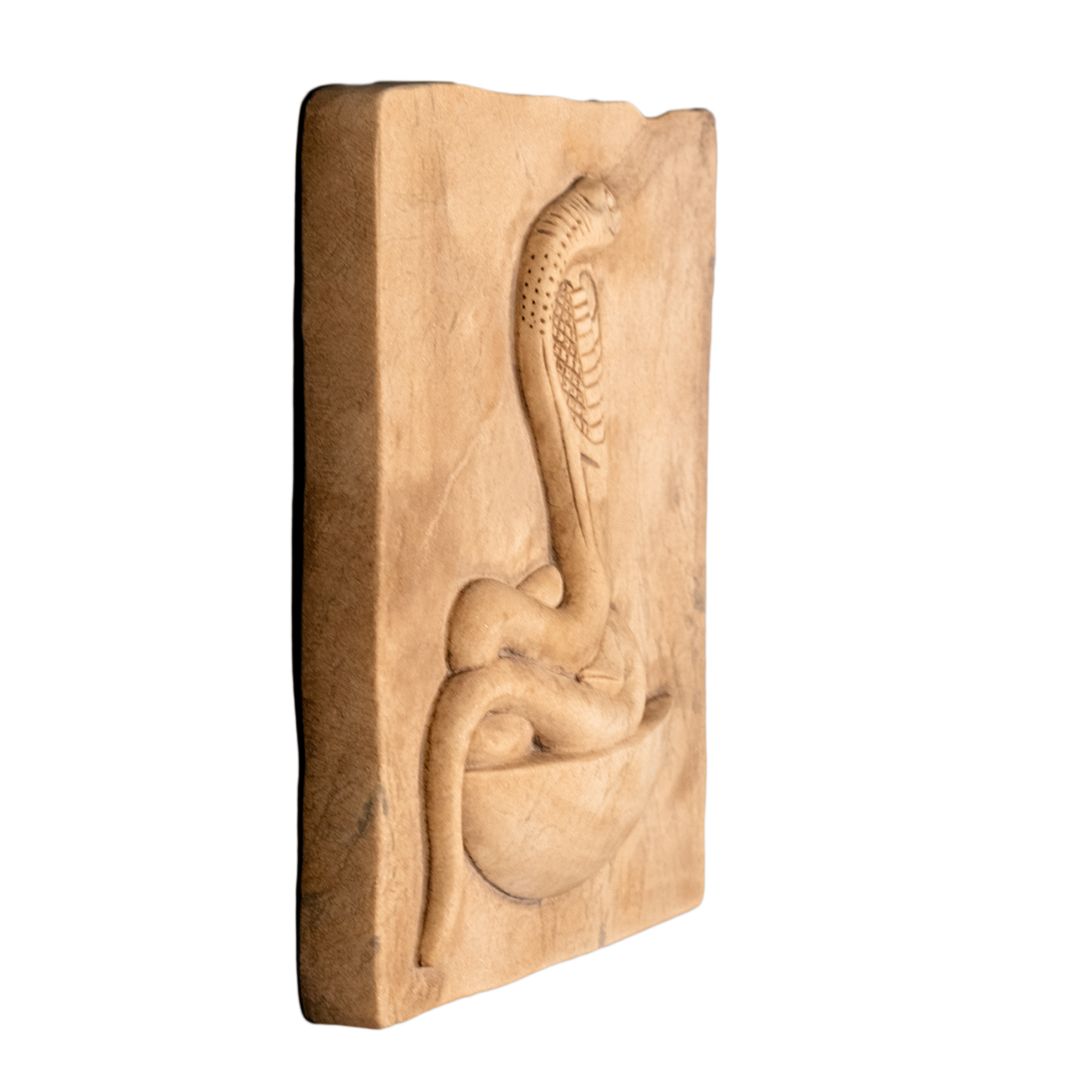
Egyptian Uraeus Cobra Relief – hand-carved marble
Egyptian Uraeus Cobra Relief – hand-carved marble
Showroom Amsterdam
Hekelveld 1
1012 SN Amsterdam
Netherlands
Warehouse Bleiswijk
Overbuurtseweg 6
2665 CA Bleiswijk
Netherlands
Choose options
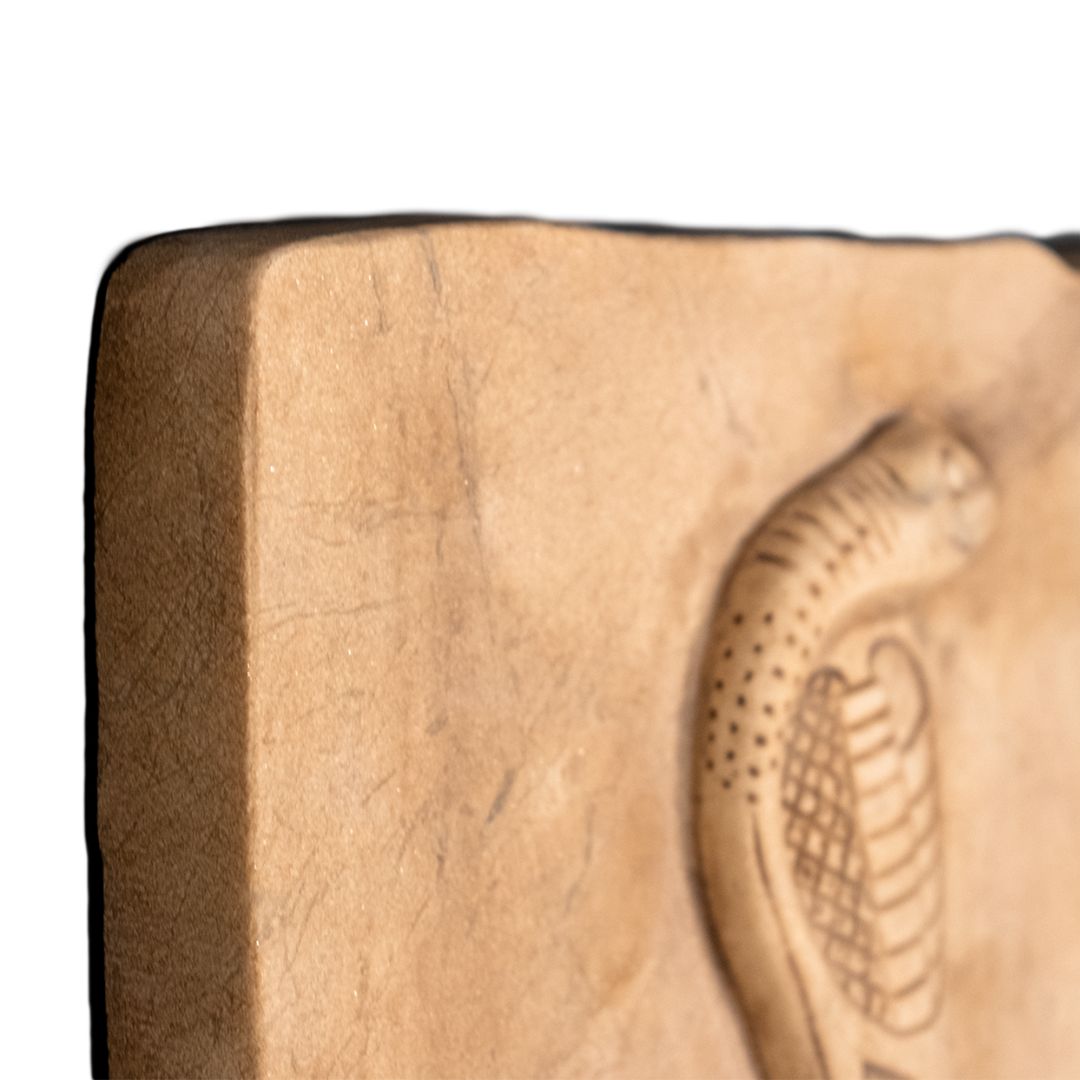
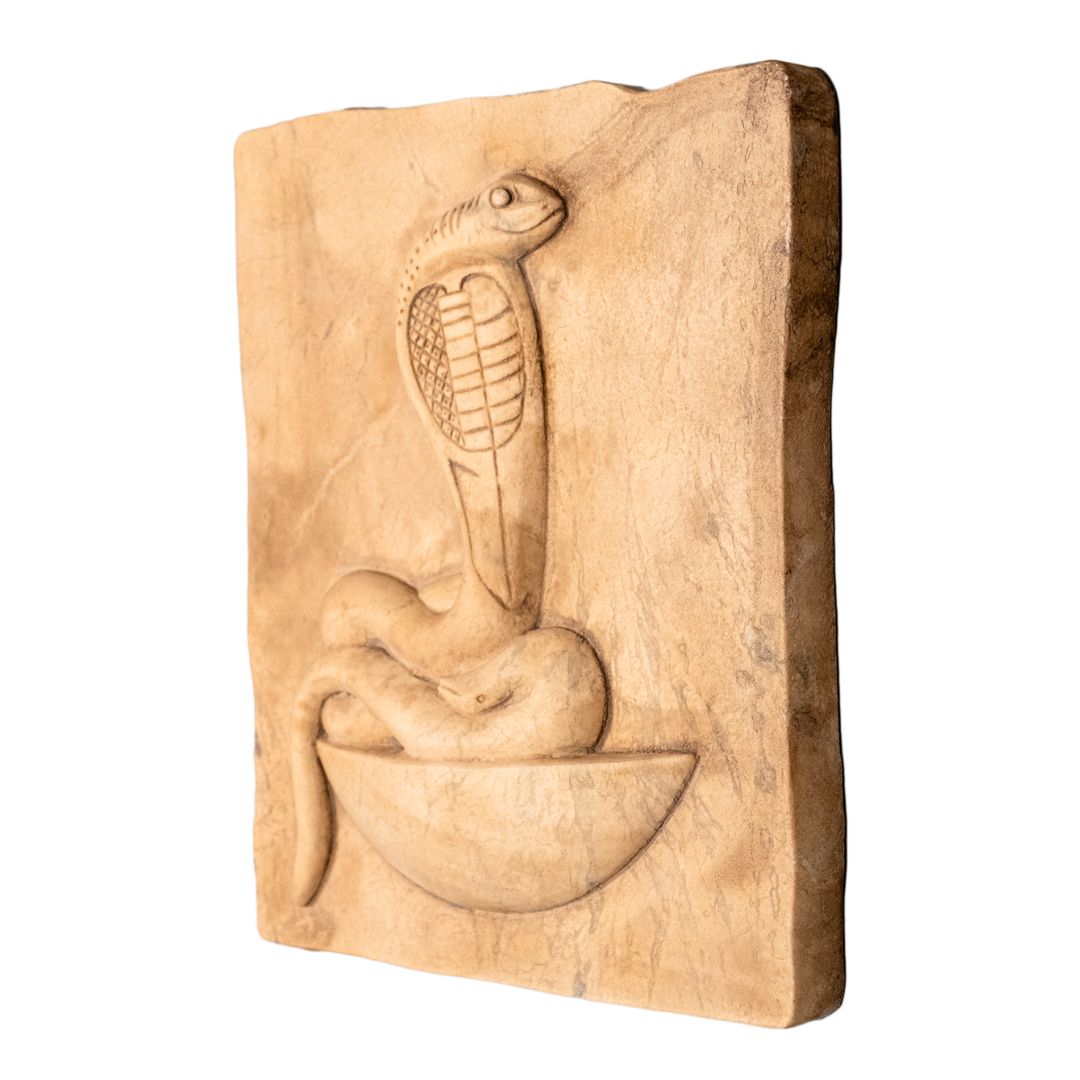
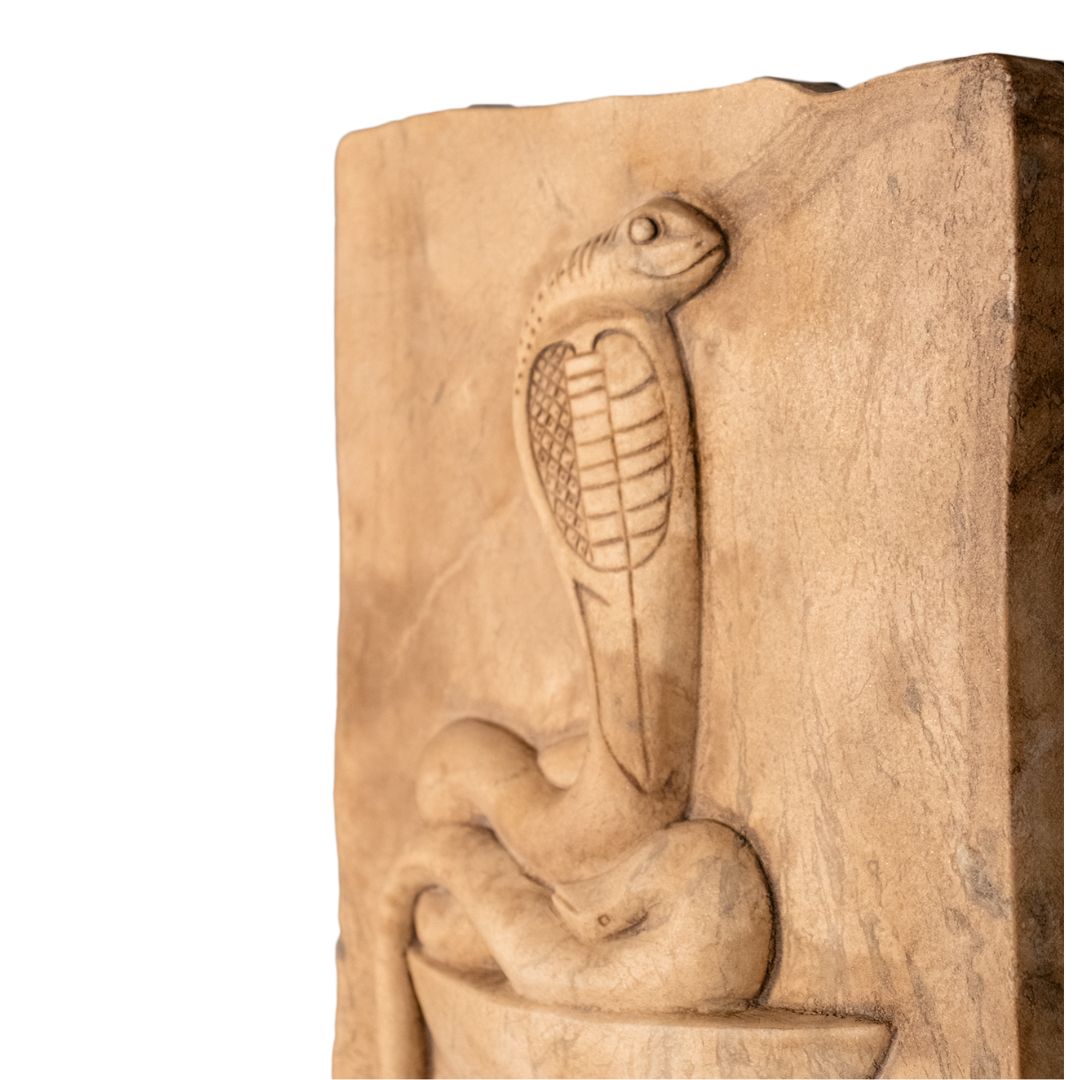
A rearing cobra with spread hood rises from its own coils on this hand-carved relief in white marble. The hood is cut with a fine lattice of scales and a ladder of bands down the throat, and a row of small drilled dots runs along the neck. The long tail curls over the rim of a shallow, half-round basket and drops past it towards the lower edge. An antique finish gives the stone a warm, sandy tone, so the low relief shifts with every change in the light.
The model is a small limestone relief plaque in The Metropolitan Museum of Art, New York (inv. 07.228.14), made in Egypt between about 400 and 30 BC, in the Late and Ptolemaic Periods. The cobra on a basket is the sign of Wadjet, protective goddess of Lower Egypt and one of the “Two Ladies” in the pharaoh’s names. As the uraeus, she reared from the royal brow. Egyptologists call plaques of this kind sculptor’s models or votives. They look like studies, yet were finished objects in their own right, probably given as offerings during the great temple building of those centuries.
At 28 cm, this relief is a little over twice the size of the 12.5 cm original. A hole drilled into the back lets it hang flat against the wall. It suits a study among books, the wall beside a doorway, or a group of framed works on paper, where light falling from the side brings out the relief.
The relief is part of the Museum Grand Tour, KUZCO Art Maison’s collaboration with the Rijksmuseum van Oudheden in Leiden. Original: c. 400–30 BC. Remade: 2026. Half of the purchase price goes to the museum for restoration, acquisitions and research.
This is not an antique, but a new, hand-carved piece after a museum model.
Worldwide shipping
We work with reliable freight carriers worldwide who are experienced in transporting heavy and delicate works of art. This ensures that your order arrives safely. Shipping costs are calculated on the basis of the weight, dimensions and destination of your order. We aim for competitive rates and provide a detailed quote once the order has been confirmed.
Estimated delivery times vary depending on your location and the size of the order. Domestic shipments usually take 3-7 working days, while international deliveries can take 3-60 working days.
For shipments outside the EU, please note that import duties and taxes may apply under the rules of your country. These costs are not included in our prices and are payable by the buyer.
Warranty
We aim for the highest standards of quality and craftsmanship in our bronze sculptures. All our products carry a 24-month warranty against defects in materials and workmanship under normal use and care. This warranty covers any problems that arise during this period; we will repair or replace the product free of charge. For warranty questions, please contact our customer service.