
How are bronze sculptures made?
Real bronze sculptures are made by the lost-wax method (cire perdue), a process that has set the standard for fine sculpture since around 3500 BC – a technique in which craftsmanship, chemistry and art combine to produce objects that outlast generations.
Walk through any interiors fair or scroll through online wholesalers and you see them everywhere: shiny 'bronze' sculptures of abstract torsos with no anatomical logic, animals with grotesquely distorted proportions. They are sold as 'art', but are often little more than industrially cast kitsch – or worse, plastic with a sprayed-on gold finish.
While mass producers flood the market with these shapeless trinkets, the craftsmanship that for centuries turned bronze sculptures into heirlooms is disappearing.So how, in this sea of imitations, do you tell a genuine bronze work of art from a factory product that ends up in a charity shop within five years?
Key Takeaways
- Bronze sculptures are made of a copper alloy (usually 85-95% copper plus tin, zinc or lead) that is more durable than marble and not brittle like plaster
- The lost-wax method is the most respected casting process for lasting works of art
- Modern resin replicas (synthetic resin/polyester) imitate bronze cheaply, but do not last and show wear within a few years
- Signs of quality: substantial weight, natural variation in the patina, a visible casting seam (not polished away), a solid base or plinth
- Patination is the chemical colouring that gives bronze its characteristic brown, green or black tone
Contents
- What exactly is bronze?
- The lost-wax method
- The problem with today's 'bronze'
- Hand casting vs industrial production
- Resin, synthetic resin and polymers: the plastic imitation
- How to recognise quality: seven tests that never lie
- A short history: from Babylon to Art Deco
- Why our bronze is different
- Care: how to keep bronze looking its best
- Frequently asked questions

What exactly is bronze?
Bronze is not a pure metal but an alloy: a deliberately composed mix of metals that strengthen one another. The classic formula combines:
- 85-95% copper (gives the warm red-brown base colour)
- 5-12% tin (increases hardness and castability)
- Sometimes zinc, lead or silver in small percentages (refines the casting properties)
This composition dates back to around 3500 BC, when Mesopotamian smiths discovered that tin counteracts the natural softness of copper. The result: a material that could be ground sharper than stone (think of swords and tools), yet was fluid enough to cast intricate shapes.
Why Sculptures in Bronze?
Three properties make bronze superior for three-dimensional art:
- Low melting point (950-1050°C) – manageable in traditional furnaces, unlike iron (1538°C)
- Minimal shrinkage on solidifying – the metal barely expands or contracts, so even single hairs or eyelids are captured exactly
- Corrosion resistance – where iron rusts and marble weathers, bronze develops a protective patina that lasts for centuries
The Lost-Wax Method
The lost-wax method (cire perdue in French, lost-wax casting in English) is the process by which almost all fine bronze sculptures – from Rodin's The Thinker to Kuzco Art Maison's bronze sculptures – come to life.
It is called 'lost' because the wax model literally disappears in the process. No two casts are therefore exactly identical: even from the same mould, the finish varies subtly.
Step 1: The Original Model (Modelling)
A sculptor first creates a positive model in clay, plaster or sometimes directly in wax. This is the master from which all casts will derive. For historical replicas – such as our bronze Adam after Rodin – an antique plaster cast or a museum photograph is often the starting point.
Crucial detail: every wrinkle, fingerprint or irregularity in this model reappears in the final result. Skill at this stage determines 60% of the eventual quality.
Step 2: The Rubber Mould
A negative mould is taken from the clay model, usually in liquid silicone rubber that records every detail. Once the rubber has cured, the original is removed, leaving a cavity – the inside of the sculpture.
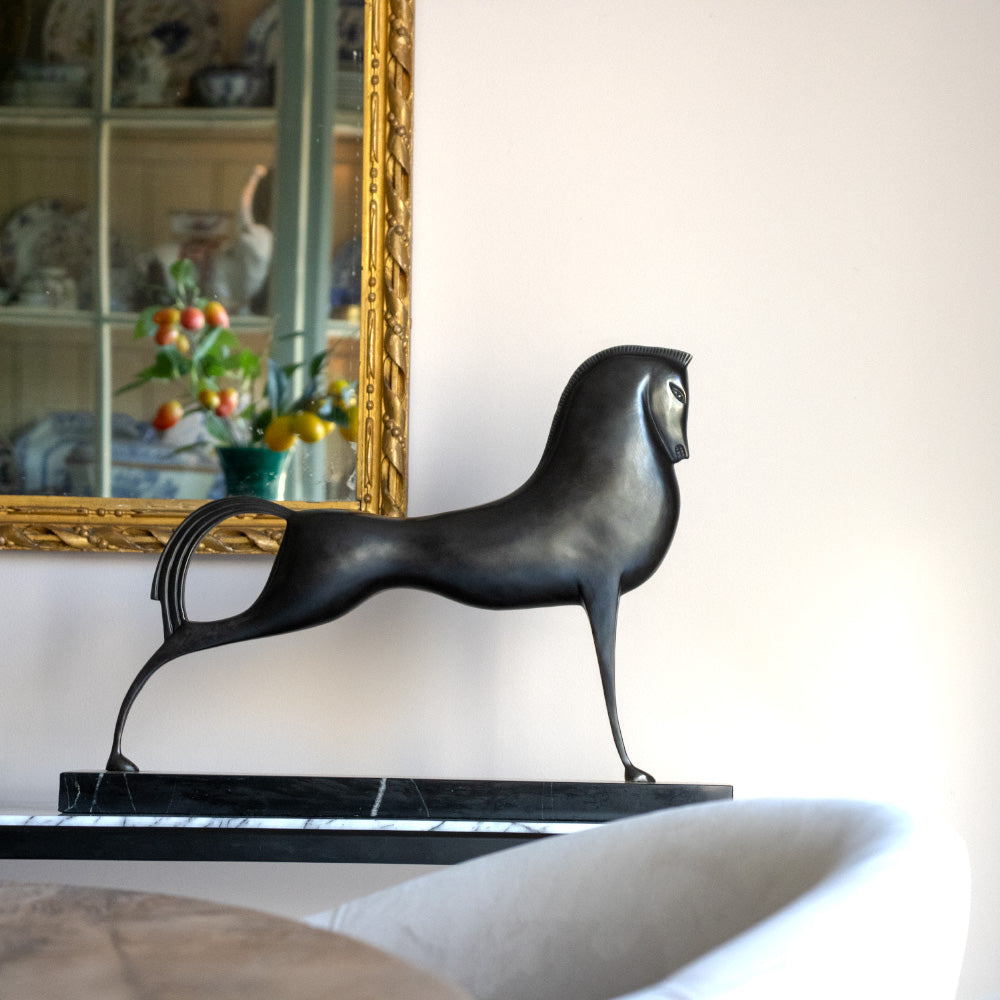
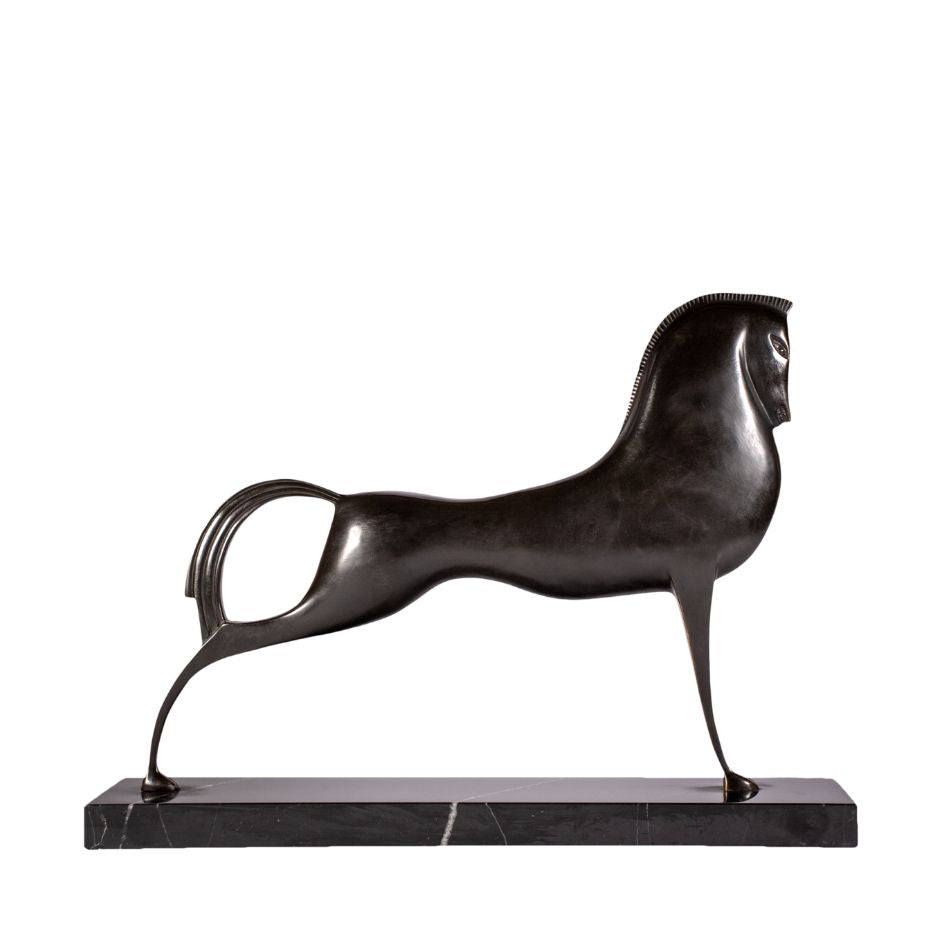
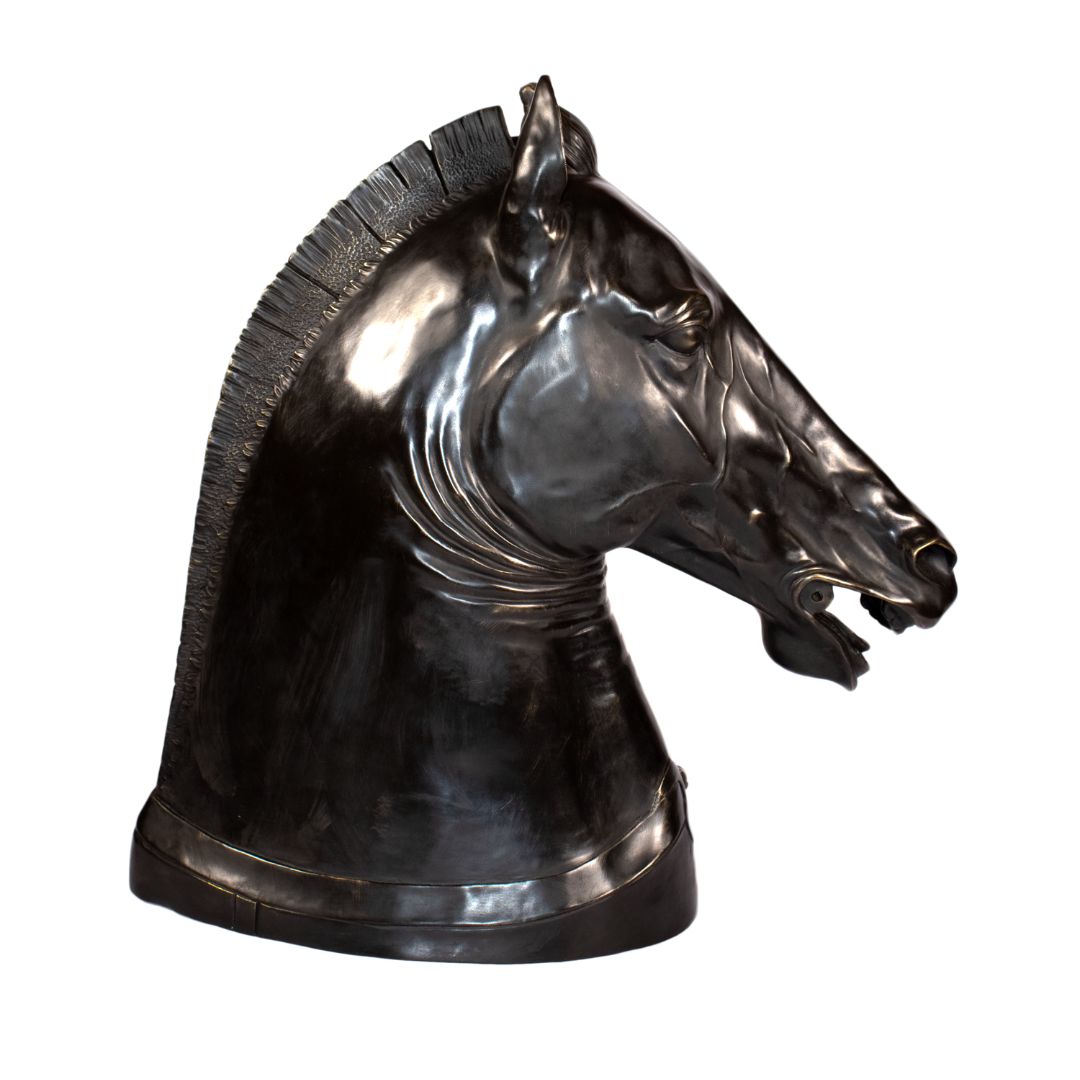
For complex sculptures (think of an Art Deco horse with an outstretched mane) the mould is made in several pieces that are later brought together.
Step 3: The Wax Model
The mould is now filled with beeswax or synthetic wax, built up to exactly the thickness the finished bronze needs (usually 3-8mm).
This wax model is hollow: solid bronze would be astronomically heavy and expensive. Instead, a refractory core (ceramic or sandstone) is placed in the centre, so that the finished sculpture becomes a shell of metal around a heat-resistant interior.
Technical detail: the core is held by pins driven through the wax, so that it stays in place during casting. These pins later leave small marks on the bronze surface – a sign of quality that shows the piece is a true lost-wax cast.
Step 4: The Ceramic Shell
The wax model is now covered with refractory plaster or ceramic slurry. This is done in layers:
- First a fine layer that reaches every detail
- Then coarser layers that give structural strength
- Final thickness: about 2-5cm
Once this shell is dry, it is heated in a kiln (150-200°C). The wax melts and runs out – hence lost wax – leaving a cavity in exactly the shape of the sculpture.
Note: cheap production sometimes skips this ceramic stage and uses permanent moulds. That works for simple shapes (such as vases), but never gives the fine detail of a true lost-wax cast.
Step 5: Casting
The empty ceramic shell is now preheated to around 700°C. Why? A cold mould would make the liquid bronze solidify before it reaches every corner.
Meanwhile the bronze is melted in a crucible – a heat-resistant vessel of graphite or ceramic. At 1050-1100°C the solid metal turns into a glowing orange liquid, almost as fluid as water.
The decisive moment: using tongs or a hoist, the crucible is tilted and the bronze flows through the casting channels into the mould. This has to happen in one pour; stopping and starting creates weak spots. Air bubbles are shaken out by tapping the mould with a hammer.

Step 6: Cooling, Breaking Out, Removing the Core
After cooling for one to two days, the ceramic shell is chipped away. What emerges is a raw bronze, still carrying casting residue: sprues, vents and the rough outer skin of the investment.
The artist or foundry removes these with grinding discs, files and chasing tools. The casting seam – where the mould sections met – is carefully smoothed but not erased entirely. A faint seam is in fact a mark of honesty: it shows this is a cast sculpture, not a mass product from an injection-moulding machine.
The refractory core is chiselled out or (in small sculptures) shaken loose through the opening in the underside.
Step 7: Patination
Fresh bronze has a red-gold tone that turns dull and uneven within months through oxidation. To control this, the sculpture is patinated: treated with chemicals that create a durable, even layer of colour.
Classic patina formulas:
- Dark brown/black: liver of sulphur (potassium sulphide) solution, applied hot – typical of Art Deco sculptures
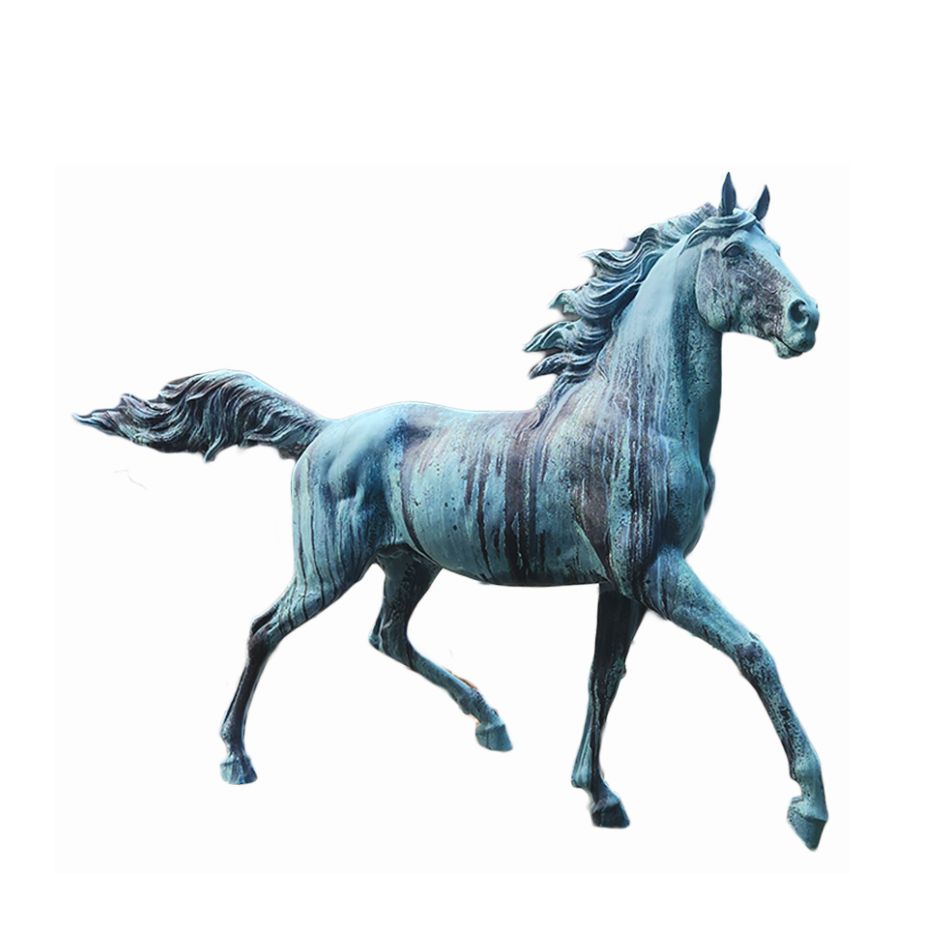
- Green/blue (verdigris): copper sulphate or acetic acid fumes, giving the classical look of outdoor statues from antiquity
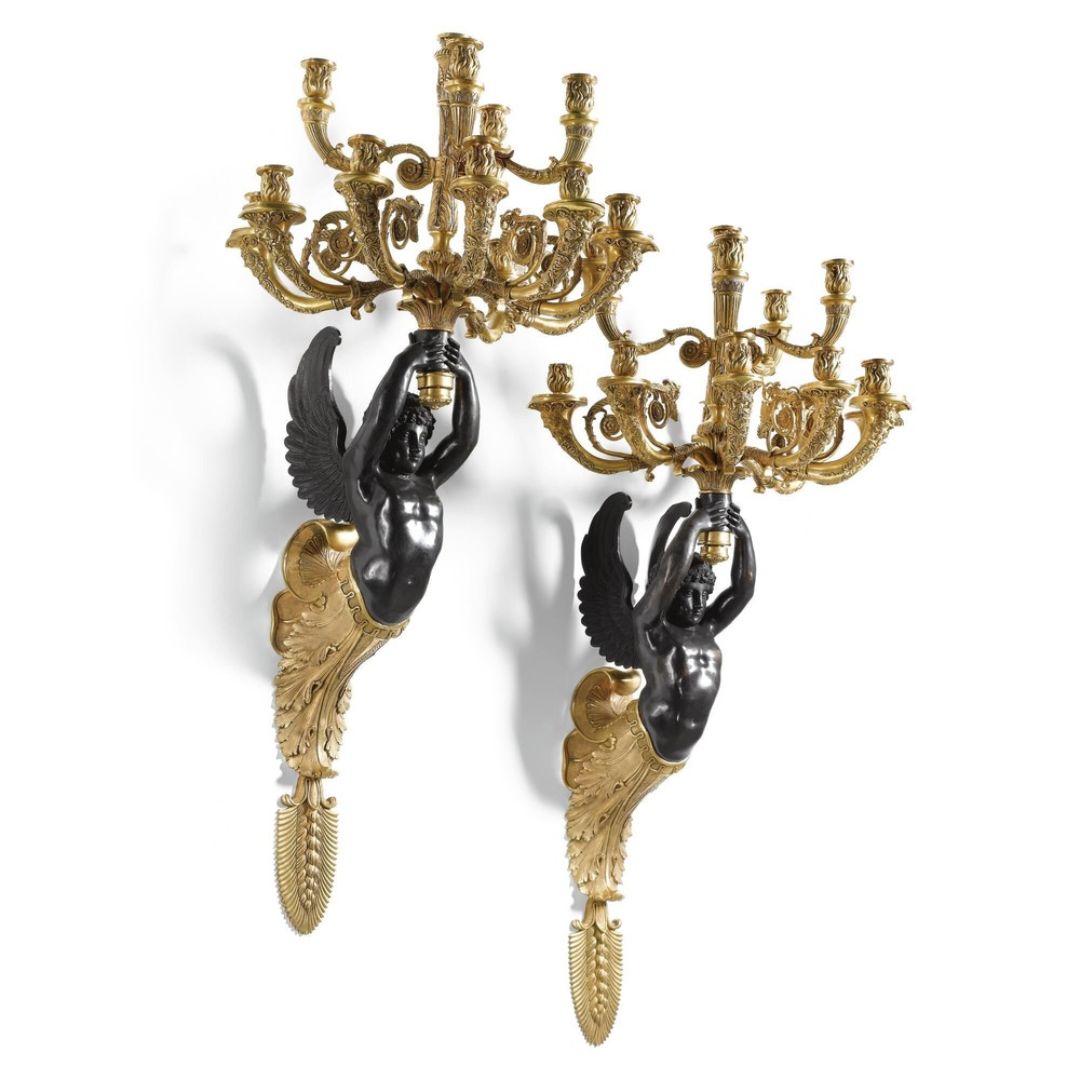
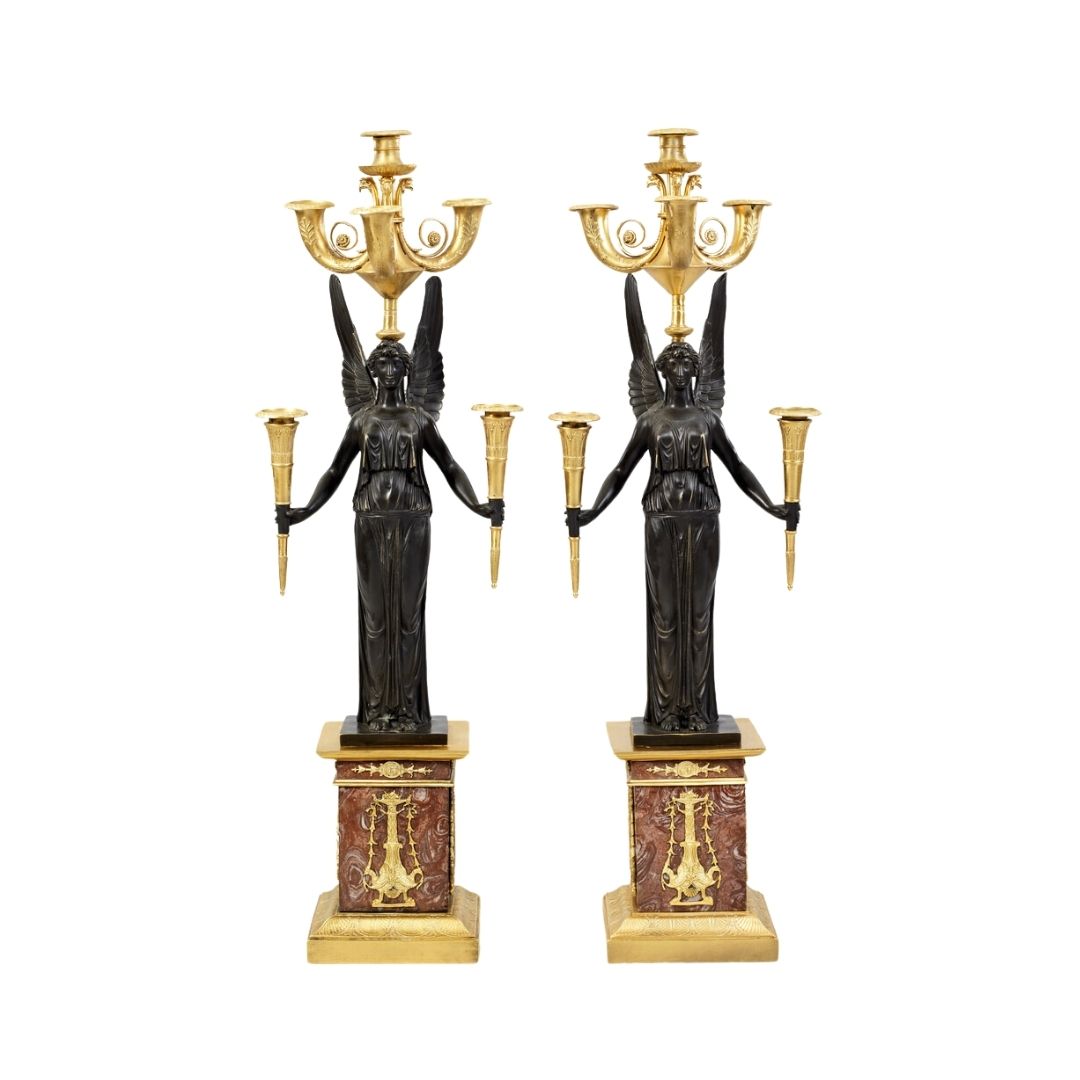
- Gold/red: ferric nitrate, popular for Baroque candelabra and Empire-style ornaments
Every foundry has its own recipes, some of them generations old. The patina is built up layer by layer, heated with a gas torch between applications, and finally sealed with beeswax or an acrylic coating.
Sign of quality: a good patina shows subtle variation in colour – darker in the recesses, lighter on raised areas. A uniform chemical coating can point to mass production or spray finishing.

Hand Casting vs Industrial Production
A. Traditional Lost Wax (Fine-Art Standard)
Characteristics:
- Each sculpture individual through hand finishing
- Visible casting seam (faint, but present)
- Uneven patina with depth
- Weight: 8-15 kg for a 40cm sculpture
- Price: €500-€15,000+ depending on size and complexity
Examples: all bronze sculptures by Kuzco Art Maison, works by Rodin, Bugatti, classical animaliers.
B. Sand Casting (Industrial, Limited Detail)
A simpler process in which damp sand forms the mould. Suitable for simple shapes such as fence posts or mass-produced architectural elements, but not for fine sculpture.
Drawbacks:
- Porous surface (grains of sand leave micro-pits)
- No undercuts possible
- Coarser end result
C. Die Casting (Cheap, Not Durable)
Some factories use permanent metal moulds into which lighter alloys (sometimes with a high zinc content) are injected under high pressure.
How to spot it:
- Seamless (too smooth!)
- Often light in weight
- Patina wears off quickly
- No individual finish
Resin, Synthetic Resin and Polymers: the Plastic Imitation
The interiors market is flooded with sculptures that look like bronze but are in fact polyester resin or epoxy, sometimes dusted with bronze powder.
Almost 46% of the world trade in decorative sculptures consists of plastic – a material that becomes brittle and dull within a few years.
How Resin Replicas Are Made
- Silicone mould taken from an original (often stolen or copied illegally)
- Liquid synthetic resin with glass fibre or stone powder as filler
- Bronze powder mixed into the surface layer, or painted on afterwards
- Chemical patina lacquer sprayed over the whole
End result: in the shop it looks like bronze. But:
- It breaks if dropped (bronze only dents)
- It weighs 60-80% less
- The patina scratches off like car paint
- It does not last; discarded after 5-10 years
'Bronze Polymer' Marketing Tricks
Watch out for terms such as:
- Bronze finish = painted plastic
- Cold cast bronze = resin with bronze powder, not cast metal
- Bonded bronze = glue + bronze powder ≠ alloy
Golden rule: if the seller does not state 'lost-wax method' or 'cire perdue' explicitly, and the product is suspiciously cheap (under €200 for a 30cm sculpture), it is almost certainly resin.
How to Recognise Quality: Seven Tests That Never Lie
1. The Weight Test
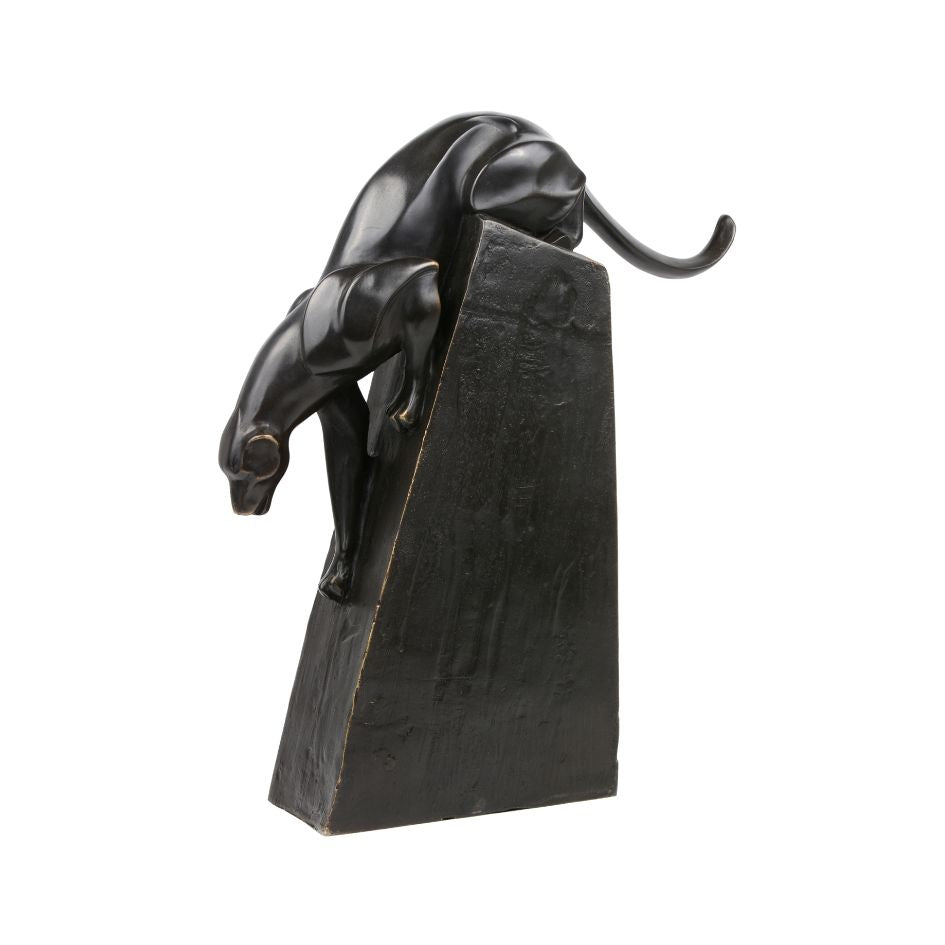
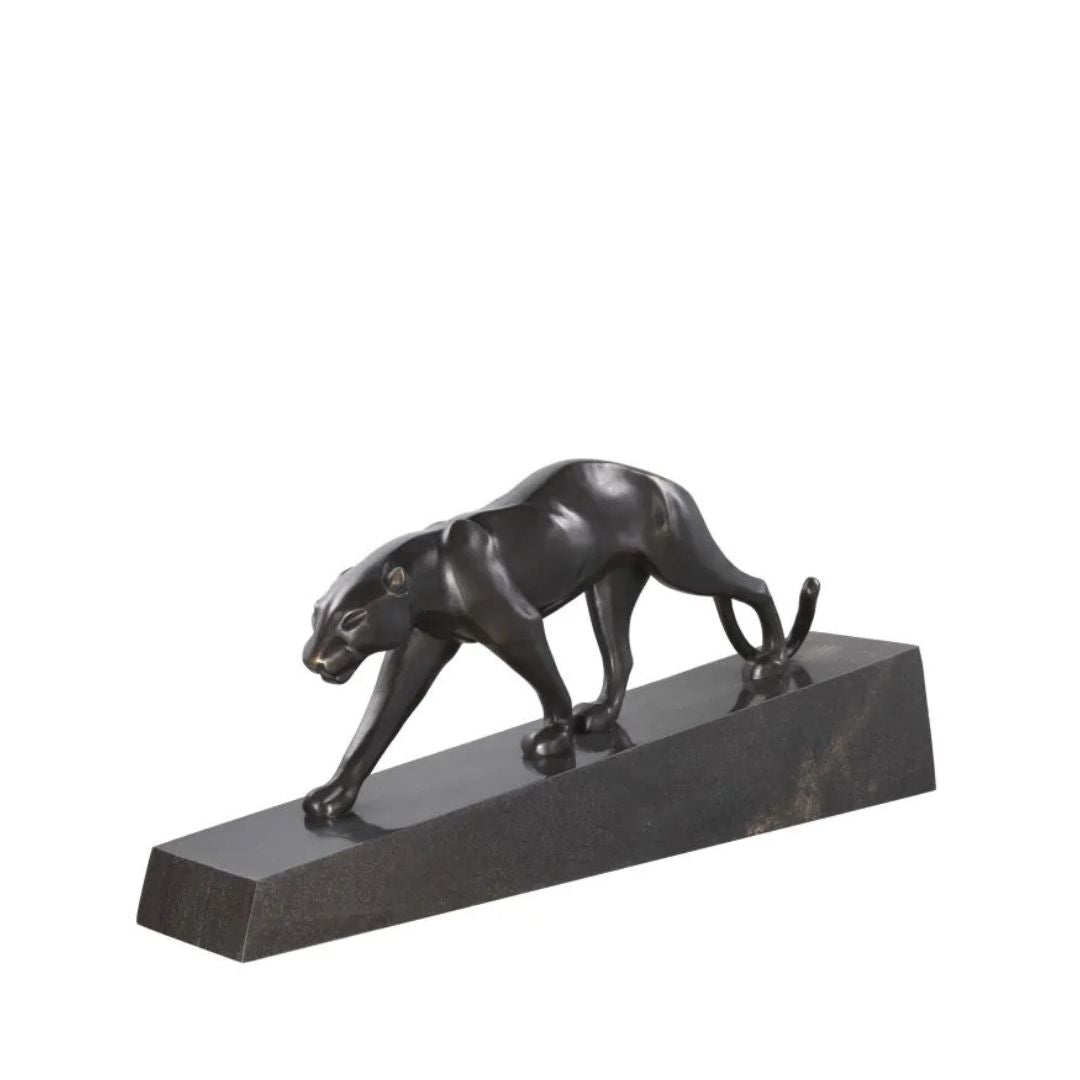
Lift the sculpture. Real bronze feels substantially heavy – a density of 8.7 g/cm³ against 1.2 g/cm³ for resin. A 30cm panther should weigh 4-6 kg, not 800 grams.
2. The Magnet Test
Bronze is non-magnetic. Hold a magnet against it: do you feel a pull? Then it contains iron or steel, which means it is an imitation alloy.
3. Depth of Patina
Scratch gently with a fingernail in a hidden spot (the underside). A real patina is chemically bonded and does not come away. Paint flakes off.
4. Traces of the Casting Seam
Look for the vertical seam line (often along the middle). In quality bronze it is present but subtle. No seam = die-cast mould or mass production.
5. The Sound Test
Tap the sculpture with a coin. Bronze produces a full, ringing tone (think of a bell). Resin sounds dull or hollow.
6. Core Pin Marks
Turn the sculpture over. Can you see small holes or projections where the core pins sat? That is proof of lost-wax casting.
7. Signature and Foundry Mark
Serious sculptors have their work cast at recognised foundries and have both their name and the foundry stamp engraved. Anonymous sculptures without any mark? Red flag.

A Short History: from Babylon to Art Deco
Bronze has outlived cultures. A few highlights:
- 3500 BC – Mesopotamia discovers bronze alloys and the Bronze Age begins
- 500 BC – Greek sculptors perfect lost-wax casting for life-size athletes (such as the Charioteer of Delphi)
- 206 BC-AD 220 – the Chinese Han dynasty produces ritual bronzes with intricate dragon motifs
- Renaissance (1400-1600) – Donatello's David and Ghiberti's Gates of Paradise reintroduce large-scale bronze work in Europe
- 1880-1920 – Auguste Rodin and Rembrandt Bugatti bring psychological expression to bronze; Art Deco popularises geometric animal sculpture
- Today – Kuzco Art Maison bridges museum traditions and contemporary interior design, as with our life-size galloping horse for the garden

Why our bronze is different
At Kuzco Art Maison we have worked for more than 30 years with the best bronze foundry in Asia – a foundry that masters the lost-wax method at craft level. Every sculpture in our bronze collection goes through:
- Hand patination with classic formulas
- Individual quality control by the founder (academic background in art and connoisseurship)
- Models reserved for us in Europe – designs we sell do not appear with other wholesalers
Want to trace the origin of a form? We are open about which historical sculpture served as inspiration, as with our hunting black panther after Rembrandt Bugatti – a tribute to the Italian animalier who studied big cats from life.
Pricing: where museum bronzes fetch tens of thousands to millions at auction, we make this level of work accessible from €300-€30,000. We can do this only through direct relationships with foundries and a digital-first B2B model without intermediaries.
Care: How to Keep Bronze Looking Its Best
Good news: bronze is almost maintenance-free. But a few tips will prolong its sheen:
Indoors
- Dust with a soft cloth (a microfibre cloth is best)
- Wax once a year with beeswax or a neutral furniture wax (Pledge) to nourish the patina
- Avoid: abrasive cleaners, acids (vinegar, lemon), steel scourers
Outdoors (Garden Sculptures)
- Accept that a green patina develops naturally – this is not damage but the romantic look of weathered bronze
- Want to keep the original colour? Apply a coat of acrylic coating or Renaissance Wax once a year
- Hard frost? Cover the sculpture or bring it indoors – frozen moisture in small cracks can make them worse
Frequently Asked Questions
Why are bronze sculptures so expensive?
The combination of labour-intensive handwork (60+ hours per sculpture), costly material (copper/tin) and centuries of craft knowledge. Cheap alternatives either compromise on quality (resin) or simplify the design (machine-pressed).
How long does a bronze sculpture last?
Centuries to millennia. Chinese ritual bronzes from 1200 BC still survive. Your Art Deco candelabra will pass down the generations as heirlooms.
Can I patinate a sculpture myself?
Technically possible, but risky without experience. Chemicals such as liver of sulphur are toxic and need ventilation. We recommend professional patination or advice.
Are your sculptures 'reproductions' or originals?
Both. We also make fine replicas of celebrated works by deceased artists (such as Rodin and Bugatti) to keep their legacy accessible to a wider public. No piece is ever presented as 'the original' – that would be a forgery.
What is the difference between an 'edition' and mass production?
A limited edition means that the artist or foundry casts no more than a set number of sculptures and then destroys the mould. Some sculptures are numbered (e.g. 5/25 = the fifth of 25). We mostly work with open editions: the moulds are kept, but each sculpture is still patinated by hand, so no two are exactly identical.
Conclusion: Bronze Is Made to Last
In a world of throwaway trends and plastics, a bronze sculpture represents something rare: permanent beauty. It is a dialogue between present-day hands and age-old techniques, between function and art.
From discreet parrot bookends for a homely study to a bronze horse as the focal point of an entrance hall, every bronze sculpture carries the weight of history – literally and figuratively.
Ready to bring art into your interior? Explore our full bronze sculpture collection or get in touch for advice on bespoke work and large projects.

About Kuzco Art Maison
Since 2024 we have been bringing works of art to interior professionals across Europe. From hand-cast bronze and hand-carved marble to hand-painted Chinese porcelain – we believe the spaces we live in can be just as inspiring as an exhibition.